5/18/20: WORKSHOP TOMORROW: TOWN COUNCIL EXPECTED TO FOCUS SQUARELY ON BEACH NOURISHMENT NEED AND OPTIONS. Engineering Consultant Submits Two-Year ‘Milestone’ Schedule of Project.

Interim Town Manager Wes Haskett and coastal engineering consultant Ken Willson participated in a “project kickoff meeting” on April 29 for a beach nourishment project in Southern Shores that has yet to be defined or approved by the Town Council, according to a “tentative schedule” submitted May 14 by Mr. Willson.

Mr. Willson’s tentative schedule of “milestones”—written in dense prose as a letter to Mr. Haskett—is the only document in tomorrow’s Town Council workshop meeting packet with which The Beacon believes the public need concern itself. We suggest you turn to page two of the letter and look at the proposed timeline graphic there.

The Council meets at 9 a.m. tomorrow in the Pitts Center for a workshop meeting that is focused on discussing a potential 2022 beach nourishment of the entire Southern Shores coastline, not just the vulnerable Pelican Watch oceanfront, which is scheduled for its five-year maintenance then.

See meeting agenda: https://www.southernshores-nc.gov/wp-content/uploads/minutes-agendas-newsletters/Agendas_2020-05-19.pdf

See meeting packet: https://www.southernshores-nc.gov/wp-content/uploads/minutes-agendas-newsletters/Meeting-Packet_2020-05-19.pdf

Mr. Willson is president/senior program manager of Coastal Protection Engineering of North Carolina, Inc. (CPE-NC), which formerly did business as APTIM and is the engineering firm selected by the managers of Southern Shores, Duck, Kitty Hawk, and Kill Devil Hills to coordinate their 2022 projects.

Before the Council has what The Beacon trusts will be a thorough, extensive, and thoughtful discussion about the need for a large-scale beach nourishment in Southern Shores two years from now, it will hold a closed session with the Town Attorney, after which it may announce the hiring of a new full-time town manager.

The Beacon hopes the Council will hire an experienced, highly skilled outside candidate who will bring much-needed order and structure to a protracted years-long conversation in Town about beach nourishment. The Beacon has written more than a dozen articles about the subject—probably many more, we stopped counting—since we launched our blog in April 2018. We refer you to all of what we have reported and opined before.

***

The reason we say Mr. Willson’s tentative schedule is the only information in tomorrow’s meeting packet worth the public’s perusal is because the beach-nourishment financial data in the packet are hypothetical, based on cost estimates provided by Mr. Willson in January (costs usually increase with time), and “for discussion purposes only,” according to Mr. Haskett.

They also are removed from the reality of our COVID 19-altered financial world.

Until such time as the Town staff organizes the speculative financial data and beach-nourishment project data into an easy-to-read and easy-to-understand summary of the facts, such as they can be determined, however, the public is not going to be fully informed, for purposes of a survey or hearing. It will likely fall back on anecdotal evidence, as it has done before in previous hearings on the subject.

According to the workshop agenda, the Council will hear tomorrow from Town staff about “publicity/educational options for future public hearing.” This was an idea suggested by Mayor Pro Tem Elizabeth Morey at the Council’s May 5 meeting.

The key word here is educational.

The public should not have to pore over consultants’ cumbersome reports in order to grasp what is at stake. And yet, that is what Town staff has always compelled the public to do.

At the same time, a Town Council majority has refused to invite oceanographers and other coastal environmental experts from the U.S. Army Corps of Engineers’ Field Research Facility—just up the road from us—to a public meeting to give their opinions on APTIM’s research and recommendations, which underlie the four beach-nourishment project options that the Council will be considering tomorrow.

Southern Shores homeowners have repeatedly requested an assessment from experts at the Field Research Facility, which is better known locally as the Duck Research Pier. Chicahauk homeowner Craig Albert is the latest property owner to publicly ask the Town Council—the new one, not last year’s—to obtain an expert second opinion before making a decision on nourishing the Town’s beaches.

For scientific opinions, see The Beacon 9/19/19 and 2/1/20.

The graphic on page two of Mr. Willson’s “milestones” letter outlines the start and completion dates for the following in a large-scale beach nourishment project:

*Interagency coordination (done in April);

*Identification of suitable sand for the project;

*Engineering design;

*Federal and state permitting;

*Acquisition of easements from property owners for construction;

*Development of construction plans and specifications;

*Financing, including the establishment of municipal service districts for the levying of higher tax rates on owners of property with closest proximity to the ocean (as recommended by a paid financial consultant);

*Solicitation of construction bids;

*Awarding of the contract; and

*Construction of the project (between May and October 2022).

This timeline contemplates substantial development, engineering design, and permitting work being done before the Town Council figures out how to pay for Southern Shores’ share of the actual $14 million to $16-million or more project costs. Dare County will contribute some monies.

As Mr. Haskett writes in a May 13 memorandum to the Town Council, “a final decision on the funding of the project will not be required until budget discussions for the fiscal year 2021-22.”

Mr. Willson’s timeline shows the establishment of MSDs in Southern Shores starting in March 2021 and finishing in June 2021. (Legal requirements must be met.)

But to make a commitment to a beach-nourishment project without knowing how it is to be funded, and who will bear the brunt of increased taxation, is not good government. Tomorrow’s Council discussion must squarely, and intelligently, address financing.

***

We conclude this meeting preview with the current costs assigned to four beach-nourishment project options recommended by CPE-NC and under consideration by the Town Council:

Option One: $13,974,200

Option Three: $16,685,800

Option Four: $14,855,600

Option Five: $16,196,500

CPE-NC, acting as APTIM, first submitted cost estimates for three beach-fill plan options in December 2018 in what it called a Vulnerability Assessment and Beach Management Plan for Southern Shores.

Those estimates, originally options one, two, and three, ranged from $9 million to $13.5 million, and were distinguishable by the amount of sand being placed on the beach. (See The Beacon, 9/17/19, for a background summary.)

As explained in the 2018 report, APTIM used special technology and design storm scenarios to arrive at target sand-volume densities in cubic yards per linear foot (cy/lf) that it said must be maintained along the Southern Shores oceanfront in order to sustain it.

The engineering technology it used is known as a “Storm-Induced Beach Change Model” (SBEACH). The results that APTIM obtained with its SBEACH model, according to its 2018 assessment report, “informed the development [of the beach-nourishment plan options] with regards to what sections of the Town may be vulnerable to impacts from the design storm, and what amount of additional [sand] volume would be required to reduce that vulnerability.”

In other words, APTIM based its 2018 assessment report recommendations of sand volume density on theoretical storm scenarios.

According to the executive summary of the December 2018 report, APTIM “used the storm characteristics of Hurricane Isabel such as wave heights, wave period, water level, and duration to drive the [SBEACH] model.” The vulnerability assessment, therefore, focused on “potential damage associated with” an Isabel-like hurricane.

APTIM basically asked: How much sand would we have to place on the Southern Shores oceanfront after a Hurricane Isabel-like event in order to restore the beaches to their sand volume before the powerful hurricane? It is that amount that determines the target cubic yards per linear foot.

The coastal-engineering firm also conducted a physical assessment of the Southern Shores beach in February 2018. (See The Beacon’s description of the original 2018 report and the Town Council’s response to it at a planning workshop, 2/28/19.)

Updates by APTIM in its beach management plan led to the firm dropping option two and recommending new options four and five, which you will find as “additional options” presented in its report at https://www.southernshores-nc.gov/wp-content/uploads/2020/01/APTIM_Beach-Update_to-Southern-Shores_2020_01_21.pdf.

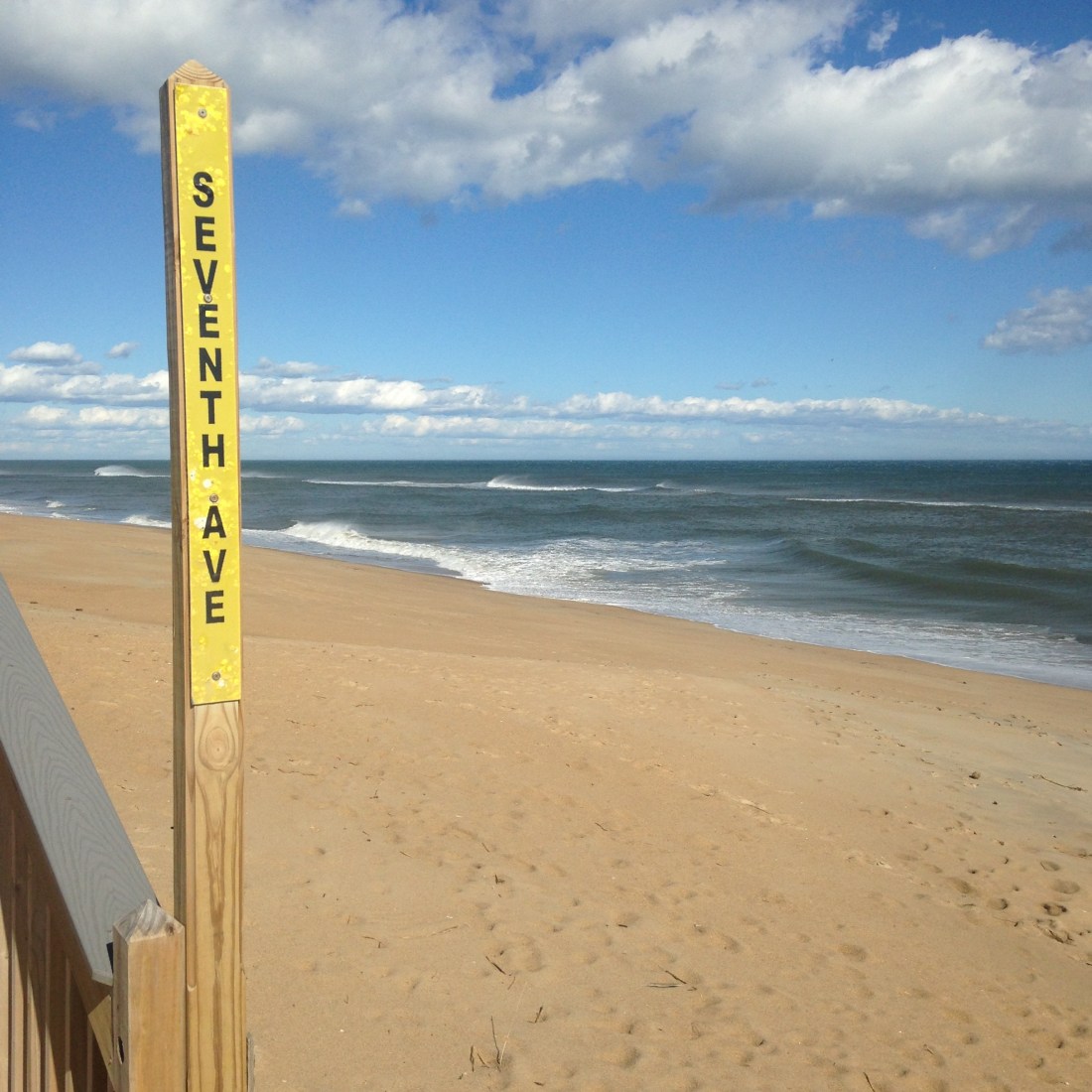
APTIM’s January 2020 update was performed at the request of a Town Council majority that wanted to include areas of the beach (particularly Seventh Avenue) that were not included in the coastal engineering firm’s first three recommended options because they were not determined to be lacking in sand volume.

See pages 29 and 30 of the update for a numerical comparison of the four options. Only four and five cover the entire coastline.

We believe CPE-NC’s methodology, results, calculations, etc., over the past two-plus years of study of the Southern Shores coastline should be summarized in a report for the public, and all that the firm has done and recommended should be subject to outside expert scrutiny and analysis.

Ann G. Sjoerdsma, 5/18/20
5/17/20: TROPICAL STORM WARNING IN EFFECT FOR OUTER BANKS; ARTHUR EXPECTED TO HAVE STRONGEST FORCE TOMORROW AFTERNOON BEFORE HEADING OUT TO SEA TUESDAY.

noswimming

Tropical Storm Arthur is expected to bring maximum sustained winds of 40 mph to the Outer Banks starting tonight and continuing into tomorrow, according to a Dare Emergency Management advisory issued this morning.

See advisory at https://www.darenc.com/Home/Components/News/News/6264/398

The Outer Banks is currently under a tropical storm warning, issued by the National Hurricane Center, which is forecasting that Arthur will have its strongest impact on the North Carolina coast tomorrow afternoon.

The NHC forecasts the first named storm of the 2020 North Atlantic hurricane season will transition on Tuesday into a non-tropical low-pressure system well off of the mid-Atlantic coastline.

The Dare Emergency Management Department is reporting that dangerous rip currents are already being experienced along the beaches and will continue over the next few days.

Two young girls caught in rip currents were rescued Friday in the ocean at Frisco, on Hatteras Island, by a Dare County man who was driving on the beach in an off-road vehicle when he learned of their distress, according to a statement by David Hallac, superintendent of the National Parks of Eastern North Carolina.

Jeffrey Del Monte, described only as a Dare County resident, quickly responded, swimming out to each girl and securing her safety with the assistance of an unidentified friend. The statement said that Mr. Del Monte swam out about 100 yards from the shore during his heroic rescue.

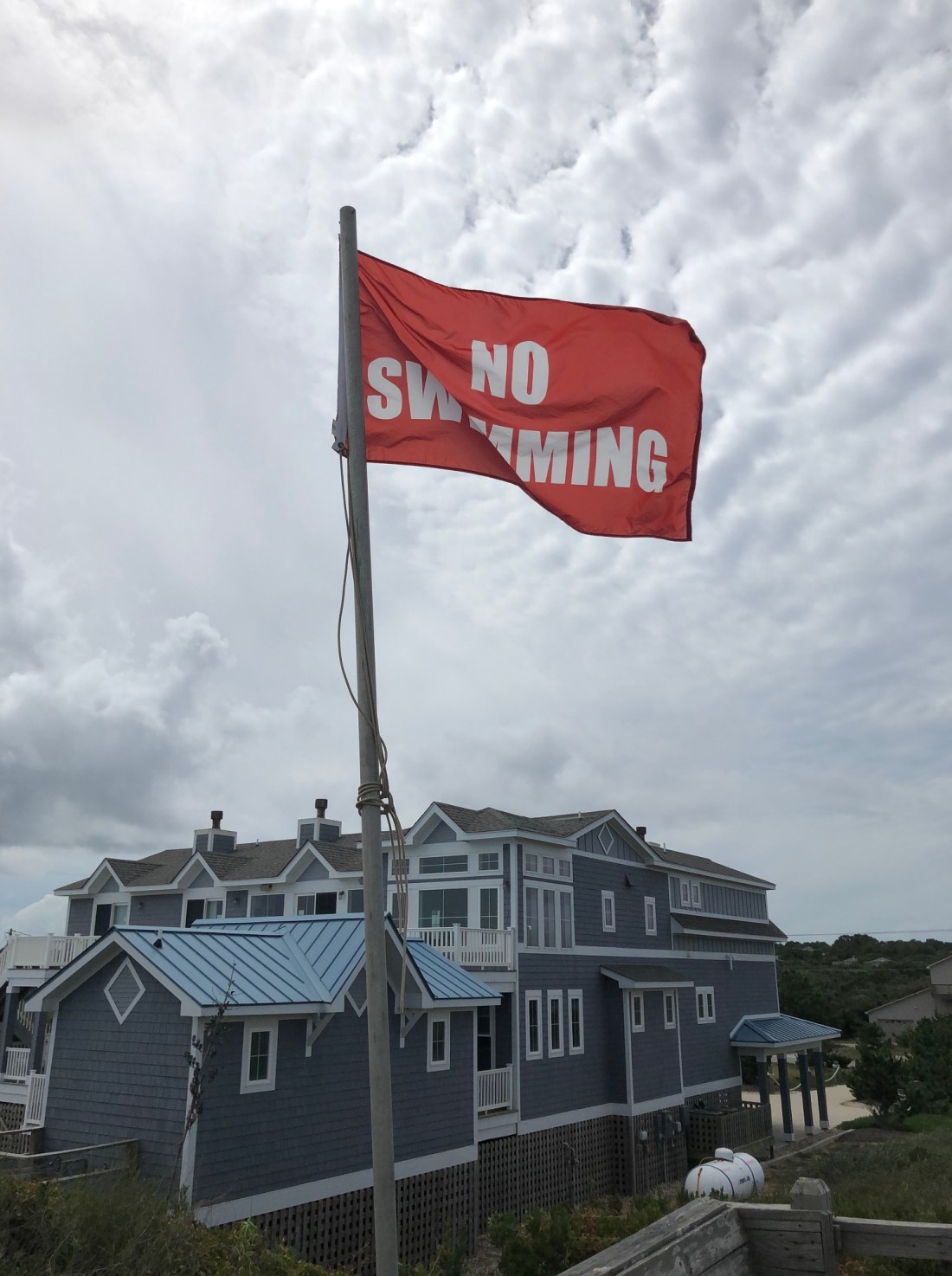
Until Arthur and the rip currents subside, no one should be swimming in the ocean.

Tropical Storm Arthur formed east of Florida last night, two weeks ahead of the “official” June 1 start of the hurricane season. It brings the potential for heavy rainfall, strong-force winds, and flooding.

Dare Emergency Management advises residents to take precautionary measures, including securing outdoor furniture, trash cans, and any other loose items outside; moving vehicles to higher ground; charging cell phones and making sure that flashlights have working batteries. See the advisory for more details.

N.C. COVID-19 REPORT

The numbers in the latest statewide 24-hour COVID-19 count improved vastly over the previous 24-hour count, which showed a record-high number of cases.

Since 11 a.m. yesterday, 530 new lab-confirmed COVID-19 cases, out of 10,358 completed tests, were reported, according to the N.C. Dept. of Health and Human Services dashboard, for a positive-test rate of 5.1 percent.

Yesterday, the NCDHHS reported a record 853 new cases in a 24-hour period, for a striking 12 percent positive-test rate.

Today’s dashboard reports hospitalizations have increased by 12 to 493, and seven more deaths have occurred, bringing the statewide total number of people who have died because of COVID-19 to 659.

Nationwide, the total number of deaths in the United States now attributable to COVID-19 is nearly 90,000.

DON’T FORGET: THE SOUTHERN SHORES TOWN COUNCIL WILL HOLD AN IMPORTANT WORKSHOP MEETING ON TUESDAY, MAY 19, AT 9 A.M.

Agenda: https://www.southernshores-nc.gov/wp-content/uploads/minutes-agendas-newsletters/Agendas_2020-05-19.pdf

Meeting packet: https://www.southernshores-nc.gov/wp-content/uploads/minutes-agendas-newsletters/Meeting-Packet_2020-05-19.pdf

The Beacon will post a meeting preview tomorrow.

Ann G. Sjoerdsma, 5/17/20

5/16/20: N.C. RECORDS SINGLE-DAY HIGH OF 853 NEW COVID-19 CASES, WITH POSITIVE TEST RATE OF 12 PERCENT. NCDHHS Announces New Guidelines on Testing.

face2
Face coverings and face shields protect all of us. 

North Carolina today reported a single-day record high of 853 new lab-confirmed COVID-19 cases, as the positive test rate jumped to 12 percent, a rate that The Beacon cannot recall seeing in the state.

While Dr. Mandy Cohen, Secretary of the N.C. Dept. of Health and Human Services, continued to stress in a press conference yesterday that more COVID cases are being reported because testing capacity has increased significantly, the number of tests being done should not affect the positive test rate, which is a key COVID-19 indicator.

Ideally, for North Carolina to progress into Phase Two, the positive test rate over a 14-day period should be declining or leveling off. That is not occurring.

In the early weeks of COVID-19 testing in North Carolina, the positive test rate—which is the percentage of positive test results in a batch of completed tests—averaged around 9 percent, as The Beacon recalls. Twelve percent is certainly the highest positive rate recorded in testing done in May. We do not know all of the daily rates in April.

According to today’s NCDHHS dashboard, 853 people out of 7,039 tested positive for COVID-19, up from yesterday’s totals of 622 confirmed cases among 12,279 tests, for an encouraging positive rate of 5 percent.

Hospitalizations statewide dropped 11 to 652, and deaths increased by 11. The Beacon has not been reporting deaths statewide, but we plan to start doing so, to see if and how well they might correlate with declines in hospitalizations.

Also yesterday, Dr. Cohen announced new guidance for determining who should be tested for COVID-19. The NCDHHS has recommended that clinicians test any patient in whom they suspect COVID-19 and also directed that they ensure access to testing to the following populations, regardless of their symptoms:

  • Anyone with symptoms suggestive of COVID-19.
  • Close contacts of known positive cases, regardless of symptoms.
  • Persons who live in or have regular contact with high-risk settings (e.g., long-term care facility, homeless shelter, correctional facility, migrant farmworker camp).
  • Persons who are at high risk of severe illness (e.g., people over 65 years of age, people of any age with underlying health conditions).
  • Persons who come from historically marginalized populations.
  • Healthcare workers or first responders (e.g., EMS, law enforcement, fire department, military).
  • Front-line and essential workers (grocery store clerks, gas station attendants, etc.) in settings where social distancing is difficult to maintain.

“We want anyone who needs a test to get one,” Dr. Cohen said.

As The Beacon reported 5/14/20, free COVID-19 testing is not available in Dare County.

In a videotaped message Thursday, Sheila Davies, director of the Dare County Dept. of HHS, said that she expects to announce next week details of a local initiative for free drive-thru COVID-19 testing.

For more information, see:

Press release on guidelines for who should be tested: https://www.ncdhhs.gov/news/press-releases/ncdhhs-updates-guidance-who-should-be-tested-covid-19

Press release on status of COVID-19 indicators after one week of Phase One: https://governor.nc.gov/news/north-carolina%E2%80%99s-key-covid-19-indicators-remain-stable

List of COVID-19 testing sites in N.C.: https://files.nc.gov/covid/documents/about/testing/collection-sites.pdf

***

 DON’T FORGET: THE SOUTHERN SHORES TOWN COUNCIL WILL HOLD AN IMPORTANT WORKSHOP MEETING ON TUESDAY, MAY 19, AT 9 A.M.

Agenda: https://www.southernshores-nc.gov/wp-content/uploads/minutes-agendas-newsletters/Agendas_2020-05-19.pdf

Meeting packet: https://www.southernshores-nc.gov/wp-content/uploads/minutes-agendas-newsletters/Meeting-Packet_2020-05-19.pdf

The Beacon will post a meeting preview on Monday.

Ann G. Sjoerdsma, 5/16/20

5/15/20: THE OBX VISITOR ACCESS BAN LIFTS AT MIDNIGHT. HOW CAN WE ALL STAY SAFE?

afterdorian
Here they come!

 They’re coming.

And they’re eager.

So get ready.

Dare County lifts its two-month-long visitor access ban at 12:01 a.m. tomorrow, and it is my totally unscientific opinion—based solely on anecdotal evidence gathered on a recent out-of-town trip and my sense of “human nature”—that people are eager to bust loose from COVID-19 stay-at-home restrictions and hit the road.

And what better place for busting loose than a wide-open beach, where the great outdoors allows for recommended physical distancing that cannot be guaranteed in any confined indoor space?

Today’s Dare Emergency Management bulletin anticipates the arrival of vacationers and restates important restrictions in effect during North Carolina’s Phase One, such as the 50 percent capacity limitation at retail businesses and the continued closure of bars, gyms, personal care businesses, and entertainment venues.

It also lists changes that visitors should expect, such as obtaining restaurant food only by takeout, drive-thru, or delivery, and not by seated service, indoors or outdoors, and the closure of community and public pools and spas.

“[I]t is important for everyone to understand,” the bulletin informs understatedly, “that vacations and visits to the Outer Banks will be different this year as we all adapt to COVID-19.”

The bulletin promotes face coverings, which it advises may be required by some businesses; the “three W’s” of wearing, waiting, and washing; and observance of signage explaining changes in business operations.

While “mass gatherings” remain limited in Phase One to 10 or fewer people, the gathering of people in “a house, household, place of residence, or current abode” is not considered a mass gathering, for purposes of the restriction. More than 10 people may reside together in a vacation home.

How do you distinguish the residents from the visiting partiers? you may ask. The bulletin does not say. We have to rely on the honor system.

Vacationers are urged to “spread out and away from others” on the beach and in the ocean.

And just in case visitors have forgotten, the ocean can pose hazards, too, the bulletin reminds. So don’t leave your brain in a shoebox in a closet somewhere while you’re busting loose.

See Bulletin No. 61: https://www.darenc.com/Home/Components/News/News/6260/1483

BUSTING LOOSE

I drove the highways between Southern Shores and the D.C. area two days this week to do essential business in Alexandria, Va., and was astonished by the traffic and the crowds.

Virginia just began Phase I of its economic reopening at midnight yesterday, so I figured I would encounter smooth sailing on the interstates. Ha! Not quite.

Governor Ralph Northam even gave Northern Virginia, the city of Richmond, and Accomack County, where workers at poultry plants have been hit especially hard by the coronavirus, an exemption from the gradual rollback on shuttered businesses, allowing them to delay for two weeks. This was another reason for me to expect open roads.

In my dreams only, apparently.

(Unlike Phase One in North Carolina, Virginia is permitting restaurants to reopen for outdoor dining, provided customers maintain social distancing, and hair and nail salons to operate, with severe restrictions. Otherwise, the two states’ plans are quite similar.)

Heading north on Interstate 95 on Tuesday afternoon, I did not see any gridlock on the south side—a welcome change for usually beleaguered commuters—but the highways were congested. I would say it was typical noontime Int. 95 traffic at 6 p.m., which is to say heavy.

I even encountered a delay around Fredericksburg for a vehicle fire on the shoulder.

Driving on the George Washington Memorial Parkway between Mount Vernon and Old Town Alexandria, I was surprised by the number of people out walking, jogging, biking, and just enjoying sitting by the Potomac River. If I did not know better, I would have thought it was a holiday, not a weekday.

Exercise has been a salvation for many during the stay-at-home orders. But few of the walkers, runners, cyclists, etc., I saw on the Mount Vernon Trail, which runs along the Potomac, observed six-foot distancing as they passed each other. Some wore face coverings, but not the majority.

With public parking lots closed, parked vehicles lined every side street and pull-off lookout offering access to the river and the trail.

Yesterday, upon my return, a popular rest area off of Interstate 95 south between Fredericksburg and Richmond was teeming with people around 2 p.m.

Less than half wore face coverings, and I was the only one wearing latex gloves—the better to avoid metallic surfaces.

Maintaining six-foot distancing in the women’s restroom was not possible unless you could dexterously dodge exiting patrons who suddenly emerged around a corner.

Bathroom stalls are closer than six feet, and all were open. I felt bad for the housekeeping staff, all of whom wore face masks.

The Hampton Roads area was heavy with traffic later yesterday afternoon, along Interstate 64 east, around Interstate 664 through the Monitor Merrimac Bridge Tunnel and then back on to 64 into Chesapeake to the Chesapeake Expressway, Rte. 168.

At 3:30 p.m., a local radio traffic reporter announced a backup at the Hampton Roads Bridge Tunnel, going east, of one mile “due to congestion.”

Each of the gas pumps at everybody’s favorite Wawa, off of the Hillcrest Parkway exit on 168, was being used, just like any other Thursday. I did not stop to see how many people were buying beer. I thought it would be too depressing.

I drove to Coinjock to gas up at the Shell station—$1.58.9 for regular unleaded—where I knew I could maintain my distance.

Passing through the Wright Memorial Bridge checkpoint, I observed a number of vehicles with Virginia license plates being directed to the side of the road. They arrived a day too early.

People are eager to bust loose.

For details on Virginia’s reopening, see:

https://www.washingtonpost.com/local/northam-reopening-plan-limits/2020/05/08/9c6155f4-9135-11ea-9e23-6914ee410a5f_story.html

https://www.washingtonpost.com/dc-md-va/2020/05/08/virginia-reopen-coronavirus-faq/

STAYING SAFE

Once they have arrived, how can we and our visitors safely and peacefully coexist—other than by holing up in our temporary and permanent residences, respectively, and ordering food deliveries?

Today’s Washington Post has a great article about precautions that three public-health experts plan to take against the coronavirus as “state and local governments begin to allow businesses and public spaces to reopen.”

Reporter Katherine Shaver interviewed William Petri, a professor of infectious diseases at the University of Virginia School of Medicine; Amanda Castel, an epidemiology professor at George Washington University’s Milken Institute School of Public Health; and Boris Lushniak, dean of the University of Maryland School of Public Health.

All three said they will leave their homes more often ONLY as “COVID-19 cases in their communities decline and continue to do so.”

According to Ms. Shaver, Dr. Castel said she plans to wait until “her community meets established criteria, including a 14-day drop in the percentage of people testing positive.”

Such a drop has not occurred in North Carolina yet, as percentage rates have gone up and down, and Dare County has a low incidence of COVID-19 cases and no community-wide free testing. (See The Beacon’s post yesterday for an update on local testing.)

Dr. Lushniak of the UM School of Public Health said he would like to support the local economy, but “I’ll still be very wary of my environment.”

In general, Ms. Shaver reports, the three experts would consider three key points:

  • Whether they would be indoors or outdoors. (Outdoors is safer.)
  • Their proximity to employees and customers. (Can they stay at least six feet from others?)
  • How much time an outing would entail. (Less is better.)

Said Dr. Castel: “I certainly wouldn’t linger in places.”

Before entering any business, the experts said they would ask:

  • Are all staff members wearing masks?
  • Are employees staying at least six feet from each other?
  • Is there hand sanitizer or another way for workers and customers to easily clean or disinfect their hands?
  • Are there few enough customers that all can remain at least six feet apart?

“If I can’t maintain the six-foot rule,” Dr. Lushniak said. “I’ll stay away.”

I have never seen all staff members wearing masks and staying six feet away from each other in the supermarkets and other stores that I frequent in and near Southern Shores.

As for customers respecting the six-foot buffer: Good luck. In my experience, one of our two local supermarkets has taken steps to protect that buffer, while the other has not, unless it has made a change recently. I cannot speak to Walmart’s customer or staff environment.

Among other precautions pertaining to both North Carolina’s and Virginia’s more relaxed Phase One, the experts recommend:

  • Avoiding the use of public restrooms.
  • Bringing water to avoid having to use a public drinking fountain. (They were closed in the Virginia rest areas I frequented this week, stopping one time up and back.)
  • Trying to shop during off-hours when there are fewer customers.
  • Socializing only outdoors, with fewer than 10 people, at a safe distance and in masks.
  • Avoiding socializing with anyone who is older or at higher risk of COVID-19 complications.

All small outdoor get-togethers must be “bring your own” everything—“food, drinks, glasses, plates, utensils”—so people avoid touching the same surfaces, they all agreed.

And the $1 million question: Would they go to the beach?

Only if it is not crowded, they all agreed.

They also said “walking is preferable to sunbathing because you can better control how close others get,” and “they would make sure to wash or sanitize their hands as soon as their toes leave the sand,” according to The Post’s Ms. Shaver.

For more infection-control advice from the three public-health experts, including how to participate safely in outdoor sports, such as golf and tennis, see: https://www.washingtonpost.com/local/trafficandcommuting/wondering-whats-safe-as-states-start-to-reopen-heres-what-some-public-health-experts-say/2020/05/14/9e684e3c-949d-11ea-91d7-cf4423d47683_story.html

TODAY’S N.C. COVID-19 DASHBOARD

Today’s NCDHHS dashboard shows an increase of 622 cases, based on 12,279 tests, for a positive test rate of 5 percent, which is significantly better than yesterday’s 7.8 percent.

Yesterday’s new case count hit a record high of 691.

Hospitalizations statewide declined today by 15, from 507 to 492.

Have a great weekend, everyone.

Ann G. Sjoerdsma, 5/15/20

5/14/20: 22ND COVID-19 CASE IN DARE COUNTY REPORTED, COULD BE COMMUNITY SPREAD; DR. DAVIES TO PROVIDE DETAILS NEXT WEEK ON LOCAL DRIVE-THRU TESTING; CLOSEST FREE TESTING SITE IS GREENVILLE WALMART.

CV test GENERIC 0010 

Dare County today reported its 22nd positive COVID-19 test result, a Dare resident  who, Dr. Sheila Davies, Ph.D., director of the Dare County Dept. of Health and Human Services, said, did not come in direct contact with an infected person.

“It is unclear how this individual came into contact with the virus, which indicates the potential that the virus was acquired by community spread.” Dr. Davies said in a videotaped message available through the Dare Emergency Management website.

Community spread occur when a person contracts a virus without having any known exposure to a source of infection, such as someone who is sick. The virus is said to be “out there” in the community.

Dr. Davies also discussed the current lack of free or mass COVID-19 testing in Dare County and announced she would “share information” next week on a “local initiative on drive-thru testing.”

See Dr. Davies’s message at: https://www.youtube.com/watch?v=Cse7BeWIVhg

Although both the federal and N.C. governments have said that anyone who wants a free COVID test should be able to get one, that availability has “not trickled down” to Dare County, Dr. Davies said, despite efforts by County officials to work with the N.C. Dept. of Health and Human Services on a testing site.

Absent federal or state assistance in setting up free or mass testing sites, she said, Dare has had to look for “alternative opportunities.”

The closest free testing site to the Outer Banks is a Walmart in Greenville that operates drive-thru testing by appointment only on Monday, Wednesday, or Friday, from 7 a.m. to 9 a.m. The test is done by a nasal self-swab so as to limit personal contact, and eligibility requirements apply. (See below for details.)

Walmart is one of the big retailers with whom the U.S. Dept. of Health and Human Services has partnered to provide free COVID-19 testing. There are seven Walmarts in North Carolina participating in this partnership, including one in Tarboro.

For details, see www.doineedacovid19test.com.

HOT TOPICS  

The 22nd Dare County resident to test positive for the novel coronavirus is recovering in isolation at home, Dr. Davies said. The health department today notified all of his or her direct contacts.

The health department director said that, counting this new case, there currently are four active COVID-19 cases in Dare County, one of whom is hospitalized and the other three of whom are recovering at home in isolation.

A Dare County resident who formerly had an active case has recovered or been asymptomatically cleared, bringing the total number of case recoveries to 17.

In her videotaped message, Dr. Davies reviewed how COVID-19 testing—which she calls a “hot topic” at the federal, state, and local levels—has evolved with increased scientific knowledge about the virus and its transmission and the availability of personal protective equipment, whose scarcity limited the number of tests that could be performed.

She said that in early April, it took seven to 10 days to get a test result back from a lab, whereas, “now, we get results back in 24 to 72 hours.”

While the NCDHHS has “been pushing for increased testing” statewide, Dr. Davies said, and its testing task force has set up “strategic partnerships” for testing, it did not form such a partnership in Dare County and place a testing site here.

All NCDHHS “sites have been selected,” she said, hence the need for a local testing initiative.

The Beacon will report on the Dare County drive-thru testing site initiative as soon as Dr. Davies reveals the details.

If you are interested in going to the Greenville Walmart, at 210 Greenville Blvd. SW, to be tested, you must meet eligibility requirements and call ahead for an appointment.

Eligibility is based on guidelines set by the U.S. Centers for Disease Control and Prevention. The following people are eligible:

Healthcare workers and first responders;

Individuals with symptoms of COVID-19;

Individuals with symptoms in accordance with state and local plans and for public health monitoring.

The general telephone number at the Greenville Walmart is (252) 355-2441.

N.C. COVID-19 DASHBOARD FOR TODAY

The number of COVID-19 cases and completed tests increased again today, as 691 people out of 8,811 tested positive during the latest 24-hour count. The positive test result rate rose to 7.8 percent, the highest percentage in a week.

The 691 positive test results is the highest daily total reported in North Carolina since the pandemic began, but it is only recently that the number of tests completed has increased to acceptable public-health screening levels.

Yesterday’s new case total was 470, based on 8,213 tests, for a positive rate of 5.7 percent.

Hospitalizations statewide for COVID-19 declined to 507, from yesterday’s count of 521.

Ann G. Sjoerdsma, 5/14/20

5/13/20: COVID-19 UPDATE: Cases Increase in N.C. and Worldwide in Nations That Have Eased Restrictions; Dare County Prepares for Visitors To Arrive Saturday.

Coronavirus-CDC-678x381 

The number of laboratory-confirmed COVID-19 cases, completed tests, and hospitalizations in North Carolina all increased in the past 24-hour counting period, but not alarmingly so, according to today’s N.C. Dept. of Health and Human Services dashboard.

More than 8,000 tests (8,213) for the novel coronavirus were administered, of which 470, or about 5.7 percent, tested positive. Yesterday’s positive test rate was 4.7 percent, a low figure that was very encouraging.

Today’s positive test rate is lower than most of the other rates calculated during the past two weeks. Daily positive test rates have tended to be between 6.0 percent and 7.5 percent.

Eight thousand daily tests are well above the 5,000 to 7,000 daily tests that NCDHHS Secretary Dr. Mandy Cohen has said is the State’s goal.

The number of COVID-19 hospitalizations statewide increased by 46 to a total of 521.

IN DARE COUNTY: Today’s Dare Emergency Management bulletin reminds local businesses of the restrictions that are in effect, and of recommended infection-control measures, during Phase One of the State’s three-phase reopening plan, which Governor Roy Cooper implemented by executive order.

Phase One, according to the Governor, will last at least two weeks before Phase Two will be initiated. Progression is dependent on the COVID-19 metrics that the dashboard tracks and on the State’s ability to test people and trace the contacts of people who have been infected.

Dr. Cohen has said that everyone in North Carolina should be able to get a test now, regardless of symptoms or personal risk.

The Dare bulletin also addresses the return of visitors to the Outer Banks starting this Saturday, reminding everyone to practice the three W’s of virus-transmission control: 1) Wear a cloth face covering; 2) wait six feet apart in public, avoiding close contact; and 3) wash your hands often or use a hand sanitizer.

See Dare Emergency Management Bulletin No. 60: https://www.darenc.com/Home/Components/News/News/6250/1483

The Dare County dashboard reports that of the 20 non-fatal COVID-19 cases in the county, 16 have recovered or been asymptomatically cleared. Four people have active cases.

THE COVID-19 NEWS WORLDWIDE IS SOBERING as nations, such as Germany and South Korea, that had reported success with virus-transmission control and had eased up on restrictions have either backtracked or are considering closures because of a surge in COVID-19 cases, according to today’s The Washington Post.

Lebanon has imposed a near-complete four-day lockdown, almost two weeks to the day that it began easing up on restrictions, The Post reports.

In Wuhan, China, where the coronavirus first emerged, authorities ordered all 11 million inhabitants to be tested after a cluster of six new COVID-19 cases occurred, five weeks after the city thought it had eliminated the disease.

South Korea last week rescinded an order to allow bars and clubs to reopen after a spike in cases quickly manifested.

In Germany, a cluster of cases at a meatpacking plant has raised fears of a new outbreak.

“We always have to be aware that we are still at the beginning of the pandemic,” German Chancellor Angela Merkel reportedly said last week. “And there’s still a long way in dealing with this virus in front of us.”

The Post also reports that India and Russia are going ahead with plans to ease their restrictions, even as COVID-19 cases “continue to soar.”

Firass Abiad, who oversees coronavirus efforts in Beirut at Lebanon’s main government hospital, told The Post that a country’s success in containing the virus will depend less on how it curtails the spread than on how it manages the inevitable case surge as a shutdown or lockdown ends.

“A lockdown is a means, not an end,” he said. “It’s a means either to allow you to regain control or put measures in place to control coronavirus when it comes back [such as testing and tracing]. When we eased the lockdown, we knew there would be an increase in the number of cases.”

For the full Washington Post article, see https://www.washingtonpost.com/world/as-some-countries-ease-up-others-are-reimposing-lockdowns-amid-a-resurgence-of-coronavirus-infections/2020/05/12/6373cf6a-9455-11ea-87a3-22d324235636_story.html

REMEMBER: Saturday, May 30, is bulk-waste collection day. Trash must be at the roadside by 5 a.m. that day to be collected. No TVs or building materials. For other do’s and don’ts, see the Town website.

Ann G. Sjoerdsma, 5/13/20

5/12/20: BIG DOINGS AT MAY 19 WORKSHOP: COUNCIL MAY APPOINT NEW TOWN MANAGER; WILL CONSIDER OPTIONS FOR A FUTURE PUBLIC HEARING ON BEACH NOURISHMENT.

Commission-Members-Can-Be-Leaders-520x262
It is tough to find artwork to illustrate the hiring of a new town manager.

The Southern Shores Town Council may appoint a new full-time town manager at its May 19 workshop meeting, according to the agenda posted on the Town website.

The Council also will take up beach nourishment and consider scheduling a public hearing to solicit property owners’ opinions on a sand-fill project of the entire Southern Shores coastline, not just the vulnerable Pelican Watch area.

The workshop will be held in the Pitts Center, starting at 9 a.m., and may be joined electronically on Zoom. See https://www.southernshores-nc.gov/southern-shores-town-council-workshop-mtg-may-19-2020/southern-shores-town-council-workshop-notice-electronic-participation-may-19-2020/.

The Council is scheduled to open the meeting, hear general public comment, and then adjourn into a closed session with the Town Attorney to consider the qualifications, fitness, and other conditions of the appointment, as well as the employment conditions, of a new town manager, according to the agenda.

Former Town Manager Peter Rascoe resigned Sept. 1, 2019, and left on leave in mid-August. Since his departure, Deputy Town Manager/Planning Director Wes Haskett has been serving as an interim manager.

After the closed session, according to the workshop agenda, the Town Council will consider appointing a new town manager and reviewing and approving his or her employment contract.

When this business is concluded, the Council will discuss beach nourishment and hear from the staff about “publicity/educational options” for a future public hearing.

As The Beacon reported yesterday, all Town Council members expressed an interest at their May 5 meeting in hearing the public’s opinions about a townwide beach nourishment project in 2022 that would cost an estimated $14 million to $16 million.

The Town’s coastal engineering consultant has previously recommended four possible project options. The Beacon has covered these options before and will do so again before the May 19 workshop.

Town Councilman Matt Neal and Mayor Pro Tem Elizabeth Morey, in particular, stressed at the May 5 meeting how much they value and would like to hear public opinion.

We want to “try to be proactive,” Ms. Morey said. We want to “push to try to get people to tell us what they think.”

See the workshop agenda here: https://www.southernshores-nc.gov/wp-content/uploads/minutes-agendas-newsletters/Agendas_2020-05-19.pdf

The Beacon will post a link to the workshop meeting packet, shortly after the Town posts it.

N.C. AND DARE COUNTY COVID-19 UPDATE

Today’s 24-hour update on COVID-19 cases and hospitalizations statewide is more encouraging than yesterday’s.

Three hundred one new laboratory-confirmed cases of COVID-19 have been reported since 11 a.m. yesterday, based on 6,379 completed tests. That computes to a positive test rate of 4.7 percent. The last time the positive rate was below 5 percent was on May 4.

The number of hospitalizations increased slightly, from 464 yesterday to today’s 475, according to the N.C. Dept. of Health and Human Services dashboard.

LOCALLY, the Dare County health department has added a new category to its dashboard, that of “active” COVID-19 cases. Today’s active case total is four.

The number of recovered or asymptomatically cleared cases in Dare County remains at 14 of 21, with one fatality. The status of two people is unaccounted for.

Ann G. Sjoerdsma, 5/12/20

5/11/20: BACKING UP ON BEACH NOURISHMENT DECISION: THE COUNCIL MAY ONLY DISCUSS IT ON MAY 19 AND VOTE LATER.

7thavefeb7 

On May 7, The Beacon posted the following notice:

“Mark your calendars for Tuesday, May 19, at 9 a.m., if you would like to submit what appear to be your last public comments before the Town Council votes on approving an estimated $14 million to $16 million nourishment project of the entire Southern Shores coastline.”

Having now reviewed the videotape of the Town Council’s May 5 meeting, we are no longer certain that the Council will make a decision about a beach-nourishment project on May 19 or that May 19 will be the last opportunity for the public to comment.

The Council’s May 19 workshop, which will be held at 9 a.m. in the Pitts Center, will likely be devoted to a discussion of the desire and need for beach nourishment, the project options recommended by a coastal-engineering consultant, and potential funding for a project, but Council members may not take a vote on approving a specific project option. They may delay a vote until some time in June.

In fact, Councilman Matt Neal, who took the lead last week on pushing for a meeting dedicated to beach nourishment, suggested that the Council have a “good solid meeting and discussion” on May 19, looking at the “necessity” for nourishment in Southern Shores and some proposed municipal service district tax rates that have been prepared for funding it, but not take a vote.

He suggested instead that a two- or four-week period ensue during which the Town would “solicit public comments.”

Mayor Pro Tem Elizabeth Morey endorsed Mr. Neal’s approach, suggesting that the Town staff be “tasked” with figuring out “how to solicit public opinion.” She floated the idea of a townwide survey. Interim Town Manager Wes Haskett said he would bring options to the May 19 workshop session.

We want to “try to be proactive,” Ms. Morey said. We want to “push to try to get people to tell us what they think.”

Town Attorney Ben Gallop clarified that a public hearing does not need to be held on the issue of approving a beach nourishment project. It is strictly up to the Town Council to decide how it will receive public input, he said, when and by what means.

While The Beacon congratulates both Mr. Neal and Ms. Morey for taking the beach-nourishment bull by the horns, if you will—AT LAST—and for giving the public its due, we have to say that procedurally, their comments came up in an unusual manner, which contributed to the confusion of what was actually decided.

Councilman Jim Conners had just made a motion to amend the FY 2019-21 budget to spend $12,203 in unassigned funds on permitting-related work for a hitherto unapproved beach-nourishment project, and Councilman Leo Holland had seconded the motion.

Mayor Tom Bennett had turned to Councilman Neal to start a roll-call vote on the motion, and it was at this moment that Mr. Neal opened a discussion on the Council’s need to consider and either approve or disapprove beach nourishment before committing any more monies to a project.

The Beacon has been critical of the Council’s delay in making this decision, while going ahead with paying a consultant $4,970 to apply for a grant for an entire-coastline nourishment project and spending other monies, including $35,000 to a consultant to prepare preliminary financial data designed to be used to assess increased tax rates on property owners.

The $12,203 budget amendment that Mr. Conners motioned to approve—a revision by Mr. Haskett of a $47,599 amendment that he had originally requested—was another such expense.

“In our defense,” Mr. Neal said by way of explaining the delay, “we wanted feedback from the public.”

With Mr. Conners’s motion, Mr. Neal, who is a bright light on the Council, said he could no longer comfortably move forward “without making a decision” on beach nourishment—or at least defining a decision-making process.

THIS BUDGET AMENDMENT AND AN UPCOMING ONE FOR $450,000

The Beacon was critical in its Town Council meeting preview of the $47,599 FY 2019-20 budget amendment that Mr. Haskett brought to the Council.

The requested monies, according to meeting packet documents, were to pay consultant Coastal Protection Engineering of North Carolina (CPE-NC), formerly known as APTIM, $17,357 for “2020 annual beach profile data acquisition” and $18,039 for an “annual 2020 beach profile data analysis and report.”

It also included $12,203 for “inter-agency coordination” and permitting work related to an as-yet-unapproved 2022 beach nourishment project.

CPE-NC, whose president is the omnipresent Ken Willson, was selected by the towns of Duck, Southern Shores, Kitty Hawk, and Kill Devil Hills to represent them in jointly coordinating their 2022 beach nourishment/maintenance projects.

That the Town Council has not approved a project beyond the Pelican Watch beach maintenance did not stop the Council from fully joining the other towns, whose projects are much larger, in hiring a consultant/coordinator and sharing in expenditures.

Mr. Haskett described the $12,203 request as being for “our share, our 25 percent” of the costs for inter-agency coordination and permitting work.

The agencies with which Mr. Willson has been coordinating include all of the usual regulators, such as the U.S. Army Corps of Engineers, the Bureau of Ocean Energy Management, and the N.C. Division of Coastal Management.

Mr. Haskett said at the May 5 meeting that he has had “numerous conversations with Ken Willson over the past month,” but it was not until late April that the four towns selected CPE-NC to be their consultant coordinator, from among three applicants who responded to a Request for Qualifications.

Mindful of the fact that the Town has not yet committed to a large-scale beach nourishment project, Mr. Neal asked Mr. Haskett at last week’s meeting whether the Town would still have to pay to participate in the inter-agency coordination/permitting if it only went ahead with Pelican Watch maintenance.

Mr. Haskett replied: “I imagine we would have to pay our share of the costs for that part of it even though it would be on a smaller scale.”

The price “would probably change,” he said, but he didn’t indicate by how much it would be reduced. Only Mr. Neal seemed concerned.

Mr. Neal also questioned Mr. Haskett about the $4,970 fee that the Council had agreed to pay APTIM (CPE-NC not being known to the Council) to prepare two N.C. Dept. of Environmental Quality grant applications, one for money to apply to the Pelican Watch beach maintenance and another for money to apply to option four of the large-scale nourishment plans recommended by APTIM.

Mr. Haskett informed the Council at the budget workshop that the nearly $5,000 fee covered both grant applications. When he told the Council last week that Kitty Hawk had requested grant money for the Pelican Watch project in an application that CPE-NC prepared for it, Mr. Neal asked if the Town would receive some of its consultant fee back.

Mr. Haskett said no, seemingly contradicting the information he gave the Council earlier about APTIM’s fee.

***

In a previous post, The Beacon questioned Mr. Haskett’s description of the $47,599 budget amendment as being for “beach profile study” expenses only, when it obviously encompassed more. We also asked him to give an accounting of the $45,000 previously allocated in the FY 2019-20 budget for a beach study.

In response to Councilman Neal’s questions at the budget workshop about spring 2020 beach profiling, Mr. Haskett replied that the profiling had been done and the $45,000 appropriation had been spent.

At last week’s meeting, however, Mr. Haskett corrected himself to state that of the $45,000 previously appropriated, only $26,000 has been spent, which leaves enough money in the current budget to pay for the $17,357 that CPE-NC requested.

Mr. Haskett further reported that, according to Mr. Willson, the $18,039 request would not be spent by CPE-NC until fiscal year 2020-21, so this amount also was removed from the budget amendment. That left only the $12,203 expense that represents Southern Shores’ “share.”

After the Council decided to devote its May 19 workshop to beach nourishment, the roll call on Mr. Conners’s motion resumed, and the vote was unanimous to approve transferring monies from the Town’s unassigned fund balance to pay this amount.

Next up for the Council: A $450,000 permitting and design proposal from CPE-NC, which Mr. Haskett told members at the budget workshop would probably be submitted in late May.

Last week the Interim Town Manager did not mention timing of this proposal, only that the Town could expect to receive $250,000 from Dare County to alleviate some of the cost. Of course, until the County’s contribution is in hand, the Town is on the hook for $450,000—assuming it approves a large-scale beach-nourishment project.

When APTIM (now CPE-NC) recommended the four beach-nourishment project options it gave the Town, they ranged in cost from about $14 million to about $16 million. It is reasonable to expect costs to have increased.

As soon the agenda and meeting packet for the May 19 workshop are posted, The Beacon will share them with you.

ZOOM WORKING BETTER, OTHER PROTOCOL CONCERNS

We conclude our May 5 meeting report by noting that the audio for the Zoom video-conference was far superior to what we complained about previously. All Town Council members, including Mr. Neal, were easy to hear.

The only sound problems occurred when off-camera speakers, such as Police Chief David Kole and Fire Chief Ed Limbacher, gave their reports. We had to strain to hear what they were saying and were too often unsuccessful.

We also like the motion roll-call system that was initiated at last week’s meeting. We have never liked voice voting and do not see it used in other Dare County beach towns that are well run.

We do think the Town Council has to be careful about having Town Clerk Sheila Kane state motions, instead of one of them. Perhaps Mayor Pro Tem Morey should be delegated the task of restating motions, so as to ensure that Ms. Kane does not make any herself.

There was at least one time during the meeting when Ms. Kane actually framed the Town Council’s discussion into a motion, at the Mayor’s request, rather than just restate a motion that a Council member had made. Mayor Bennett is increasingly relying on Ms. Kane for support.

Ann G. Sjoerdsma, 5/11/20

5/11/20: COVID-19 IN DARE: 3 WEEKEND CASES CAUSED BY DIRECT CONTACT, ALL ARE ‘ACTIVE.’

CV test GENERIC 0010 

The three Dare County residents who tested positive over the weekend for COVID-19 acquired the virus by direct contact, according to a Dare Emergency Management bulletin released today. (See The Beacon, 5/10/20.)

Their test results brought the total number of positive test results in the county to 21. There had been no new cases in Dare County for eight days before the weekend.

People who came in contact with these three individuals have been notified, according to COVID-19 Bulletin No. 59.

See https://www.darenc.com/Home/Components/News/News/6242/1483

The last six COVID-19 cases reported by Dare County are active, the bulletin said. Of these six, one person is hospitalized and the other five are recovering in home isolation.

“Active,” according to the bulletin, “means an individual currently has the COVID-19 virus and is being monitored daily by the health department.”

No other details were released about the three people who were infected. With whom did they come in contact? Where? There is no indication. The previous three people, cases 16-18, were reported to be in the same family and in home isolation.

Bulletin No. 59 also emphasizes face coverings as a “crucial part of the first line of defense against COVID-19.”

While Governor Roy Cooper has not required people to wear face coverings during Phase One, businesses may require them for their personnel and customers, the bulletin says. Dare Emergency Management is strongly encouraging local businesses to do so and to enforce a requirement on site.

STATEWIDE, North Carolina recorded only 281 new COVID-19 cases in the 24 hours since 11 a.m. yesterday, but the decline appears to be attributable to a decline in the number of tests completed. Only 3,730 tests were done in the same 24-hour period, which is far fewer than the 5,000 to 7,000 tests that the State would like to perform.

The all-important percent of positive tests results among the total completed tests increased to 7.5 percent today, up from 6.9 percent on Sunday and 6.5 percent on Saturday. This is not what public-health officials want to see.

North Carolina is 43rd in the nation in tests administered per 1,000 residents through May 7, with only 15.7 people per 1,000 being tested, according to a report by the Kaiser Family Foundation.

The State was the 15th overall, among 55 states and U.S. territories, in the total number of tests completed, through May 7, the report said.

The Kaiser Family Foundation analyzed data from the COVID Tracking Project, according to an article in The Raleigh News & Observer.

See article at https://www.newsobserver.com/news/coronavirus/article242594906.html.

North Carolina will have to ramp up its testing considerably if it is to achieve the data it needs to progress through the three-phase reopening plan outlined by the Governor.

Ann G. Sjoerdsma, 5/11/20

5/10/20: 21 POSITIVE COVID-19 TESTS NOW REPORTED IN DARE COUNTY. NO EXPLANATION GIVEN OF LATEST 3.

Coronavirus-CDC-678x381 

The number of positive COVID-19 test results in Dare County is now 21, an increase of two over yesterday’s total, according to today’s Dare Emergency Management dashboard.

Dare County has not posted a bulletin or videotape yet to explain the three new cases reported over the weekend. We expect it to do so tomorrow.

ON THE STATEWIDE BASIS . . . The number of laboratory-confirmed COVID-19 cases reported during the 24 hours since 11 a.m. yesterday declined, but so did the number of completed tests. New cases numbered 404; tests totaled 5,773. The telltale percent of positive tests among the total increased to 6.9 percent from 6.3 percent yesterday.

Hospitalizations of COVID-19 patients declined during the past 24 hours, from 513 to 442.

The Beacon, 5/10/20