7/2/24: WATER SERVICE TO BE DISRUPTED TODAY ON SECTION OF SOUTH DOGWOOD TRAIL FOR HYDRANT REPAIR.

Water service to residents of South Dogwood Trail who live between Osprey Lane and Fairway Drive will be disrupted today starting at 9 a.m., so the Dare County Water Dept. can do maintenance to a fire hydrant, according to an announcement on the Town website.

Residents on this section of South Dogwood Trail will be without water from 9 a.m. until service is restored, which is expected to be by 5 p.m.

If you do not live on South Dogwood Trail, and you are without water, the Water Dept. asks that you call its office at (252) 475-5990.

THE SOUTHERN SHORES BEACON

6/30/24: PUBLIC HEARING ON UPDATED TOWN LAND USE PLAN SCHEDULED ON TUESDAY; TOWN COUNCIL WILL VOTE ON ITS ADOPTION. More Discussion About Commercial Design Standards, Report on Affordable Housing in Southern Shores Also on Council Meeting Agenda.

A public hearing will be held at the Town Council’s meeting Tuesday, at 5:30 p.m., on the newly revised Southern Shores Comprehensive CAMA Land Use Plan (LUP), after which the Council will vote on the plan’s adoption and submission to the State for certification. The N.C. Division of Coastal Management must review and approve the LUP before it can take effect. 

Also on the Town Council’s agenda are further discussion of Zoning Text Amendment 24-03 concerning newly drafted design standards for the commercial district; an update from Town Manager Cliff Ogburn about the N.C. Dept. of Environmental Quality’s survey of milfoil in the Southern Shores canals, which the Council approved June 4; and a report on affordable housing options in Southern Shores by Planning Board Alternate Member Michael Zehner, which was postponed from the Council’s June 4 meeting because of Mr. Zehner’s unavailability.

Tuesday’s meeting will take place, as usual, in the Kern Pitts Center behind Town Hall.

For the meeting agenda and meeting packet, see: https://mccmeetings.blob.core.usgovcloudapi.net/soshoresnc-pubu/MEET-Packet-b9c1afc388cb479a858efdfa994cef50.pdf

To review the proposed Comprehensive CAMA Land Use Plan, see https://www.southernshores-nc.gov/sites/default/files/fileattachments/planning/page/2509/2-13-24_draft_comprehensive_land_use_plan.pdf

A representative from Stewart, Inc., the Raleigh-based consultant whom the Town hired to manage the update and revision of the current Town LUP, will present the final draft of the new LUP to the Town Council and be available virtually to answer questions, according to the meeting agenda.

The revised LUP represents the culmination of nearly two years of work. To see an overview of the update process, go to https://www.southernshores-nc.gov/planning/page/2022-land-use-plan-update-project

COMMERCIAL DESIGN STANDARDS, ZTA 24-03: ZTA 24-03 was subject to a public hearing on June 4, but no one spoke other than Deputy Town Manager/Planning Director Wes Haskett, who sought to withdraw the proposed ordinance to work on it further. After some discussion the Town Council unanimously voted to table ZTA 24-03 until Tuesday’s meeting. See The Beacon, 6/14/24, for a report.

The latest version of ZTA 24-03 is included in the meeting packet (see link above) on pages 2-8.

One of the stumbling points for the Town Council, in particular, Mayor Pro Tem Matt Neal, was the Planning Board’s inclusion in the proposed ZTA of a “maximum finished area ratio” for all buildings in the general commercial district. The ZTA defines finished area ratio as the “living space” in buildings divided by the “net acreage of a lot.”

According to the Southern Shores Town Code, “living space” includes only the enclosed, conditioned area within a structure that is designed or constructed for “human habitation,” and “net acreage” is the total land area to be developed after the acreage covered by waterways, marshes, or wetlands is subtracted. (Town Code sec. 36-57.)     

ZTA 24-03 proposes that the finished area ratio for all buildings in the commercial district not exceed 0.35. According to Mr. Haskett’s staff report on ZTA 24-03 for the Council’s June 4 meeting, the Southern Shores Marketplace has a finished area ratio of 0.20; the Southern Shores Crossing has an FA ratio of 0.14; and TowneBank’s FA ratio is 0.12.

Another common ratio used in urban planning and real estate development, we have learned, is the floor area ratio or “FAR.” It is derived by dividing the total floor area of buildings by the total lot area.  

The purpose of both ratios is to determine, and limit, the density of construction in an area.

We have not caught up on the Planning Board meetings to be able to analyze ZTA 24-03 in detail for you, but we will attempt to do so after Tuesday’s meeting. We believe it would facilitate the Council’s discussion of the measure if a member of the Planning Board were present at the meeting to answer questions and to elaborate upon the Board’s intentions.

REPORT ON AFFORDABLE HOUSING: The Beacon previewed Mr. Zehner’s presentation to the Town Council on affordable housing options in Southern Shores on 6/2/24. Please see that article for background. No description of Mr. Zehner’s postponed talk has been provided in the meeting agenda or packet for Tuesday.

During the Planning Board’s May meeting, Mr. Zehner, who is the Board’s First Alternate, proposed holding “educational sessions” in town about affordable housing and encouraging people to “air their concerns” about its availability in Southern Shores.

A planning professional, he said the cheapest house then for sale in Southern Shores was listed at $525,000 and defined affordability as costing “no more than 30 percent of household income.”

In a presentation June 25 to the Dare County Housing Task Force, Tyler Mulligan, a professor of public law and government in the University of North Carolina School of Government, defined affordable as “not cost-burdened” and “cost-burdened” as spending more than 30 percent of one’s gross income on housing.

(Today, according to realtor.com, there are a fixer-upper on Duck Road, built in 1976, listed for sale at $339,000 and a 672-square-foot cottage, built in 1955 and renovated, on South Dogwood Trail, listed for $399,000 and under contract for an undisclosed amount. All other listings exceed $525,000.)

Mr. Zehner suggested in May that a starting point for a conversation among Town residents would be an examination of the problem, specifically addressing whether people believe a problem in affordable housing exists in Southern Shores and “agreeing what the problem is.”    

Mr. Zehner expressed an interest in being “proactive,” in taking a leadership role, and in embarking on a study of both the problem of, and strategies for increasing, affordable housing in Southern Shores.

At the suggestion of Planning Board chairman Andy Ward, the Board agreed to have Mr. Zehner speak to the Town Council about the issue.

PUBLIC HEARING ON TCA 24-02: Besides the revised final-draft LUP, the Town Council will hold a public hearing on Town Code Amendment 24-02 at Tuesday’s meeting. TCA 24-02, found at pages 15-19 of the meeting packet, is another in a series of amendments introduced by Town staff to modernize the Town Code, as the Town Council authorized it to do in February.

This time, the focus of changes is on 1) adding definitions for “development” and “developmental approval” to the Town Code that are based on definitions in an N.C. general statute; and 2) amending the Code to allow the submission of a FEMA-approved form, survey, or other documentation prepared by a licensed professional that demonstrates that the natural grade of a parcel exceeds the RFPE [Regulatory Flood Protection Elevation] of eight feet instead of the submission of an under-construction and finished-construction elevation certificate in shaded X and X flood zones.   

We imagine these changes will be approved without objection.

FINAL WORDS ON THE LAND USE PLAN

The N.C. Coastal Area Management Act (CAMA) requires all 20 coastal counties to have a local LUP in accordance with guidelines established by the Coastal Resources Commission (CRC), which consists of 13 members appointed by various public officials, including the Governor, the Speaker of the N.C. House, and the Senate President Pro Tempore.

(You may know from recent concerns about the status of Jockey’s Ridge that the CRC is responsible for designating areas of environmental concern within the coastal region and for adopting rules and policies for development within those areas.)

Towns are not required to have land use plans, but all of the towns in Dare County do. These plans serve as blueprints for growth and include policies and guidance for such growth-related topics as resources protection, economic development, and storm hazard reduction. The N.C. Division of Coastal Management, which serves as staff to the CRC, is supposed to use local land plans in making its CAMA permit decisions.

An important element in all local land use plans is the municipality’s vision statement. The community vision statement in the updated Southern Shores LUP is as follows:

“The Town of Southern Shores is a quiet coastal community comprised primarily of low-density single-family homes interspersed with passive and active recreational facilities, navigable waterways, forests, and open space. The Town’s identity is intimately tied to its natural resources, history, and residential nature. We strive to protect Southern Shores’ environment, enhance the small commercial district located on the southern edge of town, and preserve the Town’s unique qualities by maintaining the existing community appearance and form.”

All ordinances enacted by the Southern Shores Town Council must be in compliance with the Town LUP, especially the vision statement.

Upon approval by the Town Council, the updated LUP will be sent to the Division of Coastal Management for review. The Division must approve the plan before submitting it to the CRC for certification.

The LUP currently in effect in Southern Shores dates to 2008. It was finally certified by the CRC in 2012, after the Town belatedly responded to questions asked by the Division of Coastal Management. Such delay is not expected to occur this time.

****

Happy Fourth of July, everyone.

The Town of Southern Shores prohibits fireworks, but you can watch fireworks displays in Avon, Nags Head, Manteo, Kill Devil Hills, Duck, and Corolla.

The Outer Banks Voice published a roundup of firework displays, parades, and other Fourth of July celebrations on the OBX. Check it out at https://www.outerbanksvoice.com/2024/06/22/4th- of-july-celebrations-on-the-outer-banks/

PLEASE NOTE: THE FOURTH OF JULY HOLIDAY WILL HAVE NO IMPACT ON FRIDAY’S COLLECTION OF GARBAGE AND RECYCLING. PUT YOUR CANS OUT AT THE USUAL TIMES.

Have fun and stay safe.

**

By Ann G. Sjoerdsma, 6/30/24

6/14/24: TOWN COUNCIL AGREES TO SURVEY MILFOIL IN CANALS, APPROVES $12.8 MILLION FY 2024-25 BUDGET, AND TACKLES PROPOSED CHANGES TO COMMERCIAL DISTRICT IN BUSY JUNE 4 SESSION.  

Eurasian milfoil

The Southern Shores Town Council had one of its busier meetings last week:

  • Approving a Town budget of $12,795,709 for fiscal year 2024-25, which starts July 1;
  • Learning from a N.C. State professor a multitude of facts about Eurasian milfoil, before authorizing the N.C. Dept. of Environmental Quality to survey Southern Shores canals for presence of the invasive weed;
  • Discussing proposed changes to the Town Zoning Ordinance that would establish design standards for the commercial district; and
  • Re-appointing two full members and two alternate members of the Planning Board to new three-year terms.

The one agenda topic the Town Council did not reach June 4 was affordable housing because Planning Board Alternate Michael Zehner, a professional planner who was going to initiate a Town “conversation,” could not attend the meeting. Mr. Zehner’s presentation was rescheduled to the Council’s July 2 meeting.

Police Chief David Kole also reported that a background check was then in process for a new officer and that Senior Patrol Officer Christopher L. Simpson had been promoted to sergeant.

The next Town Council meeting will be July 2, 5:30 p.m., in the Pitts Center. Mayor Elizabeth Morey announced that she will hold a Mayor’s chat on Wed., July 17, from 4:30 to 5:30 p.m., in the Pitts Center.

For background on the June 4 meeting agenda topics, see The Beacon, 6/2/24. For the meeting agenda and background materials, see:

https://mccmeetings.blob.core.usgovcloudapi.net/soshoresnc-pubu/MEET- Packet-db4132f33646488b9d04fe19680873c3.pdf.

EURASIAN MILFOIL 101

At the invitation of Town Manager Cliff Ogburn, Professor Rob Richardson, the Dept. of Crop Science at N.C. State University, appeared via Zoom, to give a thorough and comprehensive presentation about Eurasian milfoil, an invasive weed that typically grows in shallow waterways.

It was all you would ever want to know—and then some.

Dr. Richardson, who is the Aquatic and Non-Cropland Weed Scientist at N.C. State, covered what Eurasian milfoil is and where it is found in the United States; how to control milfoil, which grows from seeds in sediment into matted infestations, so it does not block the use of waterways; and how to eradicate milfoil, if that is a goal.

The Professor characterized Eurasian milfoil, which is typically found in the Northeast and Midwest and not as far south as North Carolina, as a “weak submersed aquatic perennial.”

During an excellent question-and-answer session with the Town Council after his talk, Dr. Richardson said the presence of the noxious invasive weed in a waterway varies from year-to-year—depending on such factors as water salinity and temperature, rainfall amounts, the effects of storms, waterway shading, and plant disease.

Dr. Richardson explained that there are 15 herbicides available to treat milfoil, and they come in either a granular (pellets) or liquid form. They all use a chemical known as 2,4-D (2,4-dichlorophenoxyacetic acid), which was an ingredient in Agent Orange, an herbicide and defoliant used by the U.S. military during the Vietnam War that caused harm to human beings.

It was not the 2,4-D in Agent Orange that caused the herbicide’s toxicity, Dr. Richardson said in response to a question from the Council. It was the combination of 2,4-D with 2,4,5-T (Trichlorophenoxyacetic acid), whose synthesis produces dioxin, which is highly toxic to animals and humans.

2,4,5-T is no longer used in U.S. herbicides.  

At its May meeting, the Town Council considered signing a Memorandum of Understanding (MOU) with the N.C. Dept. of Environmental Quality to enter into a 50-50 cost-sharing milfoil eradication treatment partnership. (See The Beacon, 5/4/24.)

Only three Town Council members attended the May meeting, and they voted not to take any action on milfoil eradication until NCDEQ conducts a territorial survey of the weed in Southern Shores waterways. (See The Beacon, 6/10/24.)

After Dr. Richardon’s presentation last week, the full Council unanimously approved signing a revised MOU with NCDEQ for a $2,000 aquatic vegetation survey to be conducted between June 3 and Aug. 30, when the weed is reproducing. The survey will determine the distribution and extent of Eurasian milfoil in the canals, and the Town will pay $1,000 toward its cost.

Dr. Richardson said a 2,4-D herbicide presents a “very low risk to animals and humans,” but it can damage other plants and, thus, the aquatic habitat. He also said its effects on milfoil last from 18 months to four years.   

COMMERCIAL DESIGN STANDARDS

The Town Council spent a considerable amount of time reviewing Zoning Text Amendment (ZTA) 24-03, which adds a new section to the Zoning Ordinance on “commercial design standards” (Sec. 36-179) and also new definitions intended to limit the “building area,” i.e., the footprint, in the commercial district.

The ZTA introduces the concept of a “finished area ratio,” which it defines as the “finished area divided by the land area,” where “finished area” is the same as heated “living space” (Town Code sec. 36-57) and “land area” means “the net acreage of a lot.” A proposed commercial design standard in ZTA 24-03 limits the “finished area ratio” for all buildings to 0.35.    

Because of time constraints, we did not attend the Planning Board’s May 20 meeting, during which members discussed ZTA 24-03, or listen to the meeting videotape. We understand from Deputy Town Manager/Planning Director Wes Haskett’s agenda item summary that the Planning Board, by a 3-2 vote, recommended approval of ZTA 24-03 at that meeting, but also “noted,” Mr. Haskett writes, “that the ZTA is for informational purposes, a first pass.” The Board encouraged the Town Council to “consider a larger evaluation or study of the Town’s commercial properties in the commercial corridor.”

You will find ZTA 24-03 on pp. 22-27 in the June 4 meeting packet. It also has a proposed change to the off-street parking requirements in the Town Code (Sec. 36-163) that would allow a business to reduce its required parking by one space for every 20 parking spaces, if it plants a shade tree instead. The idea is to reduce the formation of asphalt deserts.

We will not delve too deeply into Council members’ discussion of ZTA 24-03, which was principally led by Mayor Pro Tem Matt Neal, who is a professional builder.

The Council held a public hearing on the ZTA, but no one from the public spoke.

Mr. Neal questioned the new terminology, in particular, the concept of “maximum finished area ratio,” asking where it came from and commenting that “the term is not taught in school.” Floor area ratio is the term he uses and knows and would prefer to continue using.

Mr. Haskett’s response implied that the term came from Mr. Zehner, who previously served as planning director of Nags Head for about 2 1/2 years.

“I like where [the ZTA is] headed,” Mr. Neal said, “I just don’t think it’s a complete document.”    

Councilwoman Paula Sherlock called it an “excellent start.” Councilman Mark Batenic thought the ZTA contained ambiguities and “needs further review” before he could pass it.

Observing that “there’s a lot that needs to be amended” in the ZTA, Mr. Neal suggested forming a consulting group to “blue sky this thing and think about what we want our commercial district to look like.”

Ultimately, the Council unanimously voted to table ZTA 24-03 until its July 2 meeting, at which time we would expect the measure to have been revised to address some of the Council’s concerns.

IN OTHER ACTION:

  • The Town Council unanimously approved Mr. Ogburn’s Recommended Fiscal Year 2024-25 Budget of $12,795,709, after it held the State-mandated public hearing. No one from the public spoke.
  • The Council unanimously approved designation of the flat top cottage at 13 Skyline Road, which the Town owns and partially renovated, as a historic landmark. No one spoke during the public hearing on the historic landmark designation application except Mr. Haskett.
  • The Council unanimously approved a FY 2023-24 budget amendment of $264,789, the funds to come from the Town’s Unassigned Fund Balance and to be applied to street improvements at the end of the third year (June 30, 2024) of the Town’s 10-year street improvement plan. The advance will reduce the amount of work funded in the fourth year, which begins July 1.   
  • The Council unanimously approved reappointing regular Planning Board Members Andy Ward and Robert McClendon and Alternates Michael Zehner and Charles Ries to new three-year terms, beginning July 1, 2024 and expiring June 30, 2027.

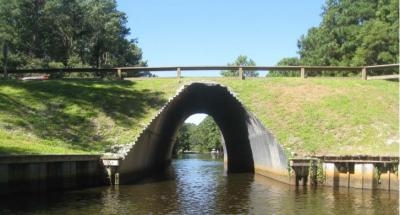
In her comments at the end of the meeting, Mayor Morey said the Juniper Trail Culvert Replacement Project will start construction “after the first of the year,” rather than at the end of 2024, as the Town Manager had previously announced.

THE PLANNING BOARD will meet on Monday, June 17, at 5 p.m. in the Pitts Center. An agenda has not been posted on the Town website, as of this writing.

By Ann G. Sjoerdsma, 6/14/24

6/2/24: DARE COUNTY PROPERTY REVALUATION TENTATIVELY SET FOR 2025; PUBLIC HEARING ON TOWN’S PROPOSED $12.7 MILLION FY 2024-25 BUDGET TO BE HELD DURING COUNCIL MEETING TUESDAY. Other Agenda Items: Affordable Housing, Survey of Milfoil in Canals, Creek.

Dare County has tentatively scheduled a revaluation of all property countywide for Jan. 1, 2025—just five years after it conducted its last real estate appraisal and assessment for tax purposes. This is a shocking change from the County’s customary practice.

The State of North Carolina requires all counties to conduct property revaluations at least every eight years, on an “octennial cycle.” (See N.C. General Statutes sec. 105-286) Counties may “advance” the revaluation cycle, however, if they choose.

Our records show that Dare County has observed a septennial revaluation cycle in recent years, having conducted revaluations on Jan. 1, 1998, Jan. 1, 2005, Jan. 1, 2013, and Jan. 1, 2020. It has never before scheduled a five-year cycle.  

News of the County’s tentatively scheduled revaluation next year is the most significant detail uncovered by The Beacon in its review of Town Manager Cliff Ogburn’s recommended fiscal year 2024-25 budget for the Town of Southern Shores.

The recommended budget included in the Town Council’s meeting packet totals $12,795,709, an increase of $22,217 over what the Town Manager (and The Beacon) previously reported. It will be subject to a State-required public hearing at the Town Council’s regular meeting Tuesday.

The Town Council will meet at 5:30 p.m. in the Kern Pitts Meeting Room for what appears on paper to be a business-heavy agenda.

For the agenda and meeting packet, see: https://mccmeetings.blob.core.usgovcloudapi.net/soshoresnc-pubu/MEET- Packet-db4132f33646488b9d04fe19680873c3.pdf.

PRESENTATIONS ON AFFORDABLE HOUSING AND MILFOIL TREATMENT

Also on the Council’s busy agenda are two special presentations:

The first by Planning Board First Alternate Michael Zehner concerns residents’ interest in exploring the problem of (if, indeed, they believe there it is a problem) and potential solutions for affordable housing opportunities in Southern Shores.

The second by Dr. Rob Richardson, the Aquatic and Non-Cropland Weed Specialist at N.C. State University, concerns the noxious weed, Eurasian milfoil, which exists in Southern Shores’ canals and Ginguite Creek, and whether eradicating it with an herbicide that contains the chemical, 2,4-D, poses harm to aquatic and/or human life.

Mr. Zehner, a professional planner who has been attending meetings of the Dare County Housing Task Force, led a discussion about affordable housing at the Town Planning Board’s May 20 meeting. We encourage all property owners to listen to this discussion, which begins at the two-hour mark of the meeting and lasts just over 40 minutes. You will find the meeting video at https://www.youtube.com/@SouthernShores/streams. (We elaborate on this discussion below.)  

We previously reported on the Town’s interest in treating milfoil in the canals and Ginguite Creek with a 2,4-D herbicide, 2,4-D being short for the chemical 2,4-dichlorophenoxyacetic acid, which is notorious for being an ingredient in Agent Orange pesticide. Two,4-D herbicides and pesticides are currently the subject of litigation in federal court in Washington, D.C. between three non-profit environmental groups and the U.S. Environmental Protection Agency. (See The Beacon, 5/4/24)

The Town Manager has sought an Aquatic Weed Control grant from the N.C. Dept. of Environmental Quality (NCDEQ) that would permit the Town to partner with NCDEQ in a 50-50 cost-sharing milfoil treatment project. At the May 7 meeting, Mr. Ogburn presented the Town Council with a Memorandum of Understanding (MOU) with NCDEQ that it had to approve for the $40,000 treatment plan to go forward. (See The Beacon, 5/4/24.)

Only three Town Council members attended the May meeting: They voted not to take any action on treatment of the Town’s milfoil until NCDEQ conducts a territorial survey of the invasive weed in the canals and Ginguite Creek. (See The Beacon, 6/10/24.)

The Town Council will have a different MOU with NCDEQ before it on Tuesday. This one is an agreement for a $2,000 aquatic vegetation survey to be conducted by NCDEQ between June 3 and Aug. 30.  

Mr. Ogburn informed the Council last month that Dr. Richardson vouched for the safety of NCDEQ’s herbicide, but as The Beacon has subsequently learned, Dr. Gavin Dehnert, an emerging contaminants scientist with Wisconsin Sea Grant at the University of Wisconsin-Madison, has found that treatment with 2,4-D kills young fish in freshwater lakes. Dr. Dehnert found in both laboratory and lake studies that young fish experience up to a 35 percent increase in mortality when they are exposed to 2,4-D.

We suggest that Mr. Ogburn give Dr. Dehnert a call.  

GETTING BACK TO THE BUDGET

Mentioned in passing on page seven of the Town Manager’s overview message to the Town Council, Dare County’s 2025 revaluation plan jumped out at us with a consequence lacking in any of Mr. Ogburn’s requested FY 2024-25 budgetary expenditures, which essentially repeat those of FY 2023-24—with one big exception. (Mr. Ogburn asked department heads to think in terms of a two-year budget, and FY 2024-25 is the second year.)

As we have reported, the big exception is the addition of some major capital expenditures in FY 2024-25, including a $2.1 million appropriation to pay for the Trinitie/Juniper Trail Culvert Replacement project. Construction is expected to begin at the bridge in late 2024, according to the Town Manager.

Other FY 2024-25 capital expenditures requested by Mr. Ogburn include $380,000 for an addition and modifications to the Town Hall building; $290,400 for construction of a sidewalk on the west side of Duck Road (N.C. Hwy. 12) from East Dogwood Trail to Hickory Trail; and $150,000 for maintenance and repair of the existing sidewalk along Duck Road north of Hillcrest Drive.

The Town Hall addition, which has been discussed in previous Council meetings, will expand the space for records collection and storage in the Planning and Code Enforcement Department.

According to the Town Manager’s report, the cost of the sidewalk from East Dogwood to Hickory will be offset by a $118,855 grant from the Outer Banks Tourism Bureau.

The recommended budget total of $12,795,709 is an increase of $3,064,259, or 31.7 percent, over the adopted budget for FY 2023-24. After multiple budgetary amendments during the fiscal year, the actual FY 2023-24 budget was $12,005,501, according to Town data. (See The Beacon, 5/10/24.)

Town history teaches us that the adopted FY 2024-25 budget also will grow with amendments to a much larger actual budget, but so, too, will anticipated revenues.

To balance the FY 2024-25 budget, the Town Manager has proposed appropriating $2,940,988 from the Undesignated Fund Balance (UFB), which, “ideally,” Mr. Ogburn writes in his May message to the Town Council, “should be used for future projects rather than budgeted for annual operating expenses.” (The additional $22,217 requested by the Police Department for staff expenses will be covered by the UFB.)

The Town Council has resolved that $3.5 million must be kept in reserve in the UFB for emergency and disaster-relief purposes. Mr. Ogburn reports that $4,830,326 is now available for use in the FY 2024-25 budget over the reserve amount.  

FY 2024-25 marks the fourth year of debt service payments for the 2022 beach nourishment project, which was budgeted at $11,325,189. The Town’s contribution to the cost is $6,065,823, which it satisfies with a special annual tax assessment levied both townwide and according to designated municipal service districts (MSD). The County contributed $4,371,401 to the nourishment project, and the remainder was made up by an NCDEQ grant.

The Town could change the tax rates for beach nourishment debt payment, as long as the required revenue is raised, but the Town Manager makes no recommendation to do so, nor does he recommend a general ad valorem tax rate increase. The property tax levied by the Town on each $100.00 of real and personal property valuation remains 23.58 cents ($0.2358).

We previously published the total appropriations requested by the Town Manager for each Town department. (See The Beacon, 5/10/24.) The only change in those totals is the $22,217 increase in the Police Department budget: from $2,409,492 to $2,431,709.

You will find the Town Manager’s recommended budget at:

https://www.southernshores-nc.gov/sites/default/files/fileattachments/town_council/ page/3159/tm_recommended_fy_24-25_budget_filed_with_clerk.pdf.

For Dare County’s notice about the proposed Jan. 1, 2025 revaluation, see: https://darenc-redesign.prod.govaccess.org/departments/tax-department/appraisal#:~:text=The%20next%20countywide%20revaluation%20is,tentatively%20scheduled%20for%20January%201%2C%202025.

DOES SOUTHERN SHORES HAVE AN AFFORDABLE HOUSING PROBLEM?

In the Planning Board’s discussion last month, Michael Zehner, who moved to Southern Shores in 2020 and was appointed the Second Alternate to the Board in July 2021, proposed holding “educational sessions” in town about affordable housing and encouraging people to “air their concerns” about its availability in Southern Shores.

Mr. Zehner said the then-cheapest house for sale in Southern Shores was listed at $525,000 and defined affordability as costing “no more than 30 percent of household income.”

(We know the $525k house because we were house-hunting in 2019 when it sold in July that year for $337,500. It is tiny and far from the beach. There is an even smaller house for sale now on South Dogwood Trail for a jaw-dropping $399,000. It is a remodeled, 1950s-era cottage.)

He suggested a starting point for a conversation among residents would be addressing whether people believe a problem in affordable housing exists in Southern Shores and “agreeing what the problem is.”    

Mr. Zehner, who was elevated this year to First Alternate on the Planning Board, expressed an interest in being “proactive,” in taking a leadership role and embarking on a study of both the problem of, and strategies for increasing, affordable housing in Southern Shores.

He envisions a “Town initiative,” he said.

A native Virginian, Mr. Zehner came from Wellesley, Mass., in 2019 to be planning director for the Town of Nags Head. According to his online CV, he served two years, eight months, in that position and is now director of planning and community development with The Berkeley Group, a consulting firm in Bridgewater, Va., that offers local government and public agency services.

Among the five regular Board members—Mr. Zehner sits on the dais during meetings, but is not a voting member—only Jan Collins enthusiastically supported him. She, too, spoke of being proactive and addressing “what we want Southern Shores to be like in 20 years.”

The others said very little, except when the topic of accessory dwelling units arose. ADUs, which provide income to primary homeowners and potentially open up rentals to more year-round occupants, are one way to address the need for affordable housing.

For the record, while the Town of Southern Shores does not allow living quarters in accessory structures, it does permit “temporary family healthcare structures,” as defined in Town Code sec. 36-168(5), to help facilitate care to a mentally or physically impaired relative. Homeowners in Chicahauk are subject to a property association covenant that prohibits ADUs. (See The Beacon, 3/21/24.)   

“From a zoning perspective,” Southern Shores Planning Director Wes Haskett explained to us earlier this year, “someone can live in an accessory structure with living space, and they can be rented, but [the structure] can’t have all of the elements that make up a dwelling unit.”

This has been interpreted in the past to mean that they cannot have ovens and other cooking appliances.

“We want to maintain what we have” in Southern Shores, said Board Chairperson Andy Ward, a longtime resident homeowner who has been critical of ADUs, “and try to be good stewards to a situation that we will never solve at this level.”

At Mr. Ward’s suggestion, the Board agreed to have Mr. Zehner speak to the Town Council about the issue. Ms. Collins suggested that he ask the Council to appoint a study committee.

The Council may wish to wait until after Dare County revalues all real property next year, and we all learn just how “affordable” the booming local housing market is.

By Ann G. Sjoerdsma, 6/2/24

5/24/24: TRASH PICKUP IS TUESDAY NEXT WEEK, NOT MONDAY. Summer Collection Schedule Starts Friday, May 31.

Residential trash collection will occur on Tuesday next week, not Monday, Memorial Day, and the two-times-per-week summer collection schedule will start Friday, May 31, the Town of Southern Shores has announced. Please pass the word to your neighbors. 

From May 31 until Sept. 2, the trash will be picked up on Fridays and Mondays, in order to accommodate the increased seasonal population. The recycling schedule remains the same.

Town offices will be closed on Memorial Day.

Have an enjoyable holiday weekend.

The Beacon, 5/24/24

5/10/24: COUNCIL MEETING HIGHLIGHTS: DECISION ON CHEMICAL TREATMENT OF CANALS, GINGUITE CREEK DELAYED UNTIL JUNE 4; RECOMMENDED FY 2024-25 BUDGET IS $12.7 MILLION; BALLOON BAN PASSED; LOT-WIDTH ZTA TABLED. PLUS K-9 Arty Eagerly Performed.  

Replacement of the Juniper Trail bridge-culvert constitutes a major expenditure in the Town’s FY 2024-25 budget.

The decision as to whether and how the Southern Shores canals and Ginguite Creek will be chemically treated this year to eradicate Eurasian milfoil, a noxious aquatic weed that smells like sulfur when it dies, was delayed by the three Town Council members who attended Tuesday’s meeting until the Council’s June 4 meeting.

Town Councilman Mark Batenic and Councilwoman Paula Sherlock did not attend the May 7 meeting. No reason for their absences was given.

Town Manager Cliff Ogburn informed the Council that the N.C. Dept. of Environmental Quality had not performed a requisite survey of the Southern Shores waters to determine how much territory should be treated with a herbicide before presenting the Town with a treatment plan. Sentiment among the Council was that a survey of the milfoil must be performed before the Town can make a commitment to partner 50-50 with the NCDEQ for herbicide treatment. (See The Beacon, 5/4/24, for background.)

Homeowners from Martin’s Point and Southern Shores presented differing views at the Council’s meeting on how much milfoil exists in the Southern Shores canals and Ginguite Creek and whether the herbicide the State proposes to use could do harm to other aquatic plants and fish, as well as to humans.

Mr. Ogburn said he had been in touch with Rob Richardson, a professor at North Carolina State University who is an expert in aquatic weed management, and Dr. Richardson vouched for the safety of NCDEQ’s herbicide, which contains 2,4-D, an ingredient in Agent Orange pesticide that is currently the subject of a lawsuit filed against the U.S. Environmental Protection Agency. (See The Beacon’s 5/4/24 post.)

RECOMMENDED FY 2024-25 BUDGET  

Also Tuesday, Mr. Ogburn presented a recommended fiscal year (FY) 2024-25 budget of $12,773,492, an increase of $3,042,042, or about 31 percent, over the recommended FY 2023-24 budget presented at this time last year.  

With budget amendments made by the Council throughout the current fiscal year, the actual budget for FY 2023-24 grew from $9,731,450 to $12,005,501, according to Town data.

More than $2 million of the additional expenditures in 2023-24 were covered by funds from the Undesignated (aka Unassigned) Fund Balance, which, according to Mr. Ogburn, totaled $7.8 million, as of the 2023 audit. The Town Council has resolved that $3.5 million must be held in reserve in the UFB and designated for emergency and disaster-relief purposees.

The remaining additional expenditures were covered by higher-than-anticipated revenues, particularly interest.

We would expect the FY 2024-25 budget, which covers July 1, 2024 to June 30, 2025, to similarly grow over the course of the fiscal year.

We will take a closer look at the recommended FY 2024-25 budget before the Town Council’s June 4 meeting, when a State-mandated public hearing on the budget will be held.

The expenses in the recommended FY 2024-25 budget, by department or category, are:

$1,465,842: Administration (the largest line item is salaries, $476,346)

$426,067: Planning & Code Enforcement (salaries, $281,296)

$2,409,492: Police Department (salaries, $1,301,457)

$5,235,462: Streets, Bridges, Beaches and Canals ($1,161,237 in debt payment for the beach nourishment project; $3,480,000 for infrastructure, which includes $2.1 million for the Juniper Trail Culvert replacement project, according to Mr. Ogburn. The Town Manager previously said the bridge project would cost $1.6 million.)

$733,924: Public Works (salaries, $381,892)

$991,125: Sanitation ($208,025, for residential solid waste collection; $238,500 for recycling collection; $280,900 for a landfill tipping fee)

$1,207,335: Fire Department ($868,315, for contracted fire protection services; $314,020 for debt payment on fire station)

$229,245: Ocean Rescue

$75,000: Capital Reserve Fund (for canal maintenance)

As of June 2023, the Southern Shores Cemetery Fund had a balance of $92,244 and anticipated expenses of only $3,750 in the next fiscal year. The Town intends to upgrade the cemetery, which is located on South Dogwood Trail next to the Duck Woods Country Club, but it did not budget for improvement expenses.

You may read Mr. Ogburn’s message to the Town Council about his recommended FY 2024-25 budget and the budget itself at:

https://www.southernshores-nc.gov/sites/default/files/fileattachments/town_council/page/3159/tm_recommended_fy_24- 25_budget_filed_with_clerk.pdf

For more background, see The Beacon, 4/7/24, and our breakdown of the “big-ticket” items in next fiscal year’s budget.

BALLOONS AND LOT WIDTH

Mayor Elizabeth Morey, Mayor Pro Tem Matt Neal, and Town Councilman Rob Neilson unanimously passed an ordinance banning the release of balloons into the open air in Southern Shores, with the exception of balloons used for scientific or meteorological purposes. The ordinance adds section 22-12 to the Town Code and includes a civil penalty of $250 for each violation of the balloon ban.   

The three Council members also unanimously voted to “table” Zoning Text Amendment 23-05, which redefines the measurement of lot width, for purposes of establishing minimum lot width for lots created after June 6, 2023.

The Beacon has written extensively about the long-term effort by Deputy Town Manager/Planning Director Wes Haskett, the Planning Board, and the Town Attorney to rewrite the language in the Town Code about lot width to make it less ambiguous. Our last salvo was written 4/23/24.

Before Mayor Pro Tem Neal made a motion to table the ZTA, citing its “lack of clarity,” Mr. Haskett advised the Council during Tuesday’s public hearing on ZTA 23-05 that he did not recommend approval of the version of ZTA 23-05 before it and would like to withdraw the ZTA for further discussion with the Planning Board.   

“I don’t think there’s any rush” to finalize the ZTA, Mr. Neal said.

It goes without saying that the unanimous quorum vote on the balloon ordinance was known in advance of the meeting, otherwise the ordinance would not have been on the agenda. We are certain that postponement of the Council’s action on ZTA 23-05 was also known, and we believe that the postponement should have occurred before the meeting. It is conceivable that some of us would have prepared remarks about ZTA 23-05 for the public meeting, unnecessarily so.

We have never known the May meeting of the Town Council, during which the next fiscal year’s budget is presented by the Town Manager, to be attended by only three elected officials.

ARTY, THE TOWN’S K-9 OFFICER

If you’d like to see K-9 Arty eagerly in action with his handler, Southern Shores Patrol Officer Thomas Long, go to the Town of Southern Shores You Tube site, click on the “Live” link, and tune into the first 20 minutes of the May 7, 2024 meeting. (See https://www.youtube.com/@ SouthernShores/streams)

Arty is a friendly 2-year-old Dutch Shepherd who was born in Poland and came to the United States in August 2023, when he met Officer Long and went through basic training. The sleek 57-pound “single-purpose” canine was originally trained with Dutch commands and still responds to them.

Arty’s expertise is in narcotics detection and tracking, which he does by “scent discrimination,” Officer Long explained. The officer took Arty through some basic obedience commands and a narcotics detection exercise at the Town Council meeting, and he enthusiastically responded to every task asked of him.

Arty is one of nine K-9s working in Dare County, according to Officer Long.

By Ann G. Sjoerdsma, 5/10/24

5/4/24: TUESDAY’S MEETING: TOWN COUNCIL TO RECEIVE RECOMMENDED 2024-25 BUDGET; TO CONSIDER BANNING BALLOON RELEASE AND PARTNERING WITH STATE TO TREAT MILFOIL IN CANALS WITH CHEMICAL HERBICIDE; AND TO RECOGNIZE K-9 ARTY AND HIS HANDLER.

A view of the canal north of the Dick White Bridge on East Dogwood Trail.

Town Manager Cliff Ogburn will present his recommended budget for fiscal year 2024-25, and the Town Council will consider adopting an ordinance banning the release of balloons in town and partnering with the N.C. Dept. of Environmental Quality to treat Eurasian watermilfoil, a noxious aquatic weed, in the Southern Shores canals and Ginguite Creek, at the Town Council’s regular monthly meeting Tuesday at 5:30 p.m. in the Kern Pitts Center.

The Council also will hold a public hearing on Zoning Text Amendment 23-05, the latest version of the new lot-width ordinance, whose progress The Beacon has covered during the past year (for the latest report, see 4/23/24 post), and will decide whether, and to whom, to award a contract for the construction of a sidewalk on the north side of Skyline Road from Ocean Boulevard to an existing path that connects the road to Spindrift Trail.

Before conducting all of this business, however, the Town Council will take time to meet and recognize Arty, a K-9 in the Police Department, and his K-9 handler, Patrol Officer Thomas Long.

For background, see:

AGENDA: https://mccmeetings.blob.core.usgovcloudapi.net/soshoresnc-pubu/MEET-Agenda-1dbdcec1125f49fcbe9abe2a4a444b4a.pdf.

MEETING PACKET: https://mccmeetings.blob.core.usgovcloudapi.net/soshoresnc-pubu/MEET-Packet-1dbdcec1125f49fcbe9abe2a4a444b4a.pdf.

Notes on the issues:

Budget: Mr. Ogburn will distribute his recommended FY 2024-25 budget, which he has previously previewed, to Town Council members at the meeting; the budget is not yet publicly available on the Town website.

A public hearing on the budget will be held during the Council’s June 7 meeting. (See The Beacon, 4/6/24.)

The Town Council held a budget workshop meeting on April 16, at which time Mr. Ogburn said that a property tax increase would not be necessary to balance next year’s budget.

Balloons: The Town Council passed a resolution on March 12 opposing the release of balloons in town. Since then, both Duck and Nags Head have passed ordinances making it unlawful to release balloons within their jurisdictions and imposing fines on offenders—$250 in Duck and $50 in Nags Head. Once balloons lose their buoyancy, they become non-biodegradable far-flung litter that can harm the environment, aquatic creatures, and wildlife. The Council is likely to pass an ordinance—a draft of which is included in the meeting packet—that bans the release of balloons in town and imposes a $250 fine on offenders.

Sidewalk on Skyline Road: The Town has used an informal bidding process to solicit bids for construction of a sidewalk on the north side of Skyline Road from Ocean Boulevard to the Chicahauk Homeowners Assn.’s cut-through path to Spindrift Trail. The Town received two bids, one of which it rejected for “non-responsiveness,” according to the Town’s agenda item report.

“For construction projects within the informal bidding range,” the Town writes, “the record of bids and bid documents become open for public inspection when the contract is awarded.”

The staff has recommended that the Council award the contract to the low bidder.

An aerial map of the sidewalk under consideration is included in the meeting packet on p. 22.

HERBICIDE TREATMENT OF CANALS AND GINGUITE CREEK

A canalfront homeowner has contacted The Beacon with concerns about the chemical product that the N.C. Dept. of Environmental Quality (NCDEQ) would use on Southern Shores’ canals and Ginguite Creek to eradicate watermilfoil, if the Town Council votes Tuesday to partner with the State in a 50-50 cost-sharing treatment plan.

The Town of Southern Shores has requested assistance from the N.C. Aquatic Weed Control Program, which is housed within the NCDEQ, and applied for an Aquatic Weed Control grant. For the program to go forward, the Town Council must vote Tuesday to sign a Memorandum of Understanding (MOU) with NCDEQ, a copy of which is in the meeting packet. The MOU sets the cost of the project at $40,000, for which the Town would pay $20,000.

According to the Town staff summary attached to the MOU, “the Town has been meeting with State Aquatic Weed Specialists to seek State support to treat the milfoil. Representatives from the Southern Shores Civic Association and Martin’s Point Homeowners Association participated in these meetings.

“DEQ performed a survey of the canals and creek last fall. The information received during the survey helped to develop a potential treatment program in the spring of 2024.”

DEQ reportedly identified a treatment map of roughly 32 acres and targeted late June as the treatment time.

Safety of Herbicide Ingredient, 2,4-D

The Eurasian milfoil eradication program in Southern Shores dates to 1971, when pellets of an herbicide containing 2,4-dichlorophenoxyacetic acid, abbreviated as “2,4-D, were reportedly scattered from the air over Ginguite Creek, some of the canals, and sections of Currituck Sound where the weed infestation was severe.

The U.S. Environmental Protection Agency, which was created during the Nixon Administration, had only been in existence then for a matter of months.

We do not have a record of how often and when the Southern Shores waters were treated for milfoil thereafter, what herbicides were used, and what the consequences of their use were to aquatic life.    

Since enactment of the Aquatic Weed Control Act of 1991, the N.C. Department of Environmental Quality has directed a statewide program to control, eradicate, and regulate noxious aquatic weeds in order to “protect and preserve human health, safety, and the beneficial uses of the waters,” and to benefit plant and animal life.

According to NCDEQ, Eurasian watermilfoil is a “submersed aquatic perennial” that was introduced to the United States from Eurasia in the 1940s as an aquarium ornamental. Considered one of the worst aquatic weeds, milfoil often forms large infestations, NCDEQ says.

This noxious weed forms a dense canopy along the surfaces of water, shading out the vegetation below; degrades water quality; hinders recreational activities; obstructs water intake; and fouls adjacent beaches, according to NCDEQ, which uses both biological and chemical control to prevent the spread of milfoil.  

2,4-D was one of the active ingredients in Agent Orange, a chemical herbicide and defoliant that was used by the U.S. military during the Vietnam War from 1961 to 1971.

Exposure to Agent Orange proved devastating to people, as allegedly thousands of U.S. soldiers and millions of Vietnamese civilians suffered major health problems, including leukemia, Hodgkin’s lymphoma, and other types of cancer, and Vietnamese children, as well as children of U.S. military, experienced a high rate of unusual birth defects.

(The story of Agent Orange’s toxic fallout is a complicated one that we cannot begin to cover. Chemically speaking, it was the trace dioxin in Agent Orange, which resulted from a mixture of 2,4-D and another phenoxy herbicide, that caused the human damage. We are not qualified to delve into the chemistry.)

NCDEQ has used herbicides that contain 2,4-D, but it is unclear from the information in the Town Council’s meeting packet whether it intends to do so in treating the Southern Shores waters.    

Lawsuit Against EPA for Its Reapproval of Two Herbicides With 2,4-D

The ingredients in the NCDEQ’s herbicide concern the Beacon’s reader, who referred us to on-going litigation in federal court in Washington, D.C., between three non-profit environmental groups and the Environmental Protection Agency over the EPA’s reapproval in January 2022 of two herbicides that contain 2,4-D. The herbicides, known as Enlist One and Enlist Duo, are manufactured by Corteva Agriscience.

The Center for Food Safety (CFS), the Pesticide Action Network North America (PANNA), and Alianza Nacional de Campesinas allege in their complaint against the EPA that the federal agency unlawfully reapproved the Enlist herbicides without properly considering their environmental and public health risks; that its decision jeopardizes hundreds of endangered species across the country; and that the herbicides harm rural communities and wildlife by increasing concentrations of 2,4-D and glyphosate in the environment, damaging habitats, polluting waters, and affecting native plants and crops.

The reader who contacted The Beacon is especially concerned about the harm that a 2,4-D herbicide would cause fish and other aquatic life in the canals.

The plaintiffs, who targeted the use of Enlist on crops, argue that the EPA’s 2022 registration decisions violated the Federal Insecticide, Fungicide, and Rodenticide Act (FIFRA) and the Endangered Species Act. They seek injunctive and declaratory relief.

You may access their 105-page complaint, which was filed June 6, 2023 in the U.S. District Court for Washington, D.C. (Civil Action 23-1633), here:

https://www.centerforfoodsafety.org/files/2023-06-06-doc-01–cfs-et-al-complaint_92063.pdf. (This link is correct. If it does not work for you, we suggest you manually input it.)

Here’s a link to an article about the lawsuit:

https://www.centerforfoodsafety.org/press-releases/6831/epa-failed-to-protect-against-toxic-enlist-herbicides-lawsuit-alleges.

The U.S. District Court recently allowed Corteva to intervene in the action as a defendant.           

We share our canalfront reader’s concern and caution about herbicides that NCDEQ may use in Southern Shores’ waters to eradicate milfoil and would like some assurance that they do not pose a health or safety risk to the public or to aquatic life. We would expect the Town Manager and the Town Council to do their due diligence before agreeing to partner with the NCDEQ to treat the milfoil in Southern Shores’ canals and Ginguite Creek with chemicals.

MORE THAN 1,000 TICKETS SOLD FOR FLAT TOP TOUR

We conclude the business of this post, which grew like milfoil from the brief we intended, by reporting that 1,013 tickets were sold for the April 27 Southern Shores Historic Flat Top Cottage Tour, according to tour organizer Sally Gudas, who said that 758 tickets were sold online and 255 were purchased on the day of the tour.

This total is 302 tickets more than were sold for the last tour, which was held in 2022, representing an increase of nearly 40 percent.

Congratulations to everyone who made this year’s tour such a successful and enjoyable event.

****

ON A PERSONAL NOTE, I would like to wish my mother, Fern MacAllister Sjoerdsma, who has resided on North Dogwood Trail since 1996, a happy 100th birthday on May 5. Mom may not be the oldest resident homeowner in Southern Shores, but I don’t know anyone who is older. She continues to amaze and inspire me with her love for life and her ability to adjust to whatever comes her way. May she enjoy every day that she has with loved ones and nature’s creatures in the beautiful maritime forest on the sound.

By Ann G. Sjoerdsma, 5/4/24   

4/25/24: FLAT TOP TOUR IS SATURDAY (1 to 5): TOWN TO HOST RIBBON-CUTTING CEREMONY AT ITS NEWLY RENOVATED SKYLINE ROAD FLAT TOP. PLUS New Southern Shores Roastery Café Offers Free Cup of Coffee to Ticketholders and More Details About the Sixth-Ever Tour. 

According to legend, the lot on which the flat top at 23 Porpoise Run sits was won by an early owner, with several other lots, in a poker game. Built in 1958 and designated a historic landmark, the Sokol/Clements Cottage was purchased in 1999 by its current owner, who artistically renovated the cottage while preserving its primary architectural attributes. Check out her before-and-after pictures when you tour the home.

The Town of Southern Shores will host a ribbon-cutting ceremony 11 a.m. Saturday at its newly renovated flat top cottage at 13 Skyline Road, shortly before the start of the sixth-ever flat top cottage tour, which is scheduled from 1 p.m. to 5 p.m. Fourteen mid-century flat tops, including all five of the cottages that have been designated historic landmarks, will be open for viewing.

Tour tickets are $10 each and are available in person, by cash or check, from the Southern Shores Historic Flat Top Cottages group’s box-office tent in the southeast corner of the parking lot of the Southern Shores Crossing shopping center, from 10 a.m. to 1:30 p.m. Saturday; and online, with a $1.50 handling fee, at https://southernshoreshistoricflattops.ticketleap.com.

All ticket proceeds will benefit the Flat Top Preservation Fund of the Outer Banks Community Foundation (OBCF).

The Southern Shores Crossing is located at 1 Ocean Blvd., behind Southern Shores Realty, and is a good place to gather before the tour starts.

Shore Coffee Roasters, a roastery café whose space in the Crossing is being readied for opening, will be set up outside Saturday, offering tour ticketholders a free cup of coffee from 10 a.m. to 1:30 p.m., as well as selling coffee to paying customers.

According to tour organizer Sally Gudas, who will be selling tickets, four merchants in the Crossing will be donating 10 percent of their day’s sales proceeds to the preservation fund. They are Shore Coffee Roasters, Southern Shores Pizza, Sojourn, and Steamers.

You may pick up your ticket, a tour map, and a handout about the 14 cottages’ histories at the box office tent. Those who purchase their tickets online may print out these materials in advance or pick them up at the box office—and grab a cup of coffee nearby. Shore Coffee Roasters is located in the space once occupied by Coastal Provisions.   

RE-OPENING 13 SKYLINE ROAD

Nature artist, real estate developer, and Southern Shores founder Frank Stick designed and built the flat top at 13 Skyline Road in 1953. Mr. Stick (1884-1966), who primarily concerned himself with early oceanfront construction, referred to the flat top as “the cottage in the dunes.”  

Much has been written about Frank Stick’s 1947 purchase of the 4-square-mile tract of land north of Kitty Hawk that would become Southern Shores and the artist’s vision of an exclusive oceanfront-to-soundfront community. We will say only that he sought to build dwellings that blended in with the sand and would be sturdy during harsh weather, and was influenced by houses he saw in Key West, Fla.

On the tour you will learn about the 42-pound blocks of concrete that were made with local sand (son David Stick, historian and author, writes in his memoirs about constructing them!), the juniper paneling that came from local trees (and, thus, was more affordable), the no-pitch roofs, and other flat-top features.

The Town purchased the Skyline Road flat top last year for $400,000 from the Outer Banks Community Foundation, which operated its office out of the cottage for 15 years before it relocated to Manteo.

The OBCF acquired the cottage in 2007 as a gift from longtime owners, Dr. John R. Tietjen and his wife, Norma F. Tietjen. The Tietjens, who are now deceased, sought in the covenants to their deed of gift to preserve Southern Shores history, to honor Frank Stick, and to benefit non-profit causes. (For background about the cottage and the Tietjens, each of whom lived nearly 99 years, see The Beacon, 4/14/24.)

The Town has returned the historic flat top to a residence, the restoration of which has been managed by Town Police Chief David Kole. The flat top is expected to be occupied temporarily by newly hired Southern Shores police officers, who may have difficulty finding affordable permanent housing. 

The flat top is adjacent to a now-vacant lot at 7 Skyline Road that the Town bought in 2015 for $205,000. The Town demolished a small single-story house in need of repair that was on the site and has yet to use the property. This lot is next to the Kern Pitts Center and has been described as part of the “Town complex.”

TAKING THE TOUR

The flat top tour is self-guided, so you may start at any one of the 14 open houses. It is not a walking tour, except where some of the cottages are located in close proximity to each other, so be prepared to look for parking as you move en route. Tour parking will be designated in several areas, but most of the parking will be on the street or in the driveways of the tour homes. Parking will be permissible without a permit on Town roads Saturday, but not on N.C. Hwy. 12.

(For those who are unfamiliar with the area: Ocean Boulevard is N.C. Hwy. 12 until the road splits, going north, at the cell tower park. If you stay to the right of the tower, you will continue on the “local” section of Ocean Boulevard, which is Town-owned; if you veer to the left, you will be on a section of N.C. 12 that is called Duck Road and is State-owned.)

If you start with 13 Skyline Road and travel north, your route will take you to these flat tops, in order of location; those that are asterisked have been designated historic landmarks:

78 Skyline Road: Lambroff Cottage

43 Ocean Blvd.: Powell/Harritt Cottage

69 Ocean Blvd.: Sea Spray Cottage

113 Ocean Blvd.: Knight Cottage

142 Ocean Blvd.*: Seaquel

Just past the cell-tower split on Duck Road, you will make a left turn on to Porpoise Run to see the two flat tops located on Wax Myrtle Trail. They are:

156 Wax Myrtle Trail*: Clarke/Gudas Cottage (the third house on the right, at the corner of Porpoise Run and Wax Myrtle)

159 Wax Myrtle Trail: Falconer Cottage

After you’ve toured these two cottages, we suggest that you return to Porpoise Run and cross Duck Road to see the flat top on the east side of Porpoise Run, which is only a block long. If you choose, you can walk from Wax Myrtle Trail to Porpoise Run (or vice versa). The house on Porpoise Run is:

23 Porpoise Run*: Sokol/Clements Cottage (pictured above)

From Porpoise Run, travel east to Ocean Boulevard and turn left. In order of location, you will come to:

157 Ocean Blvd.: Sea Breezes

169 Ocean Blvd.: Atlantic Breezes

170 Ocean Blvd.*: Pink Perfection (the Edith Pipkin Cottage, the oldest and perhaps the loveliest flat top on the tour, it is currently owned by two great-nieces of Ms. Pipkin)

218 Ocean Blvd.*: Mackey Cottage

Before the Mackey Cottage, you may wish to turn left on East Dogwood Trail and visit:

18 East Dogwood Trail: Oh So Sandy! Newman

Or you can visit it before you walk to the Mackey Cottage.

Homeowners will be present in all of the cottages except those at 142 and 170 Ocean Blvd.

You are likely to encounter a display of vintage photographs and other artifacts from bygone years of tranquil beach living at the homes, as well as personable hosts, a few of whom have memories of Southern Shores when it was predominantly a community of flat tops.  

The Town of Southern Shores established a Historic Landmarks Commission in 2016 to raise awareness of the historic significance of properties in town and to encourage preservation. While only five of the approximately 25 existing flat tops have been designated historic landmarks, others are eligible, but homeowners need to apply for the status.  

SAYING HELLO (AND THANK YOU) TO SALLY AND STEVE

If you prefer to start your tour in the middle, or if there is congestion that sends you in that direction, we recommend that you go by the Clarke/Gudas Cottage and meet Sally and Steve Gudas, the very knowledgeable, friendly, and hard-working organizers of the flat top tour. Steve will be on his own at their charming flat top until Sally closes ticket sales and joins him.

Sally’s history with the Outer Banks goes back to the 1970s and, if yours does, too, you may enjoy reminiscing with her about the good old days.

For all of the tour info you may need, please check out https://southernshoreshistoricflattops.ticketleap.com/ southern-shores-historic-flat-top-cottage-tour/.

We hope to see you out there for this celebration of Southern Shores’ singular architectural history.    

By Ann G. Sjoerdsma, 4/25/24

4/23/24: PLANNING BOARD RECOMMENDS APPROVAL OF LATEST LOT-WIDTH ZTA; WE HAVE QUESTIONS. Early Voting for State Runoff Election Starts Thursday.

This stock drawing illustrates another method by which to measure minimum lot width: The mandatory minimum width must exist at the front building line, which is not the same as the front setback line, and continue to the rear of the lot. This method applies readily to irregular lots, such as those on a cul de sac, which have been a concern of the Town and the Planning Board.

The Southern Shores Planning Board unanimously recommended approval at its April 15 meeting of the latest Zoning Text Amendment about lot width (ZTA 23-05), accepting a definition that we find questionable, but also amending the proposed ordinance to fix an error. 

Because Board Chairperson Andy Ward arrived late for the meeting, and neither of the two Alternates attended, only four Planning Board members participated in the discussion and vote about ZTA 23-05.

(For background, see The Beacon, 4/12/24. The Beacon has extensively covered the previous versions of the proposed zoning ordinance changes.)

At issue in ZTA 23-05 is the “how to” of measuring the minimally required width of lots created after June 6, 2023, presumably through recombination or subdivision. A stopgap ordinance has been in effect since that date, essentially requiring all newly created lots to meet the mandatory minimum lot width in a zoning district throughout the lot and, thus, be rectangular. It does not permit irregularly shaped lots.

The proposed ordinance creates a “lot width line” at which to measure a lot’s minimum width, which must be 100 feet in the RS-1 single-family residential and the R-1 low-density residential districts; 75 feet in the RS-8 multi-family residential and the RS-10 high density residential districts; and 50 feet in the government and institutional district.

The ZTA eliminates the use of the “building setback line,” which proved to be confusing, as the line where lot width was to be measured.  

Before the Board’s action, the proposed definition of lot width line, which will appear in Town Code sec. 36-57, if the Town Council enacts ZTA 23-05, referred only to 100 feet and not the other mandatory widths in the various districts and read as follows:

“Lot width line means a line established 25 feet from the front lot line, or the point where the lot is 100 feet wide, whichever distance is closer to the front lot line.”

Planning Board Member Robert McClendon picked up on the omission of the other lot widths, as did The Beacon on 4/12/24, and drew it to the attention of Deputy Town Manager/Planning Director Wes Haskett, who had reviewed the ZTA with the Town Attorney. The revised ZTA, which may be presented to the Town Council for public hearing at its May 7 meeting, will refer to the various minimum lots in all of the districts.

Even with this correction, we have a problem with the definition. Perhaps you can tell us what we’re missing. Please comment on the blog web site or email us at ssbeaconeditor@gmail.com. The Planning Director, the Town Attorney, and four members of the Planning Board had no issue with the language, which, with the correction, would read similar to this:

“Lot width line means a line established 25 feet from the front lot line, or the point where the lot is [50/75/100 feet wide, depending on the district], whichever distance is closer to the front lot line.”

Mr. Haskett demonstrated with a visual projection at the meeting how to determine minimum lot width where the width does not measure the mandatory minimum 25 feet from the front lot line: He drew a vertical line from the front line to the area in the lot where the mandatory minimum width, say 100 feet, is achieved, and then drew a horizontal line there from one side lot line to the other, saying that this line is the lot width line.

We follow this thinking, but we ask: When, and how often, is that line ever going to be closer to the front lot line than the line that is 25 feet from the front lot line? And if it is not, won’t the 25-foot line, by the ZTA’s definition, supersede it?  

It seems to us that the qualifying phrase “whichever distance is closer to the front lot line,” should be deleted, and the definition written so that the lot width line is where the minimum lot width is first achieved, going from front to back in the lot. It also makes sense to us to require the width of the lot from that line to the back line measure at least the minimum.

Before June 6, 2023, the minimum front-yard setback, also referred to as the building setback line, served as the measuring line for lot width in all of the districts. This setback is 25 feet from the street right of way. With the Town deciding that there no longer is a need or desire to use this setback line for lot width, we see no reason to mention the 25-foot line in ZTA 23-05 and to present an either-or choice.     

The point of rewriting the lot width requirements for newly created lots was to eliminate any ambiguities in the Town Code language. We do not believe this objective has been achieved and welcome your comments.

You may access the uncorrected ZTA 23-05 here: https://www.southernshores-nc.gov/sites/default/files/fileattachments/planning_board/meeting/3103/4-5-24_zta-23-05_lot_width.pdf.

COMMERCIAL DESIGN STANDARDS PROPOSED

The Planning Board also discussed proposed ZTA 24-03, which the Town submitted and, in its most significant part, establishes design standards for buildings in the commercial district. (See The Beacon, 4/12/24 for the list of proposed standards.)

Mr. Haskett will revise the ZTA to incorporate the feedback he received from the Planning Board and present a new version of the measure at the Board’s May 20 meeting.     

You may access ZTA 24-03 here: https://www.southernshores-nc.gov/sites/default/files/fileattachments/planning_board/meeting/3103/zta-24-03_commercial_design_standards.pdf.

A BREAK ON MEETING REPORTS

We have had great difficulty in recent months in keeping up with the Planning Board and the Town Council and, as a result, have too often written posts belatedly and in haste. Errors have crept into our copy that should not occur. Rather than continue to fight an uphill battle, we are going to take time off from reporting on Town meetings for at least a month. If there is anything of note in the Town Manager’s recommended budget for FY 2024-25, which he will present to the Town Council on May 7, we will bring it to your attention.  

Thank you.

EARLY VOTING FOR MAY 14 RUNOFF ELECTION STARTS THURSDAY

Early voting for the May 14 statewide runoff election—aka the second primary election—begins Thursday and will run until May 11, excluding weekends. On the ballot to become their political party’s nominee for the November general election will be two Republican candidates facing off for the offices of N.C. Lieutenant Governor and N.C. Auditor.

A runoff election is held when no candidate from the primary election, which was held on March 5, receives the required 30 percent of the votes cast to be named the party nominee.

James (Jim) O’Neill is vying with Harold (Hal) Wetherman to represent the Republican Party as its nominee for Lieutenant Governor, and David (Dave) Boliek opposes Gerard (Jack) Clark in the second primary race for Auditor.

Only registered Republicans and Unaffiliated voters who voted in the Republican primary on March 5 may vote in the runoff election.

Early voting will be held at the Kill Devil Hills Town Hall, the Dare County Administration Building, and the Fessenden Center Annex in Buxton. The hours are as follows:

April 25 and April 26: from 8 a.m. to 7:30 p.m.

Weekdays, Monday, April 29, to Friday, May 10: from 8 a.m. to 7:30 p.m.

Saturday, May 11: from 8 a.m. to 3 p.m.

There will be no weekend hours other than on May 11.

By Ann G. Sjoerdsma, 4/23/24