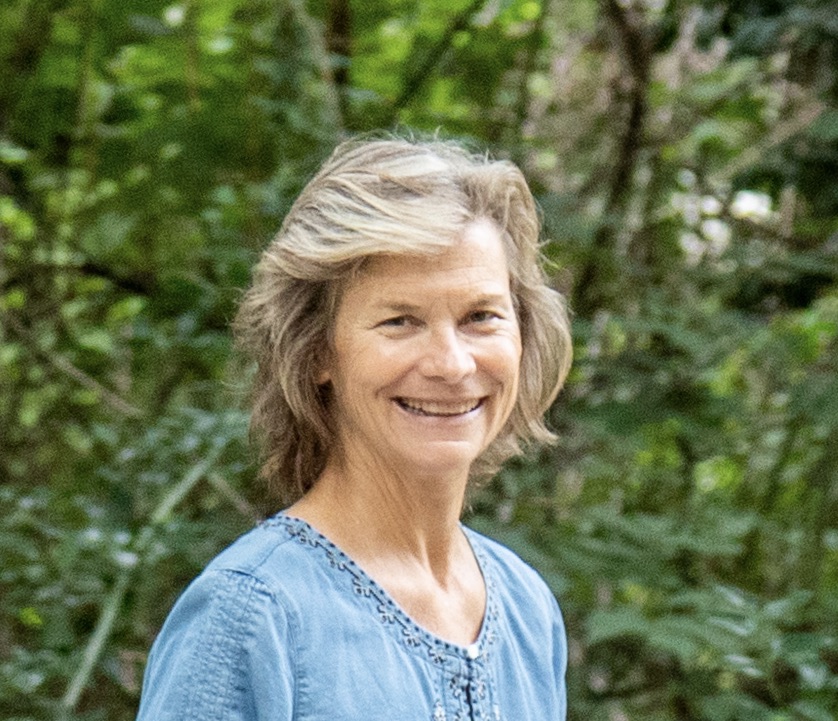
Mayor Pro Tem Elizabeth Morey and former Kentucky Family Court Judge Paula Sherlock were elected yesterday Southern Shores mayor and Town Council member, respectively, in an election in which about 42 percent of the town’s registered voters participated.
Ms. Morey, who has served on the Town Council for two years and was a longtime member of the Town Planning Board, received 724 votes (65.7 percent) of the 1102 votes unofficially reported yesterday by the Dare County Board of Elections (DCBOE) to have been cast; her opponent, former Southern Shores Civic Assn. president Rod McCaughey, received 376 votes (34.12 percent). There were two write-in votes cast in their race.
Ms. Sherlock, who is known in town politics for her advocacy before the Town Council of a lower tax rate on oceanfront property owners—of which she is one—for the 2022 beach nourishment project, received 538 votes of the 1104 votes (48.73 percent) unofficially reported yesterday by the DCBOE to have been cast in her race.
Ms. Sherlock’s opponents, John Carter and Ann Sjoerdsma, received 284 votes (25.72 percent) and 282 votes (25.54 percent), respectively.
The results of yesterday’s municipal election will be certified on Nov. 9, after the last of the absentee ballots are tabulated. The current vote totals, therefore, will change, but not significantly, before what is known as election canvassing—results certification—occurs.
According to the DCBOE, the breakdown in voting among the candidates according to early-voting and Election Day voting totals was as follows:
Morey: 455 Election Day; 269 early voting
McCaughey: 238 Election Day; 138 early voting
Sherlock: 321 Election Day; 217 early voting
Carter: 199 Election Day; 85 early voting
Sjoerdsma: 174 Election Day; 108 early voting
There are approximately 2600 active registered voters in Southern Shores, according to DCBOE data. The unofficial turnout for the election was, therefore, about 42 percent.
As The Beacon has explained previously, the Town Council seat that Ms. Morey will vacate on Dec. 7 when she is sworn in as mayor will be filled by a Council appointment. The appointee will serve out the two years of Ms. Morey’s unexpired term.
The Town is subject to N.C. state law in this matter. Section 160A-63 of the N.C. General Statutes specifies that “a vacancy that occurs in an elective office of a city shall be filled by appointment of the city council.”
The statute elaborates upon how long the appointed person shall serve, explaining that in the event a successor will not be elected until the next regularly scheduled city election–which is the case in Southern Shores–the appointed person shall service until the elected successor takes office.
The next election in Southern Shores is November 2021. Candidates elected to the Town Council then would take office in December 2021.
The new Town Council with Mayor Morey and Council members Sherlock, Matt Neal, and Leo Holland can make its appointment by the motion-and-vote method or the nomination-and-ballot method, upon which we elaborated in a blog post 10/8/21.
The Town Council need not appoint one of the three candidates who ran for office yesterday and lost.
“[T]he new Council can appoint anyone they choose,” Town Manager Cliff Ogburn confirmed in an email to The Beacon for our earlier post. “There is no requirement that the person receiving the next highest vote total would automatically fill the unexpired term of [Ms. Morey’s] seat should she become Mayor.”
“Nothing is automatic or predetermined,” he said.
Whether the appointment is made by motion-and-vote or nomination-and-ballot, Mayor Morey would be able to vote only in the instance of a tie.
BOOK DISCUSSION AND SIGNING
A Reminder: Journalist Andrew Lawler will discuss his new book, “Under Jerusalem: The Buried History of the World’s Most Contested City,” and sign purchased copies, today at 7 p.m. at All Saints Episcopal Church on Pintail Trail in Southern Shores.
The book, which was released nationwide yesterday by Doubleday, sells for $32.50.
According to advance press about “Under Jerusalem,” Mr. Lawler “takes us into the tombs, tunnels, and trenches of the Holy City—a saga of biblical treasures, intrepid explorers, and political upheaval—and brings to life the indelible characters who have investigated this subterranean landscape.”
Mr. Lawler is also the author of “The Secret Token: Myth, Obsession, and the Search for the Lost Colony of Roanoke” and “Why Did the Chicken Cross the World?: The Epic Saga of the Bird That Powers Civilization.”
For more information about the author, who specializes in science journalism, see www.kennethlawler.com.
NEXT TOWN COUNCIL MEETING: NOV. 9, 5:30 P.M. AT PITTS CENTER
You may access the agenda for next Tuesday’s Town Council meeting here:
This will be the last regular meeting of the current Town Council. It will feature a public hearing on Zoning Text Amendment 21-08, which encompasses the Planning Board’s recommended revisions of the Town’s regulations concerning signage. You may access ZTA 21-08 here:
https://www.southernshores-nc.gov/wp-content/uploads/2021/10/10-18-21-ZTA-21-08-Signage.pdf.
Also on the agenda are a report by the Town Manager about the 5-G cell towers that are being installed in residential areas and a “discussion” by the Town Council concerning the Citizens’ Exploratory Committee for a Potential Branch Library in Northern Dare County.
Ann G. Sjoerdsma, 11/3/21