Currituck County Commissioner Paul Beaumont is one of 17 Republicans running in the primary election for the U.S. congressional seat held by the late Walter Jones.
Twenty-six candidates, including 17 Republicans, met the March 8 filing deadline to run in the race to succeed the late Representative Walter Jones (Rep.) and serve out his unexpired term as North Carolina’s third congressional district representative.
Mr. Jones of Farmville, N.C., died Feb. 10.
The primary election for Representative Jones’s seat, which he held from 1995 until his death, will be April 30. The general election or primary runoff will be July 9. In the event of a runoff, the general election will be Sept. 10.
The third congressional district includes all or part of 17 counties, including Dare and Currituck counties, as well as Marine Corps Base Camp Lejeune in Jacksonville and Marine Corps Air Station Cherry Point in Havelock.
According to “The State” newspaper, among the 17 Republican candidates are three sitting state legislators (Reps. Greg Murphy, Phil Shepard, and Michael Speciale); two Currituck County commissioners (Paul Beaumont and Mike Payment); and a member of the Lenoir County Board of Commissioners (Eric Rouse).
The Republican field also includes three physicians, Kevin Baiko, who is medical director of the N.C. Cannabis Patient Network, pediatrician Joan Perry, and Rep. Murphy, who is a urological surgeon; a Beauford County country music singer (Don Cox); and Phil Law, a Marine Corps veteran and IT contractor who ran unsuccessfully against Mr. Jones in the 2016 and 2018 GOP primaries.
Mr. Law, whose campaign signs can be seen in Southern Shores, lives in Jacksonville.
The six declared Democrats are New Bern Mayor Dana E. Outlaw; former Greenville Mayor Allen Thomas; Richard Bew, a retired Marine who served as a legislative director for the chairman of the Joint Chiefs of Staff; Ike Johnson, whom “The State” refers to as the chief executive officer of a mentoring organization; Ernest T. Reeves, a retired Army captain who lost to Mr. Jones in the 2016 general election; and Gregory Humphrey.
Shannon W. Bray and Tim Harris are vying for the Libertarian party’s nomination, and Greg Holt will be on the ballot in the general election for the Constitution Party, according to “The State” reporter Brian Murphy, who covers North Carolina’s congressional delegation from Washington for the Raleigh, Charlotte, and Durham daily newspapers.
Mr. Murphy reports that five candidates filed for the race with a residential address outside of the district: Republicans Francis X. De Luca (Cary), Graham Boyd (Wake Forest), and Jeff Moore (Raleigh); Democrat Mr. Reeves (Greenville); and Libertarian Party candidate Ms. Bray (Apex).
The remaining Republican candidates, not mentioned above, are Gary Ceres, Chimer Davis Clark, Jr., and Celeste Cairns.
AT LAST NIGHT’S TOWN PLANNING BOARD MEETING . . . The Board voted unanimously to recommend to the Town Council ZTA 19-01, which seeks to restrict high-occupancy houses on the basis of their use and septic capacity, and not to recommend ZTA 19-01CUP, a similar measure that also included a provision allowing “high-density” vacation cottages under certain circumstances. The Board also denied the property owners of 64 Ocean Blvd. a variance that would have enabled them to build on their nonconforming lot there, despite being prevented from doing so by a Town Code zoning ordinance.
THE BEACON WILL RETURN TOMORROW WITH A FULL REPORT ON THE PLANNING BOARD MEETING.
A nearby property owner has appealed the Town’s issuance of a zoning permit to SAGA for its construction at 134 Ocean Blvd., pictured above. The Beacon has learned that the hearing on the appeal before the Town Board of Adjustment will be held at 3 p.m. on Thursday, April 18. See nominihotels.com for more details.
The Beacon would like to remind you that the Town Planning Board will be considering the two zoning text amendments (ZTAs) on high-occupancy houses that it directed the Town Attorney to draft at its meeting today. Although a public hearing will not be held, the public may offer comments on the merits of the ZTAs before the Board votes on whether or not to recommend either or both to the Town Council.
The Planning Board meets at 5:30 p.m. in the Pitts Center. It has not posted an agenda online, so The Beacon does not know the order of its business. The variance hearing upon which The Beacon reported 3/15/19 is also scheduled.
Both of the proposed amendments, ZTA 19-01 and ZTA 19-01CUP, create a new “permitted use” within the RS-1 and R-1 low-density residential districts of a “vacation cottage.” They further amend the Town Code zoning chapter to prohibit “vacation cottages” from having more than 14 overnight occupants and from having a septic capacity that serves more than 14 overnight occupants.
Thus, the Planning Board seeks to prevent high-occupancy houses in Southern Shores, such as the two 12-bedroom, 17-parking-space “mini-hotels” currently being built by SAGA on Ocean Boulevard (see photo above), by focusing upon the “use” of the residential structure and on the septic capacity of the structure.
ZTA 19-01CUP goes a step further than ZTA 19-01, however. It would allow “high-density” vacation cottages to exist in low-density residential districts, provided they are constructed on lots that are at least 175,000 square feet in size. High-density vacation cottages are those that the ZTA defines as accommodating more than 14 overnight occupants and having a maximum septic capacity that serves more than 14 overnight occupants.
Here is ZTA 19-01, without the high-density vacation cottage option:
Currently, the only permitted use specified in the Town Code zoning chapter within these low-density residential districts, where we all live, is a detached single-family dwelling, without qualification as to whether it is a vacation rental or a home used exclusively by the property owners.
The Planning Board could have decided to restrict occupancy and septic capacity of all single-family dwellings in the RS-1 and R-1 low-density residential districts, but it did not want to infringe upon homeowners who do not rent their houses.
The Beacon would not have distinguished between those single-family dwellings that are used as vacation cottages and those that are not.
We support the septic-capacity restriction and oppose the new permitted use of a vacation cottage. We further adamantly oppose permitting high-density vacation cottages in the low-density neighborhoods, under any conditions, and trust the Planning Board will make quick work of disposing of ZTA 19-01CUP.
The five-member Planning Board will vote on whether to recommend either or both of the two ZTAs to the Town Council, with or without further amendments. Only the Town Council has the authority to amend the Town Code.
The Town Council will likely schedule a public hearing on the ZTAs, along with ZTA 18-10, which it tabled in February, at its April 2 meeting. ZTA 18-10 addresses the problem of “large” houses and their occupancy by creating an oceanfront overlay residential district and regulating within that district according to setbacks, building height, and other requirements.
The Planning Board unanimously voted not to recommend ZTA 18-10, which came out of a motion made by Councilman Jim Conners at the Town’s Nov. 7, 2018 special meeting on high-occupancy houses.
At the start of its Feb. 5 meeting, during which a public hearing on ZTA 18-10 was scheduled, the Town Council unanimously voted to table the measure. In doing so, the Council took the unusual action of canceling a hearing for which members of the public specifically had shown up and signed in to speak.
The land between these two large houses, at 64 Ocean Blvd., is presumably 80 feet wide: The nonconforming vacant lot is 50 feet wide, and there should be side setbacks of 15 feet at the adjacent properties of 62 and 64A Ocean Blvd.
In an unusual legal move, a Southern Shores property owner is seeking a variance to enable him to circumvent a town ordinance that currently prevents him from building on a nonconforming 50-foot-wide oceanfront lot that he owns with his wife in a limited liability corporation (“LLC”).
The property owner is Steven Love. But the applicant for the variance is his attorney, Starkey Sharp, of Kitty Hawk, who has previously spoken before the Planning Board and the Town Council on behalf of his client.
The nonconforming lot on which Mr. Love and his wife, Kathleen Gorman, would like to build a five-bedroom house designed by Town Councilman Christopher Nason is 64 Ocean Blvd. A hearing on the application for a variance that would enable him to get around the town law on the sale and development of nonconforming lots—before the Town Council has acted on an amendment to that law—will be held by the Town Board of Adjustment (“BOA”) on Monday, March 18, at 5:30 p.m.
The applicable ordinance is Town Code sec. 36-132, which was amended Sept. 5, 2018 by the Town Council (4-1, with Mr. Nason dissenting) to clarify and strengthen it. The Town took action then to stop a discouraging trend by property owners either to sell developed 100-foot-wide parcels as two 50-foot-wide lots or to redevelop 100-foot-wide parcels as two 50-footers.
Since then, the Planning Board has recommended further amendments to sec. 36-132, but the Town Council has not approved them. In fact, the Council voted unanimously on Feb. 5 to table proposed ZTAs on nonconforming lots and to order the Planning Board to comprehensively identify and assess the circumstances of all of the (vacant) nonconforming lots in town.
The Planning Board, which sits as the Board of Adjustment, will also have its regular monthly meeting on Monday. On its agenda are the consideration of two zoning text amendments (ZTAs) that deal with high-occupancy houses in the residential districts and a possible continued discussion of nonconforming lots, per the Town Council’s order.
(The Beacon detailed the two ZTAs, 19-01 and 19-01CUP, in blogs of 2/22/19 and 2/23/19, and provided background on the nonconforming lots discussion 2/6/19 and 2/21/19. You will find links to The Beacon’s archives in the right-hand column, underneath the latest articles, on the blog home page.)
THE BEACON OPPOSES GRANTING THE VARIANCE
The Beacon has written on numerous occasions about Mr. Love’s 50-foot-wide lot. (See photo above.)
We have explained how he and his wife acquired it in a Jan. 22, 2016 sale by a limited liability corporation owned by SAGA Construction & Development, which split it off from a much larger parcel.
We also have explained our belief that the nonconforming lots ordinance in effect in 2016 either compelled Love-Gorman to recombine the 50-footer with the adjacent 100-foot-wide parcel they own at 62 Ocean Blvd. or directed that their properties be treated as a single lot.
The Beacon opposes the variance that Mr. Sharp seeks for Love-Gorman, who own 64 Ocean Blvd. through their LLC, “For the Love of Pete.”
We do not believe that the property owners meet the standards, including those of “unnecessary hardship,” that the Town Code specifies must be shown before a variance is granted. We also believe that the grant of this variance would set a poor and ill-advised precedent in Town.
(Town Code sec. 36-367 sets forth the standards for granting a variance. It is based on N.C. General Statute sec. 160A-388(d).)
Although the Planning Board has recommended an amendment to sec. 36-132 that would favor Mr. Love and Ms. Gorman, it has no authority or power to amend the ordinance. Until such time as the Town Council approves the zoning text amendment recommended by the Board, the law is what it is now, and it prevents the development of 64 Ocean Blvd.
To grant Mr. Sharp’s variance request would be, essentially, to amend the ordinance before the Town Council has done so. And it may not!
The Beacon can see only harm coming from allowing property owners to preempt official Town action so that they can do what they want to do according to their own timetable.
The fact that Mr. Starkey’s clients have filed an application for a CAMA minor permit, which is currently on hold, is of no factual or legal relevance.
FACTS OF THE CASE; VARIANCE ANALYSIS
The Beacon has previously laid out the circumstances of the acquisition and development of the Love-Gorman properties at 62 and 64 Ocean Blvd. Key to the factual timeline are the following events:
July 2, 2015: Love-Gorman buy 62 Ocean Blvd., which consists of Lots 1-2 of Block 6, on which a flat top known as Dunne’s Dune sits. Each lot is 50 feet wide, but the development overlaps both.
Jan. 22, 2016: Love-Gorman sign a deed with Nags Head Freehold, LLC, a limited liability corporation of SAGA’s, to purchase an adjacent 50-foot-wide lot that SAGA, acting as 64 Ocean Blvd. LLC, has split off from a larger property, which is at least 137 ½-feet wide. This lot becomes 64 Ocean Blvd. SAGA had proposed building a wedding-destination event house on the larger parcel. On the evening of Jan. 22, however, the Town Council, by a 3-2 vote, with Mayor Bennett and Mr. Nason dissenting, enacts an ordinance restricting the maximum house size to 6,000 square feet, thus foiling SAGA’s event-house plans.
Feb. 10, 2016: Demolition of the Dunne flat top at 62 Ocean Blvd. occurs, according to news coverage in The North Beach Sun.
Feb. 17, 2016: Architect Christopher Nason, of Beacon Architecture & Design, submits his CAMA site plan for 62 Ocean Blvd., according to Town planning records.
Feb. 26, 2016: Love-Gorman receive a CAMA permit to develop 62 Ocean Blvd., according to records.
May 16, 2016: The Town Board of Adjustment holds a hearing on an application by Love-Gorman for a side-setback variance on the 50-foot-wide lot at 64 Ocean Blvd. from 15 feet to 12 feet. This variance is granted.
June 2, 2016: Love-Gorman receive a building/floodplain development permit and a zoning/development permit from the Town of Southern Shores. Before they can obtain these permits, they are required by the Town to recombine Lots 1 and 2 of Block 6, which make up 62 Ocean Blvd. The new single lot is designated 2R in Block 6.
Construction on 62 Ocean Blvd. ensues after the permits are issued.
It is The Beacon’s contention that after the flat top was demolished and the two nonconforming lots at 62 Ocean Blvd. became vacant, the Town Code required all three lots making up 62-64 Ocean Blvd. to be treated as a single lot of 150 feet in width. Town Attorney Ben Gallop disagrees with this interpretation of then-Town Code sec. 36-132. Only a court can say who is correct. (This would be sec. 36-132(a)(2)(a).)
The Beacon also contends that as of Feb. 17, 2016, the date of Mr. Nason’s site plan, all three lots should have been combined into one single lot of record. This is how The Beacon interprets then sec. 36-132(a)(3), which read:
“When a nonconforming lot [64 Ocean Blvd.] entirely within the town is adjacent to one or more lots under the same ownership [62 Ocean Blvd.] and when any portion of a proposed structure [Mr. Nason’s proposed house] or required use is located on two or more lots [62 Ocean Blvd.], the lots shall be combined into one single lot of record.”
Once again, Mr. Gallop disagrees. Once again, a court is the final arbiter.
I conclude this legalistic argument with an observation: The Town Council that enacted sec. 36-132 did not intend to allow situations like the Love-Gorman situation to be created and exploited. It did not intend for 50-foot-wide nonconforming lots to be developed on the oceanfront or elsewhere in town. The Southern Shores zoning code specifically seeks to protect and preserve low-density development, not to destroy it.
Every ZTA prepared by the Town routinely refers in the preamble to Southern Shores as a “quiet, seaside residential community comprised primarily of small low-density neighborhoods consisting of single-family homes primarily on large lots (i.e., at least 20,000 sq. ft.).” This language is rooted in the Town’s Land-Use Plan, as well.
It seems to The Beacon that there is no clearer case of what the Town Council sought to prevent when it enacted sec. 36-132—thus codifying an important part of Frank Stick’s vision for Southern Shores—than development of what is now known as 64 Ocean Blvd.
The Beacon further believes that the side-setback variance that the Board of Adjustment granted the property owners in May 2016 violated the spirit, purpose, and intent of sec. 36-132 and should not have been granted.
Nonetheless, the property owners had more than two years in which to take advantage of this variance before the nonconforming lot ordinance changed Sept. 5, 2018, and they failed to do so.
ANALYSIS
In its analysis on Monday, the Board of Adjustment must answer a number of questions in the property owners’ favor before it can grant their variance. And then there must be a four-fifths majority concurrence of the five-member Board.
A threshold question in the Board’s variance analysis is whether an “unnecessary hardship” would result to Mr. Love and Ms. Gorman if the nonconforming lots ordinance is strictly applied to them. If they cross this threshold, one of the other questions that must be answered is whether the hardship resulted from actions taken by the property owners themselves.
(For an excellent article about these standards, see canons.sog.unc.edu/variance-standards-what-is-hardship-and-when-is-it-unnecessary/.)
Mr. Love and Ms. Gorman had two years and four months within which to proceed with construction on 64 Ocean Blvd., unimpeded in any way by the Town or the Town Code, but they failed to act. I know how I would answer the question about a self-created hardship.
A FINAL NOTE: For the past five years, the Planning Board has taken on the responsibilities of the Board of Adjustment, essentially wearing two hats. Before 2014, when the Town Council abolished the BOA because it had been idle for many years, they were separate boards with different membership.
The Beacon is greatly concerned that the Planning Board has already heard on multiple occasions from Mr. Sharp, Mr. Love, and Mr. Love’s builder, Allan Hutton, about development of 64 Ocean Blvd. Indeed, the Planning Board has approved a zoning text amendment that specifically gives the Love-Gorman property an exception to the nonconforming lots ordinance. It acted specifically for the benefit of these property owners.
Can members of the Planning Board truly be impartial in this variance hearing?
The Beacon thinks it may be time for the Town Council to consider reconstituting an independent Board of Adjustment.
Hillcrest Drive, looking north from its intersection with Hickory Trail. The once lightly traveled residential street is now a popular section of the Southern Shores cut-through route used by vacationers bound for the northern beaches. On summertime weekends, the traffic often comes to a standstill.
The repair of Hillcrest Drive from its intersection with Hickory Trail north to the SSCA tennis courts emerged unanimously at the March 7th Capital Infrastructure Improvement Planning (CIIP) Committee meeting as the committee’s current top recommended priority “target” for road improvements in Southern Shores in fiscal year 2019-20.
The seven-member committee, which is co-chaired by Mayor Tom Bennett and Town Councilman Jim Conners, will meet May 30 to take final stock of its recommendations, factoring in new road conditions in need of attention that may have arisen in the interim.
The Town Council considers the committee’s priority-target list when it makes a final decision in June on selected road improvements.
Also in May, the CIIP Committee will be considering any recommendations that members have for how to change the Town’s street standards to make them more environmentally friendly, particularly in regard to preserving the maritime forest. (See below.)
After Hillcrest Drive, which is beaten down by vacationer cut-through traffic every summer, the CIIP Committee unanimously approved the following projects, in descending order:
*(2) East Dogwood Trail, from N.C. Hwy. 12 east to Ocean Boulevard, a stretch of 670 linear feet (“LF”), which also requires stormwater improvement;
*(3) Sea Oats Trail, from 11th Avenue north to Sea Oats Court (about 1,110 LF), although the committee also discussed repairing the road north to its intersection with Hwy. 12 and constructing a five-foot-wide sidewalk from Hwy. 12 to Sea Oats Court;
*(4) Dewberry Lane, a 230-linear-foot road off of Bayberry Trail near its intersection with East Dogwood Trail; and
*(5) Wax Myrtle Trail, from its intersection with East Dogwood Trail south to its end (about 2,720 LF), including Dolphin Run and Porpoise Run.
Town Manager Peter Rascoe said he had “redone” the latest list of priority targets “in light of recent meetings,” during which homeowners strongly objected to a proposed widening of South Dogwood Trail, a project that the co-chairs and other committee members had elevated to a high-priority status. (See The Beacon, 2/1/19, 2/8/19, 2/13/19, and 2/21/19.)
“Any reference to South Dogwood Trail, and any reference to a comprehensive plan” involving South Dogwood Trail, Mr. Rascoe said, “have been removed.”
South Dogwood Trail’s ranking as a priority target is now No. 11. There are 22 projects on the list, assigned to one of three groups: A, B, and C, with “A” consisting of the top four targets.
Mr. Rascoe, to whom the co-chairpersons usually defer in CIIP Committee meetings, also characterized the decision whether to rank the Hillcrest Drive project or the Sea Oats Trail project as the No. 1 priority as “a coin toss” for him and engineers with Deel Engineering, PLLC, with whom he consults.
Southern Shores has a contract with Deel Engineering that expires June 30.
Like Hillcrest Drive, the targeted section of Sea Oats Trail is also part of the well-traveled cut-through route.
In addition to the committee members and Mr. Rascoe, Deputy Town Manager/Planning Director Wes Haskett, Police Chief David Kole, Public Works Director David Bradley, and Deel engineers Andy Deel and Joseph Anlauf also attended the March 7 meeting.
Mr. Rascoe announced that the projected budget for capital street funds in FY 19-20 is $662,340, which represents a levy of 5 cents (.05) on the current Town tax base value.
“You’re not going to get through one, two, three, four [on the priority list] in one fiscal year,” Mr. Anlauf said.
“Hillcrest Drive,” he observed, “will account for the full budget.”
SIDEWALKS ON HILLCREST, SEA OATS, AND EAST DOGWOOD, AND PRESERVATION OF THE MARITIME FOREST
The proposed Sea Oats Trail project seemed to grow with the CIIP Committee’s consideration of it. It remains to be seen how much of the road between its intersections with Hillcrest Drive and Duck Road (Hwy. 12) will be targeted for improvement, when it eventually is done.
Committee member Glenn Riggin suggested constructing a “walking path” on the north side of the street from Sea Oats Court to the intersection of Sea Oats Trail with Duck Road. Member Andy McConaughy supported that idea and suggested that a similar sidewalk be considered for Hillcrest Drive, near its intersection with Duck Road.
Police Chief Kole said he thought any sidewalk on Sea Oats Trail should go beyond Sea Oats Court, for safety reasons, and Mr. Anlauf said the preferred side for a sidewalk on the street, from an engineer’s perspective, is the south side. (Sea Oats Trail runs north-south until Sea Oats Court, when it curves east toward Duck Road.)
Flooding is a problem on Sea Oats Trail in this area. Because of “huge stormwater problems,” Mr. Anlauf said, “The shoulders of the road will have to change dramatically from what you see now.”
Mr. Rascoe reported that he also had evaluated the East Dogwood Trail block between Duck Road and Ocean Boulevard for sidewalk construction. Based on his and Mr. Bradley’s “eyeballing” of the road and the right of way, Mr. Rascoe concluded that “a narrow sidewalk,” of 36 to 48 inches in width, could be built on the south side.
After the discussion about priority targets ended, committee member Carlos Gomez brought up changing Town street standards to better “protect the value of the maritime forest.”
Mr. Gomez made a protracted motion—one of two he had in mind—that seemingly would have tasked the Town Planning Board, the committee, or another group, with reevaluating the Town street standards so as to “maximize preservation of the forest.”
In his presentation, Mr. Gomez referred to the conflict that arose in town recently with the proposed widening of South Dogwood Trail and suggested that the Town should do more to individualize street standards so as to protect the forest, which he called a “treasure” that gives Southern Shores much of its “identity.”
Committee member Al Ewerling, who lives on South Dogwood Trail, agreed that “the look and feeling” of a road, which are part of the “overall ambiance of the town,” should be factored into any road-design standards.
It was unclear what, specifically, Mr. Gomez was requesting in the one motion he made, which Mr. Ewerling seconded. Turning the discussion toward practicalities, Mr. Rascoe suggested that the emphasis be on “specific changes,” rather than on aspirations.
Theoretically, Mr. Rascoe pointed out, the Town could specify that no trees be removed during any road rebuilds.
Although Mayor Bennett expressed a willingness to consider changes to the street standards, his co-chair, Mr. Conners, opposed such scrutiny, defending the current standards as comprehensive.
The Mayor eventually proposed that committee members do their “homework” and come back in May “with recommendations on how to change standards or not.” Mr. Gomez accepted this approach and withdrew his motion.
A FINAL NOTEON SUMMERTIME TRAFFIC: The CIIP Committee meeting ended with a note of divisiveness when Mr. McConaughy brought up diverting vacationer traffic away from the residential cut-through route and asked about last summer’s no-left-turn (“NLT”) weekend. He met immediate resistance from Police Chief Kole, Councilman Conners, and others.
In The Beacon’s opinion, the same biases that existed last June when the NLT weekend took place—and was a resounding success—still exist and do not bode well for residents.
Frankly, The Beacon does not understand why Chief Kole is not doing everything that he can to help year-round Southern Shores residents on summertime weekends. He is a public employee/servant. The Beacon also does not see the humor in the Chief’s reference to drivers speeding through our neighborhoods as “job security.”
It is undeniable that the traffic flow through the Southern Shores woods and dunes and along N.C. Hwy. 12 during the NLT weekend was vastly improved over the usual summertime traffic flow.
The cut-through traffic, which usually emerges at the intersections of Hillcrest Drive/Duck Road, 11th Avenue/Duck Road, and Sea Oats Trail/Duck Road, was not present to jam up Duck Road, so the thoroughfare traffic moved smoothly, as well. The only backup I witnessed on Duck Road occurred on the Saturday afternoon of the NLT weekend. Sunday was a breeze.
The Chief complained at the CIIP Committee meeting about the manpower his department invested in the NLT experiment and the few calls he received from residents on Wax Myrtle Trail and Sea Oats Trail, between East Dogwood Trail and Hillcrest Drive, who saw a slight uptick in traffic in front of their houses.
In a discussion after the committee meeting adjourned, Mr. McConaughy suggested hiring a contractor to handle the erection of barrels, which the Town could purchase, to block the left-turn lane on U.S. 158 at the South Dogwood Trail intersection. Certainly, the Town has ample funds to dedicate to preventing cut-through traffic in the residential district, and, thereby, also improving flow on Hwy. 12, if it so chooses.
The Town Council decided last night to hold a public hearing on the need and desire for beach nourishment in Southern Shores at its April 2 regular meeting. By consensus, Council members agreed that the hearing will be the first order of business on their April meeting agenda, ahead of the customary staff reports.
The Town Council is currently scheduled to meet at 5:30 p.m., on April 2, in the Pitts Center.
Although not mentioned by any Council members last night, public hearings on the two high-occupancy (large) house zoning text amendments that the Town Planning Board has generated also will likely be scheduled April 2. The Planning Board will be considering these amendments, numbered as ZTA 19-01 and ZTA 19-01CUP, at its March 18 meeting. (See The Beacon, 2/22/19 and 2/23/19, for background.)
The Planning Board will vote on whether or not to recommend the two ZTAs, with or without amendment, to the Town Council, which should schedule public hearings on the measures April 2. People may express their opinions on the two ZTAs during the public-comment period of the Board’s March meeting; the Board does not hold public hearings.
(ALERT: The following report on beach nourishment contains opinion, as well as fact.)
The Town Council is considering beach nourishment so soon after its Feb. 26 special planning session, when a consulting coastal civil engineer presented a “vulnerability” study of Southern Shores’ 3.7-mile shoreline and proposed three beach-nourishment plan options, because of the availability of Dare County funds, not because of need. (See The Beacon’s report on the planning session, 2/28/19.)
Project manager Ken Willson of the Wilmington, N.C.-based Aptim Coastal Planning & Engineering of North Carolina, Inc. (APTIM) reported to the Town Council on Feb. 26 that “The dune system in Southern Shores is in pretty good shape.” It is “fairly intact,” he said, providing protection against storms and erosion.
Although the public has the right to access and use the dry-sand area of the beach, which is the area seaward of the dune line up to the mean high-water mark, oceanfront property owners hold legal title to it. The State of North Carolina does not own coastal land west of the high-water mark. Once the dry-sand area is nourished, however, it becomes publicly owned.
The Beacon strongly urges all Southern Shores property owners—especially oceanfront owners, of which I am one (a co-owner)—to attend the April 2 hearing.
RUSH TO JUDGMENT ON BEACH NOURISHMENT
Despite the good condition of Southern Shores’ dune system, and the fact that once nourishment is done, it must be perpetually maintained, several Town Council members appeared ready last night to approve a beach nourishment plan primarily because funding is now available.
Town Manager Peter Rascoe advised Council members that they must decide in April if they are going to “pull the trigger” and commit to a 2022 nourishment project, in order to obtain monies from the Dare County Beach Nourishment Fund.
The county sets aside a portion of the 6-percent occupancy tax that it collects every year in its Beach Nourishment Fund. Fund monies are then apportioned among coastal towns that are doing nourishment projects.
The Towns of Duck, Kitty Hawk, and Kill Devil Hills are scheduled to do five-year maintenance of their 2017 nourishment projects in 2022, hence the target date for construction that Southern Shores would observe if the Town Council votes in April to commit to beach nourishment.
The Town’s maintenance of the Pelican Watch sand nourishment, which occurred in 2017, is also scheduled for 2022.
The four Council members who attended the Feb. 26 special planning meeting discussed setting up a joint Town Council-Town staff committee, or other constituted committee, to do financial planning and prioritizing of big-ticket projects in town, including beach nourishment. This idea was not mentioned last night, however, after Mr. Rascoe brought up the county’s need to know “as soon as possible” if Southern Shores is in or out of the fund allocation for 2022.
The Town Manager is clearly driving this project, but he cannot drive it without Mayor Tom Bennett’s approval. (Mr. Rascoe used to tell me that he only does what the Town Council directs him to do.)
Mr. Rascoe’s advocacy is obvious in the public-hearing notice posted on the Town website today. What The Beacon heard last night was authorization by the Council of a “public hearing on beach nourishment.” There was even talk among Council members about a public-information forum, rather than a hearing.
“A month to make this kind of decision is way too short,” said Councilman Fred Newberry.
What the Town advertises today, however, is a hearing to seek “public comment from Town property owners and residents on [Mr. Willson’s] Plan’s recommendation for sand nourishment of [a] portion of the Town’s public trust ocean beach in year 2022.”
According to the Town’s hearing notice, we have a Town coastal Engineer—not just an independent contractor-consultant—who is recommending a sand-nourishment project.
But Mr. Willson’s report, both the one he submitted in writing and the one he gave to the Town Council in person last month, speaks only of presenting three nourishment plan options for the Town Council’s “consideration.” It does not advocate that the Town execute one of the options.
Mayor Bennett spoke last night about having the “opportunity” to do beach nourishment, within the window offered by the county’s timetable, “if we so choose.”
The Beacon finds the Town’s public-hearing notice misleading, skewed in favor of recommending beach nourishment, rather than just considering it.
Mr. Rascoe routinely refers to the dry-sand beach area east of the dune line as the “public-trust” beach, but, contrary to what you might think, this characterization does not give either the public or the Town of Southern Shores any special ownership status.
The public has the right to access and use the dry-sand beach, as noted above, but this has nothing to do with who owns the dry-sand beach or who pays, in increased real-estate taxes, for it to be nourished. (The common-law “public-trust doctrine” is now part of N.C. statutory law. See N.C. General Statutes sec. 77-20.)
Mr. Willson, who worked with Southern Shores on the 2017 Pelican Watch project and has arrangements with all of the other Dare County-Outer Banks towns, broke down in his report the beach-nourishment cost-estimate options as being between $9 million and $13.5 million. According to last night’s discussions, Dare County would pay for 50 percent of this cost, if Southern Shores were to partake of its Beach Nourishment Fund. The Town—we taxpayers—would make up the other 50 percent.
The Beacon will try to obtain reliable hard tax-rate figures for you before the public hearing.
The Beacon strongly encourages you to do your homework on beach nourishment and the need in Southern Shores to take on such an exorbitant project as early as 2022. It is a massive undertaking that will forever change the size of the budget and, therefore, the size of the government in Southern Shores.
Unfortunately, the Beacon does not have the time and resources in the next month to hire its own geologist and/or civil engineer to do an independent evaluation of Southern Shores’ beaches, but it definitely would like a second opinion.
The Beacon agrees with Councilman Newberry, a frequent beachgoer, who observed last night that the dry-sand area “comes, and it goes.” I’ve watched it in Southern Shores over a span of 50 years, and, although the sea level is rising, so far, I would say the beach has done a good job of sustaining itself.
IN OTHER NEWS FROM LAST NIGHT’S MEETING:
Councilman Jim Conners’s motion to adopt the nonconforming lots ZTA recommended by the Planning Board—which he called ZTA 18-09A—was defeated 2-2, after the Town Council voted unanimously to recuse Councilman Christopher Nason from voting. Mayor Bennett supported the motion with Mr. Conners, and Councilmen Newberry and Gary McDonald voted against it.
Although the latest nonconforming lots ZTA recommended by the Planning Board is known as ZTA 18-09PB, The Beacon and other audience members distinctly heard Mr. Conners refer to 18-09A in his motion: “A, as in alpha,” he said.
The Beacon is unaware of a proposed ZTA 18-09A.
In another error, The Beacon learned last night that the “old business” meeting agenda item about Mr. Conners’s proposal should have referred to a public hearing held on Feb. 5, 2019, not Jan. 8, 2019. (See The Beacon’s report, 3/4/19.)
With so much confusion over the multiple versions of ZTA 18-09, The Beacon challenges the Town’s assertion that a proper public hearing was actually held on Feb. 5.
The nonconforming lots proposal offered last night by Mayor Bennett, which also was previewed in the meeting agenda and covered by The Beacon on Monday, was approved unanimously after it was fundamentally changed.
The proposal described in the agenda called for referring to the Planning Board “an ordinance,” to be drafted by staff, that would allow for the sale or development of nonconforming lots that are at least 20,000 square feet in area and greater than or equal to 50 feet in width. The motion that passed, however, only called for the Planning Board to consider such a provision in its discussions, not for the drafting of an ordinance.
Councilman Newberry made a point of clarifying that Mayor Bennett’s motion did not involve the drafting of an ordinance. The Mayor confirmed that it did not.
Mr. Newberry’s own motion to change the makeup of the Town’s Capital Infrastructure Improvement Planning (CIIP) Committee so that it consists exclusively of “citizen-representatives,” a move that would have required the resignation of the two Council members who chair the committee, failed 2-3, with Mayor Bennett, Mr. Conners, and Mr. Nason voting against it. The Mayor and Mr. Conners are the committee co-chairs.
The CIIP Committee meets tomorrow at 2 p.m. in the Pitts Center to continue its deliberations about the prioritization of infrastructure projects for fiscal year 2019-20.
LOCK YOUR CARS!!
Police Chief David Kole reported upon a recent rash of property thefts from parked vehicles that were left unlocked. He noted that one such vehicle even had a key in its ignition. The Chief said the thefts occurred primarily in the dunes, on streets such as Hillcrest Drive and Sea Oats Trail.
In response to Councilman McDonald’s inquiry about an update on the graffiti vandalism that occurred at 62 Ocean Blvd. in December, Chief Kole said the investigation is still open, and the department is “still following up on leads.”
SSVFD Fire Chief Edward Limbacher reported that the cause of the fire that destroyed the home at 80 S. Dogwood Trail is “still under investigation.”
SAGA Construction and Development, operating as 134 Ocean Blvd., LLC, demolished this flat top at 134 Ocean Blvd. in January. A Southern Shores property owner has appealed the Town’s issuance to SAGA of a zoning permit for its development on the site. Her appeal will be heard before the Town Board of Adjustment.
If the Southern Shores Town Council ventures into the sale and development of nonconforming lots in town, as its agenda for tomorrow night’s meeting suggests it will, it will be adding to procedural irregularities that already have occurred in the Town’s handling of these matters and which it sought to cure in a unanimously approved directive to the Planning Board just last month.
The Town Council meets tomorrow at 5:30 p.m. in the Pitts Center.
The meeting agenda currently online shows that both Councilman Jim Conners and Mayor Tom Bennett will be making proposals concerning nonconforming lots under “old business.” Mr. Conners’s proposal appears clearly out of order, and the Mayor’s proposal is questionable, in The Beacon’s view.
The Beacon believes both proposals raise ethical questions for these Town officials relating to an appearance of impropriety, independence of their office, and special treatment given to a property owner.
The Beacon also believes that, if either or both of these proposals come to a vote, architect and Councilman Christopher Nason should be compelled to give a full accounting of his business and financial relationship, and that of his architectural firm, with allegedly former client-property owners who seek to develop a nonconforming oceanfront lot, but are currently prevented by Town ordinance from doing so.
At the Council’s Feb. 5 meeting, Mr. Nason said he was no longer “the architect of record” for Steven Love and his wife, Katherine Gorman, who own the nonconforming lot at 64 Ocean Blvd., through their limited liability corporation, For the Love of Pete.
The Beacon finds this characterization about Mr. Nason’s status both meaningless and specious in terms of assessing his conflict of interest. Mr. Nason designed the house that Mr. Love and Ms. Gorman have proposed building, and his building plans are on file in the Town Planning Dept.
That there is no sworn statement in the CAMA permit file for 64 Ocean Blvd. from Mr. Nason and Mr. Love disavowing any financial arrangement between them is of more significance to The Beacon. Instead, there is an unsigned typed statement purportedly from Town Manager Peter Rascoe saying that the Town was “notified on January 10, 2019”—by whom and how, he does not say—that Mr. Nason is no longer the “architect of record.”
The Beacon finds this assertion, like Mr. Nason’s own assertion at the Feb. 5 meeting, meaningless.
Other noteworthy items on what is otherwise a routine Town Council meeting agenda include a discussion about the makeup of the Capital Infrastructure Improvement Planning (CIIP) Committee, which Councilman Fred Newberry has requested, and a closed session between the Council and Town Attorney Ben Gallop, which will take place after all other business is concluded.
Mr. Newberry told The Beacon that he believes the Town’s CIIP Committee, which assesses and recommends to the Council the prioritization of capital improvement projects in a given fiscal year, should be a “citizens-only group like the Planning Board.” He expressed concern about the “undue influence” that the two Town Council members on the committee may have on the other five members.
The CIIP Committee is currently chaired by Councilman Conners and Mayor Bennett. The other five members are appointees of Mayor Bennett and Mr. Conners (thus giving them a presumptive majority of four); Councilmen Newberry, Nason, and Gary McDonald; and former Councilman Leo Holland.
At the committee’s Jan. 30 meeting, Co-Chairperson Conners made a motion to recommend to the Town Council that it consider the Town engineers’ design for widening South Dogwood Trail to 24 feet, even though three committee members were absent and the public, including the Dogwood Trails Task Force, has never supported widening this road. (See The Beacon, 2/1/19)
The closed session between the Town Council and Mr. Gallop concerns a property owner’s appeal of the zoning permit that the Town issued to SAGA Construction and Development (acting as 134 Ocean Blvd., LLC) for 134 Ocean Blvd.
FULL DISCLOSURE: I filed the appeal paperwork and paid the $350 filing fee for the out-of-state property owner who brought this action. I know the property owner because she is a petitioner in the appeal of the CAMA permit issued to SAGA for 134 Ocean Blvd. ( See http://www.nominihotels.com.) Her lawyer, who is also my lawyer in a personal matter, prepared the appeal, and she reimbursed me for the filing fee. (I gave a brief report on this zoning-permit appeal in a March 2 Beacon Facebook post. The hearing before the Town Board of Adjustment has yet to be scheduled.)
IRREGULARITIES AND ZONING TEXT AMENDMENT 18-09PB
The Beacon has extensively covered attempts by both the Town Planning Board and the Town Council to restrict the sale and development of nonconforming lots in town—in particular, 50-foot-wide lots, which once were part of a larger, developed 100-foot-wide-or-wider land parcel.
The Town Council enacted a new nonconforming lots ordinance last September, replacing Town Code sec. 36-132 in its entirety. (This update is not reflected in the Town Code version that is currently online.) At the same time, however, the Council asked the Planning Board to make some refinements to the new ordinance so that certain property owners, some of whom were identified by name, would not be unduly burdened.
Thus far, the Planning Board has directed the drafting of three different versions of the “refinement” zoning text amendment (ZTA), known as ZTA 18-09. (See The Beacon’s report, 2/4/19, for background.) Its latest attempt is ZTA 18-09PB, which the Board approved in principle on Jan. 22.
ZTA 18-09 was not reduced to writing, however, until Jan. 25, so the Planning Board did not approve and recommend the letter of the ZTA.
By the time the Planning Board met again, on Feb. 19, the Town Council had given it new instructions. Pursuant to a motion that The Beacon described in its Feb. 6 posting as “rather convoluted,” the Council unanimously agreed, with Mr. Nason voting, that the Planning Board should comprehensively identify and equitably assess all (vacant) nonconforming lots in town. (The Beacon assumed it meant all such lots that are vacant.)
According to the March 5 Town Council meeting agenda, Councilman Conners now appears to be wanting to circumvent this unanimously approved directive by proposing that the Council adopt the “Planning Board’s recommendation” of ZTA 18-09PB, which the agenda item incorrectly states was subject to a “public hearing held Jan. 8, 2019.”
Mr. Conners made a similar motion to approve the so-called “PB” version at the Council’s Feb. 5 meeting, but it died without a second.
The Beacon believes Mr. Conners’s proposal is procedurally irregular for several reasons, the most significant of which is that this zoning text amendment has never been the subject of a public hearing.
The Planning Board does not hold public hearings; it only entertains public comments.
The Town Council met on Jan. 8, but it did not hold a public hearing on ZTA 18-09PB. How could it? The ZTA wasn’t drafted until Jan. 25.
The Beacon wonders what the impetus for Mr. Conners’s motion is. If he goes forward with it, he should give the public an accounting. The public deserves to know, in particular, if he is giving any citizen “special consideration, treatment or advantage . . . beyond that which is available to any other citizen,” as he is ethically prohibited from doing under standard no. 7 of the Southern Shores Code of Ethics for Council members.
The Beacon believes Mayor Bennett should provide a similar accounting for why he will be proposing that the Planning Board consider a ZTA that, according to the March 5 agenda, would allow the “sale or development of a nonconforming lot that is at least 20,000 square feet in area and greater than or equal to 50 feet in width.”
Is he seeking “special consideration, treatment, or advantage” for any citizens with this intervention? Why is he intervening at all?
According to a survey submitted to the Town for 64 Ocean Blvd., the lot area west of the vegetation line on Mr. Love and Ms. Gorman’s oceanfront property is 17,063 square feet. While Styons Surveying indicates that the entire lot area of the property is 23,770 square feet, this includes a dry-sand area east of the vegetation on which the property owners cannot build and which also is subject to public access because of North Carolina’s public-trust doctrine.
The Town’s minimum-required lot area of 20,000 square feet clearly pertains only to the building area.
CIIP COMMITTEE MAKEUP AND PUBLIC REPRESENTATION
Councilman Fred Newberry served on the Town CIIP Committee from Aug. 1, 2017 until Dec. 5, 2017, because he was mayor pro tem. On Dec. 5, Mayor Bennett succeeded in dispossessing Councilman Newberry of his authority in what The Beacon considers a display of bias that reflects poorly on the Town’s government.
In fact, the power that the CIIP Committee and its two Town Council members now hold on capital infrastructure improvements is a direct result of Mayor Bennett’s decision to abolish all four of the Town’s standing committees—yes, the Town used to have citizen committees—because of their alleged “ineffectiveness,” according to minutes of the Dec. 6, 2016 Town Council meeting. (See https://www.southernshores-nc.gov/wp-content/uploads/minutes-agendas-newsletters/Minutes_2016-12-06.pdf.)
On Dec. 6, 2016, the Town Council approved the Mayor’s proposal to abolish the capital improvement, finance, planning, and public safety committees, by a 3-2 majority, with Councilmen Nason and Holland joining the Mayor in supporting his motion; and Councilmen Newberry and McDonald opposing it. Thereafter, the Mayor fashioned the CIIP Committee to give himself substantial control over it.
At the Aug. 1, 2017 Town Council meeting, Mayor Bennett made a motion to name himself and the mayor pro tem, then Mr. Newberry, to the reconstituted CIIP Committee. This motion carried unanimously. Four months later, however, at the same meeting during which the newly elected Mr. Conners was sworn into office, Mayor Bennett moved to appoint Mr. Conners to the CIIP Committee in place of the mayor pro tem. This motion carried 3-2, with Councilmen Newberry and McDonald opposing it.
Making this display of bias even more egregious (in The Beacon’s view), Mayor Bennett made this motion immediately after he moved to appoint Councilman Nason to serve as mayor pro tem. This motion carried by the same 3-2 majority of Bennett-Nason-Conners.
In light of the Town Engineer’s designs for widening South Dogwood Trail, which Co-Chairs Conners and Bennett requested, and Mr. Conners’s motion Jan. 30 to “fast-track” this road project, which committee member Al Ewerling managed to table, The Beacon supports Mr. Newberry’s suggestion that the committee be changed to an all-citizens advisory board.
The public outcry that occasioned news of the committee’s tentative plans for South Dogwood Trail, and which compelled the committee to step back, is evidence enough that the committee is not serving the community’s interests as well as it should.
The people of Southern Shores deserve better than this.
This photo depicts beach replenishment in 2016 at Fort Lauderdale, Fla.
Although the Town Council has not approved initiating beach nourishment in Southern Shores, outside of Pelican Watch, and property owners were strongly divided two years ago at the Town’s public forum on the subject, the Town Council entertained options and financial planning for beach nourishment at its Tuesday morning special planning session as if it had decided to move ahead.
Publicized as a planning session, the Town Council’s meeting Tuesday played out, more so, as a series of presentations for how the Town can spend millions of dollars on special projects, without any real discussion of priorities and/or needs among the four elected officials who attended.
Town Councilman and Mayor Pro Tem Christopher Nason was on the road with his daughter’s high school basketball team for a first-round state championship game.
Most noteworthy among the presenters, a consultant from a Wilmington, N.C.-based coastal engineering firm reported the results of its “vulnerability” assessment of Southern Shores’ 3.7-mile shoreline and outlined three proposed beach-nourishment plans that it would recommend, if the Town were to invest in such a project. (For details, see next section, below.)
Homeowner Paul Borzellino seemed to speak for all Southern Shores property owners present when he told the Town Council in public comments: “My mind is just blown away by the costs.”
Mr. Borzellino, who lives on Seventh Avenue, which is north of the targeted oceanfront-nourishment area, later described the “numbers” as “daunting.” The Beacon agrees.
The cost estimates for three beach-nourishment plan “options” submitted to the Town by Aptim Coastal Planning & Engineering of North Carolina, Inc. (APTIM) range from $9 million to $13.5 million, including a 10-percent contingency cost.
Earlier in Tuesday’s meeting, the Town Council also heard multi-million-dollar cost analyses from representatives of a Rocky Mount, N.C.-based architectural firm for options to renovate and add on to; demolish and replace; and/or otherwise improve upon the Town’s five facilities.
The five facilities include the Town Hall, which, at 31 years, is the oldest of the buildings; the Pitts Center, built in 1996; the police station (1998); the police training and storage building (2013), and the public works facility on Pintail Court (2001).
Cost estimates submitted in a written report by partners Tim Oakley and Ann Collier of Oakley Collier Architects, who conducted a visual inspection of the facilities last September, range from $2.6 million to over $6 million and cover several different design concepts. Ms. Collier and architectural intern Sam Eichhorn presented the firm’s assessment and design analysis to the Town Council.
Overall, Ms. Collier said, the facilities are “in fairly decent shape.”
APTIM Project Manager Ken Willson, who worked with Southern Shores on the 2017 Pelican Watch nourishment project and has arrangements with the other Dare County-Outer Banks towns, broke down the beach-fill cost-estimate options for the Town Council.
He also informed the elected officials, “The dune system in Southern Shores is in pretty good shape.” It is “fairly intact,” he said, providing protection against storms and erosion.
If Southern Shores were to make a commitment now to beach nourishment, which Mr. Willson projected to occur in summer 2022—when the Towns of Duck, Kitty Hawk, and Kill Devil Hills are doing their five-year beach-nourishment maintenance—it would be starting much earlier in the process than beach towns usually do, he said.
Also Tuesday, the father-son financial-adviser team of Doug and Andrew Carter, of DEC Associates in Charlotte, explained to the Town Council the various complicated methods available for beach-nourishment funding.
Popular among them are special obligation bonds, which permit a town to set up “municipal service districts” and to levy different tax rates within the MSDs, Andrew Carter explained, so that, for example, people who own oceanfront property would pay more than other property owners do for the sand fill/replenishment.
Once a beach town embarks upon a nourishment plan, said Mr. Carter, whose firm specializes in N.C. shoreline protection financial planning, it commits to “long-term planning” for future periodic maintenance and beach operating costs.
He echoed Mr. Willson’s earlier assertion that beach nourishment is “an exercise in adaptive management. . . . It is never seen as a one-time event.”
The Carters said their fees would be $35-$40,000 for developing a financial plan and setting up a “beach fund” for the earmarked funds; and $30,000 for working on finding the financing, which is typically for five years.
We have “significant financial challenges ahead of us,” Councilman Fred Newberry said, in a wrap-up comment period of the meeting that was allocated 30 minutes on the agenda, but lasted only about five minutes.
While Mayor Tom Bennett and one or two of the three other Town Council members present seemed prepared to choose one of APTIM’s plan options, members also expressed an interest in receiving input from the community. They did not confer at all about the architects’ facilities assessment.
Other than to suggest that a Town Council-Town staff committee convene to discuss the priority of expenditures and financial planning, the Council took no action.
THE HOW-TO OF APTIM’S BEACH NOURISHMENT PLAN OPTIONS
APTIM’S cost estimates for its three proposed beach-nourishment plans were based on its vulnerability assessment, which used something called a “Storm-Induced Beach Change Model” (SBEACH).
While one Town Council member referred to APTIM’s assessment methodology as science, it is not. It is engineering based on technology.
According to the executive summary of the report that Mr. Willson submitted to the Town in December 2018, APTIM “used the storm characteristics of Hurricane Isabel such as wave heights, wave period, water level, and duration to drive the [SBEACH] model.” The vulnerability assessment, therefore, focused on “potential damage associated with” an Isabel-like hurricane.
How did the coastal planning and engineering firm manage to do that? It simulated the storm, according to the December report, using three different sea-level scenarios: “(1) as [sea level] occurred in 2003; 2) the storm with water levels based on 15 years of sea-level risk (2018 equivalent); and 3) the storm with 30 years of sea-level risk from present day (2048 equivalent).” Sea-level rise rates were derived from a 2015 report by the N.C. Coastal Resources Commission.
The results that APTIM obtained with its model, the summary says, “informed the development [of the beach-nourishment plan options] with regards to what sections of the Town may be vulnerable to impacts from the design storm, and what amount of additional [sand] volume would be required to reduce that vulnerability.” APTIM also conducted a physical assessment of the Southern Shores beach in February 2018.
The Southern Shores shoreline, the summary states, is highly variable, in terms of the height and width of the primary dune, the distance that residential structures are set back from the vegetation line, and the rates of sand-volume change. Before analyzing storm scenarios with its SBEACH model, as The Beacon understands APTIM’s summary, the firm determined the “linear extent”—the length—of the proposed shoreline project.
Bottom line: APTIM recommends for future beach nourishment a “main placement area” on the Southern Shores oceanfront that extends from near Third Avenue south to about 450 feet south of where Chicahauk Trail intersects with Ocean Boulevard.
APTIM further designates as a “transition area” a section of the beach that extends from the southern border of the main placement area to the town boundary with Kitty Hawk. An area that APTIM refers to as the “taper” extends about 500 feet north of Third Avenue.
The Beacon defies anyone, including coastal engineers—and second opinions would be welcome—to understand how APTIM used its SBEACH model and its design storm scenarios to arrive at the target volume densities in cubic yards per linear foot (cy/lf) of sand that must be maintained along the Southern Shores oceanfront in order to sustain it. If anyone can make sense of pages ii-iv in APTIM’s executive summary, please send The Beacon an email. As I said before, it’s not science.
The following are APTIM’s recommended options for “managing” the Southern Shores beach:
OPTION ONE, which is projected to cost a total of $11,593,000, with contingency included, targets a volume-density goal of 846 cy/lf. The “average” density measured along the “main placement area” in a December 2017 survey conducted by APTIM was reportedly 801 cy/lf. Therefore, Option One posits a recommended “fill density” of 45 cy/lf. At this density, the main placement area would require 450,000 cubic yards of sand.
Option One also includes fill for the taper and transition areas. The average volume density measured along the transition area in December 2017 was 818 cy/lf. Altogether, the total volume of sand projected for this option is 665,650 cubic yards.
OPTION TWO, which is projected to cost a total of $9,010,400, also targets a volume density of 845 cy/lf, but recommends adding only 30 cy/lf to the main placement and transition areas. The total sand volume for Option Two is 492,300 cubic yards.
OPTION THREE, which is projected to cost a total of $13,557,000, targets a volume density of 858 cy/lf. This option’s total design volume for the taper, main placement, and transitions areas of the shoreline would be 803,050 cubic yards.
Councilman Jim Conners sought to make these volumes more relatable by recalculating the cubic-yard figures as dump-truckloads. The average dump truck holds about 10 to 12 cubic yards of dirt or sand, he and Mr. Willson agreed. They then calculated that two dump-truckloads of sand would be required for each linear foot of beach.
The “biggest cost” in any beach-fill project, Mr. Willson said, is sand, especially if its source is distant.
The APTIM Project Manager advised the Town Council to initiate design and permitting for whichever plan option it chooses, in February 2020. This would enable projected construction to occur in summer 2022, when the Towns of Duck, Kitty Hawk, and Kill Devil Hills are doing their five-year maintenance. A collaborative effort would save on expense, he said.
The Beacon wonders why, if the dune system in Southern Shores is providing sufficient protection, the Town should undertake beach nourishment in summer 2022, rather than in 2027, when those same towns will be doing another five-year maintenance, or even later. As all speakers agreed, once a town embarks on beach nourishment, it has made a long-term commitment from which there is no return.
If APTIM’s reason for starting “more early in the process” of beach nourishment, as Mr. Willson said, has more to do with the timing of other towns’ maintenance than with the beach conditions in Southern Shores, then The Beacon does not see a compelling need to move ahead.
Prompted by Town Manager Peter Rascoe, however, the Town Council authorized the expenditure of an estimated $13-$15,000 for APTIM to conduct a beach-profile survey this June, in preparation for the 2022 construction.
THE HOW-TO OF THE TOWN BUILDINGS ASSESSMENT
According to their written report, Mr. Oakley and Ms. Collier toured the Town’s buildings on Sept. 26, 2018 with “County officials/staff,” including “representatives from each department who were familiar with the building systems and maintenance that has occurred throughout the years.”
That the principals of Oakley Collier Architects, P.A., did not include the names of the people with whom they toured or describe the methodology of their assessment are major omissions in their report. The Beacon would like to know how they compiled their data, if they only visited the sites once. How hands-on were they?
While the Oakley Collier report-analysis appears to be fairly comprehensive, its conclusions cannot be objectively assessed in the absence of the methodology.
The architectural team says it assessed the five facilities for their functionality, accessibility, efficiency of use, potential for expansion, and egress and life safety, among other factors, and also analyzed their sites for access and circulation, parking, and signage.
The Beacon did not attend Ms. Collier’s and Ms. Eichhorn’s presentation, but viewed the Town’s videotape of it. Ms. Collier made clear that she had worked with Town Manager Peter Rascoe and other Town staff for months. Mr. Rascoe reminded the Council that it had approved a budget item in the 2018-19 fiscal year for the facilities assessment.
A year ago, the Town Manager said, the Town staff identified three major deficiencies in the buildings in which they work, particularly Town Hall. They were work flow, confidentiality, and space. The Beacon agrees that the layout of the Town Hall is not conducive to “flow” and that privacy in the building is in short supply. There’s never enough space.
According to the consultants, each of the five facilities has a life expectancy of 50 years. In the three options that they propose, two of which involve some demolition, they also seek to maximize parking as much as possible. The options are as follows:
OPTION ONE: a total cost of $2,141,297, covering:
–Renovations and additions to the Town Hall and the police station;
–Correction of “Code” deficiencies in the Pitts Center and the police training building;
–General site work.
Option One represents an upgrade of the current buildings.
OPTION TWO: a total cost of $5,109.059, covering:
–Demolition of the Town Hall and the Pitts Center and construction of their replacements ($2.6 million);
–Renovation of and an addition to the police station;
–Correction of Code deficiencies at the police training building;
–General site work.
In this option, the assembly space that the Pitts Center now provides would be accessible from within the Town Hall.
OPTION THREE: a total cost of $5,917,190, covering:
–Demolition of the Town Hall, the Pitts Center, and the police station and construction of one building that would house everything ($4,850,000);
–Correction of Code deficiencies in the police training building, which would be connected to the larger complex;
–General site work.
To each of these options would be added the construction and sitework costs for renovating and adding on to the public works facility, for a total of $476,895.
Councilman Newberry asked the speakers if they uncovered any concerns that require “immediate attention,” such as safety hazards, and Ms. Collier said there were not. She did cite security, however, as a matter that should be considered now.
You may see the design schematics for the three options and read the analytical details in the full report, which is available online in a dropbox PDF at:
AND FINALLY, SOME GOOD NUMBER NEWS: SSVFD Fire Chief Edward Limbacher reported Tuesday that the original interest rate for the financing of the new $5.4 million fire station has been lowered from 3.71 percent to 3.15 percent. The annual cost to the Town over the 25-year term of the loan, therefore, has been lowered from $333,551.96 to $314,020, for a saving of $19,531.96 per year. (See The Beacon, 11/23/18 for background on the fire station financing.)
Ann G. Sjoerdsma, 2/28/19; slightly revised 3/1/19
After I posted yesterday’s blog about the two proposed zoning text amendments (ZTAs) designed to prevent high-occupancy large houses in Southern Shores, a reader wrote to say that my explanation was too legalistic.
I tried to be otherwise, but, unlike journalists who have no legal training, I am wary of paraphrasing the precise language of laws. I also wrote my blog quickly in order to post it last night. If what I wrote was confusing, I apologize.
I now take another crack at explaining what the ZTAs seek to do.
Both ZTA 19-01 and ZTA 19-01CUP amend the Town Code zoning chapter to prohibit vacation cottages from having more than 14 overnight occupants and from having a septic capacity that serves more than 14 overnight occupants.
ZTA 19-01CUP goes a step further, allowing high-density vacation cottages to exist in low-density residential districts, provided they are constructed on lots that are at least 175,000 square feet in size. High-density vacation cottages are those that, by definition, accommodate more than 14 overnight occupants and have a maximum septic capacity that serves more than 14 overnight occupants.
I adamantly oppose high-density vacation cottages, under any conditions, and trust the Planning Board will make quick work of disposing of ZTA 19-01CUP, voting not to recommend it to the Town Council. (Only the Town Council can amend the Town Code. The Planning Board makes recommendations.)
I think it’s unfortunate that the Town Attorney drafted the proposed language about high-density vacation cottages. While the Planning Board discussed such an exception, it did not expressly approve it. But its instructions to the Town Attorney were often open-ended.
Moving on . . .
ZONING LAW ANALYSIS
Bear in mind that we are dealing with zoning law here. Zoning law regulates the use and development of land. These ZTAs attack the mini-hotel problem by expanding upon the permitted uses of land within the residential districts. I’ll explain.
The current Town Code permits the land within the RS-1 single-family residential district, which I said yesterday encompasses most of the town, where we all live, to be used only for the development of detached single-family dwellings. (sec. 36-202(b)(1)) It does not specifically mention vacation rentals among the so-called “permitted uses” of the land.
The Planning Board could have decided to restrict occupancy and septic capacity of all single-family dwellings in the RS-1 and R-1 low-density residential districts, but it did not want to infringe upon homeowners who do not rent their houses. I would have taken this approach.
Instead, the Board authorized a ZTA that creates a new permitted use, that of a “vacation cottage.” The ZTA defines a vacation cottage—an amendment to the definition section of the zoning chapter (sec. 36-57)—as “the use of a property and associated single-family dwelling . . . for any part of a calendar year for the purpose of transient occupancy.”
Transient occupancy is defined in the ZTAs, also by amendment of sec. 36-57, as overnight occupancy of a residential structure for a period of less than 30 days by a person or persons who have a place of residence elsewhere to which they intend to return. The definition refers to “rent or use” of a residential structure “by the day, week, or other period of less than thirty (30) days.”
Most such transient occupants presumably would be vacationers.
The ZTAs further allow vacation cottages to be a “permitted use” of land within the residential districts only if they are not “advertised to accommodate, designed for, constructed for or actually occupied by more than 14 overnight occupants.”
This restriction on advertisement addresses the question of enforcement.
How do you know if an existing, rather than a to-be-constructed, vacation cottage is being occupied by more than 14 people? The police cannot go door-to-door, asking the occupants of vacation cottages how many people will be spending the night.
(The definition of vacation cottage also refers to its advertisement.)
Deputy Town Manager/Planning Director Wes Haskett said at Planning Board meetings about these ZTAs that the Planning staff would peruse advertisements on rental companies’ websites, Airbnb, vrbo.com (vacation rentals by owners), and the online sites of other rental agents to ensure compliance with the new ordinance. Complaints from neighbors would also drive enforcement.
MY OWN ANALYSIS
During the Planning Board’s deliberations over “options” for preventing high-occupancy dwellings in Southern Shores, I tried to be open-minded. I supported the septic-capacity limitation—for all dwellings in the residential districts—and I otherwise asked the Planning Board to keep things simple.
I thought the Board’s move toward restricting maximum house size to 5,000 square feet was a simple solution that the Town Council should have been offered for consideration. But the Board overruled itself on this solution, so it does not appear in either ZTA.
By keeping things simple, I meant exercising restraint in amending the Town Code so as to make only those minimal changes that are necessary to achieve the objective. Complex or complicated language in an ordinance inevitably gives rise to differing interpretations.
Also, expansion of language spawns further expansion of language. Part of the reason for this is the camel’s-nose-under-the-tent theory. Once you break ground by amending a section of the Town Code that has never been amended, in order to add a new “permitted use” of the land in residential districts, for example, it is easier to amend it again and add another use.
You also may need to amend your amendment to clarify, refine, tweak, and otherwise fix what you’ve done.
I am not a proponent of the vacation cottage “permitted-use” option for controlling high-occupancy/density development. I do not favor distinguishing between single-family dwellings and vacation cottages. But I am a pragmatist. There appears to be majority support on the Planning Board for this option, and if there is on the Town Council, as well, then this option will become law.
If I were on the Board, I would recommend a ZTA with the septic-capacity limit only.
As I wrote in a response to the reader who called me out on my legalistic explanation, every word of an ordinance, statute, regulation, or any type of law is carefully chosen and precise. Every drafter of a law strives to write “clear and unambiguous language.”
When I analyze a proposed ordinance, I ask:
Is the proposed language going to achieve the objective that the lawmakers seek to achieve?
Does the proposed language give rise to any unintended adverse consequences?
Like most former and active lawyers, I can spin out unintended adverse consequences. I can identify loopholes. Indeed, I did so in the comment I posted last night, when I mentioned that the ZTAs allow for the possibility that a vacation cottage can accommodate more than 14 people as long as it is rented for longer than 30 days.
I grew up in Montgomery County, Maryland, lived in Baltimore for more than a dozen years, and still travel to the Washington, D.C.-Baltimore area regularly. I am well aware of the popularity of group rentals of beach houses in Ocean City, Md., and the Delaware beaches for the summer. The rental period is for 90 days. A handful of people’s names appear on the rental contract, but upward of 20 or more people actually use the house over the summer.
Or consider this scenario: A property owner builds a 10-bedroom dream “single-family dwelling” with the intention of using it personally as a second home and never renting it. The installed septic system will accommodate 20 people. Down the road, however, the property owner decides to rent the house or to sell it to someone who intends to rent it.
Does the house become an albatross that can’t be used? Would a future Town Board of Adjustment grant a variance so that it can be used as a “vacation cottage,” provided no more than 14 people occupy it overnight?
So that the house does not become an albatross, would the property owner desirous of renting it keep it “off the grid,” advertising it only through a means that the Town would not monitor, such as an unknown out-of-state agent?
Is the Town going to monitor Craig’s List, Facebook, Twitter, and other current and future means by which people connect online?
I am sure, with time, I could spin out other unintended adverse consequences, but I am not sure how helpful such an intellectual exercise is. The clock is ticking. That is why I turn to you, and ask you to read these ZTAs and tell me what you think.
Here they are separately:
ZTA 19-01, without the high-density vacation cottage:
The two proposed “large-house” zoning text amendments, whose content the Town Planning Board authorized in January, but could not consider at its Feb. 19 meeting—see yesterday’s blog—are now available on the Town website at:
ZTAs 19-01 and 19-01CUP are identical, except 19-01CUP allows for a “conditional use permitted” in the town’s low-density residential districts of a “high-density” vacation cottage. (More about that, below.)
The Beacon encourages you to read each of these ZTAs and to post your comments and opinions here or on The Beacon’s Facebook page.
The Planning Board seeks to control residential development in these proposed ZTAs through two means: 1) the use of the dwelling; and 2) maximum septic capacity.
The question is whether these means will, in fact, preserve low-density development in Southern Shores by preventing the construction of high-occupancy residences (mini-hotels), and, thus, protect the Town’s environment, character, and appeal and homeowners’ and vacationers’ quality of life.
You should have a voice in the decision-making. To do so, you have to read the fine print of these ZTAs.
It’s not that bad. Honestly.
Although each ZTA application has either six or seven pages, you only have to read and digest two pages: The language of each proposed amendment to the Town’s zoning chapter begins on page 4 of the ZTA application. In the case of ZTA 19-01, it continues to page 5; ZTA 19-01CUP carries a sentence over to page 6, but, it, too, is essentially two pages.
The first page of each ZTA is the cover to the application form, and the next two pages constitute a preamble setting forth the purpose and authority for the amendment. If the Town Council were to enact either of these ZTAs, its preamble would not become part of the Town Code of Ordinances, only the new underlined language in the ZTA would.
The Town zoning ordinance currently permits only one use in the RS-1 single-family residential district, which encompasses most of the town, including all of the areas that vacationers frequent, and the R-1 low-density residential district, and that is a single-family dwelling. Each of these ZTAs creates a new use known as “vacation cottage,” which it defines and limits by occupancy and septic capacity.
Vacation cottages, by definition, house “transient” occupants and may have no more than 14 overnight occupants. Their maximum septic capacity is also limited to 14 overnight occupants.
Transient occupancy is defined in the ZTAs as an overnight occupancy for less than 30 days by person or persons who have a place of residence elsewhere to which they intend to return. Both ZTAs specify that vacation cottages may be rented or used by “the day, week, or other period of less than thirty (30) days.”
DOES ZTA 19-01CUP ABROGATE ZTA 19-01?
The Planning Board discussed, but never expressly approved, the language included in ZTA 19-01CUP about a high-density vacation cottage, which it defines as a residential structure that is:
“(i) advertised to accommodate, designed or constructed with a maximum overnight occupant capacity of more than 14 persons, or (ii) having a maximum septic capacity sufficient to serve more than fourteen (14) overnight occupants.”
While it would appear that this language overrules ZTA 19-01, by permitting exactly what Southern Shores property owners would like to prohibit, ZTA 19-01CUP also requires high-density vacation cottages to be built on lots that are a minimum of 175,000 square feet.
The Beacon does not like either the concept or the allowance of high-density vacation cottages in low-density residential districts. ZTA 19-01CUP represents a Pandora’s box that should remain closed.
The intent behind the establishment of the RS-1 residential district is clearly stated in Town Code sec. 36-202(a), which appears in each ZTA: It is to “provide for the low-density development of single-family detached dwellings in an environment which preserves sand dunes, coastal forests, wetlands, and other unique natural features of the coastal area.”
No development described as “high-density,” regardless of the minimum lot size, should be permitted in this district.
Zoning text amendments (ZTAs) designed to limit occupancy in large houses in Southern Shores, which a majority of the Town Planning Board approved Jan. 7, and slightly amended Jan. 22, were not discussed by the Board at its meeting Tuesday because of the invocation of a 30-day rule whose applicability The Beacon questions and the Town Planning Director believes needs to be changed.
The result was a wasted session of the Planning Board that lasted only 30 minutes.
Last Friday, Feb. 15, Planning Board members received two draft “large-house” ZTAs that they had authorized the Town Attorney to prepare in January. At their meeting Tuesday, they seemed confused as to why they could not discuss them.
In fact, Chairperson Elizabeth Morey stumbled over stating the reason for the 30-day delay in the Board’s deliberations—until its March 18 meeting—deferring to Deputy Town Manager/Planning Director Wes Haskett to explain it. Town Attorney Ben Gallop did not attend the meeting.
The 30-day delay in the Board’s consideration of these critically important ZTAs came about, The Beacon confirmed with Mr. Haskett yesterday, because of Town Code sec. 36-416(b), which states that “No proposal shall be considered by the planning board within 30 days from the filing of the proposal with the town.”
The Beacon believes the clear intent of this language is that no proposal filed with the Town by a party other than the Town shall be considered before 30 days have elapsed, but Mr. Haskett and Mr. Gallop disagree. Hence, the delay.
At the Jan. 22 meeting of the Planning Board, Mr. Gallop apologized to the Board for not then having ready for its consideration the two ZTAs the Board had requested on Jan. 7 that he draft.
The Beacon asked Mr. Haskett about this apparent inconsistency. It seems that if Mr. Gallop had just converted into ZTAs the instructions that the Board gave him Jan. 7—which included specific language defining a “vacation cottage” and limiting maximum overnight occupancy in a vacation cottage to 14 persons—there would have been no need to invoke the 30-day rule.
On Jan. 22, the Board amended its ZTAs to add a septic-capacity limit and to retract a maximum house size reduction to 5,000 square feet.
According to Mr. Haskett, Mr. Gallop thereafter changed the text of the ZTAs, which will be on the Town website soon—significantly enough to characterize them as a “proposal” under section 36-416(b). Just what is a “proposal”?
The paragraph immediately before this section, 36-416(a), speaks of “every proposed amendment, supplement, change, modification, or repeal” to the zoning chapter being referred to the planning board for its recommendation. This Town Code section does not impose a 30-day wait. Why isn’t this the section that applies to the large-house ZTAs?
None of this sits well with The Beacon, and it shouldn’t sit well with the Planning Board, which should have been out in front on these ZTAs, so that members were not caught by surprise. By the time these ZTAs, which limit the occupancy in residential structures by use (as a vacation cottage rental) and by septic capacity, reach the Town Council for a first reading, six months will have elapsed since news of SAGA’s oceanfront “mini-hotels” became public.
Mr. Haskett suggested that the Town Council consider amending sec. 36-416(b) to clarify that the 30-day rule does not apply to proposals that the Town itself originates. That would seem to be a given to The Beacon: The Town does not file proposals with itself.
Another surprise at Tuesday’s meeting was Mr. Haskett’s framing of an inventory task assigned to the Planning Board by the Town Council such that it has become, in the apt words of Planning Board member Andy Ward, “herculean.”
The Beacon believes that the responsibility for the growth in scale of the Planning Board’s task lies with Town Council members who make imprecise, run-on motions, instead of concise and focused motions.
The Town Council decided at its Feb. 5 meeting to return ZTA 18-09PB, which seeks to except certain properties from the new nonconforming lots law, to the Planning Board, pending identification of the nonconforming lots in Southern Shores. Mr. Ward, who already has identified a number of such lots, told the Town Council that he, Ms. Morey, Mr. Haskett, and Mr. Gallop could undertake such a process.
“The four of us will hash this out,” Mr. Ward told the Council.
Unfortunately, the Town Council motion seeking “a comprehensive identification and equitable assessment of the (vacant) nonconforming lots in town,” as The Beacon reported Feb. 6, using its own words, was “rather convoluted.” The Beacon added the word vacant in parentheses because that appeared to be the Council’s intent, but I’m not going to check the videotape to see if the word was omitted in the convoluted motion.
Suffice it to say that the wording of the motion that the Council unanimously passed has spawned a herculean mission that a group involving Mr. Haskett, Town Permit Officer Dabni Shelton, and members of Dare County offices, such as the Register of Deeds, will undertake, Mr. Haskett reported Tuesday.
Mr. Haskett outlined to the Planning Board a step-by-step process designed to identify the nonconforming lots and evaluate deserving exceptions. He said he thought the lot inventory could be ready by March 18.
Inventorying all lots, both those developed and those vacant, was not what the Town Council intended, and Councilmen Fred Newberry and Gary McDonald, who attended the Planning Board meeting, said so in a post-meeting discussion.
“We meant vacant,” Mr. McDonald adamantly said.
Perhaps the Town Council can pass a clear and direct motion at its March 5 meeting to limit the scope of the nonconforming lots project before too much time is invested in it.
WIDENING OF SOUTH DOGWOOD TRAIL ABANDONED; FOCUS ON NORTHERN SEGMENT OF SIDEWALK AND ITS FUNDING
The Capital Infrastructure Improvement Planning (CIIP) Committee, which is chaired by Mayor Tom Bennett and Councilman Jim Conners, held a special meeting Feb. 12 to “clarify discussions,” according to Town Manager Peter Rascoe, that it held Jan. 30 regarding the possible widening of South Dogwood Trail.
The Beacon reported on Feb. 13 about some of these proceedings, amid the editor’s personal observations about South Dogwood Trail and the maritime forest. (For more background, see The Beacon’s reports on 2/1/19, 2/6/19, and 2/8/19.)
At the Jan. 30 CIIP Committee meeting, Co-Chairperson Conners made a motion, according to the committee minutes, to “transmit” to the Town Council “an affirmation” of the Town Engineer’s design for widening South Dogwood Trail to 24 feet. There is no question that road expansion was discussed and cost estimates were submitted.
The Beacon reported 2/1/19 on this motion, which ended up being tabled at the suggestion of Committee member Al Ewerling, who said he wanted to walk the street before making any decision and pointed out that three members of the seven-member committee were absent. Mr. Ewerling lives on South Dogwood Trail.
All seven members of the CIIP Committee attended the Feb. 12 meeting. Among them, Carlos Gomez, a civil and structural engineer, was most vocal about bringing the community into infrastructure decision-making and preserving the maritime forest.
As The Beacon has reported, homeowner opposition to the committee’s proposed widening of the picturesque and heavily treed South Dogwood Trail was swift and strong. A key voice raised was that of Michael Fletcher, chairperson of the Dogwood Trails Task Force, which concluded that for reasons related to public safety (narrow streets are safer) and natural aesthetics (the peaceful tree canopy), the road should not be widened.
In public comments, Mr. Fletcher has characterized South Dogwood Trail as “a treasure” for property owners.
In the face of such opposition, Town Manager Peter Rascoe, who takes the minutes at CIIP Committee meetings, has sought to do what The Beacon has termed damage control. (See The Beacon’s report 2/8/19.) At the Feb. 12 meeting, which was heavily attended by property owners, all of whom had ample time to comment, he continued to do the same.
(Mr. Rascoe has yet to post his minutes for the Feb. 12 meeting on the Town website. He had the minutes for the Jan. 30 meeting posted by Feb. 1. . . . [Update: Oh, wait! They’re now up! Funny how they were posted just after The Beacon published this blog.])
Despite Mr. Conners’s motion referring to 24 feet, Mr. Rascoe and Town Engineers Andy Deel and Joe Anlauf, of Deel Engineering PLLC, emphasized the idea of making South Dogwood Trail a “uniform piece of 20-foot-wide asphalt, edge-to-edge,” as Mr. Anlauf said. They also sought to distinguish road “impacts,” such as a road bed adjacent to asphalt pavement, from road “width.”
South Dogwood Trail, they said, varies in asphalt width from 17 feet to 22 feet, meaning that some of it would be widened and some of it narrowed if a uniform 20-foot width were achieved. Upon questioning, however, Mr. Anlauf could not be specific as to how much of it is 17 feet, 22 feet, or somewhere in between.
Mr. Anlauf also acknowledged that he had “supported 12-foot traffic lanes”—a 24-foot-wide road—during the Jan. 30 discussion.
Eventually, the Mayor intervened to suggest a “compartmentalized” view of capital projects on South Dogwood Trail. Observing that any “improvement” now of the road was disfavored by the public, especially widening, he suggested that the committee focus on what could be done, and that is construction of the northern segment of the proposed sidewalk along the east side of the road.
By consensus action, suggested by Mayor Bennett, the CIIP Committee, therefore, decided to recommend to the Town Council that it “remove” the northern segment of the South Dogwood Trail sidewalk project from the capital improvement budget and find funding for it elsewhere in the general budget.
The northern segment, which Mr. Rascoe reported at the Feb. 5 Council meeting has been “fully engineered,” runs south from the North-South-East Dogwood Trails intersection to Fairway Drive. The southern segment, which runs from Fairway Drive south to the cemetery, is much more problematic, because of the number of trees and the terrain, and has not been engineered.
Because three CIIP Committee members (Kranda, McConaughy, and Riggin) expressed concern about possible waste if the Town builds the sidewalk and then later has to tear it up to improve the road, the consensus action also included a recommendation to the Town Council that it ask Mr. Anlauf to “engineer” this segment of South Dogwood Trail, too.
According to figures provided by Mr. Anlauf on Jan. 30 and again on Feb. 12, cost estimates for constructing the northern 3,246-linear-foot segment of sidewalk range from $277,318 to $332,782. A minimum of 12 trees would have to be destroyed, he said, although he made it clear in discussion that more trees may have to come out once construction is under way.
Mr. Anlauf also estimated the cost of rebuilding this segment of South Dogwood Trail so that it conforms to the Town’s adopted street standards as ranging from $975,447 to $1,121,763. A minimum of 64 trees would have to be destroyed to do this, he said.
The Beacon highly recommends that the Town Council reconsider the Town street standards soon with an eye toward making exceptions for South Dogwood Trail and other narrow roads in Southern Shores. They are critical to the town’s bucolic identity and character and should be protected.
DOGWOOD TRAIL RETURNS TO NO. 13 ON PRIORITY PROJECT LIST
The Town Council has a priority list of “targets” for capital improvements in each fiscal year.
Each July, the Council enacts an ordinance that typically adopts by reference a priority list of fiscal year infrastructure projects that the CIIP Committee ranks in April in groups from A to C, with C being the lowest priority.
South Dogwood Trail was ranked no. 13 on the FY 2018-19 priority list—the first project in Group C. Monies for improvements in FY 2018-19 have already been allocated.
After the Nov. 15 meeting of the CIIP Committee, Mr. Rascoe and Mr. Anlauf, at the apparent direction of the Mayor, drafted a new prioritization of projects for FY 2019-20.
In this list, an item called “Master Plan Creation for South Dogwood Trail and Walking Trail improvements from the SS Cemetery to the Dogwood Trails Intersection 1.4 Miles (+-)” had climbed to no. 5 in Group A. Next in order at the top of Group B were:
South Dogwood Trail—Street and Walking Trail Construction from Dogwood Trails Intersection to Fairway Drive (“Segment North”)—3,540 LF
South Dogwood Trail—Street and Walking Trail Construction from Fairway Drive to Southern Shores Cemetery (“Segment South”)—3,800 LF
According to Mr. Ewerling, after the CIIP Committee reached consensus on recommending the “removal” of the northern segment of the sidewalk, it returned “South Dogwood Trail, its entire length,” to the 13th position.
The top three recommended projects for FY 19-20 now are:
Hillcrest Drive: from the Hickory Trail intersection to the SSCA tennis courts
Sea Oats Trail: 11th Avenue north to Sea Oats Court
East Dogwood Trail: from N.C. 12 east to Ocean Blvd.
MARK YOUR CALENDARS: TOWN COUNCIL PLANNING SESSION TO BE HELD TUESDAY, 2/26, AT 9 A.M. IN THE PITTS CENTER
Both the agenda for the Town Council’s special planning session and the accompanying meeting packet, which runs 111 pages, are now online. The agenda envisions a meeting lasting about four hours. You may view it here:



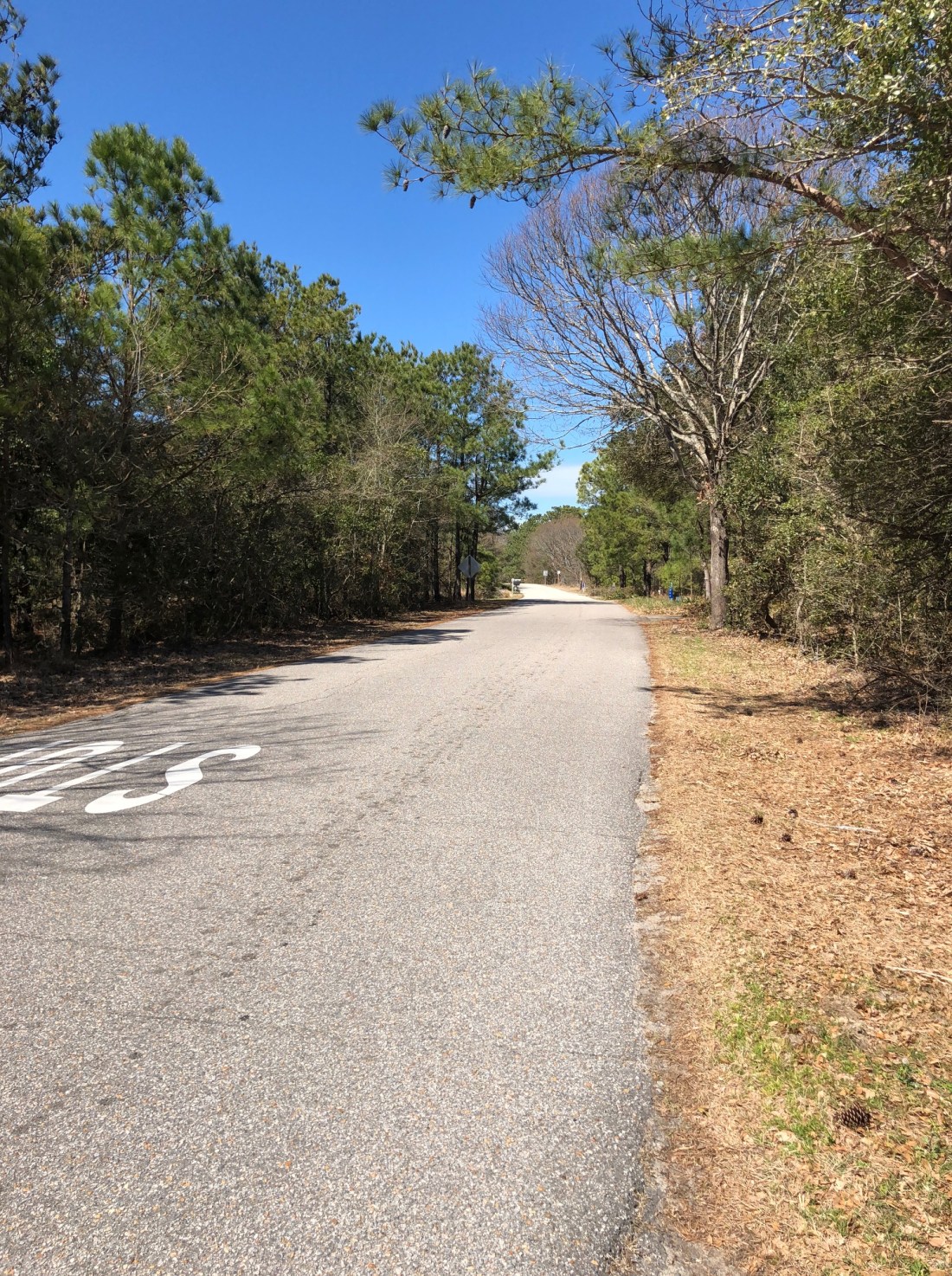


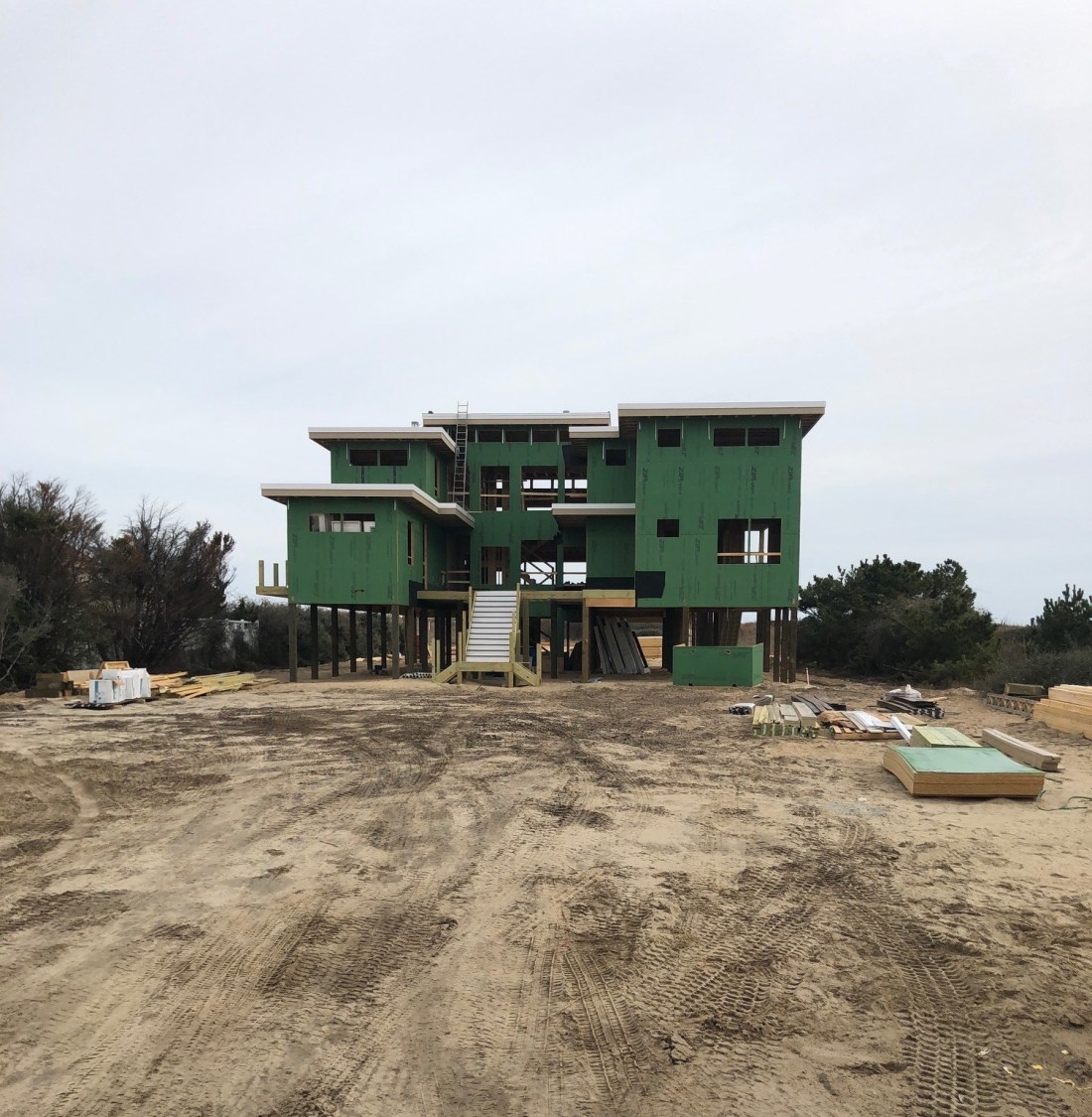

 The Southern Shores Beacon