Based on reports The Beacon received from Southern Shores residents, by email and by Facebook post, and my own observations, the Town’s no-left-turn trial this past weekend at the U.S. Hwy. 158-South Dogwood Trail intersection gave both homeowners and northbound motorists a break from the stress and aggravation of traffic backups. It created a safer and more peaceful environment.
At no time during the two-day, 8-a.m.-to-6 p.m. prohibition on turning left from Hwy. 158 to South Dogwood Trail did traffic back up on any of the town’s residential roads, including those in Chicahauk, residents reported. Typical of comments from homeowners at the north end of Sea Oats Trail, which is the last entry for “cut-through” motorists to rejoin the traffic flow on NC 12, was this Facebook post from Lori Harrell Worthington:
“This has been a wonderful weekend with no backups in our neighborhood!”
Other Sea Oats Trail homeowners were flabbergasted. Said Mary Ann Gouzie Hurd, who posted on Facebook throughout the weekend: We’ve had “no traffic” all day, each day. This is “unheard of.” More than that, “This is weird.”
Lest there be any concern that Chicahauk was bearing the brunt of the no-left-turn trial, John Booth, who lives on Gravey Pond Lane in Chicahauk, reported “light traffic on Juniper/Trinitie” on both days.
Susan Dineen, who also lives in Chicahauk, agreed. On Saturday, Ms. Dineen wrote: “I watched the Juniper/Trinitie traffic flow all day, and it was very light, which is typical for any day here.”
Pictured at top is a photo of the 158-South Dogwood Trail intersection that a Beacon reader downloaded from the N.C. Dept. of Transportation website at 12:47 p.m. Saturday. (A larger reproduction of the image appears on The Beacon’s Facebook page.)
The depicted conditions represent the worst congestion that occurred during the weekend trial, and it reportedly did not extend very far on the Wright Memorial Bridge. The congestion also did not persist throughout the day, as both Hwy. 158 and NC 12 opened up.
According to Sunday reports, traffic moved at speed on both Hwy. 158 and NC 12 for most of that day, if not all day. I drove through the 158-South Dogwood Trail at 2:30 p.m. and 3:30 p.m. on Sunday and observed traffic moving at speed, with no slowdowns. At 3:30, I drove north on South Dogwood Trail and then turned right on East Dogwood Trail, taking it to NC 12, where I joined the traffic heading north. I was pleased and shocked to be in this traffic moving at the speed limit. I stayed with it until I turned into the dunes on Sea Oats Trail; I could see a clear road ahead on NC 12.
Some readers observed that the traffic volume seemed lighter this past weekend than it usually is on a summertime weekend. Tommy Karole, owner of the Paper Canoe Restaurant in north Duck and a Southern Shores resident, said his employees who crossed the Wright Memorial Bridge reported “light traffic.” Perhaps. Or it may simply have seemed that way because the Hwy. 158 traffic flow was faster. The Town’s traffic counters should provide some insight into the number of vehicles that traveled on NC 12 and elsewhere.
The Beacon eagerly awaits an official report from TOSS Police Chief David Kole about the number of traffic citations issued during the no-left-turn trial, especially for making an illegal left turn; the number, location, and nature of any allegedly related traffic collisions that may have occurred; and the number of vehicles that crossed the Town’s counters.
I received several emails from excited residents who were thrilled to see Southern Shores police officers, “with their blue lights on,” pull out from the road shoulder, where they were parked, observing the intersection, and chase motorists who made illegal turns. The Beacon thanks all of the officers who endured the muggy heat to implement “zero tolerance.”
The OBX Locals Facebook page posted a report that the Southern Shores police issued 26 citations for an illegal turn on Saturday. This figure is unsubstantiated and should not be considered factual, absent police confirmation.
I would like to conclude this post by thanking Town Councilmen Fred Newberry and Gary McDonald, who listened to residents, who had been complaining for years about the cut-through traffic, and lobbied for a public meeting with representatives from the N.C. Dept. of Transportation. When these representatives made it clear at the Town Council’s Sept. 5, 2018 meeting that DOT would support the Town in any actions it wanted to try to curb the cut-through traffic, Councilmen Newberry and McDonald pushed for the directive that enabled the no-left-turn trial to occur.
The June 23-24 trial results are a meaningful start to a dialogue about traffic in Southern Shores, but they emanate from only one trial over one weekend. Such limited evidence is hardly enough to enable a full and fair evaluation of the effects that a left-turn prohibition at 158-South Dogwood Trail would have on traffic flow through Southern Shores—both on the residential streets and on NC 12. We would like to see another trial occur this summer in July, which is our peak vacation month, or August.
If you agree, please let the Mayor and the Town Council know: Email them at council@southernshores-nc.gov. Let them know what you think.
Built in 1948, the Graves Cottage at 64 Ocean Blvd. was a two-story flat top. SAGA bought it in an estate sale in 2013.This dwelling is under construction at 64 Ocean Blvd. today. The land to the south of it is a newly created nonconforming 50-foot-wide lot.
Deeds transferring property in Southern Shores from its developers to initial buyers contained a number of restrictive covenants, a standard one of which specified a minimum lot width of 75 feet or 100 feet for every dwelling constructed.
These covenants expressly ran with the land and, thus, moved from deed to deed as the property was transferred from one owner to the next. They were tied to the land, not to the owner, and did not have an expiration date. Subsequent deeds in a property “chain” commonly referred to them.
I finally had an opportunity to do research at the Dare County Register of Deeds in Manteo. What I discovered in looking up old deeds, which are unavailable online, was a clear intent by Southern Shores developer Frank Stick, his partners, and their business entity and successor, the Kitty Hawk Land Co. (KHLC), to establish minimum dimensional requirements for building lots.
They didn’t have a town zoning code. They had restrictive covenants.
During the past two years, an unwelcome trend has emerged in Southern Shores to redevelop 100-foot-wide land tracts on or near the oceanfront—which are platted and recorded as two 50-foot-wide lots—as two “nonconforming” lots. Since the Town enacted zoning ordinances in the 1980s, the minimum width for a lot has been 100 feet, and the minimum size has been 20,000 square feet.
In proposed Zoning Text Amendment (ZTA) 18-07, which The Beacon has covered extensively, the Town seeks to amend the Town Code of Ordinances to ensure that the development of smaller nonconforming lots does not continue to occur.
Although difficult to understand, ZTA 18-07 essentially requires the “recombination” of adjacent lots under the “same ownership” into a single conforming lot or multiple lots, if certain situations apply. Those situations involve proposed development and/or sale.
ZTA 18-07 would replace the current confusing and inadequate Town Code section on nonconforming lots, which is sec. 36-132.
The proposed amendment received a 3-2 favorable response from the Town Council on its first reading June 5. Mayor Tom Bennett and Councilman Chris Nason, an architect who has designed oceanside houses in Southern Shores, voted against it. The second reading for ZTA 18-07 is expected to be July 10.
Having now unearthed the bedrock restrictive covenants of Frank Stick and his vision of Southern Shores, I’m left wondering: Are these decades-old restrictive covenants legally enforceable? If so, by whom? The Town? The Southern Shores Civic Assn.?
In not enforcing them, has the Town, the Southern Shores Civic Assn., or both allowed illegalities to occur?
In this special report, I will detail three property situations in which restrictive covenants were ignored, to the detriment of the Southern Shores vision and land-use plan. But before I do, I’d like to impart some history.
***
The Beginnings of Southern Shores
“Founding Father” Frank Stick bought the 2800-acre tract that he named Southern Shores shortly after World War II. He envisioned an ocean-to-sound residential community of open space and luxurious privacy for people of more modest means than the ultra-rich who owned oceanfront property in the Northeast.
I have referred to this arrangement in previous posts as a non-negotiable “package deal.” Purchasers bought two lots, but always treated them as one lot for development purposes.
The Stick-McMullan-Aydlett partnership was nothing if not orderly: The partners divided the Southern Shores subdivision into blocks, some of which had sections, and decided the minimum building lot size per block, as well as minimum dwelling setbacks from Ocean Boulevard and from side and rear boundaries.
In 1967, my parents bought a pair of oceanfront lots for $10,000. I now know that underlying their 1967 deed was a 1951 deed from KHLC to the initial buyers that restricted the construction of a dwelling to “each 100 feet of property conveyed.” My parents’ deed references this 1951 deed by its recording citation, but I had never looked it up before. The earlier deed also includes a covenant requiring a dwelling to be constructed 100 feet from the east edge of Ocean Boulevard.
Mr. Stick (1884-1966), who was a nationally known wildlife artist, as well as a conservationist, and real-estate speculator, investor, and developer, designed the Southern Shores “flat top,” based on block homes he had seen in Florida. He built his own flat top in 1947 at 60 Ocean Blvd. from cement blocks. For some time after this, flat-top construction was made mandatory through a restrictive covenant in deeds that regulated architectural design.
***
The Irony of 64 Ocean Blvd.
All of the oceanfront properties around the Stick home site were 100-foot-wide lots, made up of two 50-footers, but they were platted in blocks in which the minimum required building lot width was 75 feet.
According to Ms. McNaughton’s book, a cluster of flat tops developed in this area that became known as “The Compound.” In 1948, Edward Spencer Graves of Lynchburg, Va., built an atypical two-story flat top at 64 Ocean Blvd. for his mother, who had 17 grandchildren and entertained “a constant parade of houseguests” from Lynchburg.
Known as the Graves Cottage (pictured above, at top), this historic home was destroyed by SAGA Realty & Construction to make way for its proposed 16-bedroom-with-a-ballroom “event” house, which it planned to build in 2016.
SAGA was forced to abandon its construction when the Southern Shores Town Council, by a vote of 3-2, capped home size at 6,000 square feet. Mayor Bennett and Councilman Nason, who has worked with SAGA, opposed the size limitation.
My research shows that the underlying deeds at 62 and 64 Ocean Blvd. contain the standard Frank Stick-KHLC restrictive covenant about the minimum building lot being 75 feet of frontage, and subsequent deeds refer to “restrictive covenants as may appear of record in the Public Registry of Dare County” or similar language. And yet, a 50-foot-wide lot now exists between the large houses at these addresses.
How did this happen?
It happened because 1) Edward Graves unduly complicated ownership by leaving each of his mother’s grandchildren an undivided interest in Lots 3 and 4, which made up 64 Ocean Blvd. property, and an acquired 37 ½ feet of adjacent Lot 5, originally part of 66 Ocean Blvd.; and 2) the Gupta family, principals of SAGA and related limited liability corporations (LLCs), bought the property through a 2013 court-ordered estate sale.
According to the deed history, Amit Gupta, who is a co-founder and partner of SAGA, submitted the winning bid for 64 Ocean Blvd. Several months later, Amit assigned his bid to 64 Ocean Blvd., LLC, which was managed by his brother, Sumit Gupta, another co-founder and partner of SAGA. Sumit (i.e., 64 Ocean Blvd., LLC), in turn, gifted Lot 3 to Nags Head Freehold, LLC, which their father, Prem Gupta, managed.
SAGA’s website lists Amit Gupta as its president; Sumit Gupta as its Chief Executive Officer; and Prem Gupta as its Chief Financial Officer.
In January 2016, after the Town Council restricted house square-footage, Nags Head Freehold, LLC sold this nonconforming lot, labeled “64A Ocean Blvd.,” to Steven D. Love and his wife, Kathleen Gorman, who own the adjacent property at 62 Ocean Blvd.
As I read the current, albeit fuzzy nonconforming-lot law, Town Code sec. 36-132(a)(2), the Guptas—no matter what corporate veil they use—should have been prevented from selling Lot 3. But, even if you view the law as favorable to them, the restrictive covenant requiring frontage of 75 feet should have run with Lot 3.
Taking no apparent notice of the covenant, however, the Town has treated 50-foot-wide Lot 3 as buildable: On May 16, 2016, the Board of Adjustment unanimously granted Mr. Love and Ms. Gorman a variance for 12-foot side-yard-setbacks.
The land tract at 64 Ocean Blvd., where a large house has long been under construction (see photo above, at bottom), is now 87 ½-feet wide, a size that is permissible under the old restrictive covenants, as are 10-foot-wide side setbacks; but impermissible under the current zoning law. (Would anyone care to measure the setbacks at the site?)
The Board of Adjustment’s approval of a variance on Lot 3 opened the door for other property owners, including those at 103 Ocean Blvd.
***
103 Ocean Blvd.: Did Confusion Lead to Illegality?
On July 18, 1967, the KHLC transferred two 50-foot-wide adjacent lots at 103 Ocean Blvd., to Moses E. and Mary V. Goldman, a married couple. Among the covenants listed within, the deed restricted the construction of a dwelling on the site to a land width of at least “75 feet of either ocean or highway frontage.”
Subsequent deeds in the chain of title for 103 Ocean Blvd., expressly referred to this and other covenants, even citing the book and page number of the Dare County Registry on which the first deed was recorded.
Thanks to action by the Town’s Board of Adjustment, however, 103 Ocean Blvd. is now the site of two three-story rental houses, each built on a 50-foot-wide lot.
How did this happen? To find out, you have to track the deeds.
On May 24, 1968, the Goldmans transferred a “one-half, undivided interest” in their property to Frederick and Mary Randall. This deed explicitly referred to the 1967 deed and stated that the transfer was subject to “those certain restrictions set forth in the deed of Kitty Hawk Land Company to the Grantors [the Goldmans].”
Thus, Moses and Mary Goldman had 50 percent, and the Randalls held the other 50 percent—of a 100-foot-wide property. They did not each have a 50-foot-wide lot. They thereafter built a brick duplex on the site that overlapped the two lots
Mary Randall died. On July 15, 1982, Frederick Randall and his second wife, Marguerite Randall, transferred their one-half interest to Edwin B. Goldman and his wife, Dorothea Goldman.
Edwin, you might speculate, was the son of Moses and Mary, but I could not confirm this relationship. Edwin and Dorothea’s deed clearly refers to the restrictive covenants recorded in 1967.
You might suppose that with the Goldman family owning all of 103 Ocean Blvd., the property would end up with the younger generation when the elders died, but that is not what happened. Instead, the one-half interest that Moses and Mary Goldman owned passed under Moses’s will in 1988 to Charles and Paula Pagano. Two trustees, including one named Harry L. Goldman, sold the interest to the Paganos, who sold it, in 2000, to Jimmie and Dana Summerell of East Lake, NC.
The Summerells, who are local investors, had to know they were not purchasing a 50-foot-wide lot. They also should have known the restrictive covenants that ran with the property, as well as the Town’s zoning requirements.
In the meantime, Edwin and Dorothea transferred their one-half interest to the Dorothea B. Goodman Trust, which became known in 2015 as the Georgia J. Goldman Trust.
Apparently with the advice of the Town of Southern Shores—public comments by Board of Adjustment members have indicated such—the Summerells and the trustees of the Goodman Trust executed transfers by gift in January 2017 that split the 100-foot-wide property into two 50-foot-wide lots, one owned by the Summerells, the other by the trust.
Shortly after these transfers occurred, the Board of Adjustment approved side-setback variances that enabled the two sets of owners to build on more lot square footage. They replaced the decades-old duplex with two near-identical three-story rental houses that look like they belong in crowded Nags Head, not Southern Shores. (IMHO)
Was the property owners’ and the Town’s disregard of the restrictive covenant requiring a minimum building-lot size of 75 feet in width legal? Should the Civic Assn. have intervened?
***
315 N. Dogwood Trail: Divided into A, B, C Lots
I now shift to soundside Southern Shores. In a June 4 blog, I looked at the online deed history of 315 North Dogwood Trail, an approximately 180-foot-wide land tract. (To view a deed recorded before 1999, you must go to the Register of Deeds.)
I took some heat in the June 5 Town Council meeting for referring to this property as being “subdivided,” although I clearly used the word in a non-legal sense to mean dividing a whole into smaller parts. I conceptualize what happened to this tract as an “un-combining” of lots—just like the un-combining at 64 Ocean Blvd. and 103 Ocean Blvd. See what you think about its treatment.
On Feb. 4, 1966, the KHLC transferred the land, designated as lots 34, 35, and 36, Block D, Section B, Soundside, to P.J. M. Bayne and his wife, Margie S. Bayne. Among the “covenants running with the lands and binding on the parties . . . their heirs and assigns,” listed in the deed, was the following:
“No more than one dwelling shall be constructed on each 75 feet of lot frontage, but one guest house may be built on each 100 feet of frontage in addition to the main dwelling.”
In 1973, the KHLC established the new road of North Dogwood Trail, which necessitated a revision of the boundary lines of the Payne property. KHLC and Margie S. Bayne, now a widow, agreed to an amended plat of the three lots, recorded in a new map book.
This agreement specifically stated that the “terms, conditions and restrictions stated in the instruments by which [Mrs. Bayne] initially acquired” her property interest still pertained.
In October 1991, Margie Bayne, now known as Margie S. Young, executed a deed of gift of the three soundside lots to Fred M. Suthard, reserving a life interest for herself. This deed makes no mention of the KHLC’s restrictive covenants, but Ms. Young does take “exception” to any “restrictions and covenants of record and any governmental regulations that may affect” her gift to Mr. Suthard.
Nearly 23 years later, in 2014, the executor of the Estate of Fred M. Suthard transferred title to the three soundfront lots to Raffaele Dibari and Shannon D. Dibari. The Dibaris bought the 37,000-square-feet parcel of land, which had a 45-year-old house on it, for $425,000. The parcel was treated, again, as a whole, not as parts.
Subsequently, the Dibaris subdivided—broke up? partitioned? un-combined?—the parcel by the lots, each of which is approximately 60 feet wide. They designated them 315A, 315B, and 315C N. Dogwood Trail.
Two years later, an Ohio couple paid $255,000 for the 315A lot. I only learned about this property because the Ohioans put “315A” up for sale on May 25. The online multi-listing for the lot indicates a sale is “pending.”
According to their respective deeds, the Dibaris and the Ohio couple both took title to their property subject to “easements and restriction of record, if any, in the Dare County Registry.”
This should mean that 315A is not a buildable lot because it is not 75 feet wide, as the underlying restrictive covenant in the Paynes’ deed requires. If, however, this covenant no longer has legal force, then the lot should be considered nonconforming under current Town Code zoning law.
The Dibaris, who still own adjacent lots B and C, appear to have a right to sell the A lot—because of a gap in the current nonconforming-lot law, which ZTA 18-07 would fill—but building on it is a different matter.
***
Questions arise: Do decades-old restrictive covenants have any meaning today? Does it matter if subsequent deeds do/do not refer to them as conditions of the land transfers? (It is fairly routine for land transfers to be subject to “restrictions of record.”)
What is the value of a restrictive covenant if it is not enforceable or enforced?
Shouldn’t adjacent and nearby property owners be able to trust that restrictive covenants will be enforced?
I am not a real-estate attorney, nor do I aspire to activate my law license in North Carolina and become one. I have not done any legal research on restrictive covenants, and I am not going to render a legal opinion on them. I do remember one guiding principle, however, from my first-year property-law class:
A restrictive covenant generally will not be enforced if the character of a neighborhood has changed so substantially as to defeat the purpose of the covenant.
You have to question the use and value of restrictive covenants if some property owners can blithely ignore them—especially those covenants that serve to regulate the density of development and, thus, have a profound effect on other property owners’ quality of life and land investment and on the character and ambiance of a town.
Restrictive covenants such as the ones I’m highlighting are what make Southern Shores, Southern Shores.
During the Town Council’s June 5 hearing on ZTA 18-07, Mayor Bennett expressed concern that the proposed amendment would “punish” some property owners by depriving them of an anticipated investment.
I would like to meet the Southern Shores property owner who thinks he/she would be “punished,” and then I’d like to go to the Register of Deeds and research his/her chain of deeds.
Frank Stick and company knew what they were doing. Do we, now?
In just one week, the Town’s no-left-turn trial, designed to assess the impact that closing South Dogwood Trail to arriving vacationers would have on motorist behavior and traffic flow, will take place. The Beacon is seeking traffic monitors, on foot, on bicycles, and in vehicles–or posted at their living-room windows–to file reports and photographs of what they see, especially at the intersection of U.S. Hwy. 158 with S. Dogwood Trail, at the Marketplace, in Chicahauk, and on streets in the dunes of Southern Shores (Wax Myrtle, Sea Oats, Hillcrest, etc.).
According to Town Manager Peter Rascoe, who first described details of the “exercise,” as he calls it, at the Town Council’s May 1 meeting, all motorists traveling east on Hwy. 158 from 8 a.m. until 6 p.m. on June 23 and 24 will be prevented from turning left on to S. Dogwood Trail by “heavy barrels” blocking the turn lane. This turn, which is at the second traffic light after the Wright Memorial Bridge, is routinely taken by Duck- and Currituck-beach-bound vacationers who cut through Southern Shores to avoid gridlock on N.C. Hwy. 12.
Two Southern Shores police officers will be posted at the Hwy. 158-S. Dogwood Trail intersection to ensure “zero-tolerance enforcement” on both weekend days, Mr. Rascoe said. Although mindful of the possibility that traffic may divert to Juniper Trail, the Town Council elected to keep control and cost modest by focusing only on S. Dogwood Trail. The Town will not post officers at Juniper Trail.
Mr. Rascoe also announced that the entrance to Southern Shores Landing off of Hwy. 158 will be closed during this time. The Beacon confirmed with Mr. Rascoe later that residents and guests of the Landing will be able to exit the community directly on to Hwy. 158. The Beacon would like to hear from Landing property owners if they notice increased traffic through their community on June 23-24.
The Beacon will accept reports and photographs from monitors who prefer to remain anonymous, but asks that monitors identify themselves by name, for verification purposes.
Please send your emails to ssbeaconeditor@gmail.com, preferably with photos in the body of the email, rather than as an attachment; or post your observations and photos to The Beacon’s Facebook page at https://www.facebook.com/southernshoresbeacon.
Please be sure to include basic facts with your report: Where, when, who, what? (And why, if relevant.) Thank you!
In other news and observations around town:
PUBLIC FORUM EXPECTED THIS SUMMER ABOUT TOWN CODE UPDATE PROJECT, MODULE ONE; THE BEACON WILL TELL YOU WHEN
Town Planner and Deputy Town Manager Wes Haskett announced at the Town Council’s June 5 meeting that the Planning Board has finished its review of Module One of the Town of Southern Shores Code of Ordinances Update, prepared by planning consultant CodeWright, of Durham. A public forum must be held before the Town Council can begin the “adoption process,” Mr. Haskett said.
The project is about a year behind the schedule outlined by CodeWright principal Chad Meadows, who signed his contract with the Town in September 2015. CodeWright’s total compensation was expected to be $78,000, an amount that Town budget documents show was exceeded in FY 2017-18.
Presumably, Mr. Meadows will be conducting the Module One public forum, as he has other public forums concerning the Town Code rewrite.
Mr. Meadows uses the word module to describe a group of related Town Code chapters. Module One—which is the first of three modules—encompasses the substantive issues that, according to a citizen survey conducted in December 2015-January 2016, concern property owners the most: buildings and building regulations; zoning; subdivisions, and the like. In other words, Module One covers Town Code sections commonly referred to as the Building Code and the Zoning Ordinance.
Among some of the key questions of Module One that were to be addressed by CodeWright in its assessment and proposed Town Code revision were:
1) The determination of lot coverage (which is the subject of a current Zoning Text Amendment, ZTA 18-04; see The Beacon’s reports on April 12 and April 20);
2) The determination of the maximum height for buildings;
3) The removal of trees on residential lots; and
4) The control of stormwater runoff.
The issues in Module Two, which the Planning Board, presumably, will take up soon, are far less controversial. They include streets, sidewalks, and other public properties; businesses and business regulations; and waterways and beaches.
The Town Code of Ordinances was last updated and revised in August 2009. A number of property owners, including members of The Beacon’s editorial board and myself, did not believe an “update”—we perceived it as a rewrite—was necessary and discouraged the Town Council from awarding a contract to CodeWright.
At the time of the contract award, Tom Bennett was in his first term as mayor, and the Town Council consisted of Jodi Hess, Larry Lawhon, David Sanders, and Leo Holland. Mrs. Hess, Mr. Lawhon, and Mr. Sanders all lost their bids for reelection in November 2015—but, before they did, they sat down for “stakeholder” interviews with Mr. Meadows.
Mr. Meadows kicked off his project on Oct. 20, 2015, instead of waiting until after the Nov. 3 election. The three Town Council seats that the incumbents lost were hotly contested by a field of seven candidates. Current Councilmen Gary McDonald, Fred Newberry, and Chris Nason won the election.
The Town Code Update Project has unquestionably been a hot button for some of us, who did not believe that the scope of the project was accurately represented. We are wary of building and zoning ordinance changes that may inure to the benefit of developers, builders, architects, and all manner of construction contractors, but not to current property owners or the future look, character, and quality of life in Southern Shores.
Among its duties, which are spelled out in the Town Code, the Planning Board must ensure that the Town’s land-use plan is implemented. Southern Shores is a town dedicated to low-density development and the preservation of open spaces.
We are eager to see the Planning Board’s recommendations. Under Chairperson Sam Williams’s direction, the Board has painstakingly reviewed Module One, a process that consumed more than a year. As soon as the Town announces the public forum date and time, The Beacon will publicize them. If you attend no other town meeting this year, please attend this one.
APPLICANTS NEEDED FOR PLANNING BOARD VACANCIES
Speaking of the Planning Board . . . please remember, the terms of four Board members, two regular-voting members and two alternates, are expiring June 30. At least two of these seats will be filled by people who are not currently on the Planning Board. (One of the alternates’ seats has been vacant since Glenn Wyder was appointed to the Board as a regular-voting member.)
Please consider serving your Town as a member of this very important body, which needs a diversity of opinion in order to thrive. You do not have to have a background in planning or the building industry to apply and serve, just a willingness to read, listen, learn, and analyze and a love for Southern Shores.
Here again is a link to the application you must complete in order to be considered for a Town Council appointment to the Planning Board:
TOWN CHANGES RECYCLING PICKUP DAY TO WEDNESDAY; HOW WILL VACATIONERS RESPOND TO THIS INCONVENIENT TIME? HOW WILL YOU?
The Town has announced that, starting July 4, the pickup day for residential recycling will be Wednesday. Bay Disposal, Inc., the Powell’s Point-based garbage collection service that handles trash pickup in Southern Shores, will be taking over recycling service.
Garbage pickup days will remain the same. From June 1 until Sept. 3, 2018, trash placed in the proper receptacles will be picked up curbside on Mondays and Fridays. After Labor Day, servicing will occur only on Mondays.
I asked Town Manager Rascoe what prompted the change in the recycling pickup day, telling him how dreadful I thought Wednesday was for Southern Shores cottage renters, who arrive and leave on Friday, Saturday, or Sunday.
I know from 27 years of experience as a hands-on Southern Shores rental-property owner that renters do not put out their trash—and, since the recycling program began, their recyclables—until the morning of their departure, or, at best, the night before. If they continue this pattern, recycling cans will now sit out by the street for up to five days. I can already see the beer cans and pizza boxes strewn about the ground. In windy conditions, recycling receptacles that are chock-full to overflowing will topple over, and their contents will spill out for all of us to enjoy. (If you think rental companies will step up and handle moving the recycling cans, think again.)
Mr. Rascoe explained that there had been “management” problems with the current recycling contractor, Waste Management of Virginia, and he had rebid the contract in anticipation of WMV’s two-year contract expiring June 30. Town Finance Officer Bonnie Swain said that WMV was missing cans and even missing streets on pick-up Mondays. She described Bay Disposal as “the lowest responsible bidder.”
But why Wednesday? It seems to me that any other day would be better.
The answer: Because Bay Disposal picked Wednesday. It doesn’t have the trucks to pick up both the garbage and the recycling on the same day.
“We’re going to see how this goes,” Mr. Rascoe said, assuring me that he is sensitive to environmental consequences.
I didn’t even get into how residents are going to react to the change. What do you think?
AIRPLANES FLYING LOWER THAN 1,000 FEET OVER SOUTHERN SHORES: HAVE YOU SEEN ANY?
A reader recently contacted The Beacon about a potential safety problem: Low-flying airplanes. I’m talking here about small airplanes towing aerial banners and advertising.
“Will you marry me, Sue?”
“McRib is back!”
“Happy Hour, ½ Price, BK Shuckers”
The Beacon’s reader zeroed in on airplanes “flying those low passes over our houses towing the banners when they go back south.”
Federal Aviation Administration regulations specify minimum safe altitudes for operating an aircraft. Over “congested areas,” and Southern Shores is that, aircraft must maintain an altitude of 1,000 feet above “the highest obstacle within a horizontal radius of 2,000 feet of the aircraft.” Over “other than congested areas,” the minimum permitted altitude is 500 feet “above the surface except over open water,” such as the mighty Atlantic Ocean, “or sparsely populated areas.”
In the case of water, a pilot may not operate an aircraft closer than 500 feet to any “person, vessel, vehicle, or structure.”
These altitudes do not apply to takeoffs and landings. An airplane landing at First Flight Airport, at the Wrights Brothers Memorial, which is owned and maintained by the U.S. National Park Service, may seem to come in right above your head if you’re in the right spot in KDH.
The Beacon would like to know if anyone else in Southern Shores has noticed aircraft seeming to fly over the residential districts at an altitude lower than 1,000 feet. If you have, please email me at ssbeaconeditor@gmail.com and tell me what you’ve seen. Be sure to provide the facts of when, where, and what.
Airplanes can appear to be flying lower than they actually are, so it’s advisable to take a photograph of a plane, if you can, with some height-reference points.
For information about filing a complaint with the FAA, see:
In a 3 ½-hour meeting Tuesday night at the Pitts Center that featured four public hearings and a surprise announcement by Planning Board Chairman Sam Williams, the Southern Shores Town Council split 3-2 on approving ZTA 18-07, a zoning change intended to halt a recent trend in town to develop nonconforming lots, in particular, lots that are 50 feet wide. Councilmen Fred Newberry, Gary McDonald, and Jim Conners voted in favor of the ZTA, and Mayor Tom Bennett and Councilman Chris Nason opposed it.
A second reading of ZTA 18-07 will likely be held at the Council’s July 10 meeting, although a special meeting could be held earlier. According to Town Attorney Ben Gallop, the ZTA did not “pass.” The vote to approve it on first reading fell short of the required majority. On second reading, only a simple majority is required.
As expected, the Town Council also unanimously approved two other zoning text amendments recommended by the Planning Board, including one that changes the Town Code to allow “small” drive-through facilities to operate in the commercial district, if they front on U.S. Hwy. 158 (ZTA 18-05), and was before the Council on a second reading; and another pertaining to the installation of small-cell facilities in residential districts to improve cellular-phone signals (ZTA 18-06).
Mr. Nason, an architect and owner of Beacon Architecture & Design in Kitty Hawk, did not participate in the drive-through facilities matter (ZTA 18-05), because of a financial interest. He described ZTA applicant 5415 OBX LLC, represented by Spiros Giannakopoulos, who also sought a conditional use permit (CUP) to operate a drive-through ice cream shop on the 18,260-square-foot commercial lot at 5415 N. Croatan Hwy., as “a client.”
The Council voted 4-0 to grant Mr. Giannakopoulos’s CUP.
After a robust discussion led by Mr. McDonald about how Town Manager Peter Rascoe balanced the proposed FY 2018-19 budget that was filed May 1, the Town Council approved the budget, 4-1, with Mr. McDonald dissenting.
Mr. McDonald questioned a transfer of $282,828 from the Capital Reserve Fund, which is used for capital projects, to FY 2018-19 revenues in order to make up for a shortfall in revenues and expenses that appeared in preliminary figures presented April 17 by Mr. Rascoe in a “draft” budget. (See The Beacon, “FY 2018-19 BUDGET SESSION: Preliminary Figures Show Expansion of Capital Projects, Staff; Major Investment in SSVFD, Employee Compensation,” April 24.)
“We’re using money that was designated for a specific project”—in this case, $195,000 for work on Yaupon Trail that was delayed—“to balance the budget,” Mr. McDonald argued.
The Beacon will explore Mr. McDonald’s concern, and Mr. Rascoe’s response, in an upcoming blog post.
In other budget discussions, Councilman Newberry brought up future payments for the proposed new fire station, which has been estimated will cost up to $6 million and has yet to be approved by the Town Council.
Noting that revenues are unlikely to increase, Mr. Newberry asked: “Do we start trimming the budget, or do we raise taxes?”
Councilman Nason agreed that next spring, when the FY 2019-20 is prepared, “A tough discussion [will] be had.”
The May 1 proposed budget differed only minimally from the April 17 draft budget, showing bottom-line expenditures of $6,355,401, compared with $6,388,835 in the draft.
And finally, Planning Board Chairman Sam Williams, who presented the Board’s recommendations on all of the ZTAs and answered Council’s questions, announced that after nine years as chairman, he will not be seeking another three-year term on the Board when his current term ends June 30.
Mr. Williams, a dedicated and diligent public servant who has worked extremely long hours as Board chairman, expressed an interest in having more time with his family.
The Beacon extends its best wishes to Mr. Williams and his family. We hope Mr. Williams enjoys his grandfather time, but also continues to share his knowledge and experience with the Town.
Mr. Williams’s decision creates a certain vacancy on the Planning Board, which the Town Council must fill by majority vote. The three-year term of Board member David Neal is also expiring June 30. He previously has indicated an interest in continuing for another term. In addition, a vacancy currently exists in one of the two Board alternate positions, and the term of alternate Carlos Gomez is ending June 30.
NONCONFORMING LOTS—ELABORATED
I will conclude this post with a few more comments about the discussion on ZTA 18-07, which proved to be confusing and somewhat divisive. To say the least, the issues raised by the ZTA are complicated.
It is unfortunate that the public hearing on ZTA 18-07 was the last one on the agenda, rather than the first, because so many people had left by the time it started. It is also unfortunate that Mr. Gallop did not explain to the remaining public the meaning of the vote.
After the Town Council voted, 3-2, to approve the ZTA, as written, without any changes—on motion by Mr. McDonald, seconded by Mr. Newberry—members of the audience were left asking, literally: What happened? Did it “pass”?
When I posed this question to Mr. Gallop after adjournment, he explained that, to be enacted, the ZTA needed to be approved by a “super majority” of four of the five Council members. On second reading, a simple majority, or three of the five, will be sufficient. Mr. Gallop would not characterize the ZTA as having “passed.”
Southern Shores’ low-density character is a key feature of its land-use plan and of its unique appeal. The Town’s zoning laws specify a minimum lot width of 100 feet and a minimum lot size of 20,000 square feet. These dimensional requirements are listed among those for setbacks, lot coverage, and building height, etc., in Town Code section 36-202(d), which covers the RS-1 single-family residential district.
But many lots in Southern Shores were platted and recorded as 50-foot-wide lots, and then typically sold in combinations of two or more, before the Town was incorporated and the Town Code was enacted. To my recollection, they were sold as “package deals” and developed as if they were single lots of 100 feet or more in width. It is because of this development history that Southern Shores has been able to preserve its open spaces.
It’s also because of this history that the nonconforming-lot dilemma has arisen.
When my parents purchased oceanfront property in Southern Shores nearly 50 years ago, they were offered one tract of land consisting of two 50-foot-wide lots: Take it or leave it.
They were not given the option of buying only one of the 50-foot-wide lots. I don’t know why their land wasn’t platted as one 100-foot-wide lot because, clearly, the developer’s intent was to preserve large lot sizes.
The neighbors to the immediate south of my parents’ property, who were a generation older than they, bought three adjacent 50-foot-wide lots and built a marvelous flat-top house on two of the lots, leaving the lot between my parents’ property and theirs, vacant. (Part of a dune deck overlaps the third 50-foot-wide lot, however.)
In the discussion about ZTA 18-07, Mayor Bennett seemed most concerned about the interests of people like my parents’ original neighbors: The ZTA would prevent such property owners—actually, now their grandchildren and great-grandchildren—from selling their third vacant 50-foot-wide lot.
LOW DENSITY, ABUNDANT SPACE
I think it is relevant to quote in full paragraph (a) under sec. 36-202, which expresses the intent of the regulations:
“The RS-1 district is established to provide for the low-density development of single-family detached dwellings in an environment which preserves sand dunes, coastal forests, wetlands, and other unique natural features of the coastal area. The district is intended to promote stable, permanent neighborhoods characterized by low vehicular traffic flows, abundant open space, and low impact of development on the natural environment and adjacent land uses.”
I found it very disconcerting to hear Councilman Nason say during the hearing on ZTA 18-07 that he has “no problem” with developing 50-foot-wide lots and increasing density. He may not, but the Town does and has since its 1979 incorporation.
Mayor Bennett worried about “punishing people”—such as my parents’ original neighbors and their descendants—who would be compelled by ZTA 18-07 to “recombine” their lots into one single lot if they tried to sell a nonconforming lot separately. But, if they were permitted to sell their third 50-foot-wide lot, their buyer would build on the lot, with the aid of variances, in contravention of the intent expressed in both sec. 36-202 and the Town land-use plan.
Mr. Gallop’s explanation that “over time,” the Town’s intent “is to reduce nonconformings” did not seem to resonate with the mayor.
“We need to put more work into [the ZTA],” Mr. Bennett said.
Councilman Conners spoke for Mr. Newberry, Mr. McDonald, the Planning Board, and property owners who publicly supported the ZTA, when he said that it was about “stopping runaway development so [Southern Shores] doesn’t look like Kitty Hawk or Kill Devil Hills.”
He exhorted his Council colleagues: “Let’s move forward.”
A yellow arrow marks the nonconforming lot for sale at 315A N. Dogwood Trail, in one of the photographs included with the listing.
A soundfront lot at 315A North Dogwood Trail in Southern Shores came on the market May 25, listed for sale by Beach Realty-Duck. Asking price: $285,500.
What a steal! You think, before wondering: What gives? 315A? When did land on the north end of Dogwood Trail, where the road narrows to a single lane, get subdivided?
(Please note: I am not using the terms, subdivided and subdivision, in a legal sense. The three lots at 315 N. Dogwood were treated for decades as a single parcel, although they were platted separately. I am speaking of that single combined tract as being subdivided.)
Promoted by the broker as “the only soundfront lot” for sale in Southern Shores, 315A N. Dogwood Trail is advertised—and comes up in a multi-listing search—as land. But the property details of the listing (#100656) show a house having been built there in 1970, and the online Dare County property tax records still depict an old colonial on the site.
If you read further in the listing, you’ll soon discover that what is being called 315A N. Dogwood Trail is only about 13,330 square feet in area—a size that makes it 6,670 square feet smaller than the minimum 20,000-square-foot lot size required in Southern Shores. (See Town Code sec. 36-202(d))
Lots that do not meet the Town’s legally mandated dimensional requirements, such as the minimum size of 20,000 square feet and the minimum width of 100 feet, are considered nonconforming. These requirements exist to ensure that Southern Shores retains its desirable low-density character, which is a central feature of its land-use plan.
The Town Council will be voting tomorrow on an important zoning text amendment (ZTA 18-07) that seeks to ensure that nonconforming lots, like 315A N. Dogwood Trail, are neither created nor developed in Southern Shores. The public hearing on ZTA 18-07 is one of four hearings scheduled during the Town Council’s 5:30 p.m. meeting at the Pitts Center, behind Town Hall. (See The Beacon, May 24.)
Not only is 315A N. Dogwood Trail a nonconforming lot, but the broker is encouraging potential buyers to inquire by representing: “Complete site plan with 4 bedroom home and pool available for review.” This lot, the listing pitch continues, is a “great opportunity to build your own soundfront home.”
Under both current zoning law (Code sec. 36-132), and ZTA 18-07, which replaces a section of the current law, however, 315A N. Dogwood Trail is not a buildable lot.
Anyone who buys 315A N. Dogwood Trail, as an Ohio couple did in 2016, according to tax records, will be making a mistake. My research shows that the Ohioans paid $255,000 for this nonconforming lot, which was created by a Virginia couple who purchased 315 N. Dogwood Trail and subdivided it.
Property records reveal that Raffaele and Shannon Dibari of Burke, Va., bought 315 N. Dogwood Trail in 2014 from an estate for $425,000. Talk about a steal.
The Dibaris’ purchase consisted of a combined-three-lot parcel of land that was about 37,000 square feet and 180-feet-wide and had a nearly 45-year-old house on it. Subsequently, they subdivided their parcel into three approximately 60-foot-wide lots, which they designated 315A, 315B, and 315C N. Dogwood Trail. The couple still owns adjacent lots B and C. All three of the lots are vacant: The house is gone.
How, you might ask, did this happen . . . and just two years ago?
The answer: It shouldn’t have. The current zoning law on nonconforming lots says that the Dibaris could not do precisely what they did. At least, it appears to. The law is less than clear. But no one stopped them. Who should have? Would enforcement be any better under the proposed new law?
ZTA 18-07, which the Planning Board recommended with amendments, is a rewrite of Town Code sec. 36-132(a). It intends to stop an unwelcome two-year-old trend in Southern Shores to redevelop 100-foot-wide lots as two nonconforming 50-foot-wide lots. This subdivision has been possible because in old pre-Town Zoning Ordinance Southern Shores, it was standard to plat and record a 100-foot-wide tract of land as two separate 50-foot-wide lots. The original sale of the three lots at 315 N. Dogwood Trail as one land parcel dates to 1969.
ZTA 18-07 posits five “situations” that should “trigger” the “recombination” of adjacent lots—one or more of which is nonconforming, as 315A, B, and C are—that are “under the same ownership.” One of the situations included is “prior to the sale or transfer of land.” Thus, the new sec. 36-132 would prevent the Dibaris from doing what they did, just as the old law did, but the question remains: Who’s going to stop them?
The answer is still, under the new law, no one—not until such time as the owner of the nonconforming lot applies for a zoning or building permit, and the Town Planning Dept. learns about the subdivision and sale. And then what will the Town do?
I think this is unacceptable. The proposed zoning law needs, and the Town Council should give it, sharper teeth.
SHARPER TEETH
My problem from the beginning with ZTA 18-07, which Town Attorney Ben Gallop conscientiously drafted and redrafted with assistance from Town Planner and Deputy Town Manager Wes Haskett, is that it addresses situations that compel “recombining” lots, rather than clearly stating 1) what a property owner can and cannot do; 2) which Town official or department has authority to ensure that property owners do only what they can do; and 3) what penalty, if any, should be assessed against a property owner who violates the law on nonconforming lots.
I understand Mr. Gallop’s approach, but it concerns me. In a May 17 blog, I suggested that the Town think in terms of preventing property owners from what I called “un-combining,” i.e., subdividing. It is not too late to amend ZTA 18-07 by adding a section that states that it is illegal to subdivide adjacent lots that are required under new sec. 36-132 to be recombined, and that any such subdivision is subject to penalty.
Teeth. A property owner shall not subdivide.
In other respects, I believe Mr. Gallop and Mr. Haskett have done a commendable job. They have expanded upon the triggering situations listed in the first draft of ZTA 18-07 to include those that contemplate the sale of land, not just development or redevelopment.
I also believe that the definition of “same ownership,” as that term is used in the proposed new sec. 36-132, has come a long way, but still could use more fine-tuning. I suggest including within the “case of an individual owner,” those who are non-family-member associates or acquaintances of the owner. Sec. 36-132(a)(4).
Under ZTA 18-07, single 50-foot-wide lots that are not adjacent to another lot under the same ownership and that met all legal requirements at the time of their “creation and recording” (which 315A did not) may exist and be developed. The Planning Board wisely recommended that the side-yard setback for these lots be 12 feet, rather than 10 feet, as the original draft of ZTA 18-07 specified. The 12-foot standard has been firmly established in variance hearings before the Board of Adjustment and represents a majority view. The Town Council should endorse it.
GETTING PAST THE ICE CREAM
The other public hearings before the Town Council tomorrow concern the lot size required to operate a drive-through facility on U.S. Hwy. 158 (ZTA 18-05); the erection and appearance of new poles for the installation of small-cell facilities in the single-family residential district (ZTA 18-06); and the proposed fiscal year 2018-19 budget.
I have written extensively in the past two months about all of the above and will make only a few points now concerning the first of them.
Honorable members of the Southern Shores Town Council: Get past the ice cream. ZTA 18-05 is not about opening up an ice-cream shop. It is about radically changing the zoning law on drive-through facilities in Southern Shores.
Please think like legislators, which you are, and ask yourselves: “What if?”
If you approve ZTA 18-05 and thereby allow a “small” drive-through customer-service facility to be located on a lot that is less than 20,000 square feet, provided it has frontage along U.S. Hwy. 158 (and meets other building requirements), what will be the consequences?
The Southern Shores Town Code currently requires a “drive-through facility or establishment” to be located on a lot equal to or greater than 2.5 acres. According to the Planning Board’s Martin’s Point representative, John Finelli, who spoke during the Board’s hearing on ZTA 18-05, the 2.5-acre restriction was enacted because the Town didn’t believe a drive-through business “was appropriate for every location.”
“We were trying to keep congestion off of Juniper Trail,” he explained.
Besides the congestion inevitably engendered by applicant Spiros Giannakopoulos’s proposed ice cream shop at 5415 N. Croatan Hwy., which is only 18,260 square feet, there is the overriding concern of: How would/could the proposed zoning change on drive-throughs affect the redevelopment of other commercial properties that front on Hwy. 158 at the Marketplace and elsewhere?
Just because there are now two banks on either side of 5415 N. Croatan Hwy. doesn’t mean there always will be.
Just because there is parking to the west of the main Marketplace entrance now doesn’t mean that the land couldn’t be used for small drive-through businesses.
And what about the building site where TowneBank is and the land adjacent to it? These properties front on U.S. Hwy. 158, too.
Before the Town Council carves out an exception for Mr. Giannakopoulos’s ice-cream shop, it should know whether it’s opening a Pandora’s box, and, if so, what menaces might be released.
The ultimate what-if is: Suppose Mr. Giannakopoulos decides he wants out or he dies—lawyer thinking—and 5415 N. Croatan Hwy. passes to another business entity. Is the Town going to be OK with a drive-through express KFC or Burger King, a Brew-Thru, or even a drive-through dry-cleaning facility on this highly visible site that fronts on a very busy highway?
We all scream for ice cream, but that’s not what ZTA 18-05 is about.
Ann G. Sjoerdsma, June 4, 2018; updated, June 5, 2018
The three-year terms of four Planning Board members, including those of Chairman Sam Williams and full member David Neal, and two alternate seats, expire June 30, according to documentation on the Town of Southern Shores website.
One of the two alternate positions has been vacant since April 3, when the Town Council appointed then-alternate Glenn Wyder to the Board to fill an unexpired term. The other position is held by Carlos Gomez.
The Town Code (sec. 24-24(a)) requires the five Planning Board members and two alternates to be appointed by the Town Council, for staggered terms of three years. It further requires the Town Council to fill vacancies occurring for reasons other than term expiration as they occur, for the period of the unexpired term.
The Town Council appointed Mr. Wyder to the Board during its regular April meeting, but failed to fill his vacated alternate seat for the remaining three months of his term. Alternates are non-voting members of the Planning Board who may be called upon to participate and vote on Board business in the absence of a regular member.
The Planning Board advises the Town Council by making recommendations on matters pertaining to the physical development of Southern Shores. It is the front-line watchdog or enforcer of the Town’s land-use plan, which supports “small low-density neighborhoods,” achieved by “single-family homes primarily on large lots.”
The Planning Board does not make law; the Town Council does.
Since April 1, 2014, the Planning Board has served in a dual capacity as the Town’s Board of Adjustment (BOA), whose decisions are subject to court appeal, not to Town Council approval. The BOA is a quasi-judicial body that has legal representation and conducts due-process hearings. (See Code sec. 36-365.)
Among its duties, the BOA has the power to grant variances from dimensional lot requirements, such as the side-setback variances that it granted during the past two years to Southern Shores property owners of 50-foot-wide nonconforming lots. (The Beacon has covered these cases extensively. See last month’s blog posts.)
According to the minutes of the Town Council’s April 1, 2014 meeting, Town Planner Wes Haskett recommended the abolition of the Town’s separate Board of Adjustment and its consolidation with the Planning Board, pursuant to action by the N.C. General Assembly that took effect in October 2013. The separate BOA reportedly had not met since Nov. 20, 2008.
Mayor Tom Bennett and Council members Jodi Hess, David Sanders, Larry Lawhon, and Leo Holland unanimously approved ZTA 14-01, which consolidated the two boards and specified the BOA’s powers, duties, hearing requirements, review standards, etc. This ZTA became Article XII of the Town Code’s Chapter 36, which is about zoning.
CHAIRMANSHIP
According to the Planning Board records online, Mr. Williams has been Board chairman since his July 1, 2009-June 30, 2012 term, reelected by the full Board each year.
The Town Code requires the Planning Board to elect a chairman and vice-chairman, subject to the approval of the Town Council, for one year; it also provides that a chairman may be reelected. (Sec. 24-24(c)) There are no term limits for the chairman or for any Planning Board members. Board member Joe McGraw is listed on the Town website as vice-chairman.
Mr. Neal is finishing his first term, as is Mr. Gomez, and The Beacon believes both should be reappointed. They are thoughtful, open-minded, and conscientious public servants with experience in the building industry.
Mr. Williams has served on the Board since March 25, 2008, the past nine years as chairman. While The Beacon believes Mr. Williams has been an asset to the Planning Board and the Town, and merits reappointment, we also believe that a change in chairmanship is overdue. We hope the other Planning Board members will consider the advantages of bringing a “fresh eye” to the chairmanship.
Municipal planning boards, whose members are usually appointed, not elected, should not be dominated by one individual, whose personal leadership style, land-use and development perspectives and priorities, and even personal and professional relationships within the municipality inevitably affect the Board’s business and its recommendations. Any one of the current Planning Board members, who include Elizabeth Morey in addition to Mssrs. Wyder, McGraw, and Neal, would do an excellent job as chairman and should be given an opportunity.
BOARD APPLICATION
I have often heard Town officials and staff lament that Town residents do not apply for Planning Board vacancies, and recruitment is difficult. Judging from my online research about municipal planning boards and boards of adjustment nationwide, this lament is common. I do not know how much actual recruitment is done in Southern Shores, but I will do my part here in digging up the application, which can be hard to find on the Town website. Here it is:
Please consider serving your town, your neighbors, and the greater Outer Banks community by applying for a position. Regardless of how the Town Council handles the expiring terms of Mssrs. Williams, Neal, and Gomez, there is a vacant alternate seat, with no obvious candidate. You must submit your completed application to Town Manager Peter Rascoe, who will forward it to the Town Council.
DEBRIEFING
Finally, in light of the flurry of activity before the Board of Adjustment in recent years, The Beacon would like to suggest that the Planning Board take time to review and evaluate its performance as the BOA, as well as Article XII of Town Code Chapter 36, especially the language on the standard of review for granting a variance. Questions about “hardship” to a variance applicant proved somewhat confusing in hearings.
The Beacon also would like to know if the Planning Board, which unanimously recommended ZTA 14-01 to the Town Council, still believes the consolidation of the two boards is in the best interest of Southern Shores. Besides variance requests, the BOA is responsible for hearing appeals of certain administrative decisions.
The revenues-expenses shortfall seen in preliminary figures for the Town of Southern Shores’ fiscal year 2018-19 budget has been eliminated with a transfer of nearly $300,000 from the Town’s capital projects savings account. The proposed budget, which Town Manager Peter Rascoe submitted on May 1 and which will be subject to public hearing on June 5, is now balanced at $6,355,402. You may access the budget at:
The public hearing will be held during the Town Council’s regular monthly meeting, which starts at 5:30 p.m. in the Pitts Center behind Town Hall. (See The Beacon, May 24, 2018, for other public hearings scheduled next Tuesday.)
The Council has until June 30 to adopt the recommended budget, with any changes it wishes to make, but it has been customary during Mayor Tom Bennett’s time in office for the Council to approve the budget, as submitted, immediately upon conclusion of the mandatory public hearing.
Transfer of Funds
The preliminary budget that Mr. Rascoe and Town Finance and Personnel Officer Bonnie M. Swain presented to the Town Council at an April 17 work session showed expenses exceeding income by $296,261.
Obligated by law to submit a balanced budget, Mr. Rascoe dealt with the shortfall chiefly through the transfer of $282,828 from the Capital Reserve Fund (CRF) to the General [Operating] Fund. According to Ms. Swain, with whom I met at Town Hall, the Capital Reserve Fund is a “savings account for capital projects.” The shortfall, she said, “was because of capital projects.”
As Ms. Swain explained, the $282,828 transferred from the CRF is made up of $20,000 “reserved for canal and channel maintenance” and $262,828 in “unassigned funds that can be spent at the Council’s discretion.”
At least $195,000 of the CRF’s unassigned funds came from monies allocated in FY 2017-18 for the Yaupon Trail capital project, which had to be postponed, and another $60,000 was money set aside for an update of the Town’s land-use plan, which did not occur, she said.
According to Ms. Swain, the Town has three different funds: The General Fund (GF), which covers nearly all of the budget expenses, including monies budgeted for capital improvements; the Capital Reserve Fund; and the Cemetery Fund. Both the GF and the CRF have unassigned fund balances, she said.
Although the exact amount in the GF unassigned fund will not be determined until FY 2017-18 ends, Ms. Swain estimated that its balance is about $3.4 million, just as it was a year ago. By Town resolution, a minimum of $1.75 million must be maintained in the GF unassigned fund balance, for emergencies related to natural disasters. In FY 2016-17, the GF unassigned fund had a balance of $5.5 million, said Ms. Swain, who expressed an interest in not disturbing this balance.
No Funds for Traffic Reduction
During his presentation of the proposed budget to the Town Council at its May 1 meeting, Mr. Rascoe made a point of saying that it “does not include any costs for traffic reduction.”
Later in the same meeting, Mr. Rascoe described a no-left-turn trial at the intersection of U.S. Hwy. 158 and South Dogwood Trail over the June 23-24 weekend, which the Town Council voted to reaffirm. Police Chief David Kole characterized this trial as a “one-shot deal.” (See The Beacon, May 3, 2018.)
But is a budgetary inclusion of expenses for traffic reduction really necessary? Can’t unassigned fund monies be transferred to the General Fund to cover such costs as they were used to cover the expenses-revenues gap for the upcoming fiscal year?
According to an email from Ms. Swain, “Once the $282,828 is transferred from the CRF to the GF, the balance in the CRF will be $137,794 plus any interest it makes between now and June 30. Of that amount, $79,794 is unassigned.”
OPINION: That $79,794 would go a long way toward supporting a restriction of cut-through traffic in Southern Shores’ residential districts and enforcing that restriction for 10 weekends this summer. If more money were needed, the GF’s unassigned fund balance would be healthy enough to bear a tap. An added bonus: Less traffic on town roads means less wear-and-tear which, over time, means fewer repairs and improvements to be made.
Big-Ticket Items
The Beacon does not recall a preliminary Town budget ever showing a gap between revenues and expenses. It was clear from the data submitted by Mr. Rascoe in April that the Town’s projects and staff costs are expanding rapidly.
OPINION: The way the Town is spending money, it is easy to envision a property tax-rate increase in the near future. Property taxes account for $2,903,049 in FY 2018-19 revenues. The remaining revenue comes primarily from Southern Shores’ share of county occupancy, sales, and land-transfer taxes.
OPINION: The Beacon would like to see the Mayor and Town Council actually deliberate over how the Town can economize and cut expenses or direct the Town Manager to cut 5 to 10 percent of expenses. I have never seen the Town Council try to tighten the municipal belt. Even Ms. Swain spoke about the Town Council taking a “long, hard look” at the budget.
Southern Shores is only about four square miles in area. We are a town of about 2900 residents with a number of very active homeowner associations, next-to-no crime, and a small commercial district. Granted, our population surges during the vacation months, but does that surge justify such a hefty budget?
Here is a list of the major proposed expenses in the FY 2018-19 budget:
$1,007,163 for the Administration Dept., which includes only four full-time employees (Mr. Rascoe, Ms. Swain, the town clerk, and an administrative assistant), whose combined salaries and benefits, including those paid directly to them and paid in their behalf, equal $499,204. That’s nearly a half-million dollars spent on four employees, and it doesn’t include the costs incurred for their additional training, their wellness, and other initiatives.
The last page of the proposed line-item budget contains the Town’s “pay scale” for its employees as of July 1, 2018. Conspicuously missing from the listed positions is that of Town Manager. (See “Salaries” section below.)
The Town contributes to Medicare; health, life, and dental insurance; state retirement, and a 401k plan for each full-time employee in all of its departments. It also gives each $7800 “in lieu of benefits,” which the employee may use to buy health insurance for dependents, which the Town does not routinely provide, Ms. Swain explained, or simply pocket, if he or she chooses. The combined-department total for in-lieu-of benefits in FY 2018-19 is $187,200.
(You may be interested to know that the budget contains allocations of $61,500 for legal services, an amount that represents a $30,000 annual retainer plus $185/hour for the Town Attorney; and compensation for the mayor of $4,200/yr. and $3,600/yr. for the four Town Council members. Many Southern Shores residents still believe that Town officials serve as volunteers, without remuneration. They don’t receive much, but they do receive something.)
$1,692,147 for the Police Dept., which has a payroll of $1,248,019, including all salaries, benefits, employer expenses for employees, and other budgeted compensation. According to Ms. Swain, the Police Department has 12 full-time officers.
$1,123,597 for Streets, Bridges, and Canals, which includes $654,870 for infrastructure projects, whose priority is recommended by the Capital Infrastructure Improvement Plan Committee; and $250,000 to get started on a five-foot-wide multi-use walkway on East Dogwood Trail, extending from its intersection with North-South Dogwood trails to N.C. Hwy. 12.
Although the CIIP Committee made its recommendations at an April 4 meeting, the Town Council is not planning to consider them until its July 10 meeting, after it has approved the FY 2018-19 budget. See the last page of the following report for the CIIP’s priorities:
Mayor Bennett and Town Councilman Jim Conners co-chair the CIIP Committee.
$813,614 for Fire Contracted Service, which includes, according to Ms. Swain, $220,000 of an anticipated annual $440,000+ debt for a 15-year loan to pay for construction of a new fire station, which has been estimated will cost up to $6 million and has yet to be approved by the Town; and $545,914 for contracted fire protection, up from $481,925 in FY 2017-18, the difference being the costs for a new deputy fire chief.
Mr. Rascoe announced at the April budget work session that the town’s 10-year contract with the SSVFD will expire in 2019 and, therefore, need to be negotiated anew. You can anticipate the cost for the Fire Department’s services will increase.
$688,465 for Sanitation Services, which includes $176,690 for residential collection; $172,725 for a “landfill tipping fee”; $156,200 for recycling collection; and $130,000 for limb and branch removal.
$546,444 for the Public Works Dept., which includes $379,262 for salaries, benefits, and employer expenses, as described above, for five full-time employees and one part-timer.
Salaries
In an earlier blog about the Town budget, I published some data about employee salaries that I obtained from an informed Town source who did not wish to be identified. My information was accurate. The following is an excerpt of what I wrote:
“Town Manager Rascoe is slated to earn nearly $159,656 in salary in FY 2018-19. In FY 2011-12, Mr. Rascoe earned a salary of $112,238. His salary, therefore, has increased 42 percent in seven years.
“When town expenses for Medicare, health, life, and dental insurance, state retirement, and his 401k plan are added to Mr. Rascoe’s salary, the total cost to Southern Shores for his position in FY 2018-19 is nearly $207,000.”
To my knowledge, Mr. Rascoe is the highest paid town manager on the beach. Having a law degree and N.C. law license, as Mr. Rascoe does, is not prerequisite to doing a town manager’s job.
A member of the Town Council thought my reporting of this information, which is a matter of public record and should be readily available to all members of the public, was inappropriate and took me harshly to task—identifying me, without naming me—at the May 1 Council meeting for being “irresponsible.” He further accused me of “doxing” Town employees.
After the meeting, I approached Councilman Jim Conners and asked him what “doxing” means. I’d never heard the term. Mr. Conners refused to define it, telling me “to look it up.” He further declined to discuss what I perceived as his bullying of a journalist in his official capacity during a public meeting.
I looked up doxing. According to Wikipedia.com, doxing or doxxing is “the Internet-based practice of researching and broadcasting private or identifiable information about an individual or organization.”
There is nothing private about a public employee’s salary and benefits and what they cost the municipality and its taxpayers. Inflated salaries—as well as excessive perks, junkets, luxuries, etc.—are an issue for our local, state, and national governments, and taxpayers want and deserve accountability. (The Beacon had hoped to have by now a comparison of Southern Shores’ payroll with other towns on the beach, but this report has been delayed.)
I’ve lost track of the number of Cabinet-level and other senior U.S. officials who have flown pricey private jets, instead of traveling commercial, during President Trump’s and President Obama’s administrations.
Just last month, Dr. Robert Redfield Jr., the newly appointed chief of the U.S. Centers for Disease Control and Prevention, asked for and received a sizable pay cut after his annual salary, set to be $375,000, became a distraction. He reportedly was going to make $150,000 more per year than his predecessor had and quite a bit more than other high-level U.S. government officials, who work in public health and elsewhere.
On Dictionary,com, I read that “to dox” is to “search for and publish private or identifying information about a particular individual on the Internet, typically with malicious intent.”
Once again, I distinguish private from public information. As for malicious intent, I had none, but I’m left wondering if Mr. Conners did.
Ann G. Sjoerdsma, May 29, 2018; updated, June 3, 2018
The Town of Southern Shores announced today that the Town Council will hold hearings during its June 5 meeting on the zoning-law changes recommended by the Planning Board this week to restrict the creation and (re)development of nonconforming lots and to regulate the installation of small-cell wireless facilities in residential districts.
The Town also announced that the Town Council will hold a second reading of zoning text amendment (ZTA) 18-05, which would allow a “small” drive-through facility to operate on a lot that is less than 20,000 square feet, provided it fronts on U.S. Hwy. 158.
The Town previously gave notice that a public hearing on the proposed fiscal year 2018-19 budget would be held on June 5, too, making the agenda on the Town Council’s only meeting of the month a very heavy one. The session will be held in the Pitts Center, behind Town Hall, starting at 5:30 p.m.
The Beacon reported May 23 on the action taken by the Planning Board on ZTA 18-07 (nonconforming lots) and ZTA 18-06 (small cells). We also posted blogs on May 11 and 17 that examined concerns over the creation of nonconforming 50-foot-wide lots and the granting of side-yard setback variances on them. On May 14, we looked at the Town’s authority to regulate small cells, which are radio-access nodes installed on existing or new utility or other poles to improve cellular-phone coverage.
The Planning Board has recommended that the Town Code be amended to differentiate between “small” and “large” drive-through facilities, so that 5415 OBX LLC may open a drive-through ice cream shop on the commercial lot at 5415 N. Croatan Hwy., between Wells Fargo and First National banks, which is only 18,260 square feet.
The Town Code currently requires a drive-through facility to be located on a lot that is equal to or greater than 2.5 acres, in order to minimize traffic congestion.
The Beacon reported May 3 on the Town Council’s first reading of ZTA 18-05, which would establish the new two-sized drive-through facility distinction. It failed 3-1.
Each of these houses at 103 Ocean Blvd. was built on a 50-foot-wide nonconforming lot, after a subdivision occurred.
The Southern Shores Planning Board moved decisively toward halting an unwelcome recent trend in town to subdivide 100-foot-wide lots, when it voted unanimously at its May 21 meeting to recommend to the Town Council, with amendments, ZTA 18-07, a change to the zoning law that would restrict redevelopment of “nonconforming” lots.
Nonconforming lots do not conform to the Town’s legally mandated dimensional requirements, such as the minimum width of 100 feet and the minimum size of 20,000 square feet. (See Town Code sec. 36-202(d)) ZTA 18-07 would “trigger” the “recombination” of adjacent lots—one or more of which is nonconforming—under the same ownership in certain situations, said Town Attorney Ben Gallop at the Planning Board’s hearing.
Mr. Gallop drafted the zoning text amendment with Town Planner and Deputy Town Manager Wes Haskett.
During an unusually lively Monday night session, the five Planning Board members also agreed unanimously to recommend, with amendments, ZTA 18-06, a change in the Town’s wireless telecommunications act that seeks to regulate the erection of new poles in residential districts for the installation of small-cell wireless facilities. “Small cells” are used to improve cellular-phone coverage. These low-powered cellular radio access nodes would be attached to utility or other poles in public rights-of-way.
Led by Board member Glenn Wyder, who, along with Chairman Sam Williams and member Elizabeth Morey, expressed deep concern about the physical appearance of the small cells, the Board added to its recommendation that “language be formulated by staff to deal with the aesthetics of the small-cell wireless facilities, to include the screening of equipment” that would be installed.
Mr. Wyder used the photograph at the top of The Beacon’s May 14 blog to show how bulky and obtrusive small cells can be without proper local regulations in place.
Setback Variance Denied
As The Beacon reported on May 11, and May 17, property owners have not only been able to subdivide 100-foot-wide lots, but also to obtain side-yard setback variances for the resulting nonconforming 50-foot-wide lots, enabling them to build 26-foot-wide houses, such as the two depicted above at 103 Ocean Blvd. A brick duplex previously crossed both lots on this site.
During the past two years, the Planning Board, sitting in its capacity as the Town Board of Adjustment, has granted five such variance requests, reducing side-yard setbacks on 50-foot-wide lots from the town’s prescribed minimum 15 feet to 12 feet. Monday, for the first time, the Board of Adjustment denied a setback variance for development on a 50-foot-wide lot, this one a former “paper street” adjacent to 85 Ocean Blvd. Applicant House Engineering, P.C., who represented property owner Richard M. White, of Elizabeth City, sought a setback reduction from 15 feet to 10 feet, not 12 feet.
A paper street is a street that appears on maps, but does not exist. Such streets usually occur when developers or planners lay out streets that are never built. According to online Dare County property tax records, Mr. White, who owns 85 Ocean Blvd., which is a developed 100-foot-wide lot that actually consists of two 50-foot-wide lots, purchased the paper street in 2014 for $25,000.
ZTA 18-07, the proposed new regulation of nonconforming lots, includes a provision that owners of single nonconforming lots—meaning they do not own any land adjacent to their lot—“may use” a side-yard setback of 10 feet.
According to Mr. Haskett, Rick House, of House Engineering, who appeared at the variance hearing Monday, sought a change May 11 in the variance application from 12 feet to 10 feet, after reading ZTA 18-07, and Mr. Haskett granted the change.
(The Beacon apologizes for its error in reporting the request as one for 12 feet. I did not click enough town-website links to discover the May 11 change.)
During its hearing on ZTA 18-07, which occurred after the denial of the variance, the Planning Board voted 4-1, with Chairman Williams dissenting, to recommend amending its setback provision to 12 feet.
If ZTA 18-07 becomes the Town’s zoning law on nonconforming lots, Mr. White will be unable to develop or to sell his 50-foot-wide lot separately. The lot will be “recombined” with his adjacent 100-foot-wide lot.
Fast Track to Enactment?
The Beacon has learned that Town Councilman Fred Newberry, who attended the Planning Board’s session, has requested that ZTA 18-07 be put on the Town Council’s agenda for its June 5 meeting.
Inasmuch as that meeting is only two weeks away, and I will write about the text of ZTA 18-07, as amended by the Planning Board, in advance of the public hearing before the Town Council, I will not say much now about the Planning Board’s discussions. The members were thorough in their analysis. The crux of ZTA 18-07 is its listing of those “scenarios,” as Mr. Gallop called them, that would trigger or require recombining.
As I have previously written, it was standard in the old pre-Town Zoning Ordinance Southern Shores to plat and record a 100-foot-wide tract of land as two separate 50-foot-wide lots. Although Mr. Haskett has said publicly that the number of single vacant 50-foot-wide lots in Southern Shores is only about 10, there is a much higher uncalculated number of 100-foot-wide lots that are actually two combined 50-foot-wide lots. ZTA 18-07 seeks to prevent such owners and owners of more than two adjacent nonconforming lots from treating them separately, for purposes of development, redevelopment, sale, or transfer.
I found myself at a disadvantage during the public hearing on ZTA 18-07 when I learned for the first time that Mr. Gallop had amended the text that I had read and analyzed for my May 17 blog—adding two new scenarios to his recombination trigger and substantially clarifying what is meant by “same ownership.”
Mr. Gallop’s revised ZTA 18-07 apparently appeared online May 17, after I had posted my blog and left town for a funeral. It frankly did not occur to me to check the “Public Notices” section of the town website on the morning of the hearing to see if the ZTA had been amended. Mea culpa . . . from now on I will click.
Mr. Gallop graciously acknowledged after the ZTA hearing that he had read my blog, and I had “some things right.” He also asserted that he had been mulling over what he had written and decided it needed strengthening. I congratulate him for improving the proposed zoning text amendment. You may access the revised ZTA in full here:
The revisions include 1) the addition of two situations or scenarios that would trigger recombination of lots and 2) language that is designed to zero in on who or what constitutes same ownership of adjacent lots and what constitutes “control” of a legal entity, if a lot is owned, in whole or in part, by a legal entity, such as a limited liability corporation.
The two new scenarios are:
(d) “Prior to the sale or transfer of land when any portion of the land being sold or transferred was a parcel or part of a parcel of land upon which an existing structure or associated use is currently or has been within the previous five (5) years located upon or occurring on two or more lots under the same ownership;” [and]
(e) “Prior to the sale or transfer of land including a nonconforming lot or lots adjacent to one or more other lots under the same ownership.”
The Planning Board voted unanimously to recommend amending (d) above to specify seven years, rather than five.
I still think the ZTA language should (and could) be less confusing and clearer, so that people don’t have to read, reread, and reread it, to begin to understand its intent. I am not suggesting that legal terms, which have precise meaning, be eliminated, but rather that the phrasing of the provisions be less cumbersome. I know from experience, however, that once the Town Attorney drafts an amendment to the Code, non-lawyers are reluctant to rewrite it.
I will give Planning Board member Elizabeth Morey the last word on ZTA 18-07. During the hearing, she asked Mr. Gallop an excellent question:
“Are you pretty confident that what you have put together is comprehensive enough to stop what we want to stop?”
Mr. Gallop replied in the affirmative.
Aesthetics of Small Cells
The Beacon reported May 14 on ZTA 18-06 and, more generally, about the State of North Carolina’s “deployment” of wireless facilities statewide. North Carolina aims to be in the first car, not the caboose, of the new-technologies train to the future.
Southern Shores has already amended Town Code sec. 36-175, which deals with wireless telecommunications, to include the State’s language about small wireless facilities, found in the N.C. General Statutes at sec. 160A-400.50 through sec. 160A-400.57. The State is complying with federal law, just as the Town is complying with State law.
ZTA 18-06 deals only with the installation of new poles in Southern Shores residential zoning districts that would be used for wireless facilities, not with collocating small cells on existing poles. The Town previously dealt with regulations on collocation, by adopting statutory language propounded by the State.
Under the State’s scheme, Southern Shores has limited control over the collocation—meaning the placement, installation, maintenance, etc.—of small-cell wireless facilities on or near existing structures, such as utility poles or water towers, within its boundaries. This control is spelled out in the Town Code section dealing with the permit process for collocation: Southern Shores requires all wireless providers who apply for a permit to collocate small cells to affirmatively show that the proposed wireless facilities meet:
The town’s applicable codes;
The town code of ordinance provisions or regulations that concern public safety, objective design standards for decorative utility poles, city utility poles, or reasonable and nondiscriminatory stealth and concealment requirements, including screening or landscaping for ground-mounted equipment;
Public safety and reasonable spacing requirements concerning the location of ground-mounted equipment in a right-of-way; or
Historic preservation requirements in N.C.G.S. 160A-400.55(h). [Town Code sec. 36-175(i)(l). The section specifies “or,” not “and.”]
One would think that the Town can exercise the same oversight of the installation of new small-cell poles, as it does of the collocation of small cells, in particular, requiring wireless-provider applicants to meet “objective design standards” and “concealment requirements.” But, as I understand it, the Town’s recently enacted changes do not specify this authority.
The Planning Board is seeking to ensure that all small-cell wireless facilities, whether collocated or stand-alone, are out-of-sight, out-of-mind, as much as is possible under the regulations imposed by the State. If cell-phone coverage is improved, but the visible hardware on wireless-facilities poles is an aesthetic nightmare, nearby property owners will not be pleased.
In an attempt to end an unwelcome recent trend in Southern Shores to redevelop 100-foot-wide lots on or near the oceanfront as two “nonconforming” 50-foot-wide lots, the Town has proposed amending the Zoning Ordinance to require the “recombination” of adjacent lots under the same ownership into a single conforming lot or multiple lots, if certain situations apply. The Town Planning Board will hold a public hearing on this zoning text amendment, ZTA 18-07, next Monday, at 5:30 p.m., in the Pitts Center.
Ironically, the Planning Board, in its capacity as the Town Board of Adjustment, is also scheduled Monday to hear a minimum side-setback variance request (from 15 feet to 12 feet) from applicant House Engineering, P.C., for development on a 50-foot-wide lot that property owner Richard M. White has numbered 85A Ocean Blvd.
Mr. White, of Elizabeth City, owns the adjacent property at 85 Ocean Blvd., which is a developed 100-foot-wide tract of land that is actually recorded as two 50-foot-wide lots.
In a May 11, 2018 blog about building on smaller nonconforming lots, The Beacon asked: Is Southern Shores going to start looking more like the beach towns to the south of it, where there are more houses on less land, and the population density is greater? Will ZTA 18-07 prevent that from happening?
The answer, we believe, is ZTA 18-07, if approved by the Planning Board as written, and then later enacted by the Town Council, will be a step in the right direction. But The Beacon does not believe that the proposed changes in the law go far enough to prevent the continued subdividing of previously combined-lot land tracts on both sides of Ocean Boulevard and elsewhere in the beach zone. We also find the ZTA difficult to interpret.
Such higher-density development has changed, and will continue to change, Southern Shores’ “existing community appearance and form,” which the Town Land-Use Plan seeks to preserve and which vacationers here choose over other Outer Banks environments. Our pristine, uncongested beaches are our siren song.
The Beacon also opposes establishing 10-foot side-yard setbacks for stand-alone existing 50-foot-wide lots, as ZTA 18-07 does. The editorial board is split in supporting the 12-foot side setbacks that the Board of Adjustment has been approving.
We do not wish to second-guess the drafters of ZTA 18-07, Town Attorney Ben Gallop and Town Planner and Deputy Town Manager Wes Haskett, who have been on the front lines of the nonconforming-lot controversy. We also believe that members of the Town Planning Board, led by Chairman Sam Williams, will robustly debate the amendment’s language and ask the right questions about its effect.
Nonetheless, we do offer a more detailed assessment of the ZTA at the end of this blog. But, first, as always, some background:
***
What Is Nonconforming?
According to the Town Code, a lot in the RS-1 single-family residential district, which encompasses the majority of Southern Shores, including the oceanside areas, is said to be “nonconforming” when it does not conform to legally mandated dimensional requirements. (See sec. 36-202(d)) Since the town’s 1979 incorporation and its subsequent enactment of a zoning ordinance, the minimum width for a lot has been 100 feet—a longtime norm—and the minimum size has been 20,000 square feet.
The required minimum yard setbacks—i.e., the distance between any construction on the subject lot and its property lines—are 25 feet for the front yard; 15 feet for the side yard; and 25 feet for the rear yard. Until 2000, the minimum side-yard setback was 10 feet.
The maximum allowable lot coverage is 30 percent, but, as The Beacon reported on April 12, and April 20, a majority on the Town Council is apparently seeking to redefine how residential lot coverage is calculated and, thereby, allow larger homes to be built. The Beacon believes that any relaxing of current lot-coverage restrictions would greatly benefit people who own nonconforming lots, but not the general community.
The Southern Shores Land-Use Plan clearly endorses “small low-density neighborhoods,” achieved by “single-family homes primarily on large lots.”
In the old pre-Town Zoning Ordinance Southern Shores, it was standard to plat and record a 100-foot-wide tract of land as two separate 50-foot-wide lots. Although Mr. Haskett has said that the number of single vacant 50-foot-wide lots in Southern Shores is only about 10, there is a much higher uncalculated number of 100-foot-wide lots that are actually two combined 50-foot-wide lots. (Full disclosure: I am a co-owner of at least two such properties, only one of which is developed. I also co-own land adjacent to such properties.)
***
Variances for Side-Yard Setbacks
If the Board of Adjustment hears Mr. White’s variance application for 85A Ocean Blvd., it will be the sixth such request that the Board has heard in the past two years for a nonconforming 50-foot-wide lot. It approved the previous five requests.
According to Dare County land records, Mr. White purchased the nonconforming lot from Boddie Noell Enterprises in 2014 for $25,000. The lot’s pre-2014 history is not readily available online, nor is Mr. White’s ownership history at 85 Ocean Blvd.
The Town Board of Adjustment—which is the Planning Board wearing a different hat—is a quasi-judicial body whose decisions are subject to review by the Dare County Superior Court, not by the Southern Shores Town Council. Its duties, powers, standards for granting a variance (not easy to understand!), etc., are spelled out in the Town Code, at sec. 36-360 to 36-369. I will refer to it henceforth as the BOA.
The discussions recorded in the minutes for all five of the BOA’s nonconforming-lot/side-setback variance hearings document considerable confusion on the part of its members and the public about what current Town Code zoning law on nonconforming lots requires. One look at current Code sec. 36-132(a), and you can see why ambiguity triumphs. It needs to be replaced, as ZTA 18-07 seeks to do.
Although each case that came before it was different, the BOA granted reductions from 15 feet to 12 feet to all, thus permitting the construction of 26-foot-wide houses on 50-foot-wide lots. Its approval on March 19, 2018 of side-setback variances on two 50-foot-wide lots that comprise the property at 155 Ocean Blvd. finally compelled the Town to act by drafting ZTA 18-07.
Since the 1950s, a modest bungalow that sits across both lots, numbered 9 and 10, has occupied 155 Ocean Blvd. This structure, as well as an accessory building, would have to be demolished before redevelopment could occur.
Variance applicant Gray Berryman, a former member of the Town Planning Board who represented property owner James A. Miller, succeeded in getting a setback variance for both lot 9, which he told the Board he intended to buy and develop, and lot 10, which he said his friend and associate, Olin Finch, planned to buy and develop. Thus, there would be two houses on a building site where there once was only one, and each would have a different owner.
The BOA approved both variance requests, 4-1, with Glenn Wyder, a current Planning Board member who was acting in March as an alternate, dissenting.
***
Confusion, Not Harmony
My research indicates that the first application heard by the BOA for a side-setback variance on a 50-foot-wide lot was filed by Steven D. Love and Kathleen Gorman, a married couple who live in Virginia. Mr. Love and Ms. Gorman bought and redeveloped 62 Ocean Blvd., which is on the oceanfront. Instead of a flat top, a large red-roofed white house that seemingly defies completion now sits on the site.
Reportedly to protect their investment, the Loves purchased an adjacent 50-foot-wide lot that was apparently part of a multiple-lot combination at 64 Ocean Blvd. from the SAGA construction company, which was planning to build a 16-bedroom wedding-destination inn next to their property. SAGA’s construction was derailed by the Town Council’s enactment of a 6,000-square-foot limit on “single family homes.” On May 16, 2016, the BOA unanimously approved the Loves’ side-setback variance of 12 feet.
(For the record, the Council approved the 6,000-square-foot size restriction, 3-2, with Mayor Tom Bennett and Councilman Christopher Nason, who is now mayor pro tem, voting against it. Current Councilman Jim Conners was not in office for this 2016 vote; his predecessor, Leo Holland, was.)
It now appears from online Dare County land records that a limited liability corporation known as 64A Ocean Blvd. LLC owns the 100-foot-wide lot at 64 Ocean Blvd., which is being developed, and the 50-foot-wide lot, which the parties may wish to call 64A Ocean Blvd., is owned by the Loves. If anyone can figure out what’s going on in this stretch of the oceanfront, please let The Beacon know.
The ownership history of 103 Ocean Blvd. similarly eludes easy tracking. Owners there managed to subdivide a 100-foot-wide lot into two 50-foot-wide nonconforming lots and build two new detached single family homes on each.
Before the BOA unanimously approved side-setback variances on March 20, 2017, for what was described as lot 5 at 103 Ocean Blvd., and on June 18, 2017, for what was described as lot 6, an old brick duplex sat centered on 103 Ocean Blvd.’s 100-foot-wide lot. The duplex had been there for decades.
According to BOA hearing minutes, Rick House of House Engineering, P.C., which you’ll recall is representing Mr. White on his application for a variance at 85A Ocean Blvd., also referred to the lots as 103A and 103B Ocean Blvd.
I’ve done enough online land-record research to know that the owners of lot 5, now said to be Jimmie and Dana Summerell, and the owners of lot 6, now represented as Gretchen Owens and Edwin Goldman, co-trustees of the Georgia J. Goldman Trust, were not strangers. They achieved their ownership interests, at least in part, by transferring each other property by gift, not sale.
The Beacon does not seek to deprive any individuals of their private-property rights. But zoning laws came into being to preserve and protect the general public health, safety, and welfare, not to advance individuals’ personal interests. By local law, the Southern Shores Planning Board is further charged with bringing about the “coordinated and harmonious development” of the town. (Town Code sec. 24-27(a)) Redevelopment is development.
On March 19, 2018, the Board of Adjustment finally opened Pandora’s box when it approved the two side-setback variances at 155 Ocean Blvd.
Although Chairman Williams said at this hearing that he didn’t personally favor these variances “as a matter of land use planning and policy,” he also said he was committed to performing his BOA duties and could be impartial. The current confusing town law on nonconforming lots had all BOA members asking questions.
(Note: I should have mentioned earlier that the minutes for the March 19 Planning Board/BOA meeting have not been approved yet by the Board. The Chairman has indicated that the Board will take them up at its June 18 meeting, and he has amendments to make to them.)
***
ZTA 18-07
The Town’s intent in establishing the RS-1 district is clearly stated in the zoning law: “to provide for the low-density development of single-family detached dwellings in an environment [that] preserves sand dunes, coastal forests, wetlands and other unique natural features of the coastal area.” The district is intended to “promote . . . abundant open space, and low impact of development on the natural environment and adjacent land uses.” (Code sec. 36-202(a))
In their preamble to ZTA 18-07—the “whereas” section of the proposed ordinance—Mr. Gallop and Mr. Haskett reinforce this intent, stating that the 50-foot-wide lot “redevelopment” that has occurred is “inconsistent with the low density character of the Town,” which it seeks to maintain.
They then go on to state—in a manner that would benefit from less legalese and more plain English—that a single-family dwelling may be built on any single nonconforming lot that met all legal requirements at the time of its creation and recording, provided no adjacent lot is under the “same ownership.” If such lots are 50 feet wide or less, the proposed law states, their owners “may use a side yard setback of ten (10) feet.”
I asked Mr. Haskett about the 10-foot setback, and he advised me by email that he and Mr. Gallop “drafted the ZTA to include 10 ft. side setback requirements based on the side setback requirements that were in effect until 2000 when the requirement was amended to 15 ft. . . . It is a starting point that may be subject to change following Planning Board consideration. Ultimately, the Town Council could decide to accept it, keep it at 15 ft., or decide on a different requirement.”
Ten-foot-wide side setbacks have not been the norm in Southern Shores for nearly 20 years. The Beacon believes that turning back the clock will only result in the crowding (density) that the Town seeks to prevent.
The crux of ZTA 18-07 concerns the recombination of all adjacent lots under the same ownership into a single lot or multiple lots if any of the following occur:
1) Development is proposed upon land under the same ownership which includes one or more nonconforming lots adjacent to one or more other lots under the same ownership;
2) Demolition or redevelopment exceeding 50% of an existing structure’s value is proposed and any portion of the existing structure or associated use is located on two or more lots under the same ownership; or
3) Development is proposed of a new structure or use to be located on two or more lots under the same ownership.
I’m not fond of regulatory language that has to be read, reread, and reread, in order to be understood by both lawyers and laypeople alike, and I believe this language fits that description. If the Planning Board embraces the ZTA’s approach, I would encourage it to find a simpler way to state these “situations” and then to include a “catch-all” situation that would discourage property owners, both sellers and buyers, from finding a way around 1-3, above.
Does the ZTA cover the situation at 155 Ocean Blvd.? I’m not sure. If I own two adjacent 50-foot-wide lots on which I’ve built a house, and I sell each lot to a separate buyer without demolishing the house first, must I “recombine” the lots? I’m not proposing any development or demolition. I’m just selling.
The reality is that the lots that the ZTA proposes to recombine have already, for all intents and purposes, been combined. Longstanding street addresses evidence this. I believe the Town should think in terms of preventing property owners from un-combining.
The history of Southern Shores is that small lots that became nonconforming when the Town enacted its Zoning Ordinance were developed by owners as if they were combined with one another. Owners and their successors in interest should not be allowed now to un-combine them. Preserving the character and appeal of the Town, and protecting the Town’s development intentions, are more important than an individual property owner’s financial gain.
A better understanding of Southern Shores’s development history would be helpful in deciding the nonconforming-lot issues that have arisen. When the Kitty Hawk Land Co. called my father 50 years ago and offered to sell him an oceanfront lot, it did not give him the choice of buying only one of the two platted 50-foot-wide lots. The two lots were a package deal.
ZTA 18-07’s definition of “ownership” also needs some tweaking. Although the ZTA states that the definition of “same ownership” should be broadly construed and is not limited to the meanings listed—which is good—it would benefit from more specificity.
What constitutes a “group of persons,” as this phrase is used? How do people become grouped? Do two people constitute a group or are at least three required? This definition is an important one to nail because the ZTA makes same ownership of adjacent lots so critical.
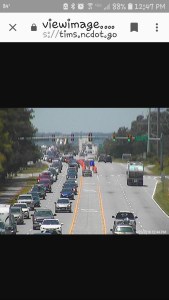

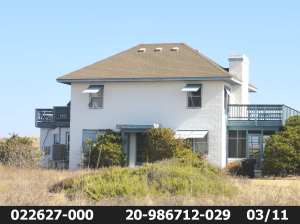










 The Southern Shores Beacon