5/14/18: PLANNING: REMEDYING POOR CELL-PHONE SIGNALS IN THE TOWN’S RESIDENTIAL DISTRICTS: Installing New Poles for Small Cells in Public Rights-of-Way

smallcellscalifornia
The Town of Southern Shores aspires to the San Francisco design (at left) of small wireless facilities, not the Oakland, Calif., design.

Do you have a problem with dropped cell-phone calls in Southern Shores? Do you suddenly lose your cellular signal when you enter certain areas in town? Do you go crazy with frustration in cell-phone dead zones?

If so, the State of North Carolina has enacted into law a systemic remedy for your signal problems, and the Town of Southern Shores has amended its zoning ordinance to enable wireless telecommunication facilities locally that further the State’s goal of “deploying” new technologies so that all N.C. citizens have access to them. The State is particularly interested in ensuring that police and other first responders have reliable wireless infrastructure.

In addition to a hearing Monday, at 5:30 p.m. on ZTA 18-07, about non-conforming lots (see the Beacon’s 5/11/18 post), the Town Planning Board will take up Zoning Text Amendment (ZTA) 18-06, which addresses the installation of new poles in town for the placement of small cells, also called small wireless facilities.

Understandably, residents on the streets where such poles are erected will want to know how their design, location, look, and other issues affecting them and their environment can be controlled. The Town has only limited authority in this area. The zoning law favors the wireless provider, such as Verizon, who applies to the Town for permission to install the facilities.

Small cells are low-powered cellular radio access nodes that often sit atop, or extend out from, existing utility poles, such as telephone poles or street lights. In the extensive zoning changes that the Town enacted earlier this year—amending Town Code sec. 36-175 to conform to the State’s mandate on wireless telecommunications facilities—it authorized wireless providers to “collocate” small cells along, across, upon, or under any town rights-of-way.

The Town also permitted wireless providers to “place, maintain, modify, operate, or replace associated poles, city utility poles, conduit, cable, or related appurtenances and facilities along, across, upon, and under any town rights-of-way.” The Town required any such placement, modification, replacement, etc., associated with the collocation of small wireless facilities within rights-of-way, to conform to the following:

1) Each new utility pole and each modified or replacement utility pole or city utility pole installed in the rights-of-way shall not exceed 50 feet above ground level.

2) Each new small wireless facility in the rights-of-way shall not extend more than 10 feet above the utility pole, city utility pole, or wireless support structure on which it is collocated.

ZTA 18-06 now imposes further specifications and restrictions on the installation of all new poles in residential districts. I will quote it below, after providing a little more background.

***

The Town’s amendments to Code sec. 36-175 track the State’s language in its wireless telecommunications facilities act, found in the N.C. General Statutes at sec. 160A-400.50 through sec. 160A-400.57. The State is complying with federal law, just as the Town is complying with State law. In its 2017 session, N.C. General Assembly made numerous substantive changes to the State wireless facilities act, which became effective July 21, 2017. The Town’s actions this year have been to update its zoning ordinance accordingly.

These changes are not yet available in the online Town Code that can be accessed through the Town’s website. I obtained them by searching on the Town website for “ZTA 18-02.” Where once the Town Code addressed wireless telecommunications sites and towers, it now addresses wireless telecommunications sites, facilities, and towers.

(Some of you have undoubtedly noticed that the cell tower erected at the N.C. Hwy 12-Duck Road split in the road did not cure your dropped calls. Taylor Woolford, manager at the Verizon store in the Marketplace, told me that many Verizon customers who jumped to AT&T when the tower went up have returned to Verizon because of continued signal problems. He described a dead-zone area from the cell tower north to the intersection of Duck Road with E. Dogwood Trail and then west into the dunes and woods. Typically, he said, signal problems occur with calls outdoors, not indoors.)

The word “facility” is best understood in this context by people who work in the wireless industry. The Town Code defines a “communications facility” as “the set of equipment and network components, including wires and cables and associated facilities used by a communications service provider to provide communications service.”

The Code definition of a “wireless facility” is even broader. It includes “equipment at a fixed location that enables wireless communications between user equipment and a communications network,” including such items as radio transceivers, antennas, wires, coaxial or fiber optic cable, regular and backup power supplies.

The Town Planning Board unanimously approved (4-0, one person absent) ZTA 18-02, incorporating the State’s language on collocation of small wireless facilities, on Feb. 20, 2018, and the Town Council did the same, 5-0, on March 6, 2018.

At the Town Council hearing, Planning Board Chairman Sam Williams reportedly said that the Board did not fully support ZTA 18-02, but realized it had no choice but to approve it. According to the meeting minutes, he also stated that the Town has a small measure of control over 1) the fall zone; 2) design standards; 3) stealth concealment standards; and 3) historic preservation requirements.

When another homeowner asked in public comments about the frequency that the small cells will use, Andrew Darling, who is past president of the Outer Banks Repeater Assn., answered that small cells generally operate at a lower power than radio power, which can cause damage to human cells at high frequencies.

In a text message, Mr. Darling recently informed me: “Cell companies are quietly buying broadcast TV station frequencies, and so all frequencies will be in service from VHF through UHF with smart towers.”

He further stated: “There has been no evidence of problems with smart cells or regular towers.”

According to its website, www.obraobx.com, the Outer Banks Repeater Assn. is an organization of volunteers who provide communications in times of public need, such as during disasters, and who encourage amateur radio operators to be ready for emergencies.

***

If you Google “photos of small cells facilities” or “photos of small wireless facilities,” you will see an assortment of poles with attached equipment that appears to be slick and streamlined, almost imperceptible, at one end of the design spectrum, and ugly and bulky, very obtrusive, at the other end. (See the extremes depicted in the photos above.)

Mr. Woolford describes the small cells he’s seen as “dome antennas” that are “very discreet.”

“If you weren’t looking for them, you wouldn’t notice them,” he said.

Town Planner and Deputy Town Manager Wes Haskett has been in contact with a contractor working for Verizon to collocate small cell wireless facilities on eight existing utility poles in town.

Here is how ZTA 18-06, which the Planning Board will consider next Monday, proposes to further regulate the installation of new poles:

1)      No new utility pole may be installed for the principal use of wireless facilities if a pole exists within twenty (20) feet of a desired location.

 2)      The minimum distance of a new pole from any residential structure shall be at least 150% of the pole height and shall not be located directly in front of any residential structure located in a residential zoning district.

 3)      Along streets and within subdivisions where there are no existing utility poles (all underground utilities), wireless facilities may be attached to street lights in the public right-of-way.

 4)      New poles may not be erected in a residential area solely for wireless communication equipment attachment unless the [wireless provider] applicant has demonstrated it cannot reasonably provide service by:

a. Installing poles outside of the residential area;

b. Attaching equipment to existing poles within the right-of-way; or

c. Installing poles in rights-of-way not contiguous to parcels used for single family residential purposes.

If you have any questions about the placement or construction of small-cell wireless facilities in your neighborhood, I suggest you attend the Planning Board meeting. The Beacon will report on the hearing and on the Board’s decision. The Town Council will likely receive the Board’s recommendation and hold its own public hearing on ZTA 18-06 in June.

Ann G. Sjoerdsma, 5/14/18; updated 5/16/18

5/11/18: TOWN PLANNING: Houses Being Built (Or To Be Built) on ‘Nonconforming’ 50-Foot-Wide Lots: What’s Going On? (Besides Confusion)

50footwide
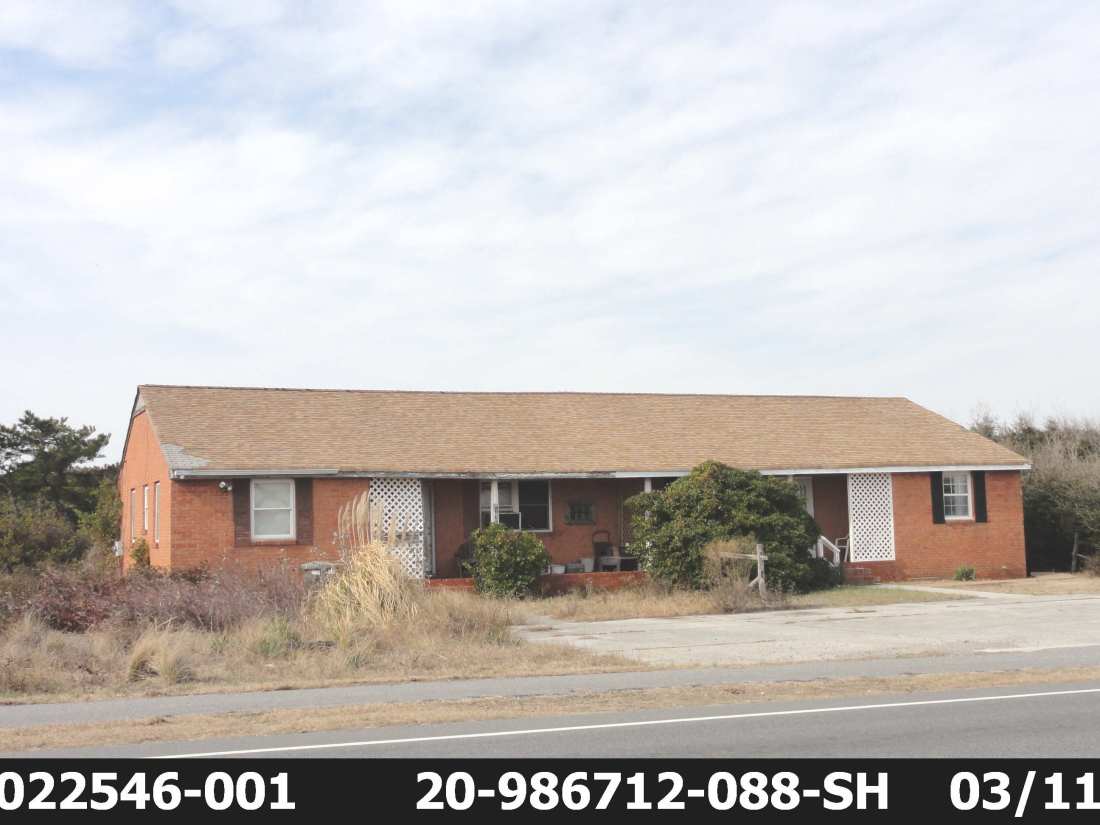
The scene at 103 Ocean Blvd.: Two new single-family homes, each on a 50-foot-wide lot, have replaced a single old brick duplex that covered part of both lots.

[5/15/18 CORRECTION: An earlier version of this blog incorrectly stated that the Board of Adjustment had approved a side-setback variance for only one of the two 50-foot-wide lots that comprise 155 Ocean Blvd. In fact, the Board approved setback variances for both lots. The Beacon regrets the error.] 

Mark your calendars for the next Southern Shores Planning Board/Board of Adjustment meeting on May 21, starting at 5:30 p.m., in the Pitts Center behind Town Hall. At issue is an important amendment to the section of the Town zoning ordinance that is designed to regulate development on “nonconforming” lots of record, meaning lots that do not conform to minimum zoning requirements—such as the minimum lot width requirement of 100 feet in the RS-1 residential district.

Is Southern Shores going to start looking more like the beach towns to the south of it, where there are more houses on less land, and the population density is greater? Will the zoning amendment, ZTA 18-07, drafted by the Town prevent that from happening?

You may have noticed that the construction at 103 Ocean Blvd., pictured above, is no longer a quaint old brick duplex that sat centered on a 100-foot-wide lot. In its place, thanks to a variance granted by the Town Planning Board, serving in its capacity as the Town Board of Adjustment, are two new detached single family homes, each on a 50-foot-wide lot. (The powers, duties, meetings, and all other matters pertaining to the Board of Adjustment are spelled out in the Town Code, sec. 36-360 to 36-369.)

Since 2016, the Board of Adjustment has been granting minimum side-setback variances to property owners who would like to build on 50-foot-wide lots. Instead of conforming to required 15-foot side setbacks, these property owners, often through representatives, have sought, and received, the Board’s approval for a reduction to 12-foot-wide side setbacks, thus permitting the construction of 26-foot-wide houses, instead of 20-foot-wide homes. (I’ll elaborate upon these variances case-by-case in a blog next week. The Board has understandably struggled with these applications and with interpreting the Town Code.)

Town Planner and Deputy Town Manager Wes Haskett has repeatedly said in public meetings that there are only 10 vacant 50-foot-wide lots in Southern Shores. It, therefore, would seem that these setback variances are not a big deal. The rub, however, is that many 100-foot-wide building sites in town, especially on and near the oceanfront, are actually recorded as two 50-foot-wide lots. That was standard procedure in the old pre-Town Zoning Ordinance Southern Shores. If property owners were to raze their old homes and sell their 100-foot-wide tracts as two separate 50-foot-wide lots, density would fast become an urgent concern.

(Full disclosure: My family’s oceanfront rental cottage, built in 1971, precisely fits this situation, as does the development to the north and south of our house.)

On March 19, 2018, the Board of Adjustment opened a Pandora’s box when it approved side-setback variances on two 50-foot-wide lots that comprise 155 Ocean Blvd. The two lots are #9 and #10 of block 29, section 3. Since the 1950s, a modest bungalow has occupied 155 Ocean Blvd., overlapping both of these lots.

Applicant Gray Berryman, representing property owner James A. Miller, succeeded in getting side-setback variances for lot #9, which, according to minutes of the hearing, he told the Board he intended to buy and develop, and for lot #10, which he informed the Board that Olin Finch, his friend and associate, would be purchasing for development. Thus, there would be two houses on a building site where there once was only one. At the time of the variance approvals, no property sale had occurred. (Mr. Berryman was a member of the Planning Board/Board of Adjustment when it approved the other side-setback variances on nonconforming lots.)

The Beacon seeks your assistance in addressing this zoning and building trend. There has been much discussion in public meetings about when two adjacent nonconforming lots–such as the two recorded for 103 Ocean Blvd.–must be (re)combined into one single lot of record. Ownership of the lots has been viewed as key to this determination. ZTA 18-07 attempts to settle the recombination issue. It also establishes a lower side setback requirement for 50-foot-wide lots than the Board of Adjustment has thus far approved: That of 10 feet, not 12 feet.

Please read the Town’s proposed zoning amendment to the Code and tell us what you think. Do you understand the legalese? Will it ensure the kind of development that you think the majority of Southern Shores property owners want? Here it is:

https://www.southernshores-nc.gov/wp-content/uploads/2018/05/ZTA-18-07-Nonconforming-Lots.pdf

We will tell you what we think next week, after we’ve had time to read your comments and do more homework.

Ann Sjoerdsma, May 11, 2018


duplex
The duplex formerly at 103 Ocean Blvd.


bungalow
The 1950s-era bungalow at 155 Ocean Blvd.


5/3/18: TOWN APPROVES NO-LEFT-TURN TRIAL AT HWY. 158-S. DOGWOOD TRAIL ON JUNE 23-24; Zoning Change to Allow Small Drive-Through Businesses Defeated After First Reading


traffic

The Town Council voted unanimously at its May 1 regular meeting to proceed with a no-left-turn trial at the intersection of U.S. Hwy. 158 and South Dogwood Trail over the June 23-24, 2018 weekend. The vote was 4-0, with Mayor Tom Bennett and Councilmen Fred Newberry, Gary McDonald, and Jim Conners voting in favor. Councilman Chris Nason was absent.

According to Town Manager Peter Rascoe, who described details of the traffic trial at the meeting, all motorists traveling east on Hwy. 158 from 8 a.m. until 6 p.m. on that June weekend will be prohibited from turning left on to South Dogwood Trail. This turn, which is at the second traffic light after the Wright Memorial Bridge, is routinely taken by arriving vacationers who seek to avoid gridlock on N.C. Hwy. 12, as they travel through Southern Shores and Duck to the Currituck beaches.

Residents along South Dogwood Trail, East Dogwood Trail, Hickory Trail, and Sea Oats Trail have complained for years about the safety hazards (motorists run stop signs and drive perilously close to pedestrians), inconvenience (residents have trouble exiting their driveways or getting anywhere on the roads by vehicle), and other impositions (e.g., motorists and their passengers exit their vehicles and urinate in yards) generated by cut-through traffic on these residential streets.

Since the advent of cell-phone navigation apps, such as Waze, which direct motorists away from congestion, the residential-street traffic flow has worsened and now typically comes to a standstill at the intersection of Sea Oats Trail with Duck Road (Hwy. 12), as well as the intersection of Hillcrest Drive and Duck Road.

(Full disclosure: I live on a heavily traveled section of Hickory Trail and have seen a tremendous increase in traffic during the past 20 years. Just 10 years ago, I was only concerned about the oppressive traffic on Hwy. 12!)

Mr. Rascoe said that “heavy barrels” will be placed in the left turn lane on Hwy. 158 and that two Southern Shores police officers will be posted at the intersection to ensure “zero-tolerance enforcement” on both weekend days. He also said the cost for this “exercise” would be $6200, $3400 for the barrels and $2800 for police overtime pay.

The no-left-turn trial could not occur without the cooperation of the N.C. Dept. of Transportation, which, Mr. Rascoe said, has an agreement with the town. The Town of Kitty Hawk, which has jurisdiction over the subject area of Hwy. 158, has deferred to Southern Shores and will not participate in the trial, he explained.

(It is important to understand that the Town of Southern Shores owns South Dogwood Trail and the vast majority of other residential roads within its boundaries. Some residential roads are private, but none is state-owned.)

After Mr. Rascoe’s presentation, Southern Shores Police Chief David Kole rose to inform the Council that he considers this trial a “one-time deal.”

“I do not have enough officers to do this through the summer,” Chief Kole said.

Both the police chief and Mr. Rascoe stressed that the town currently does not have the “manpower” to continue enforcing a left-turn prohibition at the Hwy. 158-South Dogwood Trail intersection this summer or to consider it next year. If it were to be repeated, new police hires would have to occur, according to Chief Kole.

While Mayor Bennett expressed concern about the “unintended consequences” of the left-turn prohibition, such as the possibility that traffic may divert to other residential streets in town, he supported the June 23-24 trial. The Mayor and all members of the Town Council agreed that this trial would give them data with which to assess the impact of any action they may take to minimize the cut-through traffic in town.

In public comments later, Glenn Wyder, who is president of the Chicahauk Homeowners Assn., expressed concern that this trial will “significantly affect Juniper and Trinitie Trails” in Chicahauk. Juniper Trail intersects with Hwy. 158 at the east end of the Marketplace; Trinitie Trail is a continuation of Juniper.

Mr. Wyder asked that the Town Council come up with a solution to the traffic that addresses both South Dogwood Trail and Juniper Trail.

In previous town discussions about the cut-through traffic on South Dogwood Trail, the Mayor and Town Council have been mindful of diversion to Juniper Trail and have stressed the need to control access to both roads on high-traffic summer weekends. When the Town Council passed its directive Sept. 5, 2017, for the no-left-turn trial, however, it elected to keep control and cost modest by focusing only on Dogwood Trail.

IN OTHER ACTION . . .

The Town Council did not approve a zoning ordinance change proposed by the Planning Board that would have allowed a drive-through business that fronts on U.S. Hwy 158 to operate on a lot less than 20,000 square feet. Current Town Code (sec. 36-57) requires all drive-through facilities in the C general commercial district, which includes the Marketplace, to be located on a lot equal to or greater than 2.5 acres.

The zoning change failed by a vote of 3-1, with Councilman Newberry dissenting. According to Town Attorney Ben Gallop, a unanimous decision was required in order for the zoning amendment, known as ZTA 18-05, to be enacted on its first reading. A second reading of ZTA 18-05 will be held at the Council’s June 5 meeting.

The Planning Board devised the new zoning plan, which categorizes drive-through facilities as either “small” or “large,” allowing both, in response to an application by Spiros Giannakopoulos to operate a drive-through ice-cream shop at 5415 N. Croatan Hwy. Mr. Giannakopoulos’s lot is located between Wells Fargo and First National banks on Hwy. 158 and is only 18,260 square feet, or 0.42 acres.

While the public hearing on ZTA 18-05 tended to focus on the desirability of having an ice-cream shop in the Marketplace and on the Elizabeth City resident-applicant’s business and community reputation, rather than on the proposed zoning changes, the Town Code amendment would apply to any lots smaller than 20,000 square feet that front on Hwy. 158.

Being burdened with a legal mind, I can readily see the what-ifs inherent in this situation, for example: What if the Town Council approves the proposed zoning plan, allowing a drive-through business on a very small lot, as well as Mr. Giannakopoulos’s site plan, and his ice-cream shop must close because of an unanticipated change in circumstances? His lot could be sold to a drive-through business applicant who wants to open a fast-food burger joint there, the type of establishment that Planning Board Chairman Sam Williams said Southern Shores property owners and residents have indicated they do not want. Other subsequent businesses might not seem as desirable as Mr. Giannakopoulos’s family-friendly restaurant.

I also wonder about other locations at the Marketplace that front on Hwy. 158. Currently, there is parking to the west of the main entrance into the shopping center, but that conceivably could change in the future. Brainstorming the possible adverse effects of the zoning amendment is a worthwhile exercise for the Town Council. The ZTA should be evaluated separately from Mr. Giannakopoulos’s business intentions.

In dissenting, Mr. Newberry said he was concerned about the “process” that resulted in the Planning Board’s new zoning proposal and with possible traffic congestion at 5415 N. Croatan Hwy. The prevention of congestion, particularly backups on Juniper Trail, was the reason the 2.5-acre restriction for drive-through businesses in Southern Shores’ commercial district was enacted, according to Planning Board member John Finelli, who represents Martin’s Point, at the Board’s April 16 hearing on ZTA 18-05.

Ann G. Sjoerdsma, May 3, 2018

5/2/18: COMMUNITY JOURNALISM IS THE BEACON’S GOAL: The Outer Banks Sentinel Miscasts New Blog as Us-Versus-Them

beachwithseatoatssunsetwithbirds

The Outer Banks Sentinel has an article in today’s issue about the launch of The Southern Shores Beacon. Sadly, the reporter decided to parlay his preconceptions about what The Beacon’s intent is into an us-versus-them piece, the “them” being represented by Mayor Tom Bennett, Mayor Pro Tem Chris Nason, and Town Manager Peter Rascoe.

Folks, I have 44 years of professional journalism experience, most of it in newspapers, and I believe strongly in the watchdog role of the press in our constitutional republic, in holding our local, state, and national governments accountable to the citizenry. I’ve read newspapers since I was a child, and I came of age during the Watergate crisis. I am dedicated to fact-based reporting, to providing reliable information upon which readers can make decisions about how they live and form opinions about their lives and the world around them. Accurate information is one of the cornerstones of knowledge.

I have no intention of editing and writing a predictable political screed or of discrediting people in public office simply because I happen to disagree with their opinions. I believe in reasoned discourse and in the democratic process of decision-making. While The Beacon (and I) may editorialize on occasion—and I will let you know that a blog post is an editorial and not a news report—its (my) opinions will be based on facts. As clichéd as it may sound, I truly do shop in the marketplace of ideas, and I believe in listening to a diversity of voices, not just to one’s cronies.

Mayor Bennett is quoted in The Sentinel article as saying that he has not seen The Beacon and has “no interest in it.”

“I know who they are and I know what their objectives are,” he reportedly said.

I have been interviewed for newspaper articles enough times to know that reporters often misquote people, opting to paraphrase thoughts instead of quoting language verbatim, and otherwise taking comments out of context. Perhaps The Sentinel reporter misquoted the Mayor. If the quotes are accurate, however, I would ask Mr. Bennett to reserve judgment. Maligning The Beacon and its reporters without having read it—without having any evidence to support his opinion—is hardly fair or open-minded. In fact, it suggests bias and prejudice. Inasmuch as The Beacon will undoubtedly be relying upon the Mayor as a source for information, I would hope he would endeavor to be helpful, despite what appear to be his personal feelings and unsupported assumptions.

(Subsequent to posting this blog, I ran into Mayor Bennett at Town Hall, and we had a very cordial conversation.)

Because I’m a stickler for accuracy, I would like to note that The Sentinel incorrectly reported that The Beacon has been publishing for a month. I posted the first blog on April 12, 2018. Also, the name of the grass-roots organization with which I was previously associated was The Alliance for the Preservation of Southern Shores (TAPSS). The Sentinel reporter mischaracterized the nature of that group and its actions. We did not lead “protests against town projects that involved clear-cutting of property owners’ trees,” nor did I run for Town Council in 2015 as part of a “trees” movement. The maritime forest of Southern Shores, albeit interrupted by development, is a precious resource that is a vital part of the town’s ecosystem, as well as its character and ambiance. TAPSS was about preservation of the whole of Southern Shores, from sea to sound, and dunes to woods, not about hugging trees.

TAPSS focused on ensuring that infrastructure projects in town had a low impact on the environment. We were dedicated to ensuring that the town’s land-use plan was respected. While we disagreed with the town’s destruction of dozens of large trees on Fairway Drive and at the intersection of East-North-South Dogwood trails, which we viewed as unnecessary, at no time did we organize to protest clear-cutting on private property, as The Sentinel alleges.

As I told The Sentinel reporter, my chief objective with The Beacon is community journalism. My roots in Southern Shores run deep—back 50 years to family vacations I spent here. I was raised in Maryland and went to college and law school in North Carolina. During two magical college summers, I waited tables and cleaned motel rooms on the Outer Banks, living in KDH and Nags Head. I remember when Carolista Baum led the movement to stop bulldozers from destroying Jockey’s Ridge.

My parents, Albert (Dr. Al as he was called by locals) and Fern, built the first cottage on pilings in Southern Shores on oceanfront property they purchased for $10,000. As you may know, the Kitty Hawk Land Co. parceled out lots for sale in Southern Shores, so as to ensure slow and smart growth. One day, my father, who had grown up on a farm and valued land, received a call from KHLC that an oceanfront lot had become available for sale, and he had 24 hours to decide if he wanted to buy it—sight unseen. Dad said yes, and then borrowed the money from his father, who thought buying property on the ocean was a terrible investment.

The construction of our family’s modest oceanfront cottage—it had a dishwasher, but no air conditioning or telephone—occurred in 1971. Today, my three siblings and I own the house and rent it on a seasonal basis. My parents retired here in 1996—two years after I made a full-time move to Southern Shores—and my father died here in 2014. I am the primary caregiver for my mother, who is 94 and still lives in the soundside house she shared with my father. I am committed to ensuring that she lives at home until she, too, passes.

So, you might say that Southern Shores is personal for me. It’s my home, and I would like to be a part of preserving its future. I love Southern Shores. I’m not just passing through.

BUT BACK TO JOURNALISM . . .

I will be reporting on the highlights that came out of last night’s Town Council meeting as soon as possible. The most important concerns details of the June 23-24, 2018 no-left-turn trial at the intersection of Hwy. 158 with South Dogwood Trail. Mr. Rascoe also announced that the proposed FY 2018-19 budget would be available on the town website as of 8:30 a.m. today, thus giving property owners more than a month to review it and ask questions of town staff before the June 5 public hearing. The Beacon will examine the budget and pass along any analysis we deem of value to property owners. There will be no property-tax-rate increase in the next fiscal year. Here’s the link to the proposed line-item budget:

Click to access FINAL-FY2018-2019-Proposed-Operating-Budget.pdf

If you have any questions at all about The Beacon, please contact me, either through ssbeaconeditor@gmail.com or through my personal email, annsj@earthlink.net. I would be happy to talk with you.

Ann G. Sjoerdsma, May 2, 2018

4/24/18: FY 2018-19 BUDGET SESSION: Preliminary Figures Show Expansion of Capital Projects, Staff; Major Investment in SSVFD, Employee Compensation

budget

Monies for the SSVFD’s current operation and planning for a new fire station, construction of the East Dogwood Trail walkway, and expanded staff positions and salary increases topped the fiscal year 2018-19 budgeted expenses reviewed by Town Manager and Budget Officer Peter Rascoe at the Town Council’s special budget work session April 17.

The meeting, attended by Mayor Tom Bennett, all four Council members, Finance Officer Bonnie Swain, and Mr. Rascoe, lasted only two hours—far shorter than working budget sessions of recent years, which have consumed the better part of a day.

Before the session, preliminary projected FY 2018-19 expenses totaled $6,388,835, an amount that was $296,261 more than the preliminary projected income of $6,072,574– $5,143,088 of which is projected to come from ad valorem, sales, and other taxes.

The Town Council reduced the expenses by $34,000, eliminating some of the costs budgeted for a beach-profile study, bringing the shortfall to $262,261.

Mr. Rascoe will submit his Proposed Annual Operating Budget to the Town Council on May 1, 2018, during that body’s regular monthly meeting. A public hearing on the budget will be set for June 5, 2018, during the Council’s regular June meeting.

The Beacon does not recall a preliminary town budget ever showing a gap between income and expenses. It is clear from the data submitted by Mr. Rascoe that the town’s projects and staff are expanding rapidly.

For details, see https://www.southernshores-nc.gov/wp-content/uploads/minutes-agendas-newsletters/Meeting-Packet_2018-04-17.pdf

In a blog posted April 12, 2018, The Beacon highlighted some of the larger expenses budgeted for FY 2018-19. They include $267,700 for “architectural services” in support of a new Southern Shores fire station, an estimated $5 million-plus project that has yet to be approved, and an increase of $138,870 in the annual capital-street appropriation, bringing the total for infrastructure projects, exclusive of East Dogwood Trail, to $654,870.

The preliminary budget further calls for an across-the-board 2.5 percent cost-of-living increase for all full-time town employees—except the Town Planner and Permit Officer, who are receiving raises—and increases in costs for health insurance and retirement benefits. The Town contributes to Medicare, health, life, and dental insurance, state retirement, and a 401k plan for each full-time employee.

STAFF EXPENSES

If the budget is approved as is, Planner/Code Enforcement Officer Wes Haskett will receive a $13,477 raise to compensate him for the newly created position of Deputy Town Manager. Mr. Haskett is already performing duties for both jobs, for which he will earn a total of $84,200. Permit Officer Dabni Shelton is slated to receive a $7,000 raise, bringing her salary to $64,738.

Although the Public Works Dept. has been operating with only a Public Works Supervisor since Public Works Director Rachel Patrick left in 2017, the FY 2018-19 budget calls for both managerial positions to be funded. Besides the director (total salary of $73,135) and supervisor ($56,552), the Public Works Dept., which maintains the town’s roads, buildings, parking lots, and other town-owned properties, has three full-time maintenance technicians and one part-time technician.

There has been no public discussion about why the Town Manager needs a deputy to help him do his job and what duties the deputy has.

Pursuant to sec. 2-21 of the Southern Shores Code, the town manager is appointed by, and serves at the pleasure of, the Town Council, which meets in closed session to discuss all personnel matters.

According to Beacon correspondent Susan Dineen, who attended the budget session, Mr. Rascoe is said to be “mentoring” Mr. Haskett.

Absent an employment contract, however, no future Town Council would be obligated to hire Mr. Haskett as Town Manager.

Town Councilmen Fred Newberry and Gary McDonald have raised concerns in the past two years about employee compensation. Southern Shores has among the highest salaried employees on the Outer Banks.

Town expenses for employees, including salaries and all benefits, constitute about 40 percent of the total projected expenses budgeted in FY 2018-19.

All employee compensation is a matter of public record.

Town Manager Rascoe is slated to earn nearly $159,656 in salary in FY 2018-19. In FY 2011-12, Mr. Rascoe earned a salary of $112,238. His salary, therefore, has increased 42 percent in seven years.

When town expenses for Medicare, health, life, and dental insurance, state retirement, and his 401k plan are added to Mr. Rascoe’s salary, the total cost to Southern Shores for his position in FY 2018-19 is nearly $207,000.

The preliminary total budget for the town’s administration department is $1 million, an amount that includes salaries and benefits for four employees, including the Town Manager, legal services ($61,500), operating expenses, and supplies; and the police department’s total preliminary FY 2018-19 budget is $1.69 million, $1.25 million of which is in salary and benefits.

FIRE DEPT./NEW STATION

The town’s projected FY 2018-19 appropriation for SSVFD services is $545,914, up from $481,925 in FY 2017-18, the $64,000 difference representing the base salary, before benefits, for a new deputy fire chief.

Mr. Rascoe announced at the meeting that the town’s 10-year contract with the fire department will expire in 2019 and, therefore, need to be negotiated anew.

According to Dineen, town officials discussed future budgeted monies for the SSVFD after the new fire station project is approved and construction begins. The SSVFD has reported that it can secure a 15-year loan, at 2.88 percent—terms that would obligate the town to pay $442,000 annually, in two $221,000 semiannual installments. It is possible that a first payment could be due in fall 2018, but no money has been allocated in the FY 2018-19 budget for it.

When the architectural services are added to the amount the town pays for contract fire protection services, Southern Shores’s total budget for the SSVFD in the next year is projected to be $813,614.

EAST DOGWOOD TRAIL

 The 2018-19 budget reserves a $250,000 allocation for the East Dogwood Trail walkway, although the Town Council has yet to decide upon a design—or, at least, it has yet to inform the public of the design it has chosen.

Three options for walkway design materials have been floated by the engineering team of Deel/Anlauf, the cheapest of which calls for the 5-foot-wide walkway to be made of concrete.

The meandering walkway would start at the intersection of East Dogwood Trail with South and North Dogwood Trails and extend to N.C. Hwy. 12. It is expected to be built in the public right-of-way on the south side of East Dogwood Trail.

The most expensive, and most environmentally friendly, design option would use KBI (K.B. Industries) Flexi®-pave, which is a heavy-duty porous material made from recycled tires and stone. The third option is an asphalt walkway, which, like the concrete path, would be impervious.

If the town were to choose the Flexi®-pave option, it would have to clean and maintain the walkway surface, an added expense not necessary with concrete and asphalt.

According to an April 10, 2018 memo to Mr. Rascoe from engineer Joseph Anlauf, a concrete walkway can be constructed on East Dogwood Trail for $250,000, provided other elements that were previously a part of the original design plan are eliminated. These elements include all asphalt demolition (thus keeping the road, in its divided section, at its current width); all new asphalt and associated curbing; all shade trellises, park benches, bike racks, and municipal garbage and recycling cans that were to be placed en route; and all crosswalks to perpendicular streets.

BEACH NOURISHMENT

Although no appropriation was included in the town budget for beach nourishment, Mayor Bennett observed at the meeting that any such projects would cost $10 million per mile, an increase from an earlier estimate of $5 million.

Councilman McDonald asked about installing sand fencing on the oceanfront, indicating an interest in being “proactive” about shoreline management. McDonald suggested putting money aside each year for future shoreline management.

The beach nourishment project done at Pelican Watch last summer cost the town $500,000, $150,000 of which is expected to be reimbursed through taxes paid by Pelican Watch homeowners over the next five years. Dare County contributed $500,000, as well.

UPCOMING

The Town Council has until June 30, 2018, to adopt a budget. In each year of his first term, Mayor Tom Bennett moved forward with budget approval immediately after the public hearing, allowing for only limited consideration of any objections and concerns that citizens may raise.

Bearing that in mind, The Beacon encourages you to email your comments, concerns, and questions to the mayor and Town Council members before the June 5 meeting at council@southernshores-nc.gov.

We will publish a website link to the May 1 proposed budget as soon as one is available. Between now and June 5, we also will do research on salaries in other Outer Banks towns, to see how Southern Shores’s salaries compare.

Ann G. Sjoerdsma, Editor-in-Chief

April 24, 2018


4/21/18: PLANNING BOARD: CHAIRMAN DRAFTS PROPOSED NEW LAW, CREATING ZONING PLAN TO ACCOMMODATE DRIVE-THROUGH ICE CREAM SHOP ON HWY. 158; Hearing Before Town Council on May 1.

icecream

In other Planning Board action April 16, Chairman Sam Williams wrote (proposed) new zoning law on commercial drive-through facilities in Southern Shores, in order to accommodate an applicant who would like to open a drive-through ice cream shop on a lot on U.S. Hwy. 158 that is less than 25 percent of the size envisioned by the town for drive-throughs.

The Southern Shores Town Code currently requires a “drive-through facility or establishment” to be located on a lot that is equal to or greater than 2.5 acres. Applicant Spiros Giannakopoulos’s commercial lot at 5415 N. Croatan Hwy. is only 18,260 square feet, or 0.42 acres. To get around this obstacle, Mr. Williams devised, without suggestion by the applicant, a zoning plan that differentiates between small and large drive-through facilities.

Under Mr. Williams’s plan, a “small” drive-through customer-service facility may be located on a lot less than 20,000 square feet provided it has frontage along Hwy. 158 and meets other building requirements, all tailormade for Mr. Giannakopoulos’s proposed ice cream shop. A large drive-through facility would conform to the requirement of a location size that is equal to or greater than 2.5 acres.

The Chairman found a majority on the Board to agree with his proposed plan—the vote was 4-1, with Board Member Elizabeth Morey voting against, but not offering comment—and the Board thereby replaced the ZTA submitted by applicant Giannakopoulos with its own language.

No one on the Planning Board supported Mr. Giannakopoulos’s original ZTA, which was prepared by his representative, Quible & Associates of Kitty Hawk, and proposed to give a special zoning exemption to drive-through ice cream shops, and no other businesses. New Planning Board Member Glenn Wyder immediately took issue with the applicant’s carved-out exception, opposing its specificity. At that point in the hearing, Mr. Williams stepped in to say that he had already worked out a solution.

The Town Council will hold a public hearing on ZTA-18-05, as rewritten by the Planning Board, at its next regular meeting, May 1st. Mr. Giannakopoulos, who is doing business as 5415 OBX-LLC, is seeking to operate Nu-Quality Ice Cream on the lot between Wells Fargo and First National banks, in front of the Marketplace. For details, see:

https://www.southernshores-nc.gov/wp-content/uploads/2018/04/ZTA-18-05-Nu-Quality-Ice-Cream-Shop.pdf

Frankly, the Beacon was surprised by this turn of events. When Town Planning Director Wes Haskett reminded Chairman Williams that he needed to entertain public comment before taking a vote on his ZTA, the Beacon’s reporter thought to ask: “Before you vote, may I see what you’ve written?” How does one comment without notice and an opportunity to read what one is being asked to comment upon?

The powers and duties of the Planning Board (see sec. 24-27 of the Town Code) are broad, but Mr. Williams went far beyond the application before the Board, substituting his own judgment for the applicant’s. Is this the authority contemplated by the legislators who enacted the law governing the Planning Board? Is this a good way of conducting business? Of planning?

Mr. Giannakopoulos proposes to build a 910-square-foot ice cream shop with a parking lot at 5415 N. Croatan Hwy. According to the Planning Board’s Martin’s Point representative, John Finelli, who voted in favor on the Chairman’s new plan, the 2.5-acre restriction on drive-through businesses was enacted because the Town didn’t believe a drive-through business “was appropriate for every location.”

“We were trying to keep congestion off of Juniper Trail,” he further explained.

Ironically, the Planning Board gave no consideration to the traffic congestion that Mr. Giannakopoulos’s business might generate on Hwy. 158, in both directions, as customers vie for entry, and on Juniper Trail, if the drive-through vehicular line backs up onto it.

Besides considering the impact on traffic in this highly congested area, The Beacon would have liked the Planning Board to have given more thought to the history and intent behind the 2.5-acre restriction, before compromising it.

The Beacon Editorial Board, April 21, 2018


4/20/18: PLANNING BOARD ACTION: Members Split on Lot Coverage Change, 2nd Time Around; Expect Another Town Council Hearing Soon

beachhouse

In its second consideration of an amendment to the town’s zoning ordinance that would redefine how residential lot coverage is calculated and effectively allow larger homes to be built, the Southern Shores Planning Board split last Monday on provisions that it had previously recommended to the Town Council.

The result: The Board approved the proposed zoning text amendment, known as ZTA-18-04, as amended, but it did not decide the most controversial aspect of the zoning change, which would have exempted from the permissible 30-percent lot coverage up to 500 square feet of a swimming pool. The four voting Board members in attendance split 2-2 on the swimming pool exception.

In their comments, three Board members left little doubt that they recognized that the proposed changes in lot-coverage calculation would lead to larger homes being built. Member Elizabeth Morey stated: “They [the Town Council] want bigger houses.” Board Member David Neal said he wished he could “visualize the potential,” voicing concern that this amendment “is not going in the direction that we want to go in.”

Ms. Morey later cast a dissenting vote, indicating that she did not believe the lot-coverage change was consistent with the town’s land-use plan.

The Beacon will try to explain what happened at the Board’s hearing, as well as action preceding it. We are playing catchup, so please bear with us. It appears to us that politics is playing a bigger role than the town should permit. You decide.

***

On Sept. 5, 2017, the Southern Shores Town Council rejected, by a 3-2 vote, a zoning text amendment, known as ZTA 17-03, that would have changed the town law on lot coverage in substantially the same way that ZTA 18-04 proposes to change it now. Most of the language in the two amendments—and certainly the most significant language—is identical. Councilmen Gary McDonald, Fred Newberry, and Leo Holland voted against ZTA 17-03, expressing a desire to leave the Town Code as is on lot coverage. Mayor Tom Bennett and Councilman Chris Nason voted in favor of the change.

Fast-forward two months . . . Mr. Holland does not run for reelection to Council, and Jim Conners is elected to his seat. At the Town Council’s February 2018 meeting—five months after the defeat of the lot-coverage law change—Councilman Chris Nason, an architect who is now mayor pro tem, moves to send ZTA-17-03 back to the Planning Board for reconsideration with two new sub-sections. Councilman Conners seconds this motion, and it passes, 3-2, with Newberry and McDonald casting nay votes.

Councilman McDonald objects that this reconsideration is impermissible under the Council’s rules of procedure, but he is rebuffed by Town Attorney Ben Gallop, who says that Mr. Nason’s motion is valid. The slightly restyled ZTA-17-03 becomes ZTA-18-04.

OK, now rewind back to August 2017, before the Town Council defeats ZTA 17-03, to a memorandum from Planning Board Chairman Sam Williams to the mayor. In his 8/11/17 memo, Mr. Williams informs the mayor that the Planning Board, which has been painstakingly reviewing the proposed Town Code rewrite submitted by paid consultant, Codewright, will be making recommendations to the Council for possible Code changes on a piecemeal basis, before its full review is finished. Williams zeroes in on two zoning changes that the Board has decided to take up now: 1) the way building height is calculated; and 2) the way lot coverage is calculated.

The Beacon would like to know: Were you aware that the Planning Board had decided to do this, or did you think that the Town Council would only be considering proposed Code changes after the Planning Board completed its review?

The Beacon learned about this memo only by perusing Town Council meeting packets prepared by staff last summer. To the Beacon’s knowledge, the content of this memo was not made public in any other manner.

In his memo, Mr. Williams includes a table reflecting the Planning Board’s recommendations on lot coverage. These recommendations, which were unanimously approved, form the basis for the first zoning text amendment, which the Town Council defeated, 3-2, in September, and for the second ZTA, which the Town Council sent back to the Planning Board in February for reconsideration.

[Late-breaking news: The Beacon learned after this blog was posted that these recommendations, which became ZTA-17-03, were approved by Chairman Williams, former Planning Board Member Gray Berryman, Mr. Neal, and ETJ Representative John Finelli (who votes only on items that affect Martin’s Point) in a special meeting called by Mr. Williams on Aug. 7, 2018. Ms. Morey did not attend. The four representatives expressly noted in their recommendations: “We recognize that [they] will encourage larger homes.” This information is based on Planning Board meeting minutes obtained from town staff. Minutes of the Planning Board’s meetings are not available online, nor are the meetings routinely videotaped.]

***

Section 36-202(d)(6) of the Southern Shores Town Code defines “maximum allowable lot coverage” in the low-density single-family residential district as 30 percent, except for town-owned facilities and fire stations. (See The Beacon’s April 12, 2018 blog for more detail.)

Lot coverage is the ratio of the total “footprint” area of all structures on a lot to the net lot area. The footprint typically includes principal (your house) and accessory structures, such as garages, carports, covered patios and roofed porches, decks, swimming pools, driveways, and parking pads.

The chief objectives of lot-coverage laws are 1) to ensure stormwater retention, so that runoff into streets and adjacent lots doesn’t occur; and 2) to protect open space. The Planning Board largely focused on the stormwater issue in its discussion about ZTA-18-04.

Proposed ZTA-18-04 would eliminate from the footprint, and, therefore, from the lot-coverage calculation the following:

*Gravel walkways

*Gravel or grass driveways with a pervious base

*The outermost 4 feet of [roof] eaves

*Up to 500 square feet of the water area of a swimming pool

*Open-slatted decks constructed over pervious material (not to exceed a total of 25 percent of the total footprint)

ZTA-18-04 also would exempt from calculation 50 percent of the area consumed by pervious materials and turfstone/pavers for driveways and parking areas.

https://www.southernshores-nc.gov/wp-content/uploads/2018/04/ZTA-18-05-Nu-Quality-Ice-Cream-Shop.pdf

The current law has all pervious materials, all gravel or grass driveways, and all swimming pools contributing 100 percent to lot coverage; and eaves and gravel walkways not contributing at all.

ZTA-18-04 differs from ZTA-17-03, which was defeated in September, in two respects: It adds the provision about open-slatted decks and a provision stating that only those building/zoning permit applicants (for a single-family home or adjacent swimming pool) who present “a survey with all applicable requirements, including plan certification, for a Lot Disturbance and Stormwater Management Permit” may avail themselves of the swimming-pool and open-slatted deck exemptions to lot coverage.

***

So, what did the Planning Board do? And what does this all mean?

First, the Board approved, by a 3-1 vote, the deletion of the driveway exemption—an exemption that it had unanimously recommended in August 2017—and it voted, 2-2, on eliminating the swimming-pool exemption. Chairman Williams and Ms. Morey favored exempting up to 500 square feet of the water area of swimming pools from lot coverage; Mr. Neal and new Planning Board Member Glenn Wyder did not.

“A pool should not be used as a catch-basin,” Mr. Wyder said. He also noted how his swimming pool overflows after a heavy rain.

As for what it means, The Beacon believes it means that the public is being, effectively, excluded from important decision-making about building practices and restrictions in town. The Planning Board’s decision to send proposed Code changes to the Town Council for consideration on a piecemeal basis thwarts expectations that the public had and has about being able to weigh in on the consultant’s work at the end of the Board’s review.

At the Sept. 5, 2017 hearing on the proposed lot-coverage change, resident property owner Geri Sullivan noted in her public comments that 62 percent of the people who completed the survey conducted by Codewright said they did not want to change lot coverage. Changing the manner in which lot coverage is calculated effectively changes lot coverage.

The Beacon also believes that the Town Council is playing politics to the detriment of the public’s trust. ZTA-17-03 and ZTA-18-04 are substantially similar. This Town Council should honor the Sept. 5, 2017 vote of the previous Town Council.

The next Town Council meeting is May 1st. ZTA-18-04 cannot become law without a public hearing before the Council first.

The Beacon will return soon with more news about Planning Board action and the town’s FY 2018-19 budget.

We welcome your comments and questions.

April 20, 2018

THE BEACON: Who Are We?

Hatteraslight

Hello, Beacon readers!

Welcome, Beacon followers!

Some of you have sent us messages through this website or through the Beacon Facebook page, inquiring about who is on our editorial board. We just posted a response to the Who Are We? (or Who Are You?, if you prefer) inquiry on our Facebook page. The bottom line is that we would like to earn your trust and respect through our reporting, not through our identities. Our reporting will establish our credibility and reliability.

We can tell you, however, that we are a group of 10 people who represent a cross-section of the Southern Shores community. We live in Chicahauk and in the woods and dunes of Southern Shores, as well as on the beach.

Some of us own seasonal rental property. Some of us own small businesses.

Some of us have small children. Others have small grandchildren.

We come from many walks of life and are in different stages of life.

We are Republicans, Democrats, and Independents.

We are transplanted Northerners and homegrown Southerners.

The defining characteristics of our diversity could go on . . .

What unites us is that we have chosen to live in Southern Shores because we love it, and we would like to preserve its character, charm, and beauty for today and for tomorrow. We believe that in order to do that, property owners need to be informed about what’s happening in Southern Shores–from shore to shore and from north to south.

Please give us time to get established and to grow.

And, please, stay in touch.

Thank you so much.

Beacon Editorial Board, April 19, 2018


BUDGET WORK SESSION APRIL 17: NEWS ON EAST DOGWOOD TRAIL WALKWAY DESIGN OPTIONS (concrete or more eco-friendly surface?); Income-Expense Shortfall Currently Projected


dogwoods

The Town Council budget work session scheduled at 9 a.m. tomorrow at the Pitts Center is noteworthy for its emphasis on a review of the proposed East Dogwood Trail “walking path,” whose construction startup is tentatively budgeted in FY 2018-19 for a scaled-back $250,000.

Deel Engineering will present design plan options for the 5-foot-wide walkway, which will start at the N-S-E Dogwood trails intersection in the woods and run about 4,325 feet to NC 12 (Duck Road), BEFORE Town Manager and Budget Officer Peter Rascoe and Town Finance Officer Bonnie Swain go over projected expenses and revenues with Mayor Tom Bennett and the four Town Council members.

Deel Engineering, PLLC, which is associated with Anlauf Engineering, PLLC, both of Kitty Hawk, has a multi-year contract with the Town to provide engineering, architectural, and other construction-related services on infrastructure projects.

The Beacon urges anyone interested in the future of East Dogwood Trail and South Dogwood Trail, and the impact walkway construction will have on homeowners, to attend at least the first hour of the budget session—or send a friend.

Besides the low-ball cost figure proffered by Deel/Anlauf for the East Dogwood Trail walkway, other noteworthy numbers in the draft budget submitted by Mr. Rascoe are a request of $267,700 for “architectural services” in support of the new Southern Shores fire station, a project expected to cost, in total, well in excess of $6 million; an increase in annual capital street appropriation of $138,870; and an update of the beach vulnerability survey, which was previously done, for $94,000.

(Southern Shores’ financial obligation for last summer’s beach nourishment project in front  of Pelican Watch, at the southern end of town, was $500,000, $150,000 of which is expected to be paid by Pelican Watch homeowners through a tax assessment. According to a video on the town website, the project added 180 feet to the beach width, but earlier this month, a representative of the Pelican Watch homeowners assn. appealed to the Town Council at its regular meeting for help with restoring the dune, which he claimed had been damaged in a March 2018 storm.)

Currently projected FY 2018-19 expenses total $6,388,835, an amount that is $296,261 more than projected income. The Beacon does not recall a projected Town budget ever showing a shortfall between income and expenses.

Town expenses for salaried employees constitute roughly 35-40 percent of the total projected expenses. Southern Shores has among the highest salaried employees on the Outer Banks. The town manager’s position costs the Town more than $200,000 annually.

In FY 2018-19, Mr. Rascoe will have help with administering his job. Town Planning Director Wes Haskett will be salaried as a part-time deputy town manager, a job he has already assumed, in addition to his planning department duties and responsibilities.

The Beacon is curious to know why the Town thought this reallocation/expansion of duties was necessary. We do not recall being informed in the newsletter about this change, the reasoning behind it, and the anticipated consequences it will have.

_____________________________________________________________________________________

DOGWOOD TRAIL WALKWAY OPTIONS: Concrete, Asphalt, or Flexi®-Pave? Lowest-Impact, Eco-Friendly Surface Proposed Also Most Costly; Public Forum Urged

Deel/Anlauf have submitted preliminary engineering cost estimates for three design options for the proposed East Dogwood Trail “path,” each of which is constructed of a different material. The cheapest option calls for a concrete walkway. The most expensive, and most environmentally friendly, calls for KBI (K.B. Industries) Flexi®-pave, which, The Beacon has learned from an online search, is a heavy-duty porous material made from recycled tires and stone. The third option is an asphalt walkway, which, like the concrete path, would be impervious.

According to some online engineering claims, Flexi-pave actually cleans rainwater as it passes through.

According to an April 10, 2018 memorandum from engineer Joseph Anlauf to Mr. Rascoe, the $250,000 expense included in the draft FY 2018-19 budget for the East Dogwood Trail walkway covers only construction of a concrete “main path” along East Dogwood Trail from the Dogwoods intersection to NC 12. The estimated expense does not include:

*asphalt demolition, previously proposed in order to narrow East Dogwood Trail in the divided-roadway section in the dunes;

*any new asphalt and associated curbing that would be required;

*shade trellises, park benches, bike racks, municipal garbage cans/recycling cans and other niceties proposed to be built or positioned along the walkway; and

*any crosswalks to perpendicular streets

Since the South and East Dogwoods Task Force filed its final report in January 2017, the South and East Dogwood Trails walkway project has become a neglected and/or protracted and certainly confusing project.

The task force, chaired by Michael Fletcher, recommended a 5-foot-wide path that would meander around trees and would have “elements of a greenway.”

https://www.southernshores-nc.gov/wp-content/uploads/2015/10/170117-FINAL-REPORT-DWTF.pdf

Before a decision is made on the surface material to use and other design details and on the money to expend on this massive, community-altering construction project—some property owners will lose much of their front yards—The Beacon urges the Town to hold a public forum to explain what is contemplated and how it will benefit and infringe upon property owners. This is follow-up that hasn’t occurred and should.

Anecdotally speaking, The Beacon finds that many homeowners on the affected streets are unaware of the walkways being contemplated.

Public officials should do more to inform property owners than just refer them to online material that is difficult to access and assess.

The Beacon is also concerned about the lack of long-range planning being discussed by the Town Manager, Finance Officer, and the Town Council, despite several requests by Town Council members at their regular meetings for such planning. The Beacon especially would like to know how much the Town will be paying annually, and in total, for the new fire station, while it’s also paying for other big-ticket items, such as the Dogwoods walkways and, potentially, another beach-nourishment project.

Beacon Editorial Board, April 16, 2017


ALERT: 2018-19 BUDGET-PLANNING MATERIALS NOW ON TOWN WEBSITE; also Design Plans for “Conceptual” Walkway Along South Dogwood Trail

TOSSlogo

The Southern Shores Town Hall newsletter published today (April 13) contains links to budget materials that will be discussed at the budget-planning work session April 17 and to plans described as “preliminary design” work for “a conceptual walkway along South Dogwood Trail.”

Construction of the Dogwood trails walkway system is one of the big-ticket items expected to command the attention of the mayor and Town Council when Town Manager Peter Rascoe presents the anticipated income and expenses for FY 2018-19.

The Beacon doesn’t really understand what a conceptual walkway is and will endeavor to sort through the fragmented content on the website about the proposed South and East Dogwood Trail walkways and report back to you soon. We believe the walkway system is beyond mere concept.

You will find the agenda for the April 17 budget-planning session, which will be held at 9 a.m.—and last until such time as our public officials decide to adjourn—in the Pitts Center here:

https://www.southernshores-nc.gov/wp-content/uploads/minutes-agendas-newsletters/Agendas_2018-04-17.pdf

A meeting packet for the budget-planning session, which details facts and figures that will be under discussion, is available on the town website here:

https://www.southernshores-nc.gov/wp-content/uploads/minutes-agendas-newsletters/Meeting-Packet_2018-04-17.pdf

The Beacon will highlight some of the proposed budget items in a report before the April 17 planning session.

An April 13 “Draft of preliminary design plans for a conceptual walkway along South Dogwood Trail” may be accessed here:

https://www.southernshores-nc.gov/4-13-18-south-east-dogwood-trail-walkway-paths/

According to information under this link, the South and East Dogwood Trails “paths” have been broken into three segments, described as follows:

Segment 1: “runs along South Dogwood Trail from the SS Cemetery to Fairway Drive.”

Segment 2: “runs along South Dogwood Trail from the Dogwood Intersection down to Fairway Drive.”

Segment 3: “runs from the Dogwood Intersection to NC 12.”

It would appear from these descriptions that when construction on South Dogwood Trail occurs, it will be done first from south to north and then second, from north to south, with a convergence at Fairway Drive. The Beacon has not studied the 33 links under the listed segments, which are described in terms of six “paths,” to ascertain if this is what is “conceptualized.”

While The Beacon appreciates notice about the design plans for this massive construction project on South and East Dogwood Trails, it would much rather have them synthesized and summarized in a written report, rather than presented in multiple links as drawings and figures. Certainly someone familiar with this project can explain the options and costs being contemplated in a few easy-to-read paragraphs. Most of us are not engineers and those who are undoubtedly have plenty of other work to do.

The Beacon will report again after the April 17 budget-planning session, too.

(To read yesterday’s blog post about the Town Council’s effort to change the law on calculating 30% lot coverage, so as to enable construction of larger houses, click on the link in the right-hand column of this page.)

Beacon Editorial Board, April 13, 2018