The second local drive-thru COVID-19 testing event will be held next Tuesday, June 2, starting at 10 a.m., in Nags Head, the Dare County Dept. of Health and Human Services announced this morning. This time, 500 people will be tested–a substantial increase over the 200 people who will be tested at this afternoon’s drive-thru event at First Flight High School.
The June 2 testing will take place at the Soundside Event Site at 6800 S. Croatan Hwy. (the bypass) in Nags Head. It is open to Dare County residents who are age 10 or older and provide appropriate identification.
To be tested, you must call (252) 475-5008 and make an appointment. If you are tested, you will be informed of your results by telephone within 72 hours.
The Dare County HHS department is partnering with Macko Medical Laboratories of Raleigh to bring drive-thru COVID-19 testing to the Outer Banks.
A new single-day record of than 1,000 new lab-confirmed COVID-19 cases in North Carolina has been reported by the N.C. Dept. of Health and Human Services. The 1,107 new positive results represent 4.2 percent of the 26,358 completed tests in the same 24-hour period, according to the NCDHHS dashboard.
As Dr. Mandy Cohen, NCDHHS Secretary, has said on many occasions, the daily new case totals are rising with an increase in the number of tests being performed. While an increase in cases is not desirable, today’s total and those from the past two days (788 and 708 on Thursday and Friday, respectively) would be of more concern if fewer tests were being done, and the positive-test rate were above 5 percent to 7 percent.
Hospitalizations increased during the past 24 hours by 21, up from 568 to 589, and nine more COVID-19-related deaths were reported for a statewide total of 737 deaths.
That Phase Two started yesterday at 5 p.m. is coincidental to the spike in the number of new COVID-19 cases.
Governor Roy Cooper is scheduled to speak today at a 2 p.m. COVID-19 update briefing. The Beacon will not be able to cover the Governor’s conference.
DARE COUNTY will announce details for its next local drive-thru testing event by 5 p.m. next Wednesday. As The Beacon reported yesterday, all appointments for the Wednesday drive-thru testing at First Flight High School in KDH have been filled. This testing is not free, but it is a diagnostic test that should be covered by private insurance, Medicare, and Medicaid.
Not only will Southern Shores’ new town manager, Cliff Ogburn, assume office in the middle of a global pandemic, he will start just before the height of the summer season: the July 4 holiday weekend.
[Please Note: All appointments for Dare County’s drive-thru COVID-19 testing next Wednesday at FFHS have been filled. The County will announce the next drive-thru testing date on Wednesday at 5 p.m.]
The stay-at-home order under which North Carolinians have been living since March 30 ends at 5 p.m. today, as we move into Phase Two of the State’s reopening, which Governor Roy Cooper has described as a “safer-at-home” phase.
Phase Two represents a “cautious” and “modest” approach to the continued gradual easing of statewide economic restrictions, which started May 8, with Phase One, the Governor said in his Wednesday briefing.
Phase Two is spelled out in Executive Order 141. It allows restaurants, personal care, grooming, and tattoo businesses, and child-care facilities to open for on-premises services, subject to specific infection-control measures designed to promote social distancing and to reduce COVID-19 transmission.
The order also increases the number of people who may gather in outdoor mass gatherings from no more than 10 to no more than 25.
Phase Two will remain in effect until 5 p.m. June 26, unless the Governor repeals or rescinds it.
During the five weeks of Phase Two, “high-risk individuals,” including people age 65 and older and those of any age who have serious underlying medical conditions, are encouraged to stay at home.
Those who go out in public are advised—but not required—to wear a cloth face covering, to maintain at least six feet of social distancing from other people, to use hand sanitizer, to wash their hands frequently, and to regularly clean “high touch” surfaces such as steering wheels, wallets, and telephones.
Retail businesses, such as Walmart, whose mask-less customers came up in a recent Next Door discussion among Southern Shores residents, may require their customers and employees to wear face coverings, if they choose. The Executive Order does not prevent individual businesses from imposing greater restrictions, but, as we have seen in the national news, enforcing face-covering requirements can result in angry confrontations and even violence.
Retail businesses are still required to limit their store occupancy to 50 percent of capacity and to ensure that six feet of distancing space is maintained between everyone in the store. Executive Order 141 applies the same standards in the context of restaurants; personal care, grooming, and tattoo businesses; and indoor and outdoor pools.
Restaurants and personal care, grooming, and tattoo businesses also must adhere to additional requirements of social distancing, disinfection, and hygiene, which are designed to reduce transmission of COVID-19. (See the order.)
While restaurant workers are “strongly encouraged” to wear face coverings when they are within six feet of someone else, workers in personal care, grooming, and tattoo business are required to wear them in the same circumstances.
Law enforcement officers may be called to assist if the requirements of the Executive Order are not observed.
Bars, night clubs, gyms, health clubs, indoor exercise and fitness facilities, movie theaters, museums, bowling alleys, bingo parlors, venues for parties or receptions, and a number of other entertainment businesses remain closed during Phase Two.
Significantly, “worship, religious, and spiritual gatherings, funeral ceremonies, and other activities constituting the exercise of First Amendment rights” are exempt from all of the requirements in Executive Order 141.
The statewide indoor and outdoor mass-gathering restrictions do not apply to mass gatherings that are protected by the First Amendment’s free exercise of religion clause.
For all other gatherings, the indoor mass gathering restriction of no more than 10 people remains in effect through Phase Two.
The Executive Order strongly encourages individuals who participate in exempted mass gatherings to observe social-distancing recommendations. It also urges the organizers of such events to conform them to the 10- and 25-person restrictions.
The Governor would rather that mass gatherings not occur at all because of the higher risk of COVID-19 transmission in crowds, but he is not challenging the First Amendment free exercise clause.
RECENT NEW DAILY CASE COUNTS EXCEED 700
Governor Cooper and Secretary of the N.C. Dept. of Health and Human Services, Dr. Mandy Cohen, scaled back the anticipated scope of reopening in Phase Two because they are concerned about the number of new COVID-19 cases being reported statewide. The case counts from the past two days will not relieve their concerns.
The daily new COVID-19 case count statewide has exceeded 700 for the 48 hours since the Governor announced the start of Phase Two. The positive-test rate has remained fairly low, however, averaging 5.8 percent.
The data from the NCDHHS dashboard for Thursday and today are as follows:
Thursday: 788 new COVID-19 cases, out of 13,042 completed tests, for a positive-test rate of 6 percent. Hospitalizations increased 24 to 578, and deaths increased 14 to 716.
Today: 708 new COVID-19 cases, out of 12,579 completed tests, for a positive-test rate of 5.6 percent. Hospitalizations declined by 10 to 568, while deaths increased 12 to 728.
MEETING THE NEW TOWN MANAGER, CLIFF OGBURN
Considering all of the foregoing, newly hired Southern Shores town manager Timothy Clifton (“Cliff”) Ogburn will be assuming the leadership of our Town Hall at what appears to be an inauspicious time.
For that reason, it is also a challenging time.
From what we have observed of Mr. Ogburn in his role as Nags Head town manager, we believe he has the right stuff to meet any challenge. We greet his appointment with optimism.
Mr. Ogburn is a Greenboro native who grew up in Clemmons, N.C., in Forsyth County, received his bachelor’s degree from East Carolina University, and earned master’s degrees from ECU and Old Dominion University in Norfolk, Va.
He became town manager of Nags Head in 2009.
According to a Wednesday press release by the Town, Mr. Ogburn was one of five semifinalists that the Town Council interviewed remotely for the job. The Town received 66 applications from people located in 19 states, as The Beacon has previously reported.
Mr. Ogburn’s last day in Nags Head’s employ will be June 19, according to OBX Today. He will start work in Southern Shores no later than July 1.
Mr. Ogburn’s terms of employment were not disclosed by the Council at its workshop meeting on Tuesday, when it approved his hiring.
Before becoming Nags Head’s town manager, Mr. Ogburn served a short stint as the town’s deputy town manager, according to the Town’s release. He also served as public services director for Dare County and as parks and recreation director for the Town of Edenton.
Mr. Ogburn’s master’s degrees are in education (ECU) and public administration (ODU). He, his wife, Joy, who is a teacher at First Flight Middle School, and their children live in Nags Head. We are hopeful that Mr. Ogburn and his family will move to Southern Shores.
The town manager position has been open since mid-August, when Peter Rascoe took two weeks’ leave before his Sept. 1 retirement. Deputy Town Manager/Planning Director Wes Haskett has served as both acting and interim town manager since Mr. Rascoe departed.
Mr. Rascoe is currently employed by the City of Charleston, S.C., according to the Town’s release.
The Beacon looks forward to speaking with Mr. Ogburn in the future.
A “safer stay-at-home Phase Two” that is a “more modest step forward than originally envisioned” will start Friday at 5 p.m., Governor Roy Cooper announced at a 5 p.m. emergency briefing today.
The Governor “scaled back” his original plans for reopening in Phase Two, he explained, because lab-confirmed COVID-19 cases continue to increase daily.
While today’s new cases numbered a relatively low 422, last Saturday’s new cases hit a record high at 853. The average daily new case total in the past week is 615.
“We need to move in a more cautious way,” the Governor said, in light of this data, and “take a more modest approach.”
While the statewide stay-at-home order will be lifted in Phase Two, many more “nonessential” businesses will remain closed than originally planned. They include bars, nightclubs, movie theaters, bowling alleys, gyms, and indoor fitness facilities.
The Governor described these businesses as “places where the likely spread of the virus can occur” because people are indoors, close to each other, and touching the same items.
Public playgrounds also will remain closed.
Businesses allowed to reopen Friday at a limited capacity and with required infection-control measures in place include restaurants, hair and nail salons, barbershops, other personal-care services, and child-care facilities.
Generally speaking, all of these businesses, as well as public swimming pools, will be permitted to operate at 50 percent capacity. (See The Beacon’s blog earlier today about restaurant requirements and recommendations.)
The Governor did not directly respond to a reporter’s question about how the 50-percent capacity restriction would be enforced.
The Beacon will report on the new executive order that launches and defines Phase Two in more detail tomorrow.
Before the Governor announced taking the “gradual and cautious step” of Phase Two, Secretary of N.C. Dept. of Health and Human Services, Dr. Mandy Cohen, reviewed the “trends and metrics” that the State is watching to assess the current COVID-19 threat.
All of the metrics except daily lab-confirmed cases are either decreasing or leveling, she said. They include the number of people presenting to hospital emergency departments with COVID-19-like symptoms; the positive-test rate percentage of total cases completed; and the number of COVID-19 hospitalizations—although she did note “a slight uptick in the last two days” in hospitalizations.
Dr. Cohen said “significant progress” has been made in testing statewide and in the hiring of contact tracers. There are now more than 300 COVID-19 testing sites across the state, a list of which is available on the NCDHHS website.
Although indoor mass gatherings remain restricted in Phase Two to no more than 10 people, the Governor announced that up to 25 people may gather together outdoors.
Religious services are exempt from the mass-gathering restrictions, he said, but worshipers are encouraged to practice social distancing. Other safety recommendations for worship services are included in the new executive order.
As originally outlined by the Governor, Phase Two was projected to last between four and six weeks. Today Dr. Cohen said it would be in place for five weeks.
Asked by a reporter what Phase Three might look like, Governor Cooper said he expected more businesses to be open, restrictions to be eased, and fewer limits to be set.
“It’s hard to predict what things will be like a month from now,” he said.
But he also observed that “We want very much to be able to start school in August.”
BREAKING NEWS: Dare County, in partnership with Macko Medical Laboratories of Raleigh, will host drive-thru COVID-19 testing Tues., May 26, at 1:30 p.m. at First Flight High School in Kill Devil Hills. A total of 200 tests will be performed of permanent Dare County residents who are age 10 or older.
People interested in being tested must schedule an appointment by calling (252) 475-5008. The testing is not free, but it is fully covered by private insurance, Medicare, and Medicaid. Results will be available within 72 hours.
Dare County conducted 588 tests for COVID-19 from March 9 through May 17, according to a videotaped message by Dr. Sheila Davies, director of Dare’s Dept. of Health and Human Services, posted yesterday on the health department’s website.
Dr. Davies will be posting an update videotape every Tuesday, she said.
Of the 588 tests conducted by the County, 22 tested positive, for a 3.7 percent positive-test rate as of this week.
According to Dr. Davies, the positive test rate had been “stable” around 4.2 percent for the past few weeks.
Dr. Davies used her message to update the status of the 22 cases; describe the metrics that Dare County has been tracking to determine the “intensity and spread of COVID-19 in the community”; and give some information about the local drive-thru testing initiative that she mentioned last week. (See breaking news, above.)
She also referred businesspeople to free online training sessions that they may take to prepare themselves for protecting their employees and customers from the coronavirus.
Of the 22 confirmed COVID-19 cases, Dr. Davies said, 19 have recovered or been symptomatically cleared, two are active, and one died. Of the two active cases, one remains hospitalized, and the other is recovering in home isolation.
Similar to the N.C. Dept. of Health and Human Services, Dr. Davies said the Dare DHHS is tracking:
the weekly number of COVID-19 cases;
the number of lab-confirmed cases;
positive tests as a percent of the total tests done; and
COVID-like illness surveillance.
Dr. Davies explained that the County does surveillance by tracking the percentage of people who present to the Outer Banks Hospital Emergency Department with COVID-like illness, out of the total number of people who present to the ED. That percentage, she said, has been less than 5 percent during the past few weeks.
Businesspeople will find free 30-minutes courses in how to operate safely during the COVID-19 crisis at www.countonmeNC.org. The program is called Count On Me, N.C.
STATE MOVING TOWARD PHASE TWO
Governor Roy Cooper is expected to outline at a 5 p.m. press conference today a Phase Two opening for North Carolina at the end of the week.
Phase Two will allow restaurants, entertainment venues, hair and nail salons, and other nonessential businesses that either have been closed or have been operating without indoor customers to reopen, provided they have specific infection-control measures in place.
The NCDHHS has already issued “interim guidelines” to restaurants owners about how to safeguard their employees and customers.
The guidelines contain both requirements and recommendations.
All restaurants will be required to have tables and seating spaced out among customers, both indoors and outdoors, to ensure that six-foot distancing is maintained, and their indoor maximum occupancy will be restricted to 50 percent of the stated fire capacity.
Restaurants that do not have a “fire code number available,” according to the guidelines, may permit up to 12 people per 1,000 square feet of space.
Restaurants also will be required to conduct daily COVID-19 symptom screening of their employees and to perform ongoing and routine environmental cleaning and disinfection of “high-touch areas.” They will be required to increase their disinfection during “peak times or high customer density times” and to ensure that all shared objects are cleaned between use.
NCDHHS “strongly” recommends that all employees and customers wear a cloth or disposable face covering when they may be less than six feet from other people in a restaurant. The State health department also “encourages” restaurant owners to provide face coverings for their employees and customers.
THE SOUTHERN SHORES TOWN COUNCIL yesterday authorized allowing restaurants to use a portion of the parking lots that serve them for outdoor dining.
The question of sidewalk and parking-lot dining came up in regard to the two restaurants at the Southern Shores Crossing, Coastal Provisions Oyster Bar & Wine Bar Café and Steamers. The Council did not discuss the five eateries at the Marketplace, all of which are smaller than Coastal and Steamers.
The Town Council unanimously voted to proceed with taking the legal action required to amend the Town zoning code temporarily to allow for parking-lot dining.
NCDHHS DASHBOARD NUMBERS
The NCDHHS reported the following metrics for the past two days:
Tuesday: 677 new COVID-19 cases out of 9,253 completed tests, for a positive-test rate of 7.3 percent; 74 new hospitalizations (from 511 to 585); and 30 new deaths (691 total).
Today: 422 new COVID-19 cases out of 12,595 completed tests, for a positive test rate of 3.3 percent; 31 fewer hospitalizations (from 585 to 554); and 11 new deaths (702 total).
The Beacon will cover the highlights of the Governor’s press conference later today.
The Town of Southern Shores has hired Cliff Ogburn, the current longtime town manager of Nags Head, to be its new full-time town manager, the Town Council announced this morning at its workshop meeting.
Mr. Ogburn is expected to start in his new position no later than July 1.
Interim Town Manager/Planning Director Wes Haskett will likely continue as deputy town manager and planning director, Mr. Haskett told The Beacon after the Council’s meeting.
In other big news, the Town Council voted unanimously, after a robust, wide-ranging discussion on the issue, to hold a public hearing on beach nourishment on June 16, presumably to start at 9 a.m., when its mid-month workshop session usually starts.
The Council will vote after the hearing on whether to approve beach nourishment of the entire Southern Shores coastline, and, if so, which consultant-recommended option it will endorse. A project has been estimated to cost upwards of $16 million.
The Council also approved having Mr. Haskett prepare and send a mailer about a potential beach-nourishment project and its property-tax consequences to all Southern Shores property owners, inviting them to send written comments to info@southernshores-nc.gov.
Mr. Haskett will be publicizing the public hearing and the opportunity to submit written comments in the Town newsletter and on the Town’s Facebook page, starting this Friday, he told The Beacon. The electronic communications will link to the website’s beach nourishment materials.
Town Councilman Matt Neal, who played a lead role in the Council’s discussion today, zeroing on the question of the coastal engineering consultant’s potential conflicts of interest and on project cost calculations and concerns, said he has been “struggling” with his decision on beach nourishment, which he views ultimately as a “subjective judgment for our long-term future.”
Councilman Neal said he would be “soliciting [property owners’] feedback fervently.”
“I’d like to hear from people with the closest proximity to the ocean,” he said.
Mayor Pro Tem Elizabeth Morey, who was the chief driving force for the public hearing, also expressed keen interest in hearing from property owners, especially those who would have to pay more in property taxes than others if the municipal service district taxation method is used.
The June 16 public hearing will likely be handled just as public comments have been handled in recent Town Council meetings—with comments submitted in writing in advance to the Town Clerk or given remotely through Zoom videoconferencing.
The Town will “adhere to whatever state guidelines are in place” for indoor mass meetings, Mr. Haskett said.
There is no time limit on comments given at a public hearing.
The Beacon will follow up as soon as possible with an article about Mr. Ogburn, whom we know to be a highly capable town chief executive officer, experienced with beach nourishment and progressive in his problem-solving, most recently in seeking recycling solutions on the Outer Banks.
The Beacon views the Nags Head town government as the standard-bearer in Dare County municipal governments.
According to Ellis Hankins, the professional job search consultant hired by the Town, 66 applicants from 19 different states applied for the town manager’s job. But the Town apparently only had to look down the beach road for its top candidate.
Governor Roy Cooper seemed inclined at a 2 p.m. briefing today toward moving North Carolina’s reopening into Phase Two this weekend—a phase that would lift the statewide stay-at-home order and allow more non-essential businesses, including close-contact personal services, to operate with restrictions.
The Governor said he would “let people know something very soon” about Phase Two, most likely by mid-week.
Although Governor Cooper said that he and his public-health team would have to look at the COVID-19 “indicators and trends” for the next two days, to decide if Phase Two is advisable, he raised no concerns about the data the State has received since Phase One took effect on May 8.
Phase One, which was designed to last at least two weeks, has no expiration date.
Secretary of the N.C. Dept. of Health and Human Services, Dr. Mandy Cohen, briefly addressed the “largest single-day increase” in COVID-19 cases of 853 over the weekend, calling it “concerning.” She said she would “continue to look into the data to understand why” the spike occurred.
As she has in previous briefings, Dr. Cohen stressed the increase in the number of COVID-19 tests being conducted as the main reason for the increase in cases.
“We are easing restrictions,” she explained further, “and folks are moving around more,” so the virus has more chance to spread.
Dr. Cohen described the metrics of daily case counts and positive-test rate percentages as being “stable,” saying the latter average about 7 percent, which is “in line” with what she would like to see.
Dr. Cohen did not mention that the positive-test rate spiked to 12 percent with the 853 cases recorded in the 24-hour period from 11 a.m. Friday to 11 a.m. Saturday.
Today’s NCDHHS dashboard records 511 new COVID-19 cases among 6,811 completed tests, for a 7.5 percent positive-test rate. Hospitalizations increased 18 to 511, and deaths rose by two to 661.
The Beacon has recently learned from N.C. media reports, including by The Raleigh News & Observer, that the data used to compile the number of hospitalizations are incomplete: They are based exclusively on voluntary surveys submitted–sometimes not every day–by only 100 hospitals statewide.
According to The News & Observer, the statistics submitted also do not always include COVID-19 patients in the hospitals’ intensive care units or on ventilators.
Both the Governor and Dr. Cohen repeated in today’s briefing messages they have delivered before, including that North Carolina “has flattened the curve, but the threat is still there,” that “more testing is critical”—about 7,500 tests are being conducted daily—and that people need to take a cloth face covering and hand sanitizer with them when they go out to a public place and observe the three W’s of wear, wait, and wash.
Early in the briefing, Governor Cooper said that he was “troubled” by people’s failure to wear face coverings, especially in supermarkets and other stores where employees risk infection simply by going to work.
He urged people to “protect others, as well as yourselves” and to show appreciation for the “front-line” retail workers by wearing face coverings.
A media question about young people holding “COVID parties” in order to deliberately get infected and to build “herd immunity” drew an angry response from the Governor.
“That is completely irresponsible and absolutely unacceptable,” he said, disgustedly.
After Dr. Cohen explained that a “COVID party” would do “exactly the opposite” of what public-health officials are trying to achieve—which is to slow the spread of the virus—Governor Cooper responded further.
“If you do that, you can easily kill someone you love,” he said.
It was a powerful moment in what was otherwise a routine update.
PHASE TWO
Governor Cooper was reluctant to give specific details about Phase Two, which is expected to last four to six weeks.
Asked by reporters specifically about the operation of barbershops and hair salons and the limitation on mass gatherings indoors, the Governor would say only that restrictions will be imposed, and that he would elaborate upon them later.
In close-contact businesses, he said, personal protective equipment will be required of both service professionals and their customers, and a capacity limit will be applied to a mass gathering indoors.
When he first announced his three-phase reopening plan, the Governor said that in Phase Two, restaurants, bars, and other businesses that have been closed because of customers’ proximity to each other would be allowed to reopen with “reduced [customer] capacity or with specific restrictions requiring social distancing.”
Dr. Cohen answered a question about the reopening of public pools, which is permissible in Phase Two. She said pools will be allowed to reopen with fewer people than the usual capacity; with seating that ensures six-foot physical distancing; with people wearing face coverings when they are not swimming; and with other distancing imperatives.
The Governor said there are currently 275 testing sites in North Carolina, a number that he expects will “grow,” including with modular units that will temporarily set up in a town, city, or community. (Dr. Sheila Davies, director of the Dare County Dept. of Health and Human Services announced last week that she would have details about a local drive-thru testing initiative this week.)
“We want testing to be far and wide,” the Governor said.
The Governor said he is “hopeful” that North Carolina can move into Phase Two on Friday, adding “that economic prosperity and public health can go hand-in-hand.” BREAKING NEWS: The News & Observer just reported that sparsely populated Avery County in the mountains along the Tennessee border reported its first positive test result for COVID-19 this afternoon.
Avery County’s positive test apparently was one of 250 nasal-swab tests conducted in a drive-thru testing event in early May, according to The News & Observer.
A popular second-home destination, Avery has a 14-day self-quarantine rule in effect for anyone coming into the county for an overnight stay.
Interim Town Manager Wes Haskett and coastal engineering consultant Ken Willson participated in a “project kickoff meeting” on April 29 for a beach nourishment project in Southern Shores that has yet to be defined or approved by the Town Council, according to a “tentative schedule” submitted May 14 by Mr. Willson.
Mr. Willson’s tentative schedule of “milestones”—written in dense prose as a letter to Mr. Haskett—is the only document in tomorrow’s Town Council workshop meeting packet with which The Beacon believes the public need concern itself. We suggest you turn to page two of the letter and look at the proposed timeline graphic there.
The Council meets at 9 a.m. tomorrow in the Pitts Center for a workshop meeting that is focused on discussing a potential 2022 beach nourishment of the entire Southern Shores coastline, not just the vulnerable Pelican Watch oceanfront, which is scheduled for its five-year maintenance then.
Mr. Willson is president/senior program manager of Coastal Protection Engineering of North Carolina, Inc. (CPE-NC), which formerly did business as APTIM and is the engineering firm selected by the managers of Southern Shores, Duck, Kitty Hawk, and Kill Devil Hills to coordinate their 2022 projects.
Before the Council has what The Beacon trusts will be a thorough, extensive, and thoughtful discussion about the need for a large-scale beach nourishment in Southern Shores two years from now, it will hold a closed session with the Town Attorney, after which it may announce the hiring of a new full-time town manager.
The Beacon hopes the Council will hire an experienced, highly skilled outside candidate who will bring much-needed order and structure to a protracted years-long conversation in Town about beach nourishment. The Beacon has written more than a dozen articles about the subject—probably many more, we stopped counting—since we launched our blog in April 2018. We refer you to all of what we have reported and opined before.
***
The reason we say Mr. Willson’s tentative schedule is the only information in tomorrow’s meeting packet worth the public’s perusal is because the beach-nourishment financial data in the packet are hypothetical, based on cost estimates provided by Mr. Willson in January (costs usually increase with time), and “for discussion purposes only,” according to Mr. Haskett.
They also are removed from the reality of our COVID 19-altered financial world.
Until such time as the Town staff organizes the speculative financial data and beach-nourishment project data into an easy-to-read and easy-to-understand summary of the facts, such as they can be determined, however, the public is not going to be fully informed, for purposes of a survey or hearing. It will likely fall back on anecdotal evidence, as it has done before in previous hearings on the subject.
According to the workshop agenda, the Council will hear tomorrow from Town staff about “publicity/educational options for future public hearing.” This was an idea suggested by Mayor Pro Tem Elizabeth Morey at the Council’s May 5 meeting.
The key word here is educational.
The public should not have to pore over consultants’ cumbersome reports in order to grasp what is at stake. And yet, that is what Town staff has always compelled the public to do.
At the same time, a Town Council majority has refused to invite oceanographers and other coastal environmental experts from the U.S. Army Corps of Engineers’ Field Research Facility—just up the road from us—to a public meeting to give their opinions on APTIM’s research and recommendations, which underlie the four beach-nourishment project options that the Council will be considering tomorrow.
Southern Shores homeowners have repeatedly requested an assessment from experts at the Field Research Facility, which is better known locally as the Duck Research Pier. Chicahauk homeowner Craig Albert is the latest property owner to publicly ask the Town Council—the new one, not last year’s—to obtain an expert second opinion before making a decision on nourishing the Town’s beaches.
For scientific opinions, see The Beacon 9/19/19 and 2/1/20.
The graphic on page two of Mr. Willson’s “milestones” letter outlines the start and completion dates for the following in a large-scale beach nourishment project:
*Interagency coordination (done in April);
*Identification of suitable sand for the project;
*Engineering design;
*Federal and state permitting;
*Acquisition of easements from property owners for construction;
*Development of construction plans and specifications;
*Financing, including the establishment of municipal service districts for the levying of higher tax rates on owners of property with closest proximity to the ocean (as recommended by a paid financial consultant);
*Solicitation of construction bids;
*Awarding of the contract; and
*Construction of the project (between May and October 2022).
This timeline contemplates substantial development, engineering design, and permitting work being done before the Town Council figures out how to pay for Southern Shores’ share of the actual $14 million to $16-million or more project costs. Dare County will contribute some monies.
As Mr. Haskett writes in a May 13 memorandum to the Town Council, “a final decision on the funding of the project will not be required until budget discussions for the fiscal year 2021-22.”
Mr. Willson’s timeline shows the establishment of MSDs in Southern Shores starting in March 2021 and finishing in June 2021. (Legal requirements must be met.)
But to make a commitment to a beach-nourishment project without knowing how it is to be funded, and who will bear the brunt of increased taxation, is not good government. Tomorrow’s Council discussion must squarely, and intelligently, address financing.
***
We conclude this meeting preview with the current costs assigned to four beach-nourishment project options recommended by CPE-NC and under consideration by the Town Council:
Option One: $13,974,200
Option Three: $16,685,800
Option Four: $14,855,600
Option Five: $16,196,500
CPE-NC, acting as APTIM, first submitted cost estimates for three beach-fill plan options in December 2018 in what it called a Vulnerability Assessment and Beach Management Plan for Southern Shores.
Those estimates, originally options one, two, and three, ranged from $9 million to $13.5 million, and were distinguishable by the amount of sand being placed on the beach. (See The Beacon, 9/17/19, for a background summary.)
As explained in the 2018 report, APTIM used special technology and design storm scenarios to arrive at target sand-volume densities in cubic yards per linear foot (cy/lf) that it said must be maintained along the Southern Shores oceanfront in order to sustain it.
The engineering technology it used is known as a “Storm-Induced Beach Change Model” (SBEACH). The results that APTIM obtained with its SBEACH model, according to its 2018 assessment report, “informed the development [of the beach-nourishment plan options] with regards to what sections of the Town may be vulnerable to impacts from the design storm, and what amount of additional [sand] volume would be required to reduce that vulnerability.”
In other words, APTIM based its 2018 assessment report recommendations of sand volume density on theoretical storm scenarios.
According to the executive summary of the December 2018 report, APTIM “used the storm characteristics of Hurricane Isabel such as wave heights, wave period, water level, and duration to drive the [SBEACH] model.” The vulnerability assessment, therefore, focused on “potential damage associated with” an Isabel-like hurricane.
APTIM basically asked: How much sand would we have to place on the Southern Shores oceanfront after a Hurricane Isabel-like event in order to restore the beaches to their sand volume before the powerful hurricane? It is that amount that determines the target cubic yards per linear foot.
The coastal-engineering firm also conducted a physical assessment of the Southern Shores beach in February 2018. (See The Beacon’s description of the original 2018 report and the Town Council’s response to it at a planning workshop, 2/28/19.)
APTIM’s January 2020 update was performed at the request of a Town Council majority that wanted to include areas of the beach (particularly Seventh Avenue) that were not included in the coastal engineering firm’s first three recommended options because they were not determined to be lacking in sand volume.
See pages 29 and 30 of the update for a numerical comparison of the four options. Only four and five cover the entire coastline.
We believe CPE-NC’s methodology, results, calculations, etc., over the past two-plus years of study of the Southern Shores coastline should be summarized in a report for the public, and all that the firm has done and recommended should be subject to outside expert scrutiny and analysis.
Tropical Storm Arthur is expected to bring maximum sustained winds of 40 mph to the Outer Banks starting tonight and continuing into tomorrow, according to a Dare Emergency Management advisory issued this morning.
The Outer Banks is currently under a tropical storm warning, issued by the National Hurricane Center, which is forecasting that Arthur will have its strongest impact on the North Carolina coast tomorrow afternoon.
The NHC forecasts the first named storm of the 2020 North Atlantic hurricane season will transition on Tuesday into a non-tropical low-pressure system well off of the mid-Atlantic coastline.
The Dare Emergency Management Department is reporting that dangerous rip currents are already being experienced along the beaches and will continue over the next few days.
Two young girls caught in rip currents were rescued Friday in the ocean at Frisco, on Hatteras Island, by a Dare County man who was driving on the beach in an off-road vehicle when he learned of their distress, according to a statement by David Hallac, superintendent of the National Parks of Eastern North Carolina.
Jeffrey Del Monte, described only as a Dare County resident, quickly responded, swimming out to each girl and securing her safety with the assistance of an unidentified friend. The statement said that Mr. Del Monte swam out about 100 yards from the shore during his heroic rescue.
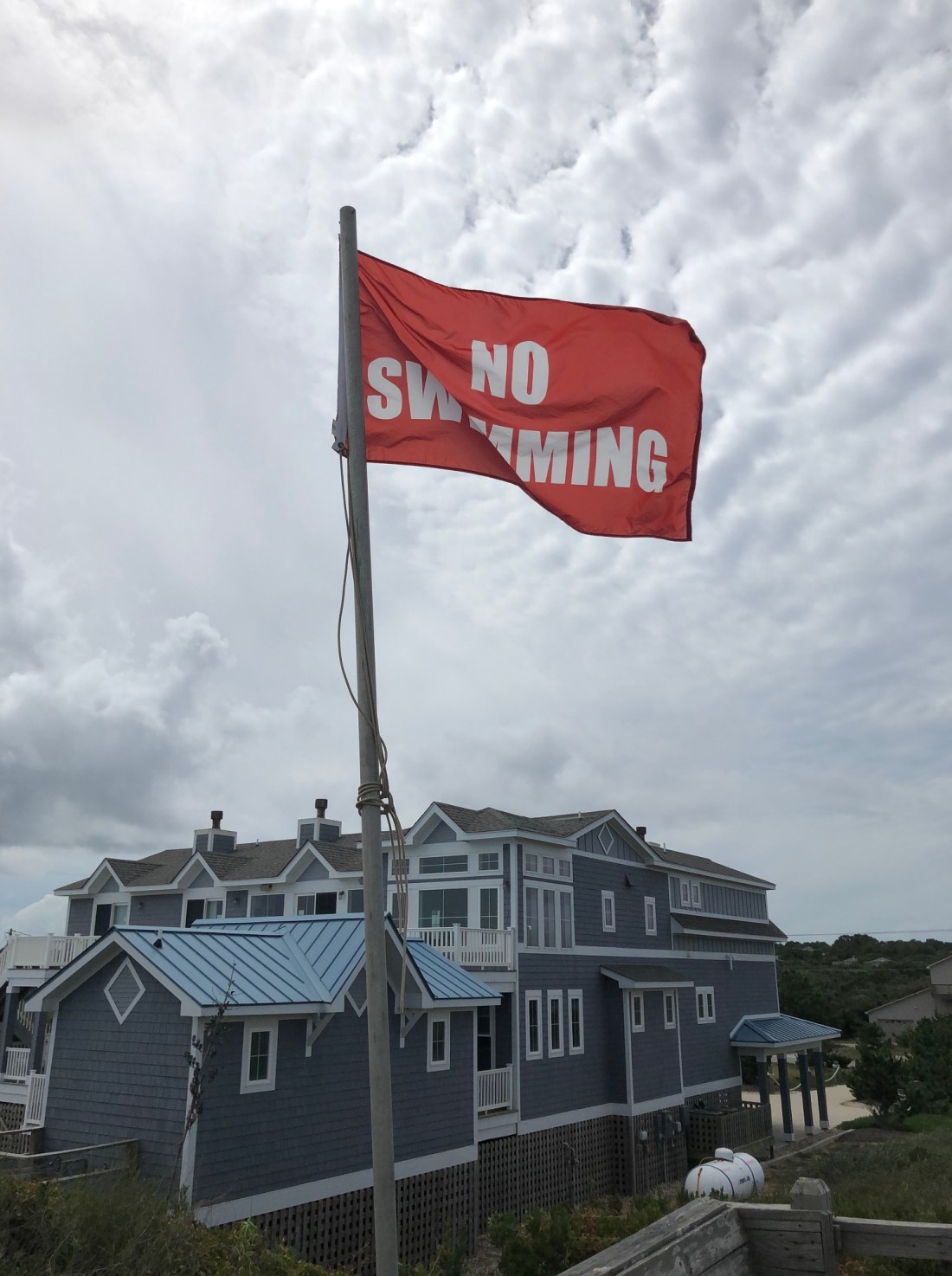
Until Arthur and the rip currents subside, no one should be swimming in the ocean.
Tropical Storm Arthur formed east of Florida last night, two weeks ahead of the “official” June 1 start of the hurricane season. It brings the potential for heavy rainfall, strong-force winds, and flooding.
Dare Emergency Management advises residents to take precautionary measures, including securing outdoor furniture, trash cans, and any other loose items outside; moving vehicles to higher ground; charging cell phones and making sure that flashlights have working batteries. See the advisory for more details.
N.C. COVID-19 REPORT
The numbers in the latest statewide 24-hour COVID-19 count improved vastly over the previous 24-hour count, which showed a record-high number of cases.
Since 11 a.m. yesterday, 530 new lab-confirmed COVID-19 cases, out of 10,358 completed tests, were reported, according to the N.C. Dept. of Health and Human Services dashboard, for a positive-test rate of 5.1 percent.
Yesterday, the NCDHHS reported a record 853 new cases in a 24-hour period, for a striking 12 percent positive-test rate.
Today’s dashboard reports hospitalizations have increased by 12 to 493, and seven more deaths have occurred, bringing the statewide total number of people who have died because of COVID-19 to 659.
Nationwide, the total number of deaths in the United States now attributable to COVID-19 is nearly 90,000.
DON’T FORGET: THE SOUTHERN SHORES TOWN COUNCIL WILL HOLD AN IMPORTANT WORKSHOP MEETING ON TUESDAY, MAY 19, AT 9 A.M.
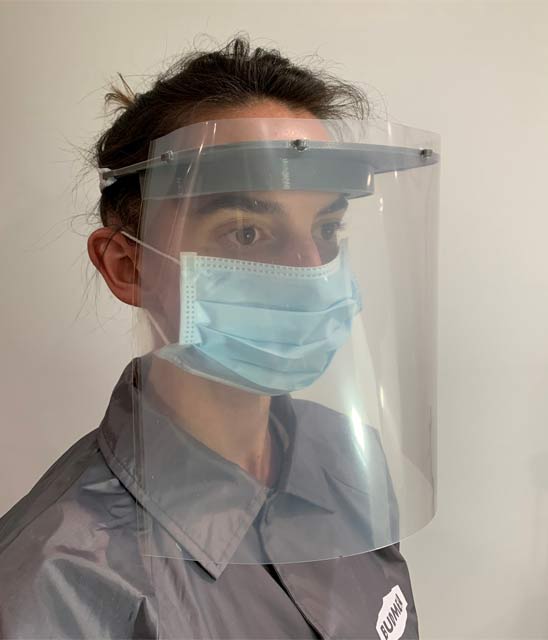
Face coverings and face shields protect all of us.
North Carolina today reported a single-day record high of 853 new lab-confirmed COVID-19 cases, as the positive test rate jumped to 12 percent, a rate that The Beacon cannot recall seeing in the state.
While Dr. Mandy Cohen, Secretary of the N.C. Dept. of Health and Human Services, continued to stress in a press conference yesterday that more COVID cases are being reported because testing capacity has increased significantly, the number of tests being done should not affect the positive test rate, which is a key COVID-19 indicator.
Ideally, for North Carolina to progress into Phase Two, the positive test rate over a 14-day period should be declining or leveling off. That is not occurring.
In the early weeks of COVID-19 testing in North Carolina, the positive test rate—which is the percentage of positive test results in a batch of completed tests—averaged around 9 percent, as The Beacon recalls. Twelve percent is certainly the highest positive rate recorded in testing done in May. We do not know all of the daily rates in April.
According to today’s NCDHHS dashboard, 853 people out of 7,039 tested positive for COVID-19, up from yesterday’s totals of 622 confirmed cases among 12,279 tests, for an encouraging positive rate of 5 percent.
Hospitalizations statewide dropped 11 to 652, and deaths increased by 11. The Beacon has not been reporting deaths statewide, but we plan to start doing so, to see if and how well they might correlate with declines in hospitalizations.
Also yesterday, Dr. Cohen announced new guidance for determining who should be tested for COVID-19. The NCDHHS has recommended that clinicians test any patient in whom they suspect COVID-19 and also directed that they ensure access to testing to the following populations, regardless of their symptoms:
Anyone with symptoms suggestive of COVID-19.
Close contacts of known positive cases, regardless of symptoms.
Persons who live in or have regular contact with high-risk settings (e.g., long-term care facility, homeless shelter, correctional facility, migrant farmworker camp).
Persons who are at high risk of severe illness (e.g., people over 65 years of age, people of any age with underlying health conditions).
Persons who come from historically marginalized populations.
Healthcare workers or first responders (e.g., EMS, law enforcement, fire department, military).
Front-line and essential workers (grocery store clerks, gas station attendants, etc.) in settings where social distancing is difficult to maintain.
“We want anyone who needs a test to get one,” Dr. Cohen said.
As The Beacon reported 5/14/20, free COVID-19 testing is not available in Dare County.
In a videotaped message Thursday, Sheila Davies, director of the Dare County Dept. of HHS, said that she expects to announce next week details of a local initiative for free drive-thru COVID-19 testing.




 The Southern Shores Beacon