Seventy-five new COVID-19 cases were reported today on the Dare County Dept. of Health and Human Services’ dashboard, a new single-day record high.
Forty-seven of the 75 cases are Dare County residents, and 28 are nonresidents.
Yesterday the DCDHHS reported that a local woman age 65+ had been hospitalized for COVID-19.
The State of North Carolina set a new record on Saturday when the Dept. of Health and Human Services reported 11,581 new COVID-19 cases in a 24-hour period.
Hospitalizations declined slightly statewide to 3,774 today, while COVID-19-related deaths climbed to 7,567.
We will post a COVID-19 roundup tomorrow before taking a week off to attend to other business.
Dare County Manager Bobby Outten made the rounds of town council meetings last week to inform officials about how he proposes the County allocate its funds to their towns’ upcoming beach nourishment projects, and only one governing board expressed an independent judgment and questioned Mr. Outten’s methods.
We would like to thank the commissioners of Nags Head for their probing analysis of Mr. Outten’s proposal and their proactive suggestion that beach nourishment funding should be developed on a county-wide basis, with all of the towns working together.
In their discussion, the Nags Head commissioners emphasized finding more money from new sources in order to continue maintaining all of Dare County’s beaches.
The Duck Town Council also expressed concern about funding for beach nourishment “down the road,” as Mayor Pro Tem Monica Thibodeau put it, but it did not brainstorm where and how more money might be identified.
Mr. Outten told elected officials that the County plans to reduce by about $1.4 million its contribution to each town’s beach (re)nourishment project in order to have enough money to fund two first-time nourishment projects in Southern Shores and the unincorporated community of Avon on Hatteras Island. Each town recently received a State grant in the amount of about $1.4 million.
“There isn’t enough money” in the Dare County Beach Nourishment Fund (BNF) “to do both projects,” Mr. Outten said, unless the County “reduces the funding to each town by the [N.C. Dept. of Environmental Quality] grant.”
According to Mr. Outten, the BNF, which is funded by one-third of the occupancy taxes the County collects, currently has an “excess” of $8.5 million in it. (The occupancy tax is 6 percent.)
By “reducing” the funding that Dare County would have given to Duck, Southern Shores, Kitty Hawk, Kill Devil Hills, and Nags Head for their upcoming beach-maintenance projects by $1.4 million each, the County can add about $7 million to its available excess.
If this plan is approved by the Dare County Board of Commissioners (BOC) at its Jan. 19 meeting, Southern Shores can expect to receive about $7 million up-front from Dare County, and an annual contribution of $750,000 to its bond debt service, according to Town Manager Cliff Ogburn.
Mr. Outten visited the governing boards of Kitty Hawk, Southern Shores, Nags Head, and Duck last week, and gave them all essentially the same presentation, which he said at the start of his remarks he had discussed with the mayors in a recent conference call.
The County Manager will visit the Kill Devil Hills Town Council tomorrow, when it meets at 6 p.m.
Because the live-stream feed from the Southern Shores Town Council meeting last Tuesday was virtually inaudible—the voices were low, and a persistent hum further drowned them out—we viewed the videotapes of the Kitty Hawk, Duck, and Nags Head meetings to learn what we had missed.
We base this report/commentary on remarks that Mr. Outten made during these meetings, as well as the response he received. We will not attribute them to any particular town presentation, however, unless it is relevant to do so.
We were able to discern from the livestream of the Southern Shores meeting at the time that it occurred that Town Council members asked few questions of Mr. Outten, and none seemed to push back like some of the Nags Head commissioners did.
Nags Head had planned to apply its $1.4 million grant to a 2022 Hurricane Dorian damage-repair project.
After Mr. Outten’s presentation, Nags Head Mayor Pro Tem Michael Siers, a realtor® with Howard Hanna, said that the County was “taking” the town’s Dorian grant money, and also suggested that Mr. Outten “readjust” or “redevelop” his funding model so that it benefits all of Dare County as it is today, not as it was when the model was developed 10 years ago for Nags Head.
Mr. Outten replied that Nags Head’s NCDEQ grant was not designated for Hurricane Dorian damage repair, but was designated generally for beach nourishment, and the grant simply replaces a portion of what Dare County would have given the town.
As for his funding model, Mr. Outten told Mr. Siers, “If there’s a better way to do this, we’d love to hear it. Our goal is to take care of the beaches of Dare County, as a whole. And if there’s a better way to do it, we want to do it.”
Mr. Ogburn assures us that the interference problem with the live You Tube feed will be resolved by the Town Council’s Jan. 19 meeting, when the Town’s coastal engineering consultant will be discussing “the results of the recent beach survey/monitoring report, as well as briefing [the Council] on the design of the 2022 project.”
We finally may find out at this meeting how much Southern Shores’ beach nourishment project is going to cost.
REDUCTION IN COUNTY FUNDS FOR TOWN PROJECTS
Mr. Outten last appeared before the Southern Shores Town Council on Nov. 6, 2019; he was accompanied by Dare County BOC Chairman Bob Woodard. The County Manager said then that the BNF had an excess of $7.5 million in unallocated funds.
In order to “put sand on the beaches in Dare County,” Mr. Outten said in 2019 and again last week, the County reserves BNF monies to ensure that “maintenance is carried going forward” on all projects that it funds and that it secures one year’s worth of debt service.
The $8.5 million excess is money over and above these costs.
The good news is that the BNF excess has grown by $1 million in 14 months. The bad news is, and has been for a while, that two applicants are vying for this funding: Southern Shores and Avon.
The Avon project was in the picture in 2019 well before Mr. Outten first spoke to the Southern Shores Council. (See The Beacon’s reports on 11/8/19 and 11/9/19 for background.)
As the County Manager explained in 2019 to the Council and again last week, Avon is in a “critical situation” with ocean overwash during storms that takes out N.C. Hwy. 12, its only means of access, and with oceanfront houses in danger of falling into the ocean.
In response to a question from Ms. Thibodeau, Mr. Outten said that Avon’s beach nourishment, “as a stand-alone project, would cost about the same as” the Southern Shores project, which has been estimated to cost between $14 and $16 million.
If the Avon project is done in 2022 contemporaneously with a Buxton renourishment project, it would cost about $11 million, he said.
The County Manager told Duck officials that Southern Shores is “proactively doing” beach nourishment. He did not characterize Southern Shores’ need as “dire,” as he did Avon’s.
Although Mr. Outten at no time ever committed Dare County to paying for 50 percent of the costs of Southern Shores’ 2022 beach nourishment, the Town’s financial consultants persistently referred in public presentations to the County’s contribution being 50 percent and members of the current and immediately preceding town councils also publicly assumed this level of contribution.
We regret that we could not hear the remarks made last Tuesday by Mayor Tom Bennett and Councilman Jim Conners, both of whom are carryover members from 2019. During public comments in 2019-20, we persistently corrected the 50-percent assumption made by both.
Assuming that the County funds both Southern Shores and Avon as it has proposed, and projecting the County’s funding model out to 2028, Mr. Outten said the BNF’s excess funds are likely to be around $5 million.
“The fund doesn’t grow as much as it once did,” he said.
THE NAGS HEAD BOARD STEPS UP
A year ago, Mayor Pro Tem Siers said, Mr. Outten visited the Nags Head commissioners in their meeting room and showed no interest in their suggestion that the beach towns “come together as a county” and try to develop a cost-effective county-wide beach nourishment plan that would allow them to “hit the hot spots as needed.”
Last week Mr. Siers pointedly challenged the County Manager’s funding “plan” as being outdated and in need of being “readjusted” in order to “move forward” in a way that “benefits the whole county.”
It seemed to us upon listening to their exchange that Mr. Siers, whose arguments were buttressed by his fellow commissioners, and Mr. Outten were talking at cross-purposes with each other.
While Mr. Outten focused on how to divide up the money in the BNF, Mr. Siers focused on “where you’re gathering the money from” and on the “urgency” that exists in 2021 to do beach nourishment that did not exist in 2011, when Nags Head did the first project on the Outer Banks, and none of the other towns was interested.
Although the County Manager said he had consulted with Dare’s “legislative delegation” about new “funding sources,” he did not elaborate upon these discussions. He told the Duck Town Council that “No one has been successful in creating a recurring beach nourishment fund” at the State level.
“Have you run a study on a one-cent sales tax increase or other ways of coming up with this money,” instead of taxing oceanfront property owners? asked Mr. Siers, who later mentioned raising the occupancy tax rate.
According to Mr. Outten, “oceanside” property owners in Avon will have to pay 40 cents more per $100 of property value, and other property owners in the Hatteras Island community will face a 10-cent tax increase—figures that Mr. Siers balked at as “detrimental to the residents,” especially the 40-cent increase.
(Mr. Outten did not speculate on the property tax increase in Southern Shores for its beach nourishment, when asked at the Duck meeting.)
In a similar vein, when informed about the County’s funding reduction, Duck Councilman Sandy Williams said: “We’re not getting money to reduce [the tax burden] on our MSDs [municipal service districts].” This view contrasted with Mr. Outten’s blunt comment to the Kitty Hawk Town Council that, because of the County’s reduction, taxpayers are going to “swallow a pretty significant tax increase.”
In response to Mr. Siers’s inquiry about the sales tax, Mr. Outten recalled the failed experience with the 1 percent sales tax increase—also known as a “sand tax”—that was enacted in 2005.
This tax—which the Dare County Commissioners imposed after receiving the N.C. General Assembly’s approval—was to exist for eight years, but it was overwhelmingly repealed by voters in a February 2006 referendum.
At the time the occupancy tax was 5 percent. It has been 6 percent since 2014. (Both Mr. Siers and Nags Head Commissioner Renee Cahoon, whose family has a long history in the rental business, commented that county occupancy taxes are declining as, according to Ms. Cahoon, “more houses come out of the rental market.”)
To reference this grass-roots protest that occurred 15 years ago, long before any Dare County town had performed beach nourishment, much less ALL of the towns and portions of unincorporated Dare County had done it, is to live in the past, as Mr. Siers suggested. Apples and oranges.
We vividly recall the sand-tax experience, including the “Beach Huggers” who opposed the tax. Most locals at the time thought the federal or state government should pay for maintenance of the Outer Banks’ public beaches, not consumers, including themselves.
Only Nags Head was even considering beach nourishment 15 years ago, and its inaugural project five years later had a $36 million price tag.
All of the Nags Head commissioners endorsed the idea of talking to their state legislators about increasing funding for beach nourishment through taxation or other means.
“We need a readily available source of money,” said Nags Head Commissioner Webb Fuller, a former interim town manager in Southern Shores, who also advocated for “equitable distribution” of the funds that the County has.
He suggested that “a formula” be developed that would “provide a degree of certainty as to how much money each [town or] area would receive.”
Mr. Fuller also proposed the formation of a “working group” of local “technical” professionals to consider “equitable distribution of what we have,” as well as “financial opportunities that we could pursue.”
Nags Head Mayor Ben Cahoon said he would try to schedule a gathering of the other town mayors to discuss beach-nourishment funding. This mayors’ meeting cannot happen too soon. It is already years too late.
Duck Mayor Don Kingston noted that beach maintenance is among the legislative lobbying targets of the North Carolina League of Municipalities, which has defined the creation of a “permanent and adequate funding stream for local infrastructure needs,” including beaches, as a top goal. All of the towns are members of the League and are participating in its legislative goal-defining process.
That the State of North Carolina does not have “skin in the game”—a phrase invoked by Mr. Outten and many elected officials to describe the investment risked by the County and the towns in beach nourishment—is shocking, considering how much it profits from the tourism-dependent coastal economy.
Perhaps with momentum generated by the Nags Head Board of Commissioners, this unjust situation will finally change. Beach nourishment is not just a one-time event; it is a perpetual commitment.
The Southern Shores Civic Assn. has partnered with One Day University, which offers a video library of lectures you can stream, as well as live-stream classes in which you can participate, to give all SSCA members free membership to One Day U.’s online learning resources in January-February.
One Day University has worked with professors nationwide for the past 12 years to develop “entertaining versions of their best lectures,” according to its website.
It purports to have more than 200 lectures in its video library, covering history, politics, law, medicine, science, psychology and the arts, among other fields of academic inquiry.
Near the end of the two-month period, according to SSCA President Rod McCaughey, the Civic Assn. will “reach out and poll the membership about continuing the One Day University program.”
If enough SSCA members express interest in continuing, One Day U. will offer each member a reduced fee negotiated by the SSCA of $1.00/month for the remainder of 2021.
The usual One Day U. membership fee is $7.95/month, Mr. McCaughey said in an email sent today to SSCA members.
To begin your free two-month trial access to One Day University, simply follow these steps:
Go to onedayu.com/ssca.
Click the START TODAY button.
Enter ssca-go in the Coupon Code field and click the arrow to the right of the coupon box to apply the coupon. (You should see the monthly cost change to zero. If this does not occur, double-check to ensure that you have entered the code correctly and then click the “apply the coupon” arrow again.)
Click the PROCEED TO CHECKOUT button.
Enter your information and click SIGN UP NOW.
With COVID-19 preventing us from gathering in person for educational programs, One Day University helps to fill a need that many of us have for lifelong learning. We thank the SSCA for making this generous opportunity available.
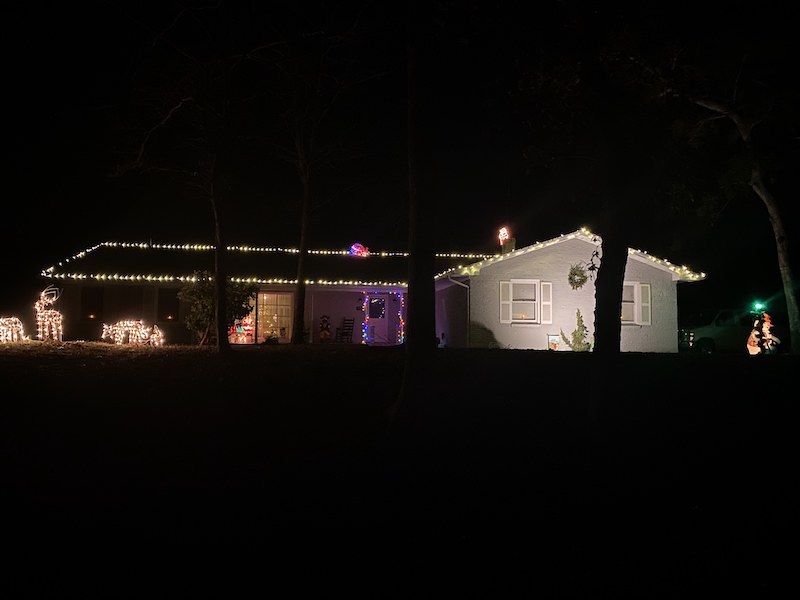
In other SSCA news . . . Emily Gould, SSCA’s volunteer/social coordinator, announced yesterday the results of the holiday lights contest.
First place went to 181 South Dogwood Trail; second place to 16 Seventh Ave.; and third place to 136 High Dune Loop.
Ms. Gould said that the SSCA received 157 votes for the contest, in which 38 house displays were entered and included on a driving tour.
Governor Cooper has repeatedly sought assistance from municipalities and local health departments in his fight to prevent the spread of COVID-19 in North Carolina.
A grass-roots petition seeking to compel elected Dare County government officials and the Dare County Dept. of Health and Human Services to do more to enforce Governor Roy Cooper’s executive orders enacted to stop the spread of COVID-19 is now circulating online through change.org. You may access it here:
Organizers are seeking 5,000 signatures on their petition. As of this writing, 2,628 people have signed in support of the petition’s list of 12 demands, which includes the demand that the DCDHHS “police” restaurants and other businesses for masking and physical-distancing violations and “apply meaningful consequences to those that don’t or won’t comply.”
The other demands speak more generally to enactment of “reasonable, consistent, and enforceable regulations” to stop the spread of COVID-19 in Dare County and to protect public health and safety.
The DCDHHS has reported 305 new COVID-19 cases since the first of the year, including a single-day record high of 73 cases on Jan. 2, and one death, bringing the number of Dare County residents who have died of the coronavirus to six.
According to N.C. public health officials, the crush of new cases attributable to Christmas holiday gatherings has not yet been registered on local health department dashboards.
Again today, as yesterday, the N.C. Dept. of Health and Human Services reported more than 10,000 new COVID-19 cases in a 24-hour period. Today’s NCDHHS dashboard shows 10,028 new cases, as well as 3,960 hospitalizations statewide, and 7,328 deaths. The positivity rate was 13.5 percent.
The change.org petition alleges that local leaders have put economic considerations ahead of local citizens’ health, accusing them of “outright capitulation” to the tourist economy and vacationers’ dollars by “allowing COVID-19 to flourish in Dare County.”
The “local citizenry,” the petition states, “has the right to demand better leadership by our elected representatives at the state and local levels. We have not seen evidence of that. Sadly, it seems our leaders are in hiding during an emergency.”
We do not recall hearing from Bob Woodard, Chairman of the Dare County Board of Commissioners, since June 22, 2020, when he announced a local mask mandate in a videotaped message.
Certainly, neither Mr. Woodard nor Dr. Davies has held a COVID-19 briefing and responded to media inquiries—an omission that we consider a major failing.
In contrast, Governor Cooper and Dr. Mandy Cohen, NCDHHS Secretary, held more than 110 COVID-19 briefings last year.
We publicize the petition as a matter of public information. We cannot confirm or deny the facts alleged by the organizers–such as the description of the fourth of Dare County’s six COVID-19 fatalities as a 48-year-old man who was a United Parcel Service delivery driver. We simply do not have the resources to vet this petition.
While we believe the language petition is too inflammatory, we also well understand the anger and frustration underlying it. We expressed our own passions earlier this week in response to the mob violence at the U.S. Capitol.
We agree with challenges by the petition organizers to Dare County leadership to take more action to protect the public from COVID-19 or to explain publicly why it has not.
At briefings last fall, Governor Cooper encouraged local government officials to enact civil penalties (e.g., fines) to enforce his COVID-19 orders.
On Dec. 11, 2020, the Governor wrote to local government officials requesting their assistance, attaching an advisory opinion from the N.C. Attorney General’s Office concluding that municipalities have the legal authority to adopt ordinances that would impose civil penalties for noncompliance.
To our knowledge, only the Town of Nags Head has considered adopting local ordinances to impose civil sanctions for violations of the Governor’s executive orders; the Board of Commissioners concluded that it did not have the legal authority to do so.
Certainly, the Town Council of Southern Shores never publicly entertained such action.
The restrictions in the Governor’s executive orders can be enforced criminally through arrest and prosecution, if local law enforcement officers choose to exercise their discretion and act.
The Dare County leadership, including the Dare Control Group, could exhort police, as a matter of policy, to enforce the orders aggressively. The District Attorney’s Office also could take a stand.
The Beacon has learned that there is legal disagreement as to whether municipalities have the authority to enact ordinances for civil sanctions.
While the Attorney General’s Office advised the Governor that they do, the University of North Carolina School of Government reached a different conclusion:
According to attorney Jill Moore, who also has a Masters in public health, local health directors, such as the DCDHHS’s Dr. Davies, have the “authority to issue isolation or quarantine orders, the authority to enforce the North Carolina communicable disease laws through the use of criminal or civil remedies, and the authority to abate imminent hazards.”
Ms. Moore thoroughly discusses the use of each of these “tools.” A person who violates an isolation or quarantine order issued under the authority of N.C. General Statutes (NCGS) 130A-145, for example, may be charged with a Class 1 misdemeanor, which is punishable by up to two years in prison.
This type of order is distinct from a mere instruction from the DCDHHS that an individual self-isolate or self-quarantine. Dr. Davies has referred to this power in her COVID-19 updates, but has given no indication as to whether she invoked it.
As for Dr. Davies’s enforcement of State statutes pertaining to “communicable diseases,” Ms. Moore states that local health directors are responsible for ensuring that communicable disease control measures are “given.” This is NCGS 130A-144(e).
As a practical matter, she writes, “this may simply mean ensuring that people are informed about the control measures they are required to comply with.”
But, she continues, “If a person who has been informed violates a required control measure, the misdemeanor remedy appears to be available to enforce it.”
An “imminent hazard,” she writes, is a “situation that is likely to cause an immediate threat to human life, an immediate threat of serious physical injury, an immediate threat of serious adverse health effects, or a serious risk of irreparable damage to the environment if no immediate action is taken.” This is language from NCGS sec. 130A-2(3).
If Dr. Davies were to determine that such a hazard exists, she could order the “owner, lessee, operator, or other person in charge of the property” where the hazard exists to abate it. Abatement can include temporary closure of the property.
Most intriguing to us is the rulemaking authority of the DCDHHS Board, which “is comprised of members selected by the Dare County Board of Commissioners,” according to the DCDHHS website.
There are 16 members of the DCDHHS Board, including:
A local board of health “has the authority to adopt rules that are necessary to protect and promote public health within its jurisdiction,” according to Ms. Moore, citing NCGS sec. 130A-39.
To be valid, she observes, a local board of health rule must:
*Be related to the promotion or protection of health;
*Be reasonable in light of the health risk addressed;
*Not violate any law or constitutional provision;
*Not be discriminatory, and
*Not make distinctions based upon policy concerns traditionally reserved for legislative bodies.
Further, a local health rule must be more stringent than a state regulation on the same subject matter, which we believe would be a challenge in rulemaking for COVID-19 control.
If this standard were met, however, the violator of a local board of health rule could be charged with a misdemeanor or the local health director could seek injunctive relief.
We have thrown a lot of “legalese” at you today, and we have not had the time to digest it ourselves. We conclude our legal discussion with Ms. Moore’s conclusion:
“Local boards of health are charged with protecting and promoting public health in the jurisdictions they serve. . . . This suggests that local boards of health should be engaged and active partners in monitoring COVID-19 within their communities and promoting responses that ensure the public health, regardless of whether they also exercise their rule-making authority.”
We would like to know what the DCDHHS Board of Health has done during the pandemic. We have seen no public-information releases by this body.
The change.org petition is seeking “monitoring” by the DCDHHS that goes far beyond just posting the numbers of new COVID-19 cases locally. The organizers are seeking active local enforcement, just as Governor Cooper has requested for months now.
When asked at the Wednesday COVID-19 briefing whether he might impose more stringer restrictions, the Governor said, “All options are on the table.”
Ursula and Bob Bateman of Southern Shores continue to do well, experiencing no adverse effects, more than 40 hours after they were vaccinated Wednesday with the Moderna COVID-19 vaccine at the Thomas A. Baum Senior Center in Kill Devil Hills.
Mr. Bateman played tennis yesterday. Mrs. Bateman said she feels a little stiffness when she raises her vaccination arm, but no pain at the injection site. The vaccination itself, she said, “was nothing.” Like a pin prick.
Thanks to Mrs. Bateman, who inquired of medical personnel at the vaccination event, The Beacon reported on Wednesday afternoon already that Dare County had vaccinated 300 people that day. The Dare County Dept. of Health and Human Services later confirmed the number online.
Mrs. Bateman said that after she and her husband checked in at the Baum Center upon arrival, they waited only about 10 minutes before they received their vaccinations. She estimated that there were five to six vaccinators on site, whom she thought were likely nurses. She also observed many members of the Dare County Emergency Services on hand, as well as Dr. Sheila Davies, director of the DCDHHS.
After they were vaccinated, the Batemans were taken to a room where they were monitored for 15 minutes for any adverse reactions before they could leave. Rare instances of anaphylaxis, which is a severe allergic reaction, have reportedly occurred in response to COVID-19 vaccination.
Each of the Batemans received an appointment card for a second-dose vaccination on Feb. 3, four weeks later.
Mrs. Bateman described the vaccination event as smooth and well-handled. She was impressed.
The Beacon has learned that a number of Southern Shores homeowners have appointments for vaccinations on Monday at the Parks and Recreation Center in Kill Devil Hills.
LOCAL CASES CONTINUE TO INCREASE DRAMATICALLY
The DCDHHS reported yesterday two days’ worth of new COVID-19 cases locally. (See The Beacon’s report, 1/8/21.) The total was 110: 78 Dare County residents and 32 nonresidents.
We have just received unconfirmed word that a petition is circulating online to compel the Dare County Board of Commissioners to take action to enforce the Governor’s mask mandate, 10 p.m.-to-5 a.m. curfew, restaurant capacity restrictions, and other COVID-19 prevention actions. We are not aware of how local law enforcement departments are handling violations of the Governor’s executive orders. But we have heard anecdotally that some local restaurants are exceeding capacity.
We will report further on this development as we gather the facts.
ON A PERSONAL NOTE, I have just received word from a good friend of mine in Maryland that her 49-year-old stepson died Wednesday of COVID-19, more than a month after being diagnosed.
This young man was healthy and fit, with no underlying medical conditions. After testing positive for the virus, he isolated at home, where he was under the care of his personal physician. He thought he would be fine and advised his family not to worry.
But three weeks after his diagnosis, he had to be transported by ambulance to a hospital where he worsened and was placed on life support. I do not have all of the medical facts, but I know that he delayed going to the hospital because he just did not believe the severity of his condition. After all, he was healthy and young.
A record-high 10,398 new COVID-19 cases were diagnosed in North Carolina during the most recent 24-hour period, according to the N.C. Dept. of Health and Human Services’ dashboard, while the number of hospitalizations continued to climb toward the 4,000 mark.
Since Governor Cooper and NCDHHS Secretary Dr. Mandy Cohen implored North Carolinians yesterday to take immediate action to protect themselves and others from the coronavirus–emphasizing again the imperative that they wear masks and stay home except for essential activities–67 more people have been hospitalized for COVID-19, and 137 have died.
Statewide hospitalizations now total 3,960, while deaths number 7,213.
The Dare County Dept. of Health and Human Services did not update its COVID-19 dashboard yesterday. At 11 a.m. today, it posted new case reports for yesterday, showing 53 people, including 38 Dare County residents, had tested positive for COVID-19.
UPDATE: Later in the day the DCDHHS posted 57 more new COVID-19 cases, 40 residents and 17 nonresidents, for a two-day case total of 110. The DCDHHS dashboard also added the hospitalization of a Dare County resident, without explanation.
I have deleted my post about the terrorist mob storming the U.S. Capitol today in order to prevent the peaceful transfer of power at the highest level of our government. What happened today and what is continuing to happen sickens me. I may take sick leave, but before I do, I will report:
Earlier today Governor Roy Cooper held a COVID-19 update briefing in which he announced the extension of the modified stay-at-home order in North Carolina by three weeks, which means that the 10 p.m. to 5 a.m. curfew will remain in effect until 5 p.m. Jan. 29.
Also at the briefing, Dr. Mandy Cohen, Secretary of the N.C. Dept. of Health and Human Services, announced the issuance of a Secretarial Directive in which she advised people to stay home and only leave for essential activities, such as going to work or school, buying groceries, or attending to healthcare needs; to wear a mask at all times and to maintain six feet of physical distance from people whenever they are outside of their homes; to avoid gatherings with people who are not in their households; and to take other immediate actions to prevent the spread of COVID-19.
People who are age 65 or older, or who are at high-risk for developing serious illness, the Secretary advised, should arrange to have their groceries, medications, and other essential supplies delivered to them.
Governor Cooper said that statewide COVID-19 metrics, which have dramatically escalated since early November, “paint a dark and difficult picture,” and continued to propound that “prevention is our best weapon.”
Secretary Cohen called the latest counts for new COVID-19 cases, hospitalizations, and emergency-room visits for COVID-19-like symptoms “astonishingly high” and noted, with alarm, that they do not yet reflect the “full impact of the [Christmas] holidays.”
Today the NCDHHS dashboard reported 6,952 new COVID-19 cases, 3,893 hospitalizations, and a positivity rate of 17.8 percent. Both the number of hospitalizations and the percentage of positive tests are record highs.
There is “an alarming amount of virus everywhere in our state,” said Secretary Cohen. Both she and Governor said “getting the vaccine out quickly” is the State’s most urgent priority.
They also expressed disappointment that many people in Prioritization Phase 1A, such as staff at long-term care facilities, have declined to receive the vaccine.
According to the NCDHHS’s COVID-19 County Alert System, which was updated today, 96 of North Carolina’s 100 counties are currently in the “red” or “orange” zone for COVID-19 spread, signifying critical or substantial spread, respectively. Eighty-four of them are in the red, including Dare County.
“We are in a very dangerous position,” Governor Cooper said.
The COVID Data Tracker of the U.S. Centers for Disease Control and Prevention reported this morning that North Carolina has received 498,450 doses (4,753 per 100,000) of Pfizer/BioNTech and Moderna vaccines thus far, and has vaccinated 137,198 (1,308 per 100,000) people with first doses. Second doses of vaccine reportedly arrived in North Carolina this week.
Secretary Cohen said several times during today’s briefing, as she has in the past, that vaccine supplies in North Carolina “are very limited and people may need to wait.” The Dare County Dept. of Health and Human Services has stressed the same message.
The Governor has mobilized the N.C. National Guard to help local health departments with administering vaccinations statewide. The Guard is sending out six-person teams to assist: Two team members will be able to administer vaccinations, while the other four will help with logistics.
The Secretary said that the NCDHHS has allocated all of the vaccine supply it has received to local health departments, but some counties are having trouble with their distribution.
According to Southern Shores homeowner Ursula Bateman, who received her first dose of the Moderna vaccine, with her husband Bob, at the Baum Center this afternoon, the DCDHHS vaccinated 300 people today. Mrs. Bateman described the vaccination event as “well-handled” and the vaccination itself as painless.
“It was just a prick,” she said, adding that she felt more pain when she was received a pneumonia vaccination.
The DCDHHS has not yet updated its dashboard today for new local COVID-19 cases.
I do not apologize for the passions I expressed earlier or for my refusal to engage in discussion and argument. This is a privately maintained blog of news and editorial opinion, not a publicly funded forum. The First Amendment does not apply to the actions of strictly private parties. It is designed to address government oppression.
There is a dangerous pandemic raging across our country. I have done my best to inform you about it locally and statewide.
The deer blend into the landscape along Holly Trail on a recent Sunday morning.
The Southern Shores police are seeking the public’s help with identifying the person(s) who illegally killed a deer with an arrow in Chicahauk last weekend.
In a release to local media, the police said that the deer was found dead about 9:30 a.m. Saturday near the turtle pond between 62 Spindrift Trail in Chicahauk and 61 Ocean Blvd. It did not report any further details of what was described on Nextdoor.com two days ago by a Chicahauk homeowner as an apparent poaching.
The news of the deer’s slaying first appeared on Nextdoor when a Chicahauk homeowner reported that a buck had been killed with an arrow and decapitated, presumably for his antlers. The homeowner said that a child discovered the buck’s remains.
This same homeowner reported hearing what she thought was gunfire in the area during the preceding days.
Hunting is not permitted in Southern Shores, and the “shooting or discharging” of arrows in town is specifically prohibited by Town Code sec. 22-5. The offense is a Class 3 misdemeanor.
If you have any information about the misguided and potentially dangerous person or persons who committed this soulless act, please contact the Southern Shores Police Dept. at (252) 261-331.
DELAY, AS EXPECTED; VACCINE REGISTRATION UPDATE: We have heard from another Southern Shores homeowner that when she went through the online vaccination registration last night, she received the following response upon submission of her form:
“Due to an overwhelming response, it will take time for our staff to call you back. It will likely be mid to late February before we are able to accommodate everyone in this phase, as vaccine supply is very limited. Please be patient as we work to provide you an appointment for your vaccine.”
The Dare County Dept. of Health and Human Services reported yesterday afternoon that it did not anticipate registering people in Group 2 of Phase 1B—the next group of vaccine recipients prioritized in Phase 1B after people age 75 or older—until the “beginning of February.” It would now appear that this was an optimistic assessment.
As we have previously reported, the holdup with vaccinations is the amount of vaccine that the State of North Carolina receives from the U.S. government each week. The problem of limited supply does not originate with the State; it originates in Washington.
Dr. Mandy Cohen, Secretary of the N.C. Dept. of Health and Human Services, said at the last COVID-19 briefing in Raleigh that the State can count on receiving 60,000 doses of each vaccine weekly “going forward.” Needless to say, this is a grossly inadequate supply for a state as populous as North Carolina.
Governor Roy Cooper and Secretary Cohen are scheduled to hold another COVID-19 briefing today at 2 p.m., which may be viewed on UNC-TV channel 3 or via livestream at https://www.unctv.org/watch/live-stream/eoc/.
Secretary Cohen receives word from the federal government of the State’s weekly supply of vaccine each Tuesday. Perhaps she will have encouraging news.
INAUDIBLE LIVESTREAM OF TOWN COUNCIL MEETING: We would like to report to you today what Dare County Manager/Attorney Bobby Outten said at last evening’s Town Council meeting about County funding for the Town’s 2022 beach nourishment project, but we were unable to hear him well enough on the meeting livestream to do so. A persistent hum drowned his voice. We can say only that Mr. Outten spoke at some length.
None of the speakers at the meeting, which lasted about an hour and 20 minutes, were clearly audible on the livestream we accessed. We checked the videotape this morning and encountered the same problems. If anyone has better success with the Town’s You Tube video of the meeting, please let us know.
We will try to catch up with Town Council news by speaking with Town Manager Cliff Ogburn as soon as possible. Please check back on Friday or Saturday.
Because of the COVID-19 vaccination reporting we did yesterday, we were unable to attend the meeting in person, but we will endeavor to do so in the future. The next Town Council session will be Jan. 19 at 9 a.m. in the Pitts Center.
Frontline essential workers in Group 2 of Phase 1B of North Carolina’s vaccine rollout should not expect to be able to register for vaccine appointments until “the beginning of February,” the Dare County Dept. of Health and Human Services said today in its Tuesday COVID-19 update.
The DCDHHS calculated that based on Dare County’s anticipated supply of vaccine and the number of people age 75 or older who will register for vaccine appointments, vaccinations of Group 1 of Phase 1B will take about a month.
Frontline essential workers prioritized to receive the COVID-19 vaccine in Group 2 must be age 50 or older. They include first responders, such as firefighters and police officers; corrections officers; food and agricultural workers; U.S. Postal Service workers; manufacturing, grocery store, and public transit workers; and educational and child-care workers, including teachers, support staff, and day-care workers.
Phase 1B also has a third group that consists of healthcare workers not vaccinated during Phase 1A and frontline essential workers of any age.
The DCDHHS also reported 27 new COVID-19 cases today, 20 of whom are Dare County residents.
During the past week, 14.9 percent of the COVID-19 diagnostic tests done locally were positive, according to the update, which gave no further details about the Dare County resident whose death was reported yesterday.
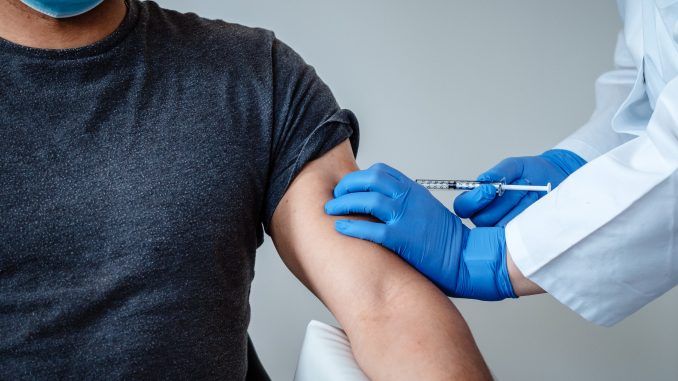
Photo provided by BioNTech, the German company that worked with Pfizer to produce the COVID-19 vaccine first approved for emergency use by the FDA. The Dare County health department is administering the Moderna vaccine. Both vaccines require two doses for efficacy.
A Southern Shores homeowner informed us this morning that she and her husband registered today for the last vaccination appointments scheduled tomorrow at the Thomas A Baum Senior Center in Kill Devil Hills.
They just got lucky, placing two 8:30 a.m. calls to the Dare County COVID-19 Call Center, and getting through to a real person on the second call. Their appointment is for 3:45 p.m. tomorrow.
Subsequent to this Southern Shores homeowner’s success, another homeowner in our town called the Call Center and also got through to a real person, who informed her that the Call Center is no longer making vaccination appointments by telephone, only through online registration.
This homeowner reports that the Call Center worker advised her that people who register online will be contacted according to the time that they registered, essentially on a first-come/first-serve basis.
Only people who are age 75 or older–and, therefore, in Group One of Phase 1B of the vaccine rollout–may register now. People who are in Phase 1B, but in a lower-ranked group, are not eligible for vaccination yet. (See The Beacon, 1/2/21, for the groups in all four prioritization phases of North Carolina’s vaccine rollout.)
After you submit your registration form, you should see a notation at the top of the page informing you that your submission has been successful.
The Beacon has decided not to identify either of these homeowners out of concern for their privacy. The first homeowner, who will be vaccinated tomorrow with her husband, has agreed to be interviewed by The Beacon about the process. Please check back tomorrow to read about their experience.
THE NUMBER OF COVID-19-RELATED HOSPITALIZATIONS AND DEATHS ACROSS THE STATE CONTINUE TO RISE. The N.C. Dept. of Health and Human Services reported today 3,781 hospitalizations, a new record, and a total of 6,996 deaths.
In the past three days, the number of new COVID-19 cases statewide has ranged from 5,187 to 6,487. The positivity rate was above 16 percent yesterday and is again today.
The issue of concern with the number of hospitalizations, Dr. Mandy Cohen, Secretary of the NCDHHS, has explained, is not the number of hospital beds available, but the number of physicians and nurses available to treat COVID-19 patients. The worry is a shortage of medical staff, not beds.