Land at the Duck Road split is a popular location for political campaign signs.
“One-stop” early voting for North Carolina’s March 3 primary, in which candidates for the U.S. presidency, the U.S. Senate, and the N.C. governor and lieutenant governor, will be vying for their party’s nomination, starts today at 8 a.m. and runs weekdays through Feb. 29.
Voting will take place from 8 a.m. to 7:30 p.m. at three locations: the Kill Devil Hills Town Hall, the Dare County Board of Elections Office in Manteo, and Fessenden Annex in Bauton. There will be no voting on the weekends of Feb. 15-16 and Feb. 22-23, and polls will close at 3 p.m. on Sat., Feb. 29.
Besides the top N.C. executive positions, there are candidates running for N.C. Attorney General, N.C. Secretary of State, N.C. Treasurer, and other state offices, but your opportunity to vote for any of them depends on your political party affiliation or, if you are unaffiliated, on which primary you choose. Some party candidates in the November election—such as incumbent N.C. Attorney General Josh Stein, a Democrat—have already been declared because they have no primary opposition. (See sample ballots below.)
ON THE LOCAL LEVEL, Republicans—and unaffiliated voters who choose to vote in the Republican primary—will have the opportunity to vote for either Rob Rollason of Kill Devil Hills or incumbent Bobby Hanig of Powells Point in District 6 of the N.C. House of Representatives and for either Paul Wright or incumbent Steve House in District 3 of the Dare County Board of Commissioners.
District 3 represents Duck, Southern Shores, and Kitty Hawk. Mr. House lives in Southern Shores, and Mr. Wright lives in Kitty Hawk.
The Democratic candidate for District 6 of the N.C. House is Tommy Fulcher of Southern Shores. Mr. Fulcher is the husband of Mayor Pro Tem Elizabeth Morey, who was elected to the Southern Shores Town Council last November. Mr. Fulcher and Ms. Morey are political consultants who have worked on local Democrats’ campaigns.
Democrat Kathy McCullough-Testa of Southern Shores will face the winner of the GOP primary for the District 3-Dare County Board seat in November.
Three other seats on the seven-member county Board of Commissioners are up for election this year, but only one is being contested.
Board chairman and District 2 Republican Robert Woodard will face Democrat Amanda Hooper Walters of Kill Devil Hills in November. Neither faces primary opposition.
Both District 1 commissioner Wally Overman of Manteo, a Republican, and District 4 commissioner Danny Couch of Buxton, a Democrat, are running unopposed.
Democrat Tess Judge of Kitty Hawk will challenge Republican State Senator Bob Steinburg of Edenton in November for his N.C. Senate seat. Mrs. Judge previously ran unsuccessfully in 2018 for Mr. Hanig’s House seat.
There will be partisan races for seats on the Dare County Board of Education this year, but no primaries.
N.C. HAS SEMI-CLOSED PRIMARY
North Carolina has a semi-closed primary system. Voters who have declared a party affiliation may vote only in their party’s primary. Unaffiliated voters may vote in a particular party’s primary only if the party authorizes them to do so. The Democratic, Republican, and Libertarian parties have given unaffiliated voters permission to vote in their primaries, but the Green and Constitution parties have not.
The deadline for changing party affiliation for the primary election has passed. It was Feb. 7.
You may register to vote during the one-stop early voting period in a process known as same-day registration. You must meet legal requirements for voting eligibility and have proof of county residency.
You will not be required to show a photo ID for the primary. A lower federal court ruling has prevented North Carolina’s photo ID law from taking effect.
Are separated recyclables placed in receptacles like these in front of Food Lion in the Marketplace ending up in Bay Disposal’s transport to a Portsmouth incinerator? They are if they just end up in bins behind the store. The Beacon aims to find out.
The Town Council’s unanimous approval Feb. 4 of a $16,780 budget amendment that would give Bay Disposal & Recycling a per-home rate increase for its curbside recycling pickup until June 30— even though it is taking the Town’s recyclables to an incinerator, not a recycling center—is what the most recycling-savvy member of the Council, Matt Neal, called a “stopgap” measure.
While Mr. Neal joined in giving Bay Disposal what Interim Town Manager Wes Haskett called a “slightly increased rate” and in authorizing Mr. Haskett, Town Attorney Ben Gallop, and Bay Disposal manager Joshua Smaltz to amend the existing service contract—in particular, specifying that the current arrangement is only temporary—he also made a point of clarifying that he approved these changes only on condition that the Council “reevaluate” the contract “at the end of the [2019-20] fiscal year.”
This reevaluation would occur a year before the expiration of the Town’s recycling contract with Bay Disposal, which runs until June 30, 2021.
With that understanding agreed upon, Mr. Neal voted to approve the “stopgap,” which permits Bay Disposal to continue to take Southern Shores’ recyclables to Wheelabrator, a waste-to-energy facility in Portsmouth, where they are incinerated, not recycled.
Mr. Haskett, who did not state the precise amount of the rate increase, characterized this potentially months-long temporary arrangement as in effect “until another option is available or the market improves,” or, in light of Mr. Neal’s term, until June 30.
The Beacon went to press with a Town Council meeting story last Friday around 2 p.m. without having the advantage of seeing the meeting videotape because it had not been posted online—an extremely unusual delay, especially considering that the meeting lasted only one hour and eight minutes.
The videotape apparently was posted not long after The Beacon’s blog appeared. We were able to view it today and have concerns about some of what we heard.
THE BEACON’S CONCERNS
We are troubled first by Mr. Haskett’s failure to state for the public record—and the Town Council’s failure to state in its motion—the amount of the per-home rate increase that the Council gave Bay Disposal. This rate—assuming it is $1.17, and not another rate that the Council discussed behind the scenes—has only been recorded in written background materials for the Council’s Jan. 7 meeting, not discussed openly at a public forum.
Equally troubling was Mr. Haskett’s reference, without any elaboration, to the possibility that Bay Disposal could take Southern Shores’ recyclables to an actual “recycling plant in Northern Virginia.” At no time, did we ever hear the Town Council seriously take up this possibility in public. (Last week I was in Alexandria, Va., a NOVA city that is a model for viable and efficient recycling, as well as other green programs.)
The Beacon is left to surmise, based upon what we read in the January written background materials, that this transport would cost an additional $2.70 per home.
Is this increased cost any worse than burning recyclables for the foreseeable future? More to the point of problem-solving, is this increased cost one that other towns, such as Nags Head, might be interested in sharing? Could towns negotiate this cost?
In The Beacon’s view, the government on display at the Feb. 4 meeting was perfunctory and lacking in transparency and accountability. No one sought to inform the public by spelling out both the terms of the revised contract and the thinking behind these terms.
The Beacon would like to know why Mr. Haskett told the Town Council—and it readily agreed—that the termination provision of the Town’s contract with Bay Disposal would be rewritten to favor Bay Disposal. Please correct me if I’m wrong, astute readers. Mr. Haskett proposed changing 10 days to 30 days in the following terms:
“If . . . either party shall be in breach of any provision of this Agreement, the other party may suspend or terminate its performance hereunder until such breach has been corrected; provided, however, that no termination shall be effective unless and until the complaining party has given written notice of such breach to the other party and the other party has failed to cure such breach within at least ten (10) days thereafter. In the event any such breach remains uncured for a period of ten (10) days, the complaining party may terminate this Agreement by giving the other party written notice of such termination; which shall become effective upon receipt of such notice.”
As we read the change, the Town would be giving Bay Disposal 30 days to fix a breach. Why should we give it that much time? What’s the rationale for this change? Mr. Haskett did not explain it. Why 30 days? Why not 15?
We were further troubled by the fact that Town Attorney Ben Gallop said nothing when Mayor Pro Tem Elizabeth Morey asked about the Town’s “statutory obligation” in regard to recycling. Mr. Haskett told her that he would have to research the question, but Mr. Gallop should know the answer or at least be able to discuss it.
Here again, we wonder: What does Ms. Morey know about state recycling law? And when did she learn? Who’s meeting with whom? How much government is happening behind closed doors, and why?
In a council-manager form of government such as Southern Shores has, the town manager is the chief administrator, not the mayor or anyone else on the council.
N.C. law states that the manager “shall direct and supervise the administration of all departments,” including public works, and is subject only to the “general direction and control of the council,” not to specific order of the mayor or anyone else.
During public comment, Rod McCaughey, immediate past president of the Southern Shores Civic Assn., said that the SSCA “would like to advocate for as responsible a recycling program as we can find to do.” He noted that the Council’s actions “do not preclude us looking at other alternatives.”
How are decisions being made?
Rather than “statutory obligation,” it is our civic responsibility that should be foremost in the minds of elected officials. North Carolina has long been committed to recycling and waste reduction, and its municipalities are expected to effectuate that commitment.
RECYCLING OPTIONS
N.C. statute (N.C.G.S. 130A-309.10) makes it unlawful for a “person” to “knowingly dispose” of many types of solid waste in landfills, including aluminum cans and “recyclable rigid plastic containers.” The same statute prohibits a “person” from “knowingly” disposing of aluminum cans by incineration in an incinerator for which a permit is required.
As we noted in an earlier post, the N.C. Dept. of Environmental Quality (DEQ) is temporarily permitting Bay Disposal to transport aluminum cans and other single-stream recyclables to Wheelabrator’s incinerator, a decision that it will revisit in three months. This permission is being referred to as a waiver.
N.C.G.S. 130A-309.09B encourages, but does not require, local governments to separate “marketable plastics, glass, metal, and all grades of paper for recycling.” The same law directs local governments to participate in joint waste reduction and solid waste management programs, “to the maximum extent practicable.”
Mr. Haskett reported that the N.C. DEQ had met with “local jurisdictions” recently because the Department, and some “nonprofits” and other “interest groups,” want to “help out” the Outer Banks.
The DEQ, Mr. Haskett said, “is trying to bring a new recycling plant to Northeastern North Carolina.”
This is wonderful news that The Beacon had already heard, but not publicized because we did not have sufficient facts to do so.
The bad news is that Mr. Haskett was not among the people who met with N.C. DEQ because, as he said, he was not “notified.” The reason he was not notified is that–as The Beacon has learned in its reporting–Southern Shores has not reached out to the N.C. DEQ or to Dare County or to anyone else to explore other options. The Town has not taken any initiative.
The Beacon has been reaching out to people in the know and will be filing a more complete investigatory report as soon as possible.
We were pleased to hear Mr. Neal asking questions of Mr. Smaltz at the meeting about who is picking up the recyclables at various town recycling centers on the beach. If Bay Disposal is picking them up—regardless of whether they are segregated or not—they are ending up at Wheelabrator.
After interviewing responsible public officials, The Beacon previously reported that the glass and cardboard recyclables at the Dare County-Kitty Hawk Recycling Center are picked up by Dare County and that Bay Disposal collects its single-stream recycling. We also reported that the county disposes of all of its recyclables by means other than Bay Disposal’s transport. We did not query the public works directors at Kill Devil Hills or Nags Head.
We have since learned from Dare County Public Works Director Shanna Fullmer that Bay Disposal actually collects the county’s plastics, which means they are being burned. The Beacon has a standing appointment to meet with Ms. Fullmer to discuss the county’s recycling operations. We are especially interested in its glass crushing program.
N.C. law requires counties to conduct county-wide property revaluations at least every eight years; but they can choose to do them more frequently. Dare County’s last revaluation was in 2013; the 2005 revaluation, which sought to catch assessments up with the real-estate market bubble, stimulated a lot of taxpayer appeals.
Dare County decided to move up the eight-year cycle and do a revaluation this year. You will be receiving assessments for the Jan. 1, 2020 market value of your real property later this month. There have been rumors that this year’s revaluation will look a lot like 2005’s.
The 2020 revaluation came up for the first time in the Town’s discussions about beach nourishment at last week’s Town Council meeting. We trust that Mr. Haskett was not surprised when he contacted the Dare County Assessor’s Office about property values in Southern Shores and learned that the new assessments would be out soon.
The Town Council tasked Mr. Haskett and financial consultant, DEC Associates, Inc., with doing some beach-nourishment funding calculations according to Town property values and potential municipal service districts. (See The Beacon’s reports of the Council’s Jan. 21 workshop.) Because of the revaluation, Mr. Haskett reported last week that he and DEC will not have the tax-rate increases and MSDs requested until the Council’s March 4 regular meeting or its March 24 workshop, which is also a budget work session.
The Beacon will be interested to see how the Interim Town Manager and the Town Council cope with the expected property assessment appeals filed by Town property owners. My own experience has been that appeals are often successful, and they don’t happen quickly.
Mr. Haskett also sought to correct erroneous calculations that DEC Associates presented at the Jan. 21 workshop.
The Charlotte-based financial consultant had assumed in all of its financial models for a beach-nourishment project that Dare County would be contributing 50 percent of Southern Shores’ costs even though Dare County Manager Bobby Outten had informed the Town that the county’s contribution would be limited to $7.5 million–which may or may not constitute 50 percent.
Apparently, Andrew and Doug Carter of DEC did not touch base with Mr. Outten before they came to the Southern Shores workshop.
The explanation that Mr. Haskett offered last week was that “DEC’s models are correct, should negotiations be successful.”
In other words, if Dare County agrees to cover 50 percent of the Town’s debt service—in future negotiations—then DEC’s models would be correct. But inasmuch as it has not yet agreed to do that, DEC’s assumption that it would does not make its premature erroneous calculations correct.
That the Town Council is willing to accept such slipshod work from a consultant is a disappointment to The Beacon.
DEC Associates promotes a one-size-fits-all financing package of special obligation bonds and municipal service districts. As Chicahauk homeowner and former judge Craig Albert pointed out in public comments, the Town Council is not even considering general obligation bonds, which require voters’ approval through a referendum.
Mr. Albert criticized the Council for letting five people decide the funding method for any potential beach nourishment project, rather than 2,500.
AND FINALLY . . . the new Capital Infrastructure Improvement Planning Committee looks a lot like the old CIIP Committee.
Mayor Tom Bennett reappointed Glenn Riggin, the same person he appointed in 2017, and Councilman Leo Holland reappointed Jim Kranda, whom he appointed in 2017, at the end of his last term in office.
Councilman Jim Conners appointed Andy McConaughy, whom former Councilman Chris Nason had appointed in 2017.
Thank goodness for the addition of Ms. Morey and Mr. Neal to the Town Council. They appointed new people–and thus, new voices and new perspectives to the committee– which is what The Beacon believes a town government should do. Cronyism should be discouraged.
Ms. Morey named Lori McGraw, and Mr. Neal named Dan Osman.
Mr. Conners continues as a co-chairperson of the committee. He will be joined by new co-chair, Councilman Neal, who replaces Mayor Bennett.
The CIIP Committee will meet Feb. 26 at 2 p.m. in the Pitts Center. If you live on Hillcrest Drive north of Hickory Trail, you may be interested in attending. Mr. Haskett announced that preliminary plans for the Hillcrest Drive repaving project have been finalized, and that the Town will be meeting with adjacent property owners soon.
Mr. Haskett also announced that the East Dogwood Trail construction project—on the east side of Hwy. 12 (Duck Road)—would be starting soon. RPC Construction Co. was the low bidder at $222,170. This project is expected to be done by May 1.
THE SOUTH DOGWOOD TRAIL SIDEWALK is “about 20 percent complete,” Mr. Haskett said, and has a projected completion date of June 1.
In an action designed to economize, Southern Shores property owner Gwendolyn Snyder Smuts recently dismissed her appeal against the Town for the zoning permit it issued to SAGA Construction and Development to construct a “mini-hotel” at 134 Ocean Blvd.
Mrs. Smuts told The Beacon that she would prefer to spend her resources on her appeal of the State of North Carolina’s issuance of a CAMA permit for SAGA’s construction—a legal action that moved closer last week to a court ruling on the merits when a Wake County Superior Court judge denied motions to dismiss the appeal filed by the N.C. Attorney General’s Office and SAGA.
The CAMA case is a consolidated one that also involves a challenge by Southern Shores property owner Marvin Tignor to the validity of the CAMA permit issued by the State to SAGA for its mini-hotel construction at 98 Ocean Blvd. CAMA is an acronym for the Coastal Area Management Act, a statute enacted by the North Carolina legislature in 1974 to protect the coastal environment.
“The CAMA permit case has the potential to help property owners in other Dare County towns and along the North Carolina coast,” Mrs. Smuts said. “It’s an important case.”
Both Mrs. Smuts and Mr. Tignor have argued that the N.C. Division of Coastal Management’s issuance of CAMA permits to SAGA to allow it to build its mini-hotels on the oceanfront was “inconsistent” with the Southern Shores Land-Use Plan. The CAMA statute specifically prohibits permitting that is inconsistent with a local land-use plan, which all of the Dare County beach towns have.
Adopted in 2012, the Southern Shores Land-Use Plan clearly expresses a commitment to ensuring low-density development, open spaces, and neighborhoods of single-family homes.
The DCM is an agency of the N.C. Dept. of Environmental Quality, which is represented in legal actions by the N.C. Attorney General’s Office.
The CAMA case is on appeal in the Wake County Superior Court after a ruling last summer by a N.C. administrative law judge (ALJ) in favor of the State and SAGA, which is an intervening party. The ALJ treated the appeal as a local-zoning matter, rather than as a question of State statutory law, and committed error, the property owners have argued.
According to Mrs. Smuts’s attorney, James L. Conner II, an environmental law expert and a partner in the Durham law firm of Calhoun, Bhella & Sechrest, dismissal of the Town zoning case was a voluntary one, agreed upon by the Town’s and SAGA’s attorneys.
Mrs. Smuts and her family own property across the street from the oceanfront mini-hotel at 134 Ocean Blvd.—which SAGA built at “its own risk,” despite a written warning by the Town about the pending litigation. The Southern Shores Board of Adjustment ruled against Mrs. Smuts, 3-2, last April, and she appealed to Dare County Superior Court.
Motions in Mrs. Smuts’s zoning appeal were scheduled to have been heard last week in the Dare County Superior Court, according to Mr. Conner.
Like Mrs. Smuts, Mr. Tignor owns property across the street from SAGA’s lavish multi-storied, 12-bedroom, 12-bathroom, nearly 6,000-square-foot, 24-person septic capacity mini-hotel at 98 Ocean Blvd., which has numerous large-size amenities, both inside and outside, typical of an “event” house, not a single-family home.
For more background information about the litigation, please see nominihotels.com.
If you would like to display a NO! MINI-HOTELS sign in your yard, please send your request with your address to ssbeaconeditor@gmail.com. Your sign(s) will be delivered.
A Beacon reader took this photograph of the Seventh Avenue oceanfront today at 11:35 a.m. According to the contributor, the beach measured 90 feet from the dunes to the water line, which was nearing low tide at 12:08 p.m. According to coastal engineering experts, Southern Shores beaches are at their widest in late July and early August and at their narrowest during the winter months.
The Town Council approved a $16,780 FY 2019-20 budget amendment at its Tuesday meeting to enable curbside collector Bay Disposal & Recyling to continue to divert recyclables to a waste-to-energy facility in Portsmouth, where they are incinerated, not recycled, and to charge what Town documents indicate will be $1.17 more per home in Southern Shores for this transport.
The next morning, the Nags Head Board of Commissioners also voted to give Bay Disposal, which handles its curbside pickups, permission to continue diverting its recyclables to Wheelabrator, the Portsmouth facility, at least through June 30, while the Town “pursues additional information and possible options for its curbside recycling service,” according to a Feb. 6 update on the town’s website
In a news release issued by the Town of Nags Head yesterday, Town Manager Cliff Ogburn said: “We want everyone to understand that the recyclables collected currently are not being sold to a manufacturer who will re-use the material; instead, they are being incinerated in a waste-to-energy facility. While that is better than sending the material to a landfill, it is not true recycling. Our Board of Commissioners has decided to continue the current process while we investigate other fiscally responsible and environmentally friendly options.”
The release made no mention of a rate increase. Nags Head’s contract with Bay Disposal differs from the one that Southern Shores has with the company because it specifically stipulates that no more than 10 percent by weight of all collected recyclables are to be taken to a landfill and/or incinerated without the town’s permission. Bay Disposal breached this contract.
Southern Shores has not posted to the town website an update on the curbside “recycling” situation in our town nor has it posted a link to the You Tube video of Tuesday’s meeting, which, according to attendees, lasted a little over an hour.
Typically, Town Clerk Sheila Kane has the meeting videos online no longer than 48 hours after the meeting. Often, she posts them within 24 hours.
Nags Head’s You Tube video of its nearly four-hour-long Wednesday meeting was online the next day.
The Beacon was unable to attend Tuesday’s meeting because of a conflict. We will augment this report as soon as the meeting video is online, and we have time to view it. We understand that Southern Shores is also “standing by” with Bay Disposal, but the Town has taken no action of its own to explore and/or initiate a solution.
As The Beacon reported 2/3/20, Dare County has an active glass-recycling program. We plan to publish an investigatory followup next week to our recycling report of 2/3/20.
We heard recently from a reader that the Outer Banks Restaurant Assn. is strongly encouraging restaurants and municipalities to recycle glass. Dan Lewis, owner of Coastal Provisions in Southern Shores, is president of this association. The Beacon plans to contact Mr. Lewis soon.
We do know from Beacon correspondents who attended Tuesday’s meeting that the Council selected the highly regarded The Mercer Group, a national search consultant that is headquartered in Georgia and has an office in Raleigh, to manage the search for a new town manager. The Beacon has touted The Mercer Group, which assisted the Manteo Board of Commissioners with its recent successful search to find a successor to longtime City Manager Kermit Skinner.
Earlier this week the Town published notice of a public hearing to be held at the Town Council’s Feb. 18 workshop meeting about the “Town Manager search process and timeline.” The meeting will be held at 9 a.m. in the Pitts Center. No other details were provided.
According to Beacon correspondents, the Council named five people to the Capital Infrastructure Improvement Planning Committee, which will meet Feb. 26 at 2 p.m. in the Pitts Center, and took no action on beach nourishment. We will publish the names of the appointees in a subsequent blog post.
MARK YOUR CALENDARS FOR CUT-THROUGH TRAFFIC MEETING
The Exploratory Committee to Address Cut-Through Traffic in Southern Shores will hold a joint meeting with N.C. Dept. of Transportation representatives on Thursday, Feb. 27, at 2 p.m., in the Pitts Center. According to committee chair Tommy Karole, the primary purpose of the meeting is to discuss the option of prohibiting a left turn on to South Dogwood Trail from U.S. Hwy. 158 during summer weekends. Mr. Karole said other ideas for curbing traffic flow through the residential areas will also be discussed.
Kill Devil Hills has decorated the surround for its Town Hall flagpole with crushed recycled glass. Such mulch is available free of charge from Dare County, which has been crushing recycled glass with its own compactor since 2008.
The Southern Shores Town Council is expected to approve a modest budget amendment tomorrow (Tues., Feb. 4) that indicates its interest in continuing to work with curbside recycling collector Bay Disposal & Recycling, but does not signal a long-term commitment to the beleaguered contractor.
Joshua Smaltz, Bay Disposal’s Outer Banks Site Manager, first appeared before the Town Council at its December meeting to request an increase in the monthly per-home collection rate that the Town now pays under a three-year service contract, which expires June 30, 2021.
Mr. Schmaltz sought an increase from $5.42 per home to $7.40 per home, citing steep increases in the per-ton rates that Bay Disposal has been paying for processing.
According to the contract, which Mr. Smaltz and former Town Manager Peter Rascoe signed, there are 2,394 homes in Southern Shores. (You will find the contract in the meeting packet for the Council’s Jan. 7 meeting, not for tomorrow’s meeting. Bay Disposal also handles Southern Shores’ garbage collection.)
Before the Council had a chance to respond to Mr. Smaltz’s request, he notified the Town that the southeastern Virginia recycling processing center (also called a material recovery facility) that Bay Disposal had been using had refused to accept any more of its curbside recyclables. Since mid-December, therefore, Bay Disposal has been transporting Southern Shores’ recyclables, as well as the recyclables it picks up in other Dare County towns, to Wheelabrator, a waste-energy plant in Portsmouth that incinerates them.
No recycling, as such, occurs at Wheelabrator, and concerns have been raised about the air pollution associated with the facility’s incineration, especially when it burns plastics.
See The Beacon on 12/7/19, 1/9/20, and 1/18/20 for background.
The Council’s budget amendment calls for a transfer of $16,780 from the Town’s unassigned fund balance to the sanitation budget in order to cover increased recycling pickup expenses. There is no indication, however, in either the agenda or in the online meeting packet, what service-rate increase a Council majority apparently has approved and what service time period this increase is intended to cover.
The Beacon trusts that the Council will enlighten the public about its deliberations and decision-making when it takes up the amendment tomorrow. The Jan. 31 Town newsletter reports only that the Council will consider at tomorrow’s meeting whether to allow Bay Disposal to continue transporting town recyclables to Wheelabrator “until market conditions improve or other options are available.”
Not mentioned in this newsletter report is the fact that the State of North Carolina has a say in that decision.
In January, Mr. Schmaltz shared with the Council his concern about Bay Disposal obtaining the requisite permitting from Virginia to allow the Powell’s Point-based company to continue transporting product to Wheelabrator. He did not bring up permitting by North Carolina.
According to a Jan. 15 letter from an official with the Division of Waste Management (DWM) within the N.C. Dept. of Environmental Quality (DEQ), the State of North Carolina will allow Bay Disposal to transport recyclables to Wheelabrator “as a temporary measure and will revisit this decision in three months.” This letter is included in tomorrow’s meeting packet.
In it, Sherri C. Stanley, a permitting official in the Solid Waste Section of the N.C. DWM, informs county and town officials that do business with Bay Disposal—including Interim Town Manager Wes Haskett—of the Section’s understanding that “Wheelabrator recovers both ferrous and non-ferrous metals at their facility and that other materials are converted to electricity for the local power grid and steam for the Navy Shipyard.”
Ms. Stanley describes this arrangement as “not the ideal situation for management of collected recyclables.”
The Beacon agrees. We asked the Town Council at its Jan. 21 workshop to “think outside the box” in coming up with ways to perpetuate true recycling in Southern Shores, and we would like to believe that some members, as well as Mr. Haskett, are trying.
Not only was Southern Shores the first town on the Outer Banks to initiate curbside recycling, but Dare County leads the state in recycling the most household paper and container materials per capita, according to a 2018 report by the Dept. of Environmental Quality. The DEQ reports that the average Dare County household recycled about 2.56 tons in 2017.
In explaining its leadership, Dare County Solid Waste Supervisor Douglas Huff is quoted in press accounts two years ago as crediting “public outreach efforts” and “tourists from the North, where recycling is more of a common habit.” (A former “tourist from the North,” I have ceased my so-called curbside “recycling,” and am doing the necessary schlepping.)
That the Outer Banks is a fragile environment that Dare County property owners should protect also should be a driver for clean recycling.
THE DARECOUNTY RECYCLING ENTERPRISE
After The Beacon visited the joint recycling venture between Dare County and Kitty Hawk, located at 4190 Bob Perry Road, and talked with the Kitty Hawk public works director (as previously reported), we approached Dare County Sanitation and Recycle Supervisor David Overton, about the possibility of a joint venture between the county and Southern Shores. (For info about the Kitty Hawk recycling center, see https://www.kittyhawknc.gov/departments-and-services/public-works/recycling/.)
We had been informed by Rod McCaughey, former president of the Southern Shores Civic Assn., that the SSCA board and membership were interested in exploring recycling options, in light of the current crisis, so we thought contacting the county was worth a shot.
Mayor Tom Bennett reportedly told the SSCA at its January general membership meeting that the Town was not going to invest staff time and money in new recycling options.
What Mr. Overton told us was uplifting. Dare County does not offer curbside recycling, but it does operate four recycling disposal sites—including a main center in Manteo—that anyone can use at no charge. Even more gratifying: It is truly recycling the materials that it receives, locally and in nearby states. See https://www.darenc.com/departments/public-works/recycling.
The county appears to have a thriving recycling business. Where, we asked Mr. Overton, do the collected recyclables go? His answers were:
Paper and cardboard: They are compacted and taken to Virginia for recycling.
Metals and aluminum: The county has a buyer in Wanchese.
Plastic: These products, he said, “end up in Tennessee.”
Glass: This is the best component of its program. The county crushes glass in its own compactor—which it acquired in 2008, making it the first N.C. county to have such equipment—and makes it available, free of charge, to anyone who wants it.
And who wants it? According to Mr. Overton, the demand is great for “multiple uses” and “endless possibilities.” People use crushed glass for road construction, driveway surfaces, and landscaping projects, as well as for candles, lamps, stained-glass windows, jewelry, and other art objects.
Crushed glass makes a decorative mulch that can be used around potted plants or in outside landscaping. The Kill Devil Hills Buildings and Grounds Division is using recycled glass mulch around the town’s main building at 102 Town Hall Drive. (See https://www.kdhnc.com/564/Recycled-Glass-Mulch.)
All of the beer and wine bottles that Dare County tourists and residents go through do not have to end up in landfills or at Wheelabrator.
The glass mulch is safe. You can walk barefoot on the mulch without being cut. You also can hold it in your hands without fear of injury.
Southern Shores residents currently can take their clean glass recyclables to the Dare County-Kitty Hawk recycling center and be assured that the county will pick them up. The same is true of corrugated cardboard. But the single-stream recycling that you deposit at the Kitty Hawk center will be picked up by Bay Disposal, which is transporting all product to Wheelabrator, until further notice.
You can bring unsorted single-stream recycling to the Manteo recycling center, which is located at 1018 Driftwood Drive. The sorting will be done for you.
Kitty Hawk, unlike Southern Shores, does not have what is known as “mandatory” curbside recycling. Its curbside recycling is “voluntary,” by monthly subscription only, pursuant to a town contract with Bay Disposal. Also unlike Southern Shores, Kitty Hawk has a garbage-collection contract with the county.
Until July 1, 2018, when Mr. Rascoe contracted with Bay Disposal to pick up Southern Shores’ garbage, Dare County serviced Southern Shores, too.
I, personally, recall Mr. Rascoe’s decision not to renew the contract with Dare County as being controversial and not well-received by many residents, who wanted the relationship with the county to continue. Cost-cutting was certainly mentioned as a reason, but I have not delved into videotapes of 2018 meetings to probe the decision further.
According to Mr. Overton, the Town informed the county that it was not “happy with our service.”
That is also what Mr. Rascoe and Finance Officer Bonnie Swain told The Beacon in an interview about the FY 2018-19 budget regarding TFC Recycling’s curbside service. Customers were not satisfied, they said. The Town chose not to renew its recycling contract with the southeastern Virginia-based company at the same time that it parted ways with Dare County.
LOOKING AHEAD
The Beacon asked Mr. Overton: How does Southern Shores get in on what Dare County is doing with recycling? Why couldn’t we have a joint-venture recycling center in our town?
If the Town had an existing garbage-collection contract with Dare County, it would be fairly simple to explore an expansion of services. Forging an arrangement now, in the absence of one, would require initiation of a discussion between Mr. Haskett and Dare County Manager/Attorney Bobby Outten. The Beacon is hopeful that the SSCA can play a role in making that happen.
Schlepping recyclables to a transfer center, rather than having them picked up curbside, is not convenient, but neither is paying money to a purported recycling collector to dispose of recyclables outside of the recycling-processing chain.
Southern Shores has always been in the vanguard on environmental issues. We hope it will be again.
The same Southern Shores beach as the one depicted yesterday, only this time the view is to the south and Hurricane Dorian has passed. After a storm, beaches need time to recover.
The Beacon would like to thank everyone who wrote to us in response to yesterday’s post. We greatly appreciate your comments, observations, suggestions, etc., and will share some of them at the end of this article.
First, though, we pass along information about the Town Council’s regular meeting Tuesday. Then we try to address some of the confusion and lack of information that surfaced at the Council’s Jan. 21 workshop when the discussion turned to beach-nourishment financing.
The Council’s Tuesday meeting will be held at 5:30 p.m. in the Kern Pitts Center. Here is a link to the agenda and meeting packet:
“Consideration of a Potential Beach Nourishment Project” is the fourth item of four listed under “Old Business” on the agenda. The other three items concern appointments to the Capital Infrastructure Improvement Planning Committee; the recycling contract with Bay Disposal, which is no longer taking curbside recyclables to a recycling center; and “Consideration of Consulting Firm for Hiring a Manager.”
Whether “consideration” on the agenda means that the Council will make a decision on any issues is anyone’s guess. The Beacon certainly hopes that a majority will finally select a consultant to manage the hiring search for a new town manager, making a decision that is long overdue.
***
The upshot of the Jan. 21 workshop discussion on beach-nourishment financing appeared to be that the Council would not select and approve a project option until it has in hand a monetary sense of what new Council members Elizabeth Morey and Matt Neal both called the “pain” Southern Shores taxpayers will feel. They want to know how much taxes would have to increase to pay for APTIM’s recommended projects.
It does not seem to bother the Town Council, as it bothered members of the public, that it has never had a public discussion about the merits of various financing methods, only one of which involves defining multiple service districts and levying tax increases according to those districts.
As Sea Mark coastal engineer and geologist Spencer Rogers told me by telephone Friday: “Nationally, there are lots of ways to fund beach nourishment.” Consider, for example, that many people rent out rooms to vacationing beachgoers via Airbnb and VRBO, but they do not live near the oceanfront.
In Southern Shores, however, those other ways are not being considered. The “done deal” nature of the Council’s discourse Jan. 21 on MSDs was obvious.
The Council unanimously approved a motion to have its financial consultant, DEC Associates, Inc., of Charlotte, work with Town staff to prepare actual tax-rate increases for it to consider, according to whether the Town levies a tax increase town-wide or uses multiple service districts (MSDs) as a tax framework and a town-wide contribution to pay for beach nourishment.
Councilman Neal, who made the motion—which Mayor Pro Tem Morey seconded—set forth three tax assessment/MSD options that the Council would like DEC and Town staff to investigate and “price”:
1) A town-wide tax levy in which all property owners would pay the same amount for a beach nourishment project;
2) A tax-increase levy on property owners in an oceanfront MSD, with a contribution made by the Town’s General Fund revenues; and
3) A tax-increase levy on property owners in three MSDs—the oceanfront and two more districts heading west from the oceanfront—with a contribution by the Town.
Not surprisingly, this task initially rocked Doug Carter, the father in the father-son team that owns DEC Associates, because, as he explained, that is not what he does: “We take little part in defining MSDs,” he said. Of course not, that is a legal job.
It would have been helpful to have had Town Attorney Ben Gallop present at the workshop to fill in the many legal blanks that arose, but, because the Council lacks information, were not addressed. MSDs are a matter of N.C. statutory definition and process, not town discretion. (As The Beacon previously noted, property owners have the statutory right to petition to be excluded from an MSD.)
In support of Mr. Neal’s requests, Councilman Jim Conners described the Council as being presented with a “chicken-and-egg” dilemma. Until Council members know, as Mr. Conners said, “how much [beach nourishment] is going to cost on your tax bill,” an apparent majority of them do not want to move forward with selecting one of APTIM’s recommended options.
That apparent majority does not include Mayor Tom Bennett, who has long appeared ready to make a commitment to beach nourishment and did so again on Jan. 21.
TOWN CONTRACT WITH DEC ASSOCIATES: WHAT THE FIRM DELIVERED AT WORKSHOP WAS NOT WHAT THE COUNCIL WANTED
On Oct. 1, 2019, a Town Council majority of three voted to approve spending $35,000 to hire DEC Associates, a beach-nourishment financial planner, to advise the Council about financing a project even though it had not yet committed to doing a project—and still has not. Rather than chicken-and-egg thinking, The Beacon views this as classic cart-before-the-horse planning.
As dissenting former Councilman Gary McDonald said at the meeting, and The Beacon reported 10/2/19: “We can come up with [the] scenarios” for financing, without a consultant’s assistance. It made no sense to him or former Councilman Fred Newberry to commit monies to a cart-before-the-horse contract with DEC Associates, which, according to Mr. Neal on Jan. 21, requires the consultant to do “MSD construction.”
But Mayor Bennett and Councilmen Jim Conners and Christopher Nason disagreed with Councilmen McDonald and Newberry. The three voted in favor of a $35,000 budget amendment that represented “half of the total amount due for financial planning from DEC Associates, Inc. for beach nourishment.” As is routine with budget amendments, the money came out of the town’s unassigned fund balance.
Not only are the scenarios or financing “modes” well known, as Mr. McDonald observed, they were presented by Doug Carter and his son, Andrew, at the Town Council’s Feb. 26, 2019 planning session.
In explaining the reasoning behind this premature consulting contract, the Mayor said last October that DEC Associates would shed light on “how we finance this thing” and provide insightful “recommendations.” He also said that the hiring of the financial consultant would show Dare County that Southern Shores is “serious” about a nourishment project and about asking the county for funding.
If you heard the Carters’ presentations at both the Feb. 26, 2019 planning meeting and the Jan. 21 workshop, as The Beacon did, you experienced déjà vu. Much of what the Carters said two weeks ago was what they said nearly a year ago. Their new power-point presentation is duplicative, in part, of last year’s. For their latest, see https://www.southernshores-nc.gov/wp-content/uploads/2020/01/DEC-Carter_Presenation.pdf. (The figures provided for debt service reflect a 3 percent interest rate.)
In their latest presentation, they included a bottom-line number for what Doug Carter described as the Town’s “skin in the game”—a phrase that Dare County Manager Bobby Outten also uses—if the Council approves one of the nourishment project options recommended by APTIM and the county pays 50 percent of the costs. This number is $1,073,928 per year.
The problem with this calculation, which is short of what the Town would need to cover its share of the debt service, is that Mr. Outten informed the Town Council last November that the maximum contribution currently available from the Dare County Beach Nourishment Fund is $7.5 million. That the Carters did not know that the county is not guaranteeing 50 percent payment of project costs is disconcerting, to say the least.
The Beacon pointed this out in a blog on 1/21/20, in which we reprinted an article that we wrote 11/9/19 shortly after Mr. Outten spoke to the Town Council. Mr. Outten explained then that the county could not split costs 50-50 with the various towns that have done replenishment because its Beach Nourishment Fund did not have sufficient funds to do so.
More disconcerting to Council members—who were led by Councilman Neal—was that the Carters did not provide the data that they wanted and expected: to wit, suggested municipal service districts in Southern Shores and tax-rate increases on property owners, according to those municipal service districts.
The disconnect between the Town Council and the Carters, especially the elder, who is the firm’s primary spokesperson, was near-palpable. Doug Carter did his North Carolina folksy best (I say that affectionately) to clear the dense fog in the Pitts Center, but his face appeared pained when he finally said about the Council’s expectations: “We did not have that understanding.”
(That there was a gap in understanding accentuates for The Beacon the need for a permanent full-time town manager to run interference.)
We daresay that when Doug Carter told the Council, “MSDs will require some time and effort,” no one on the Council had any idea what he meant. They should ask Mr. Gallop about all of the statutorily imposed requirements.
In the power-point description that Mr. Carter gives of his “preferred method” of financing beach nourishment—through special obligation bonds and MSDs—he omits mention of the notice, reporting, and public hearings that are required by law if the Town drafts an ordinance defining MSDs and passes it.
This omission may have been intentional by the Carters so that these bonds appear more appealing to municipalities than the more familiar general obligation bonds, which Mr. Carter called “laborious” because a voter referendum is required.
When The Beacon asked former Councilman Christopher Nason at the Council’s meeting last October what he knew about general obligation bonds and other modes of financing, he honestly admitted that he knew nothing. This is not acceptable
In explaining to the Council that his firm does not define MSDs, Mr. Carter said, “We talk to you about how you blend your resources between MSDs and taxes at large. . . .” DEC is all about blending funds. MSDs are the Town’s business with its attorney.
Until now.
Interim Town Manager Wes Haskett told the Council that he and DEC would have the tax-rate increase data, according to Mr. Neal’s proposed MSDs, “as soon as possible,” which at the earliest is probably Feb. 18, the date of this month’s Council workshop.
FOLLOWUP TO YESTERDAY’S REPORT
One reader wrote to tell us that the Southern Shores Civic Assn. makes available to its members a PDF of Spencer Rogers’s book, “The Dune Book,” which he co-wrote with the late David Nash, who was an extension agent in coastal management in Brunswick and New Hanover counties. I meant to provide an Internet link yesterday. You may download the book here:
The book is a fast read, but if you are short on time, I recommend that you spend your time reading chapter two about how the beach works.
To say that the beach is moving, changing, shifting, doing many dynamic activities all of the time, is to engage in layperson understatement. I defer to Mr. Rogers, who last year received one of N.C. State University’s Office of Research and Innovation’s prestigious Awards for Excellence. A member of the Sea Mark staff since 1978, Mr. Rogers is THE go-to person in the state for coastal construction and erosion knowledge along and about the North Carolina shoreline.
Another reader reminded me of how limited Duck’s 2017 beach nourishment project was. This is important to understand. The teetering houses that I mentioned yesterday are on Duck’s northern end, north of the Army Corps of Engineers’ Field Research Facility and far removed from the commercial village and nearby developments, which were more recently constructed.
(In the 1970s, Duck was little more than a church and a campground. There was no public road north of what is now the commercial district. I remember it well.)
According to the Town of Duck website, the project cost $14,057,929, of which Duck paid $6,963,000 through its General Fund and increased taxation on property owners in municipal service districts that it identified. The Dare County Beach Nourishment Fund paid the remaining $7,094,929. The debt-service cost to the town is $1,221,390 per year for five years.
In contrast, Kitty Hawk replenished its entire 4-mile shoreline, for the primary purpose, as Mr. Outten told the Town Council last November, of preventing storm-related ocean overwash in the streets between N.C. 12 and Hwy. 158. That project cost about $18.2 million. Kitty Hawk, too, used MSDs to finance its portion of the costs.
The Southern Shores beach between Dolphin Run and Trout Run at 9:53 a.m. on Sept. 5, 2019, before Dorian arrived in town.
After Ken Willson presented APTIM’s latest report on potential beach nourishment in Southern Shores at the Town’s Council’s Jan. 21 workshop meeting, Mayor Pro Tem Elizabeth Morey asked a question that suggested a deeper level of study of APTIM’s analyses than previous Council members have shown. The newly elected Council member asked about Southern Shores’ shoreline history.
Mr. Willson, vice president of Aptim Coastal Planning and Engineering (APTIM), had shown images of the Southern Shores shoreline in 2008 and 2018. Ms. Morey asked if there was “imagery readily available that would give us an idea where the Southern Shores beach was in the seventies, eighties, and nineties, as opposed to in the 2000s.”
Is there any imagery dating back decades, Ms. Morey wondered, that would be “fairly easily” accessed “at low cost”?
In nearly two years of listening to Mr. Willson report to the Town Council—the first time in March 2018 about a 2017 baseline profile by APTIM of the town’s shoreline, then about APTIM’s December 2018 “vulnerability assessment” of the shoreline, in light of the town’s “beach management plan” goals, an update 17 months later of that study, and on Jan. 21 about the width of the beaches—The Beacon has never heard a Council member ask about Southern Shores’ history. It has been a major oversight.
Mr. Willson went from informing the Town Council after the 2017 profiling that “the shoreline is looking fairly stable” and there is “no big rush” to “jump” on beach nourishment to recommending “options” for sand replenishment along the entire Southern Shores shoreline that would cost in the neighborhood of $16 million.
At the Council’s recent workshop, Mr. Willson said that whether or not there is a “need” for beach nourishment in Southern Shores is a “discretionary decision by the Council.”
He also described APTIM’s analysis in support of nourishment as “subjective” and “discretionary.”
“A lot of it has to do with providing sufficient or acceptable level of storm damage reduction,” he explained. “How much [sand] volume do we need in the system to provide a specific level of storm damage reduction” in the event of a severe storm that may never occur?
The answer to Ms. Morey’s thoughtful question, to which Mr. Willson alluded, after first mentioning two other possible sources (one of them being U.S. Army Corps of Engineers data available just up the road at the Field Research Facility (FRF) in Duck), is yes: The N.C. Division of Coastal Management (DCM) has interactive maps accessible online that depict the location of the shoreline at various times, dating back to 1849.
Even more important, the DCM has online maps that document long-term average erosion rates that have been calculated and updated periodically along our beaches and offer a perspective dating back to 1940. The history exists! It is online!
Knowing the history of the Southern Shores shoreline enables today’s decision-makers to put the “risk” that Mr. Willson has identified into realistic perspective.
HISTORY INFORMS THE FUTURE: LAST SEVERE STORM WAS IN 1962
According to coastal engineer and geologist Spencer Rogers, who works with the exemplary research/education/outreach program, N.C. Sea Grant, in its Wilmington office, historical erosion rates provide a model for the future.
They are the “best indicator,” Mr. Rogers said in a telephone interview with The Beacon yesterday, of what will happen to a shoreline.
And yet, these rates have not been part of the conversation that Southern Shores has had during the past two years with APTIM. APTIM’s emphasis has been on erosion in the event of a severe storm, whose parameters (e.g., winds, wave action) it modeled after Isabel, the 2003 hurricane that, as Mr. Rogers noted, “pretty much petered out by the time it got to Kitty Hawk.”
As the highly regarded coastal specialist aptly pointed out, Southern Shores has not been directly hit by a severe storm since the Ash Wednesday storm of 1962, an Extreme Nor’easter that took out the old Sea Ranch Hotel at the current site of Pelican Watch, next to the Kitty Hawk Pier. Since this March 1962 event, no buildings in Southern Shores have been destroyed or threatened by erosion.
When Duck and Kitty Hawk did beach nourishment in 2017, houses in both towns were teetering at the ocean’s edge. Some in Kitty Hawk had already been lost. This has never been the case in Southern Shores.
While APTIM is advising the Town Council how to achieve “storm damage reduction protection” in the event of a monster hurricane, the reality is, as Mr. Rogers observed, that “storm patterns are pretty scattered” in the northern Outer Banks, in contrast to Hatteras Island and the southern Outer Banks.
Another reality—in addition to the town’s known 60-year history since the Ash Wednesday nor’easter—is that no hurricane of the magnitude of Katrina or Michael has ever hit Southern Shores.
Mr. Rogers, who also serves on the faculty of UNC-W’s Center for Marine Science, was nice (and patient) enough to go through an interactive mapping exploration in Southern Shores with me. I will take you through the process later in this column and hope you will be inspired to do more of your own research.
LOOKING AT TYPES OF BEACH EROSION
As Mr. Rogers explains in his book, “The Dune Book,” there are four types of erosion: 1) seasonal erosion; 2) erosion caused by a severe storm; 3) long-term erosion; and 4) inlet erosion. Beach nourishment projects are designed to address #2, an “extreme storm event” and/or #3, “chronic day-to-day losses,” he said.
Fortunately, we do not have to contend with inlet erosion. Shorelines adjacent to inlets—such as Topsail Beach—experience hazards that shorelines along oceanfront do not.
One such shoreline is along Ocean Isle Beach, which is between Holden and Sunset beaches near the North Carolina-South Carolina line. Beach nourishment done there 20 years ago by the Corps of Engineers “disappeared in a couple of months,” Mr. Rogers said. The town and Corps had to go back to the drawing board.
To compare the Southern Shores’ shoreline with a shoreline where an inlet is the major driver of erosion, as some local property owners have done, is to make the proverbial apples-to-oranges comparison. There are no inlets off of our coast.
(Mr. Rogers also noted that Dare County’s nourishment of unincorporated Buxton and Rodanthe, which had high LT erosion rates, “disappeared very quickly,” too.)
Seasonal erosion occurs because of a variation in wind and wave energy.
As the Sea Mark coastal specialist explained: “The beach oscillates in width from season-to-season and from year-to-year.” During the summer, he noted, sand moves north, so Southern Shores should benefit from Kitty Hawk’s 2017 nourishment project.
The beach is at its widest in late July and early August, according to retired longtime USACE Field Research Facility coastal engineer and former Southern Shores homeowner Bill Birkemeir, who also spoke with me by telephone last week. (To calculate beach widths recently, APTIM used measurements from May, not from the summer.)
In the “seasonal cycle,” Mr. Birkemeier said, the beach is “narrow and steep in winter” and “comes back in the summer.” Passing hurricanes and other storms push the sand off-shore, but it returns. “It’s really simple,” he noted, and very important to understand.
When Mr. Willson attempted to update in September 2019 what he called erosional and accretional “trends” in Southern Shores on the basis of data obtained between December 2017 and May 2019, oceanographers from the Field Research Facility challenged his conclusions.
As The Beacon reported 9/20/19, Dr. Katherine L. Brodie and Dr. Nicholas Cohn, both of whom live in Southern Shores, told the Town Council at its Sept. 19 planning session that APTIM’s conclusions were “based on limited data” and “on short-term trends that are not particularly helpful.”
“It is very challenging to understand what’s really happening to our coastline,” said Dr. Brodie, who characterized the Southern Shores dune system and shoreline as being “stable” over time. (“It is very difficult to eyeball the shoreline,” said Mr. Rogers, who has a master’s degree in coastal and oceanographic engineering from the University of Florida. There are “radical changes” going on that the eye cannot detect.)
Dr. Brodie also told the Town Council that “there is lots of seasonal variability” in erosion (loss) and accretion (gain) of beaches. The time to measure beach erosion is not in the winter, as APTIM had done.
Both Dr. Brodie and Dr. Cohn offered their professional expertise to the Town Council in helping it to make an informed and educated decision about beach nourishment. But the majority did not accept their offer.
Because Southern Shores has not been annually profiling its shoreline, we do not have what Mr. Birkemeier called “built-up knowledge” to evaluate short-term data. Some of us thought that APTIM’s 2017 profile would be the first in a series of annual surveys to keep track of the shoreline. But it did not take long for Mr. Willson to shift into recommendations for beach nourishment, with encouragement from the Town.
SOUTHERN SHORES HAS HISTORY OF LOW LONG-TERM AVERAGE EROSION RATES
According to its website, the N.C. Division of Coastal Management evaluates long-term average erosion rates for North Carolina’s 300-mile ocean coastline every five years. It updates these rates by obtaining new aerial photographs of the shoreline to add to its database and running the data through computer programs that yield “thousands of numbers.” It started this effort in 1979, using photographs that date back to 1940.
In a January 2019 report about the methods it used to update LT average erosion rates in 2016, the DCM reported that 88 percent of the Southern Shores shoreline had measured erosion, while the remaining 11 percent had measured accretion. The DCM calculated the average LT erosion rate for our beaches to be 0.5 feet per year.
This does not mean that every year part of the Southern Shores shoreline is losing six inches of width while another part is gaining sand.
The DCM explains the calculation by comparing a 1992 shoreline with a 1942 shoreline. To derive the long-term average erosion (or accretion) rate, you would divide the distance that the shoreline has moved by 50, which represents the 50-year time period. If it has eroded 100 feet, you have a long-term average erosion rate of 2 feet per year, 100 divided by 50.
According to Mr. Rogers, the median long-term average erosion rate for North Carolina shorelines is currently one foot per year, a figure that he said is driven by sea-level rise.
*Once you are there, click on “skip intro” at the top. A map of North Carolina should appear on your screen. When it does, type “Southern Shores” into the location box and click the search key.
*You now should be looking at a map of the Southern Shores area that shows the Currituck County mainland, the Wright Memorial Bridge, and U.S. Hwy. 158 into Southern Shores, as well as some of the main streets in the southern part of town, including South Dogwood Trail and Ocean Boulevard.
*In a column to the left of the map, you should see some icons, including what looks like a stack of papers, second from the top. This is the “layers list.” Click on it.
*Eliminate the checkmark in the box next to “DCM Office Locations” by clicking on it, then scroll down. What you seek are “Erosion Rates—2019 (oceanfront)—pending adoption,” and, for comparison purposes, “Erosion Rates—2013 (oceanfront)” and “Erosion Rates—2004 (oceanfront). You and Mayor Pro Tem Morey also will want to look at “Shorelines: Oceanfront and Inlet,” which is the fourth choice beneath the 2004 Erosion Rates.
*Check “Erosion Rates—2019 (oceanfront) and type in your location box, next to Southern Shores, a street name, such as Mullet Circle, which is the example that Mr. Rogers used with me.
*You now should see a street map, depicting Mullet Circle, east of Ocean Boulevard; Pompano Court will be to the north, and Dolphin Run to the south.
*Move your cursor out to the shoreline and click on one of the red lines you see. Red denotes erosion; green denotes accretion. The LT average erosion rate for the Southern Shores beach at Mullet Circle is 0.7 feet/year. This rate was determined over a 76-year period, from 1940 to 2016.
*Let’s look at another section of the Southern Shores shoreline. Type in “Seventh Avenue” next to Southern Shores in the location box and click.
*When you get to the map of the shoreline at Seventh Avenue, you should see small green lines at the oceanfront. Click on one of these. You will learn that the DCM has calculated a long-term average accretion rate of 0.2 feet/year over the same 76-year period at the Seventh Avenue oceanfront.
If you move to the beach at Chicahauk Trail, you will learn that a number of spots along the Southern Shores shoreline between Chicahauk Trail and Skyline Road have LT average accretion rates of 0.1 to 0.2 feet/year. There is long-term accretion on the oceanfront at Third Avenue and Hickory Trail, too.
In my interactive mapping explorations, I discovered that the only areas of the Southern Shores shoreline that have LT average erosion rates above the state median rate of 1.0 ft./yr. are a section around Trout Run, south to Yellowfin, and the southern part of the beach, from Ocean View Loop to the Kitty Hawk line. These erosion rates are generally 1.0 ft./yr. to 1.1 ft./yr. The 2017 nourishment at Pelican Watch should have made a difference at the southern end.
The time period covered by the 2013 rates is 1940-2009; and for the 2003 rates, it is 1949-1998. Please check them out.
If you and Ms. Morey click on “Shorelines: Oceanfront & Inlet” box in the layers list, you will see how the shoreline has shifted. In 1849, it is out in the ocean. As Mr. Rogers explained, the 1849 shoreline is based on a “coastal geodetic survey” and is not entirely reliable. It was President Thomas Jefferson who initiated the idea of surveying the coast in order to ensure safe navigation and stimulate international trade.
In addition to the 1949 shoreline representation, the DCM map shows shoreline positions from 1940, 1998, 2002, 2004, 2009, 2012, and 2016. Of interest is the 2002 shoreline, which is considerably west of all of the others—a testament to the changing dynamics of the coastal environment. The shoreline subsequently “corrected” itself.
DECIDING WHETHER TO DO NOURISHMENT; ANNUAL PROFILING
When asked how he would evaluate the Southern Shores beach-nourishment decision if he were a member of the Town Council, Mr. Rogers said he would look at:
the long-term erosion rates;
the benefits and costs; and
how the town can pay for it
It would be a “personal” decision, he said.
The Town Council has not considered erosion rates, because APTIM did not, nor has it done a cost-benefit analysis. No one has talked about how the town, which has few commercial properties, financially benefits from beach nourishment, except in terms of the relatively small amount that it receives as its share of the Dare County occupancy taxes. We suppose Southern Shores theoretically could become a ghost town, but neither its shoreline nor its tourist economy is in crisis.
Despite a report by a Seventh Avenue homeowner that he talked with tourists who said they will go elsewhere because the beach there has substantially deteriorated, that anecdote illustrates a very rare exception. Rental companies can tell the Town Council that they are not hearing that complaint. I can tell the Council that after 50 years of seasonal rentals in my family’s quaint 1970s-era oceanfront beach box, business remains robust. We rent out—and we are just north of Trout Run!
During the two years that I have been attending presentations by Mr. Willson—and also at the January 2017 beach nourishment conference, in which Mr. Rogers participated as a guest expert—I have never heard a rental-property owner outside of Pelican Watch complain about losing income because of poor beach conditions.
There is no reason, however, to treat the north end of the Southern Shores shoreline, where Seventh Avenue is, the same as the center of the shoreline or anywhere else along what the DCM says is a 4.5-mile shoreline.
“You don’t have to put sand everywhere,” Mr. Rogers said, in addressing the perceived “need” for beach nourishment, “or put the same amount everywhere.”
(Indeed, property owners may petition to be excluded from a municipal service district because they do not benefit. That is a subject for tomorrow’s post.)
You can distinguish among different sections of the beach, but first, The Beacon believes, you should know your beach. Both Mr. Rogers and Mr. Birkemeier recommend annual surveys. We do not know where the sand on our beaches is and where it goes. We need to start keeping track.
“It helps a lot to understand what your beach is doing,” Mr. Rogers said, “and to design a project [to suit your beach] when you do” decide nourishment is warranted.
Everyone on the Town Council should be familiar with the easy-to-access, no-cost data provided by the DCM. Everyone should know the erosion-rate history of Southern Shores’ beaches. Everyone should view the shoreline as more than just a series of modern-day snapshots.
The Town Council needs to get behind annual profiling now . . . and to keep asking thoughtful questions . . . of thoughtful and experienced professionals who will answer them thoroughly and without bias.
Spencer Rogers would be happy to come to Southern Shores for a public meeting, and the invitation from the FRF oceanographers is probably still open. Time is on our side.
TOMORROW: MORE ON BEACH NOURISHMENT AND THE TOWN COUNCIL’S JAN. 21 WORKSHOP
I am finding that I have more time than I expected to have before taking a long-planned leave. I can report to you that the only actions the Town Council took at its workshop session yesterday were to delay for another two weeks the selection of a search consultant to assist with the hiring of a new town manager and to request that DEC Associates, whom the Council hired in October as a beach nourishment financial consultant, deliver figures on the tax-increase impact a potential project would have on property owners in various “municipal service districts.” This was information the Council expected to receive from DEC Associates at the workshop.
Both of these actions were unanimous decisions.
Former Town Manager Peter Rascoe gave notice of his intent to retire Sept. 1, 2019 in mid-July, and Town staff identified the three search firms the Council is now considering in early September. The Council suggested it would choose a firm at its Feb. 4 meeting.
It was clear from public comments heard yesterday and at previous public forums that the most serious beach erosion in Southern Shores is at the northern end, from Third Avenue to the Duck town line. The beach and dunes are generally healthy elsewhere, especially in what might be considered a central area around Porpoise Run and Trout Run. (The Pelican Watch area is already in a nourishment program.)
I believe Councilman Matt Neal suggested yesterday that if the town goes ahead with a $15-$16 million beach nourishment project and obtains special obligation bonds to pay for it, the municipal service districts (MSDs) that must be set up could partition the oceanfront into three areas: north, central, and south. MSDs enable towns to assess property owners different tax-rate increases according to the districts in which their property is located.
I will pick up with this next week. In the meantime, I would appreciate it if you would take photographs of the Southern Shores beaches and send them to me at ssbeaconeditor@gmail.com. Please include the date and time of day of the photograph and indicate whether the photograph depicts the beach at high or low tide or somewhere in between. You may obtain tide times for Southern Shores at tideschart.com.
The oceanfront at the East Dogwood Trail access on a recent Saturday afternoon.
The Beacon is on hiatus for a week. We will return next week with news and opinion about a potential beach nourishment project in town and its financing, the search for a new town manager, and options for recycling.
We will cover today’s Town Council workshop in detail next week. The only actions the Council took were to delay for another two weeks the selection of a search consultant to assist with the hiring of a new town manager and to request that DEC Associates, whom the Council hired in October as a beach nourishment financial consultant, deliver figures on the tax-increase impact a potential project would have on property owners in various “municipal service districts.” This was information the Council expected to receive from DEC Associates at the workshop.
Former Town Manager Peter Rascoe gave notice of his intent to retire on Sept. 1, 2019 in mid-July. Town staff identified the three search firms the Council is considering now in early September.
Because there was some confusion today about Dare County’s anticipated funding contribution in a beach nourishment project, we reproduce below an excerpt from an article we wrote Nov. 9, 2019, after Dare County Manager Bobby Outten and Dare County Commission Chairman Bob Woodard appeared before the Town Council on Nov. 6, 2019 to speak about the county’s funding. I spoke with Mr. Outten by telephone on Nov. 8 to clarify some of the points he made at the Council meeting, which was held the day after the municipal election. The Dare County officials appeared at the invitation of the Town Council.
THE BEACON, 11/9/19:
$7.5 million is currently available in BNF for project(s)
Currently, Mr. Outten explained, there is $7.5 million in the Dare County Beach Nourishment Fund (BNF) that has not been allocated for other purposes, such as paying debt service and covering maintenance of the projects that have been completed. Part or all of this money is available to be given to a town for its beach-nourishment project.
As The Beacon explained yesterday (11/8/19), the county’s occupancy tax is 6 percent. One-third of the occupancy taxes collected is set aside for beach nourishment. This amount is often referred to as “2 percent,” but it’s actually one-third of the 6 percent. These “2 percent” monies can be used for no other purpose, but to “put sand on our beaches,” Mr. Outten said, and to maintain that sand fill.
The county puts a premium on maintaining beach nourishment, thereby protecting its investment, and anticipates, for planning purposes, that maintenance will occur every five years. In a given beach town, however, maintenance may not be necessary that frequently. Nags Head performed maintenance just this year of its 2011 beach nourishment project.
[UPDATE: On Monday (1/20/20), Mr. Outten informed Chicahauk homeowner Craig Albert that none of the three towns that did beach nourishment in 2017, in addition to Southern Shores at Pelican Watch–Duck, Kitty Hawk, and Kill Devil Hills–had committed to doing renourishment in 2022-23. Mr. Outten told The Beacon in a Dec. 11 meeting that Kill Devil Hills had expressed an interest in delaying its maintenance.]
The occupancy tax money comes into the county as it is collected, according to Mr. Outten, so the BNF “grows and grows, then we spend it down.” What this means is that the unallocated amount can be expected to increase.
Formula for determining how much each town should pay for nourishment
As Mr. Outten explained at the Wednesday Town Council meeting, Dare County paid about 50 percent of the costs for Nags Head’s 2011 nourishment project, which was the first one on the Outer Banks. According to online reporting by the Town of Nags Head, the project’s total cost was $37 million.
When Kill Devil Hills, Duck, and Kitty Hawk subsequently came to the county to ask about funding for nourishment of their beaches, Mr. Outten said he had to figure out “how to fairly allocate county funds” among them. The BNF had insufficient funds to support a 50-50 split for each town, as was done in Nags Head.
What the County Manager eventually did was ask: “How much did Nags Head tax its taxpayers” in order to pay its share of the beach nourishment project? Mr. Outten said he looked at how much Nags Head “spent out of its coffers,” and divided that number by its tax base, to arrive at a tax rate paid by “everybody” in town. It was about 7.85 cents, as he recalled, or 0.0785 per $100 of property valuation. [Today, DEC Associates of Charlotte reported a figure of 7.82 cents.]
When each of the three towns applied that formula—i.e., multiplied their tax bases by the 7.85 factor—it could afford a nourishment project, Mr. Outten said. The county then made up the difference in the costs of each town’s project . . .
Because its tax base is so large, however, when Kill Devil Hills applied the 7.85-factor formula, it “got virtually none of the occupancy-tax money”—because it could afford to do without it—“and that didn’t seem fair,” Mr. Outten said.
KDH and the county negotiated, arriving at a 5.2 factor instead, Mr. Outten said, so “they had skin in the game at some level, and we put some skin in, too, to make it fair.”
Of course, like Nags Head, the three towns didn’t actually apply the 0.0785 tax rate to every taxpayer because they used municipal service districts to tax oceanfront and oceanside property owners at a higher rate than other property owners.
***
DEC Associates provided no information today that The Beacon had not already learned from the power-point presentation it gave at the Town Council planning session Feb. 26, 2019 or from County Manager Outten’s talk on Nov. 6. In fact, in stating that the county will contribute a guaranteed 50 percent to a town’s beach nourishment project, it erred.
The glass disposal bin at the Kitty Hawk/Dare County Recycling Center as it appeared this morning. Southern Shores residents are free to drop off items at the center, which is located off of West Kitty Hawk Road.
Tomorrow’s Town Council workshop meeting, which convenes at 9 a.m. in the Kern Pitts Center, will present property owners and residents with their first opportunity to address the recycling crisis that has unfolded during the past three months.
As a Bay Disposal & Recycling representative made clear at the Council’s Jan. 7 meeting, the recyclables that residents have been putting out curbside for pickup since Dec. 10 have not been recycled; they have been taken to a waste-to-energy plant in Portsmouth, Va., where they have been incinerated.
That the Town has not informed the public on the Town website and/or in the Town newsletter about this significant development is more than an oversight. The Town has failed to fully disclose the situation and once again fueled public concerns about a lack of transparency in governmental affairs.
According to a Beacon source, Mayor Tom Bennett informed SSCA members gathered Jan. 13 for the civic association’s general membership meeting that the Town is not planning to do anything to save the recycling program in Southern Shores, which was the first municipality on the Outer Banks to offer curbside recycling.
Although the Town Council has not yet voted on renegotiating its “recycling” contract with Bay Disposal, Mayor Bennett indicated that the Town will continue to offer curbside pickup of garbage and other items that the collector will transport to Wheelabrator in Portsmouth for incineration. Trash burning at energy plants has been implicated in both climate change and air pollution.
Mayor Bennett reportedly cited a lack of staff resources and funding for the reasons why the Town is not trying to save recycling in Southern Shores.
Is this what the other Town Council members want? Or has this inaction been decreed by mayoral fiat? What about the public’s opinion? What does the Southern Shores public want? And why hasn’t the Town reached out to the public through its website or newsletter?
The latest Town newsletter, issued Jan. 17, showed graphics of which items are recyclable, and which are not, without informing the public that Bay Disposal no longer takes Southern Shores’ curbside loads to a recycling processing center!
Mayor Bennett reportedly mentioned the Kitty Hawk/Dare County Recycling Center at 4190 Bob Perry Road in Kitty Hawk as an option for Southern Shores recyclables. The Beacon has done the same, but is now concerned that the collector for this center is also Bay Disposal, which is hauling recyclables to Wheelabrator, not to a recycling processing center. [UPDATE: It is, indeed. See below.]
KITTY HAWK/DARE COUNTY RECYCLING CENTER
According to the Kitty Hawk town website, Outer Banks Hauling handles Kitty Hawk’s subscription curbside recycling. Outer Banks Hauling is another name for Bay Disposal. The Beacon tried to reach Kitty Hawk Public Works Director Willie Midgett and Dare County Sanitation and Recycle Supervisor David Overton by telephone this morning, but was unsuccessful—perhaps because of the holiday. [UDATE below.]
Undeterred, we traveled to the Kitty Hawk/Dare County Recycling Center to see the operation up-close and to speak with the attendant on duty. He was not given a holiday. The center is open Monday, Tuesday, Thursday, and Friday, and Saturday morning. See https://www.kittyhawknc.gov/departments-and-services/public-works/recycling/.
The recycling center separates glass and corrugated cardboard from the rest of the recycling it accepts, which is commingled in a single stream. Lavelle Jenkins, the very friendly and helpful part-time employee who assisted me, said that the county picks up the glass and the cardboard, and that the single-stream recyclables end up at Bay Disposal’s site in Currituck County.
[UPDATE 2 p.m.:] Mr. Midgett confirmed in a telephone call what Mr. Jenkins had said. Kitty Hawk will continue to have Bay Disposal pick up its single-stream recycling “as long as it does not go to a landfill,” Mr. Midgett said.
According to the Kitty Hawk Public Works Director, Dare County crushes the glass it collects and reuses it in road projects. The County bundles the cardboard it collects, he said, and sells it.
Kitty Hawk’s curbside recycling is strictly subscription-only, for which Bay Disposal charges $12.45 per month. Mr. Midgett said that town residents were given the option of “mandatory recycling,” but “it did not fly.”
In contrast to Kitty Hawk, the Town of Duck has a contract for residential and commercial curbside recycling with TFC Recycling, the Hampton Roads-based company with which Southern Shores previously did business. It is TFC Recycling that has refused to accept loads from Bay Disposal for processing at its recycling plant.
If the Town ceases to do business with Bay Disposal, there will be ample funds available to dedicate to searching for a solution to the recycling crisis. In FY 2019-20, the Town allocated $156,200 for “recycling collection,” just as it had done in FY 2018-19, the first year of its contract with Bay Disposal In FY 2017-28, the budgeted amount for collection was $139,849; in FY 2016-17, it was $134,594. (Former Town Manager Peter Rascoe touted a costs saving when he switched collection companies.)
Options exist for continued recycling in Southern Shores, and they should not be solely up to the “grass roots” to research and explore.
The calls The Beacon made today, along with calls to the Duck, Kitty Hawk, and Nags Head town managers, and the N.C. and Va. departments of environmental quality, can be easily made by Town staff without undue expense. What’s more, Interim Town Manager Wes Haskett is more likely to get a callback from these governmental employees than a blogger/reporter is.

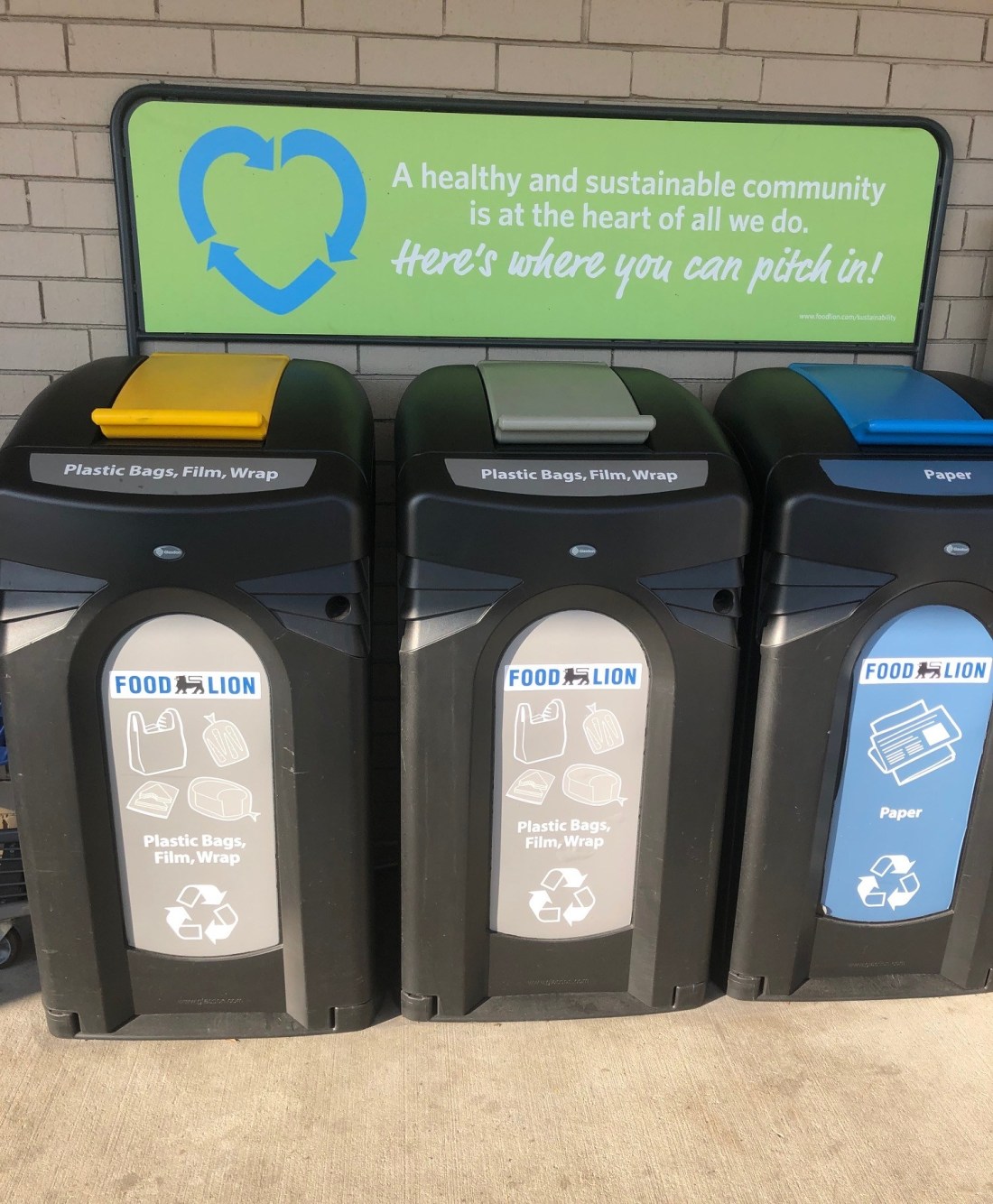
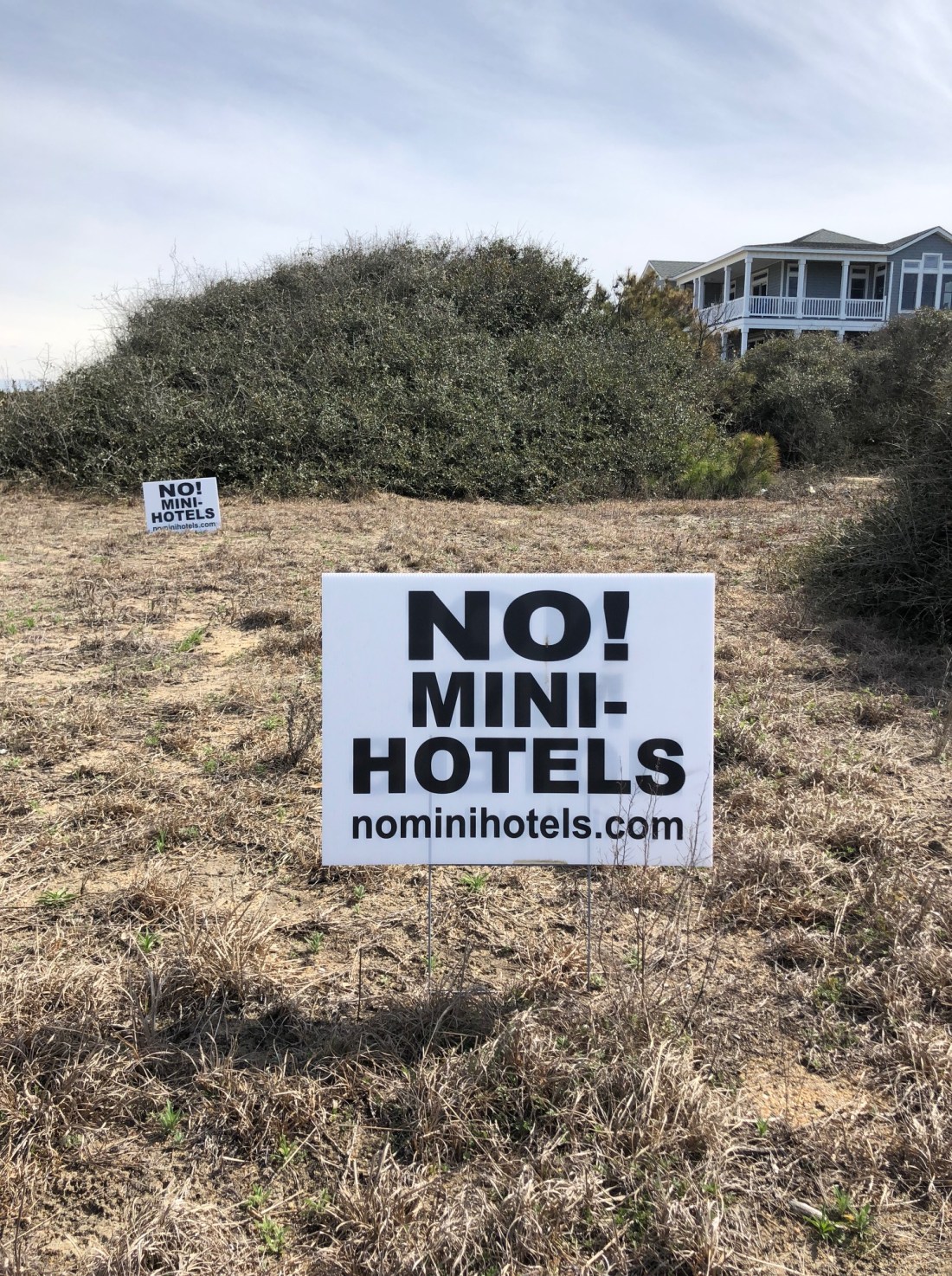
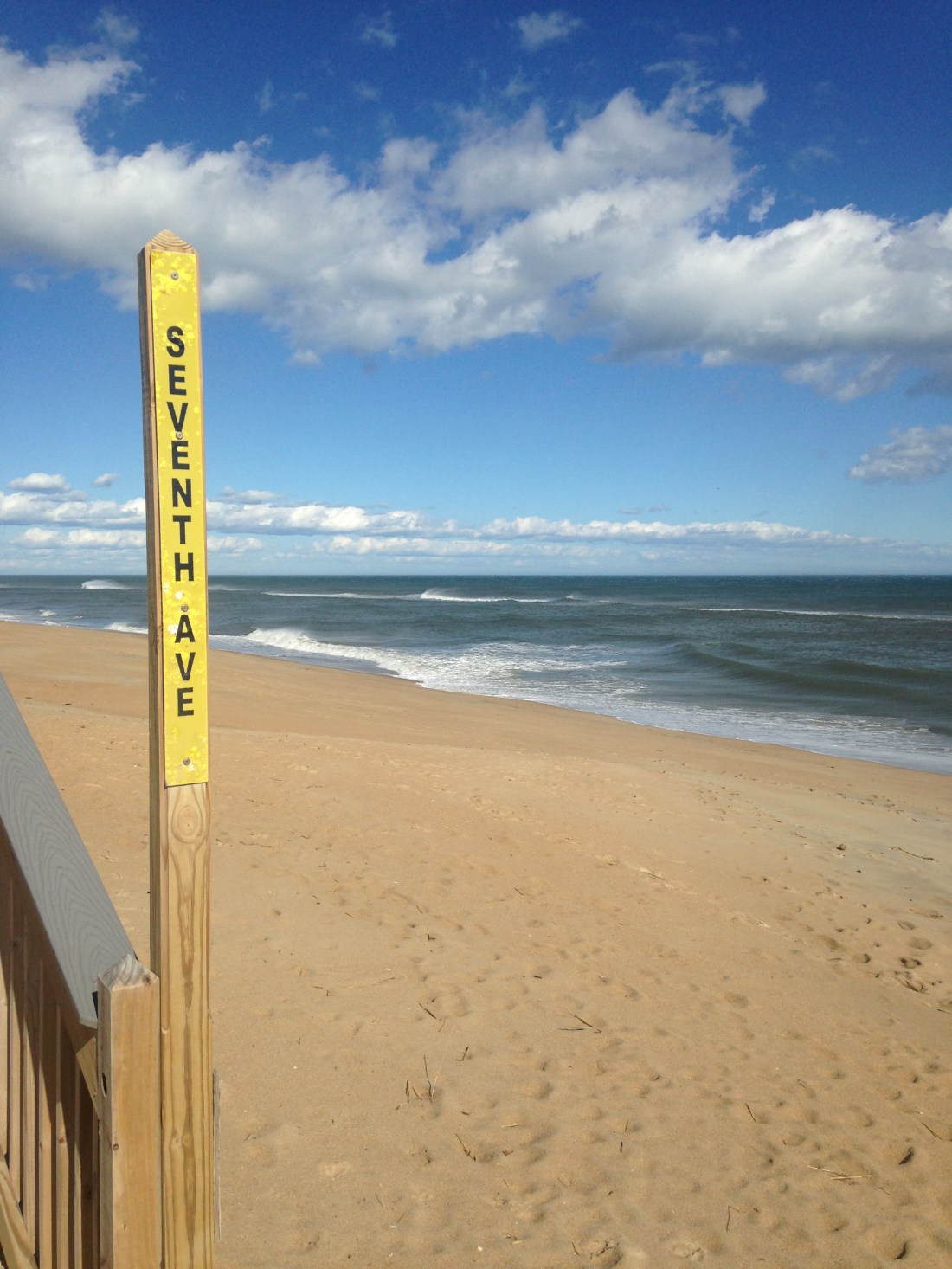

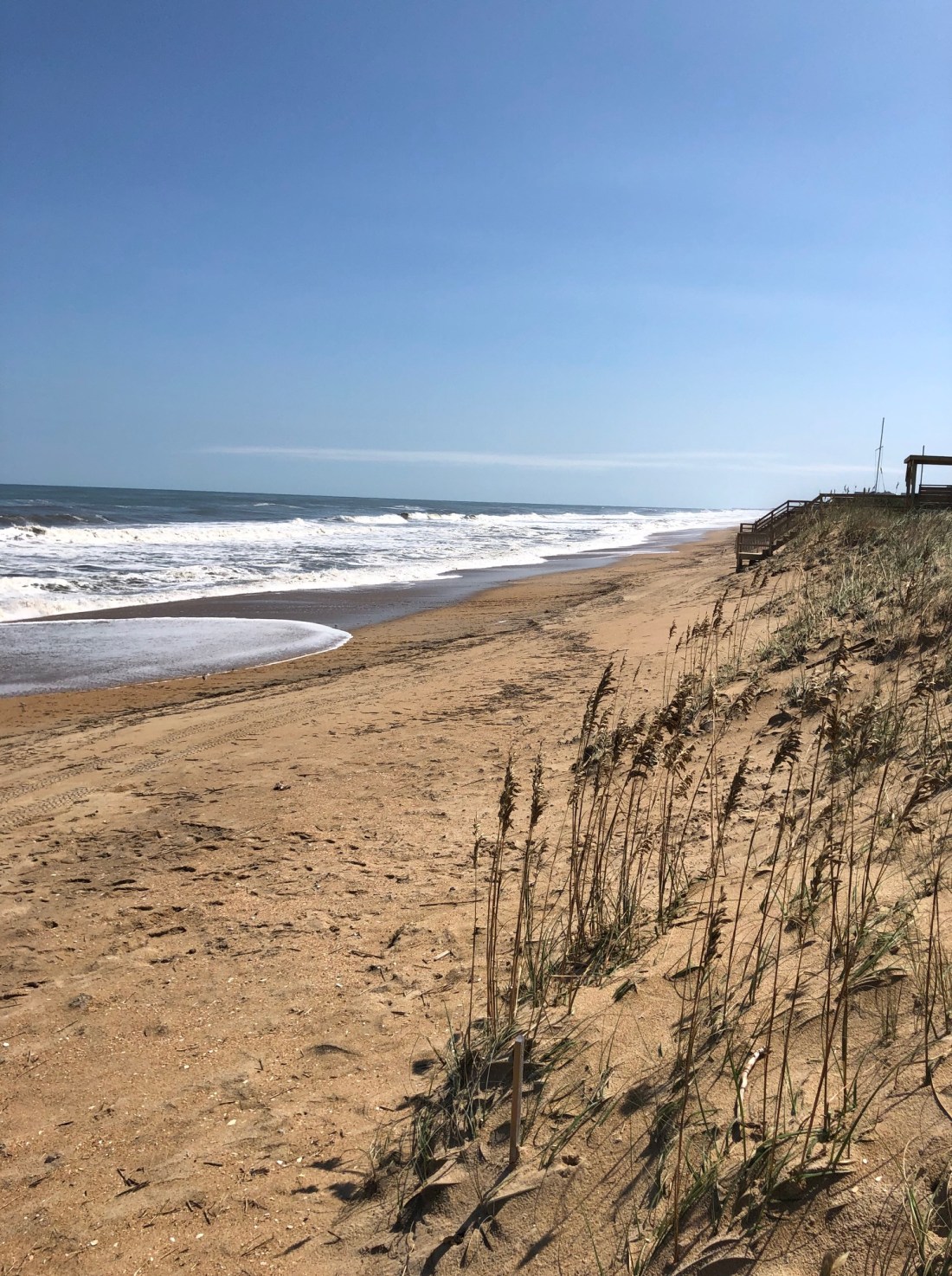
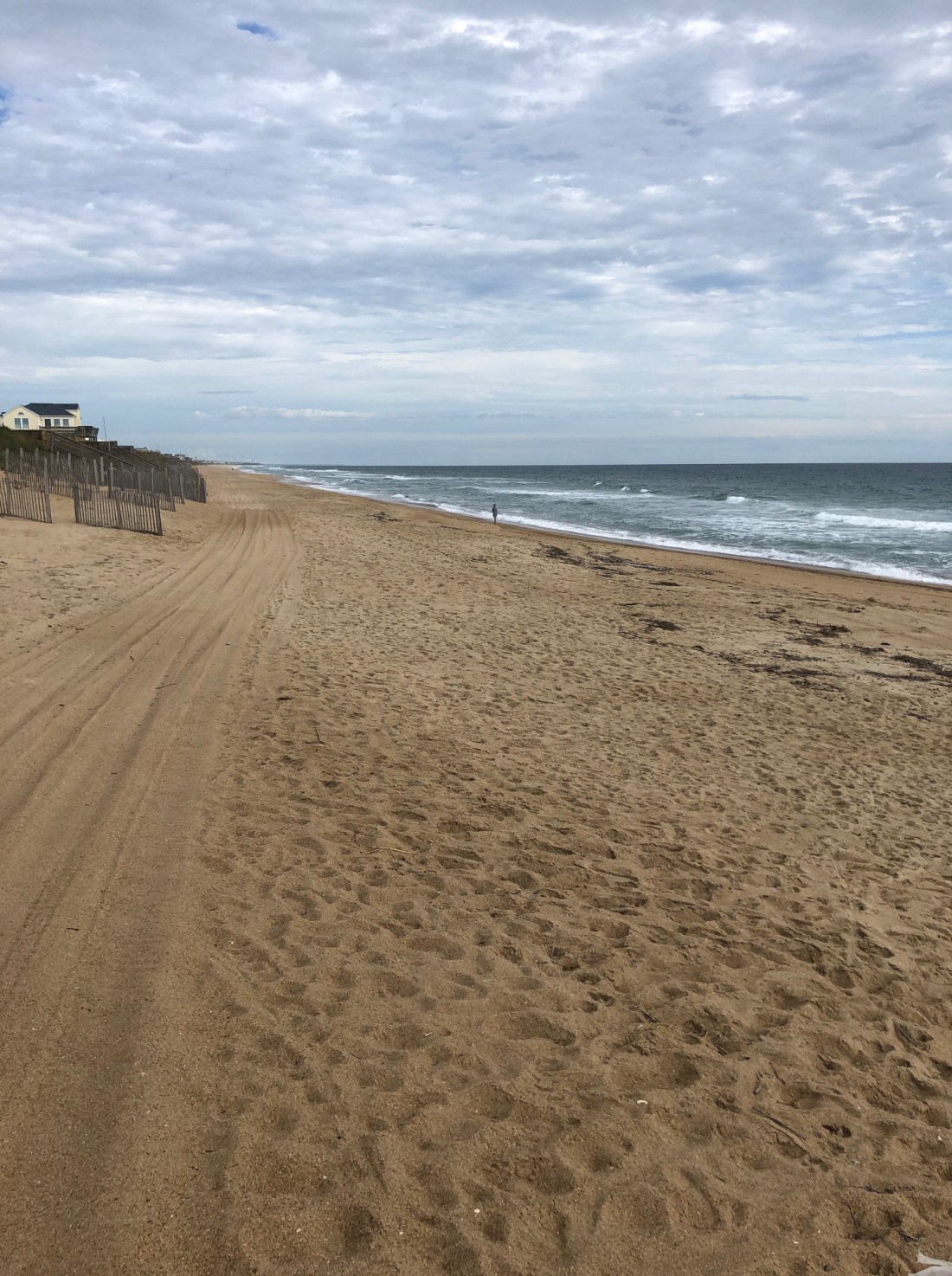

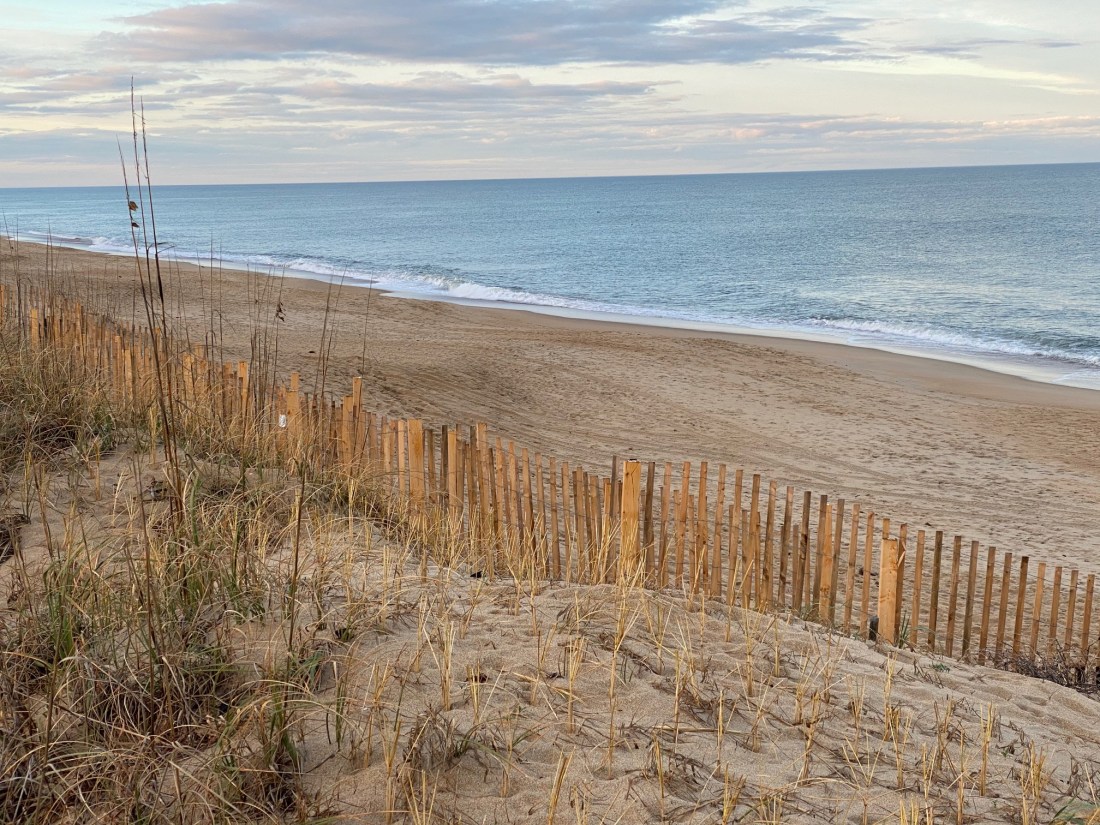

 The Southern Shores Beacon