In yesterday’s blog, I promised to publish today a detailed report of Tuesday night’s Town Council meeting.
Unfortunately, I will not be able to deliver on that promise. Please check back over the weekend for the report.
While I do have a moment, I would like to say a word about the possibility of a legal challenge to the new septic-capacity and overnight-occupancy restrictions that the Town Council enacted Tuesday.
You may have read in comments on this blog as well as on Facebook pages elsewhere that the 14-person restrictions indirectly serve as a limit on the number of bedrooms in a dwelling, which the Town legally cannot impose. The premise is that both septic capacity and occupancy are determined by multiplying the number of bedrooms by two.
I believe this argument is faulty, and a challenge based on it would fail.
First, let me say that it is the Dare County Health Dept. that certifies septic capacity for a dwelling, not the Town of Southern Shores. The Town does not participate in the Health Dept.’s permitting process.
Second, the factual evidence simply does not support the bedrooms-times-two contention.
Before the Town Council’s vote on ZTA 19-01PB, I said in public comments that I am a co-owner of a vacation cottage that has four bedrooms and a septic capacity of six persons, NOT eight (4 x 2) persons.
I also informed the Council that I had examined rental listings in the 2019 Southern Shores Realty bulletin/vacation planner and quickly found numerous homes that have a septic capacity that does not equate to twice the number of bedrooms. For example:
16 Pelican Watch: 3 BR, cap. 7
30 Pelican Watch: 4 BR, cap. 7
31 Ocean Blvd.: 6 BR, cap. 14
53 Ocean Blvd.: 6 BR, cap. 14
105 Ocean Blvd.: 5 BR, cap. 12
153 Ocean Blvd.: 4 BR, cap. 10
159 Ocean Blvd.: 6 BR, cap. 18
163 Ocean Blvd.: 7 BR, cap. 21
5 Purple Martin Lane: 5 BR, cap. 13
5 Fourth Ave.: 6 BR, cap. 16
6 Eighth Ave.: 5 BR, cap. 14
2 Eleventh Ave.: 5 BR, cap. 12
I spent just five minutes on this exercise and did not consult other rental companies’ vacation-cottage listings.
Southern Shores Realty (SSR), which is the rental agent that my family has used for nearly 50 years, specifies “capacity” in its listings, rather than “occupancy.” In response to an email that I sent her, SSR Rental Manager Patrina Chappelle, said: Cottage “occupancy is based on the septic capacity. The Health Department would have this information for any property.”
The Town Council voted unanimously last night to limit septic-system capacity and overnight occupancy in vacation cottages to 14 persons—zoning changes that culminate the Town’s efforts since last October to prevent development like the high-occupancy, event-house-type dwellings that SAGA Construction Inc. is building now on the oceanfront.
(Please note: SAGA’s structures are currently the subject of pending litigation initiated by property owners. See http://www.nominihotels.com for details.)
The five-member Council, which includes Mayor Tom Bennett, approved the septic and occupancy restrictions, as written in zoning text amendment (ZTA) 19-01PB. No one sought to amend the language of the ZTA, which the Planning Board unanimously recommended.
As The Beacon has previously reported, the new 14-person overnight-occupancy limit does not apply to residential dwellings that are not used as vacation cottages, a term defined in the new Town Code ordinance by its use for “transient occupancy.” The maximum septic capacity of 14 overnight occupants applies to all dwellings, regardless of their use. (Please see The Beacon’s report 5/6/19 for more details.)
The Beacon will elaborate tomorrow on the Town Council’s deliberations in a more detailed report of last night’s meeting.
CUT-THROUGH TRAFFIC, ‘EVENT’ FACILITIES
In other noteworthy action, Councilman Fred Newberry requested that discussion about how to alleviate the summer weekend cut-through traffic be added to the Council’s June 4 meeting agenda, and Councilman Gary McDonald added review and reconsideration of the Town Code’s regulation of “event facilities” to next month’s agenda.
Characterizing the cut-through traffic as the no. 1 complaint that he hears from residents, Mr. Newberry reacted favorably to a suggestion made by homeowner Tommy Karole in public comments that an exploratory committee be formed to consider all options for traffic reduction.
“There may be some new ideas that we haven’t thought of,” Mr. Newberry said.
Mr. Karole, who has lived for nearly 19 years on East Dogwood Trail near its intersection with North and South Dogwood Trails, said he would like to head up such a committee.
After the vote on ZTA 19-01PB, Mr. McDonald keyed on the Town’s regulation of event facilities, which are not permitted in the residential districts, just the commercial district.
The Town Council also unanimously approved transferring consideration of the problems created by the recent reconfiguration of the Yaupon Trail-South Dogwood Trail intersection to the Capital Infrastructure Improvements Planning Committee; and establishing a committee, with representatives from Southern Shores, Duck, Kitty Hawk, Kill Devil Hills, and Martin’s Point, to explore the possibility of a Dare County library branch in Southern Shores.
Homeowners on Yaupon Trail had petitioned the Mayor to cut down the iconic tree at the intersection of Yaupon with South Dogwood Trail in order to resolve what they said were driver sight-line problems. Mayor Bennett and others on the Town Council, however, identified the real issue at the intersection as a narrowing of the entry to/exit from Yaupon, created by recent road construction. (See The Beacon, 5/6/19, for further details.)
Mayor Bennett also announced last night that the Mallard Cove Assn. had withdrawn its request that the town assume ownership of its private road.
IN OTHER NEWS:
Construction of the new fire station was halted recently because of a design problem and is now behind by 30 days, according to a spokesman for contractor A.R. Chesson Construction who addressed the Council last night. The fire station had been projected to be completed in January 2020. The spokesman said work would resume this week.
Town Manager Peter Rascoe announced the filing yesterday of the Town’s proposed FY 2019-20 operating budget and the scheduling June 4 of a public hearing on the budget. The proposed budget calls for expenses of $7,450,846, an increase of more than 12 percent over the previous fiscal year’s expenses. (See The Beacon, 4/24/19, for background.)
Homeowner Paula Sherlock announced in public comments the formation of an oceanfront property owners association, in response to recent discussions about the prospect of beach nourishment in Southern Shores.
Any sight-line issues created by the newly configured Yaupon Trail-South Dogwood Trail intersection can be addressed with a stop sign or a mirror. The iconic tree need not be destroyed.
The Town Council will decide tomorrow whether it will approve the enactment of septic-capacity and occupancy restrictions on residential dwellings, which are designed to prevent structures like the 12-bedroom, 24-person-capacity structures being built by SAGA Construction Inc. on the oceanfront and to preserve the town’s low-density environment.
The Council voted, 3-2, at its April 3 meeting to approve a zoning measure that would limit the septic capacity in all houses in Southern Shores, and the overnight occupancy in all of the town’s “vacation cottages,” to 14 persons. But a “supermajority” of four of the five Council members was required upon “first reading” to pass the measure, known as zoning text amendment (ZTA) 19-01PB, into law.
The vote tomorrow on the measure’s second reading requires only a simple majority of three members for approval. The Council will meet at 5:30 p.m. in the Pitts Center.
ZTA 19-01PB was unanimously recommended by the Town Planning Board, which spent months hearing from the public about options for curtailing large high-occupancy houses before it drafted the ZTA. The zoning text amendment amends three sections of the Town Code: sections 36-57 (definitions); 36-202 (RS-1 single-family residential district); and sections 36-204 and 36-205 (other residential districts).
On first reading last month, Mayor Tom Bennett and Councilmen Fred Newberry and Gary McDonald voted to pass ZTA 19-01PB. Councilmen Christopher Nason and Jim Conners opposed it. (See The Beacon’s reports on 4/3/19 and 4/4/19.)
The public will have an opportunity to comment on ZTA 19-01PB, which The Beacon has covered extensively, before the Council votes. There will not be another full public hearing, however.
A key provision of the ZTA is the creation of a new permitted use in the town’s residential districts of a vacation cottage, which is defined by its use for “transient occupancy.” The ZTA defines transient occupancy as follows:
“overnight occupancy in a residential structure for periods of less than thirty (30) days for vacation, leisure, recreation or other purposes by a person or persons who have a place of residence to which they intend to return including when such property or structure is offered in whole or in part for rent or use by the day, week, or other period of less than thirty (30) days.”
In imposing the 14-person overnight-occupancy limit, the zoning measure provides that vacation cottages shall not be “advertised to accommodate, designed for, constructed for or actually occupied by more than fourteen overnight occupants.”
The overnight-occupancy limit does not apply to residential dwellings that are not used as vacation cottages. But the maximum septic capacity of 14 overnight occupants applies to all dwellings, regardless of their use.
Despite some reservations about its wording, The Beacon supports enactment of ZTA 19-01PB and would like to see the Town Council unanimously support the Planning Board.
OTHER BUSINESS: THE BEACONURGESTOWN TO SPARE ICONIC YAUPON TRAIL TREE, ERECT STOP SIGN OR MIRROR INSTEAD
Also on the Town Council’s agenda tomorrow are:
*A vote on a resolution to oppose offshore drilling and seismic testing (The Council has previously expressed opposition);
*The appointment of a town representative to the Dare County Land Transfer Tax Appeal Board (The term of current representative, Michael Stone, expires June 30);
*Consideration of a request by the Mallard Cove Association that the town assume ownership of its private road;
*Consideration of the possibility of a Dare County branch library in Southern Shores and the appointment of a citizen committee to explore this possibility;
*A request by Mayor Bennett that the Council authorize removal of the iconic Yaupon Trail tree at the road’s intersection with South Dogwood Trail for safety reasons.
The Beacon would support the establishment of a Dare County branch library in Southern Shores if the county assumes all of the costs for establishing and operating it. The library proposal that Councilman Conners has presented to the Council states that the county would fund it. The Beacon would not support a donation of land by the town for this purpose.
The Beacon further finds commendable the idea of dedicating space within a Southern Shores-based library to a children’s room, a community meeting room, and public-access computers. (See the meeting packet for Mr. Conners’s report on the library proposal.)
The Beacon strongly opposes the destruction of the large iconic tree at the intersection of Yaupon Trail and South Dogwood Trail—a move that a group of Yaupon Trail homeowners seeks through a petition presented to the Mayor. The Beacon empathizes with the homeowners’ frustration over having their intersection reconfigured, but would like to see less invasive means taken to address it.
The Beacon supports the reinstallation of the stop sign that stood for decades on the south-bound side of South Dogwood Trail, at this intersection, or, alternatively, the installation of a mirror, similar to the one erected at the intersection of Tall Pine Lane and South Dogwood Trail, which enables drivers turning right (south) from Tall Pine Lane to see northbound traffic on Dogwood.
In developing the roads in Southern Shores’ maritime forest, the town’s developers, especially David Stick, sought to preserve the environmental aesthetics as much as possible by saving the trees. Hence, part of North Dogwood Trail has a large treed median strip in the middle of it, many of the streets are narrow, and, until the recent completion of the Yaupon Trail repaving project, Yaupon Trail had an unusual split entry/exit to and from South Dogwood Trail.
The engineering plan for the Yaupon Trail repaving eliminated the fork in the road, thus narrowing the entrance to/exit from Yaupon Trail. Before this re-engineering occurred, Yaupon Trail homeowners wanted to preserve their signature tree, according to Mayor Bennett.
(I have test-driven the new intersection and did not find the tree to be an obstruction. I could see northbound traffic, but I had to stop fully and emerge slowly. I found the narrowing of the road to be more annoying.)
A two-way, or even a three-way, stop at this intersection would give Yaupon Trail residents the protection and space they need when they emerge from their street and turn right (south) on to South Dogwood Trail. It also would serve as a calming device for other motorists on the road, especially during the heavily-traveled summer weekends.
Short of that, a strategically placed mirror is an easy fix.
Mayor Bennett has said publicly that the Yaupon Trail tree is alive and healthy. It should not be sacrificed because of engineering error or oversight. The Beacon urges the Town Council to bring back the stop sign or to install a mirror.
TOWN CONTACTS HOMEOWNER ABOUT HIS COMPLAINT AGAINST SAGA ‘SPECIAL-EVENT HOUSES’ ONE DAY AFTER BEACON BLOG
Resident homeowner Tony DiBernardo, who complained at the March 5 Town Council meeting that SAGA Construction had advertised its proposed structures at 98 and 134 Ocean Blvd. for rent through Carolina Designs Realty as “special-event houses” with a capacity for housing 100 guests, heard from Deputy Town Manager/Planning Director Wes Haskett after The Beacon published its 4/29/19 blog asking what the Town had done about his complaint.
According to Mr. DiBernardo, whom The Beacon contacted last week for a followup, he also filed a written complaint with the Town about SAGA’s advertised event houses on March 14. Until last Tuesday, however, a day after The Beacon’s blog appeared, he had not received any word from the Town about a resolution.
Mr. DiBernardo told The Beacon that Mr. Haskett contacted him by email last Tuesday, and he was “satisfied” with the action the Town had taken.
In an email with The Beacon, Mr. DiBernardo said Mr. Haskett told him the Town had notified Carolina Designs that the property owners cannot use either structure as an event house, and, if they do, the Town will “move forward with enforcement.”
In an email exchange that The Beacon had with Mr. Haskett on Friday, May 3, he reported that “Carolina Designs was contacted directly by the Town and warned of the definition of Event Facility as defined in Section 36-57 of the Town Code.” He also said that a “condition will be included in the Certificate of Compliance/Occupancy for both properties that states that the property shall not be used as an Event Facility as defined in Section 36-57.”
In my inquiry, I asked Mr. Haskett with whom Town staff communicated at Carolina Designs, what mode of communication the Town staff used, and when (what date) the Town staff took action. I assumed that Mr. Haskett had initiated contact because the complaint was a matter of code enforcement. I also assumed that a written report of the disposition of the complaint would have been prepared for the official record and given to Mr. DiBernardo.
Mr. Haskett advised me that “the Town Manager [Peter Rascoe] called and verbally discussed the advertisements with a principal of Carolina Designs on the morning of March 6th, and warned her the advertisements were worded such that they possibly could be interpreted as advertising for a facility with a ‘primary purpose of hosting pre-planned events.’”
The definition of event facility in the Town Code is “an establishment, structure or property designed, maintained, advertised or actually used for the primary purpose of hosting pre-planned events.”
Event facilities are not permitted in Southern Shores’ residential districts, only in its commercial district, which is on the south edge of town.
Mr. Haskett referred me to Mr. Rascoe with any further questions.
It is The Beacon’s opinion that Mr. Rascoe and/or Mr. Haskett should have contacted the property owners of 98 and 134 Ocean Blvd. directly, not their rental agent. The Town should have written to SAGA’s investor groups, 98 Ocean Blvd. LLC and 134 Ocean Blvd. LLC, informing them of the complaint that had been received and quoting provisions of the Town Code regarding permissible uses in the RS-1 single-family residential district.
The Town’s warnings should have been directed to the property owners.
As for further questions of the Town Manager, I will leave them to the Town Council, to whom Mr. Rascoe reports. Mr. Rascoe made no mention of his followup with Carolina Designs during the report he gave at the Council’s April meeting. Perhaps he can include details of his communication in his report tomorrow.
The Town Council conducted business April 23 for 22 minutes and 56 seconds after the special meeting-budget work session that morning had ended and Council members had returned from a closed session for the sole purpose stated on the agenda of adjourning, The Beacon has learned.
Only the word “adjourn” appeared on the agenda that was posted on the Town website and available at the meeting for action to be taken after the closed session.
During the highly irregular “extracurricular” 23-minute budget session, the meeting videotape reveals that the Council picked up where the official noticed meeting left off. The five-member public body voted on two motions, including one in which they unanimously agreed to submit by email a list of priority projects for budgetary funding to Mayor Tom Bennett before their May 7 meeting.
In the official meeting about the proposed FY 2019-20 budget, which The Beacon covered 4/24/19, the Council touched on the matter of project and funding priorities, during an extended discussion about long-range planning. But it reached no resolution.
In the other motion, Councilman Jim Conners moved to cancel the Council’s April 30 budget work session, whose scheduling was approved by resolution last December.
The usual majority of Mayor Bennett, Mr. Conners, and Councilman Christopher Nason voted in favor of cancellation, while Councilmen Fred Newberry and Gary McDonald opposed it. There was no discussion about a postponement.
The inappropriate impromptu 23-minute session, which has to be scrutinized in light of North Carolina’s open meeting laws, was held in front of only Town Clerk Sheila Kane, who is seen in the first frames of section 2 of the meeting videotape collecting herself and resuming her seat. (The videotape of the day’s discussions is divided into two segments, the second one of which consists only of the session that was not noticed in the agenda.)
Although Mayor Bennett is clearly speaking during the first 20 seconds of this tape section, his words were not recorded.
All members of the audience and all previously assembled Town staff, including the Town Manager/Budget Officer, the Police Chief, the Deputy Town Manager/Planning Director, the Finance Officer, and the Public Works Director had dispersed.
The Beacon learned about this “extra” session upon investigating how it was possible for a meeting cancellation notice to appear on the Town website the afternoon of April 23, when there had been no Council vote on cancellation during the official budget work session.
I emailed an inquiry to Town Manager Peter Rascoe, asking him to “please advise” how “a majority vote” for cancellation “was obtained,” when no vote had been taken in “open session.”
When I pointed out in an ensuing email that he had not answered my question, he said: “Your email does not contain a question,” apparently not being familiar with the phrasing, “Please advise me.”
When I asked directly when the vote was taken, he replied: “During the special meeting of April 23, 2019.” But he failed to supply a time, which is the commonly accepted definition of “when,” or any context. I decided not to keep restating the question until I finally hit on phrasing that would compel his disclosure.
Mr. Rascoe was rude and unhelpful. Three times he referred me to the videotape. In response to my inquiry about how a majority vote was “obtained,” he answered: “You will need to research with any of the members of the governing board how a majority vote between themselves was obtained.”
Come again? You mean they didn’t just put their hands up after someone made a motion and someone else seconded it? And weren’t you there?
At no time did Mr. Rascoe–whose high-level municipal office vests in him a clear-cut responsibility to inform Southern Shores property owners/taxpayers, as well as members of the press, about public business–advise me that the motion and the vote to cancel the April 30 budget work session occurred after the closed session during the 23-minute add-on session.
The Beacon urges you to watch segment 2 of the videotape. You will learn what your Town Councilmen have to say, and what they really think, when they are relaxed and candid and don’t believe anyone is listening.
LONG-RANGE PLANNING
During the official, noticed budget work session, Town Councilmen Newberry and McDonald tried to commit the Town to long-range planning. Mr. Newberry brought up the same concept, which he characterized as “good business practice,” at the Town Council’s Feb. 26 planning session, but no discussion occurred among the four Council members who attended.
The Town Council did not hold its annual springtime retreat this year. The retreat is traditionally a time for planning.
Mr. Newberry repeatedly said he would like a “wholistic plan” for budgeting that would extend out over a period of years, not just “bits and pieces,” as he referred to piecemeal budgetary planning that is dependent on the projects supported by a Council majority in any given fiscal year.
Mr. Newberry suggested that the Town Manager to do an “analysis” of future projects that would include various “scenarios” for funding and scheduling them—an idea that was opposed by Mayor Bennett and Councilmen Conners and Nason, who said they did not believe such an analysis was Mr. Rascoe’s job.
These same three Council members defeated a motion that Mr. Newberry made to direct the Town Manager to develop a “proposed plan” for managing the funding of beach nourishment, walking trails, no-left-turn weekends and traffic reduction, building improvements, roads, and any other projects that “we foresee over the next several years.”
After the defeat, Mr. Newberry said, in frustration: “So you’re saying you don’t want to plan.”
The Beacon believes the exchange among the five Council members and Mr. Rascoe, who said of Mr. Newberry’s request for a proposed plan, “I’ve heard it and heard it for four years,” demonstrated a lack of fundamental communication, as well as unnecessary animosity.
While listening to the discussion, we thought that the public body would benefit from a mediator’s intervention—from someone who recognizes the disparate ways in which each participant thinks and can facilitate understanding among them.
In the unauthorized 23-minute session, Mr. McDonald spoke of “dysfunctionality” in the group, and Mr. Newberry actually suggested having a facilitated meeting for the purpose of planning—an idea that Mayor Bennett approved.
$1 MILLION FOR SOUTH DOGWOOD SIDEWALK
The same three elected officials who rejected Mr. Newberry’s motion for a proposed plan voted to appropriate almost $1 million from the Town’s General Fund (GF) unassigned fund balance for a five-foot-wide concrete sidewalk on South Dogwood Trail. (See The Beacon, 4/24/19.)
The GF pays for nearly all of the Town’s budget and includes monies to operate the different Town departments (administration, public works, police, code enforcement), to purchase fire-protection services, and to pay for capital improvements.
As The Beacon reported, the GF’s unassigned fund balance held $4,752,187, as of June 30, 2018, according to auditor Dowdy & Osborne. The auditor will provide an updated balance as of June 30, 2019.
These unassigned or “undesignated” funds historically have been regarded by the Town as reserved for emergencies related to storm relief, not for discretionary purposes, such as nonessential capital-improvement projects.
(In the 23-minute session, Councilman Conners brought up the possibility of applying some of these monies to a “tax rebate.”)
The Town Council has required by resolution that a minimum of $1.75 million be maintained in the GF’s unassigned fund balance for natural-disaster emergencies.
I thought Mr. Rascoe informed the Council last week that the auditor has advised the Town to maintain at least $3 million. Having now listened to the videotape of the meeting, which is of unusually poor quality, being impaired by a buzzing sound, I now know that Mr. Rascoe said it was his (“the Manager’s”) recommendation.
(Mr. Rascoe has a low, often inaudible voice that I find difficult to understand. The same is true of Police Chief David Kole and of the Mayor and members of the Council, at various times. All would benefit from speaking into microphones.)
Based on the videotape, I believe Mr. Rascoe reported the following engineer’s cost estimates for construction of the proposed South Dogwood Trail sidewalk:
$332,782.56 for the sidewalk section from the intersection of North, South, and East Dogwood Trails south to Fairway Drive;
$620,119.81 for the section from Fairway Drive to the cemetery.
According to the minutes of the Jan. 30 meeting of the Town’s Capital Infrastructure Improvements Planning Committee, the cost estimate offered then for the southern Fairway Drive-cemetery section was $664,000.
Mayor Bennett made a point of saying during the budget meeting that the sidewalk job would be done in two phases, with the first phase being the northern end. He left open the possibility that the Council could decide after phase one is complete not to do phase two, urging his colleagues to “be careful.”
Regarding opposition from homeowners who live on the east side of South Dogwood Trail, the Mayor said: “We could have a battle on our hands.”
Mr. Conners, however, adamantly advocated “doing the whole thing,” saying it was “critical” to link the community by sidewalk to the Kitty Hawk Elementary School so that children can walk to school.
The Beacon wonders if Mr. Conners, who lives on Duck Woods Drive, is aware that Southern Shores children take the bus to school. (In the 23 years that I’ve lived along the South Dogwood Trail/Hickory Trail route, I’ve never seen a child walk to school, but I’ve been stopped behind school buses many times. A bus drops schoolchildren off in front of their homes or at stops where they either leave their bicycles or meet a parent.)
Mr. Conners also analogized the objection that potentially dozens of homeowners on South Dogwood Trail might have to the devastation of their front yards, the destruction of dozens of trees in their lush woods, and the ruination of the character and calm of their picturesque street to the objection that he and several of his neighbors have to a new storm drainage system in front of his house.
Of the $1 million sidewalk construction project, he said: You can’t “hold it up” because of the objection of “five or six or whatever number of people.”
The Beacon believes that if the Town Council were to hold a public hearing about the proposed South Dogwood Trail sidewalk—coupled, perhaps with a hearing about cut-through traffic—Mr. Conners would discover that more than a handful of people oppose it. And not all live on South Dogwood Trail.
In his own analogy, Mr. Nason brought up the recent “horrific accident” on N.C. Hwy. 12 in Kitty Hawk that resulted in two pedestrian fatalities, suggesting that a sidewalk on South Dogwood Trail would protect pedestrians on it from a similar fate.
N.C. Hwy. 12 is a heavily traveled state thoroughfare with a 35-mile-per-hour speed limit. The 25-mile-per-hour South Dogwood Trail is a residential street, not a thoroughfare.
No traffic collisions resulting in death or injury have ever occurred on South Dogwood Trail, according to The Beacon’s research. In an informal survey of residents who live on or near South Dogwood Trail and were out walking Tuesday, The Beacon encountered no one who could recall even a fender-bender on the road.
During the 23-minute extra session, Mr. Nason was more candid about the freak nature of the accident in Kitty Hawk that killed a young couple from Virginia and admitted that having a sidewalk would not have prevented the tragedy. Mr. McDonald simply stated: The beach road is a “different animal.”
Relying upon his own anecdotal evidence, Mr. Conners said, “South Dogwood is even worse than the beach road.”
During the official meeting, Mr. Newberry said he thought a special meeting about the South Dogwood Trail sidewalk project should be held in order to give the public an opportunity to comment. Mr. Conners disagreed. No motion was made to hold such a meeting.
TRAFFIC REDUCTION ON CUT-THROUGH ROUTE
Along with the Mayor and Mr. Nason, Mr. Conners rejected, without comment, any attempt to relieve the stress, inconvenience, noise, and peril the cut-through summer traffic causes resident homeowners, as well as walkers and bicyclists.
The Bennett-Nason-Conners majority voted against a motion made by Councilman McDonald to include funds in the budget for no-left-turn weekends during the summer and did not otherwise suggest any relief.
How about two no-left-turn weekends during the first weeks of July? Or Saturday-only no-left-turn restrictions? No alternatives were suggested.
Similarly, no one on the Council mentioned trying well-known traffic-calming measures on South Dogwood Trail and other sections of the cut-through route, such as lower speed limits, more stop signs, speed humps, speed cushions, speed tables, raised pedestrian crossings, and other measures that have been brought up in public meetings.
After Councilman McDonald made his motion, the Council asked Police Chief David Kole for his opinion.
The Chief said that he would have to hire another full-time officer in order to staff the Hwy. 158-South Dogwood Trail intersection for such weekends and “guesstimated” a new hire would cost $120,000. He also said other expenses would run $6,000 per weekend, or about $60,000 for the summer.
No one on the Council questioned the Chief’s data or suggested ways to lower costs. Currently, the Town police department has a commitment to assist Kitty Hawk with traffic oversight at the U.S. Hwy. 158-N.C. 12 intersection in front of the welcome center.
Mr. Rascoe observed that the Town has no place to store the barrels that would be used to block the left turn at the Hwy. 158-South Dogwood Trail intersection.
The Beacon notes that a storage facility could be erected on the unused Town-owned lot on Skyline Road, if the public works department’s storage space is full. It is also possible that a nearby town, such as Kitty Hawk, would be willing to lend the storage space that Southern Shores lacks.
Town Manager/Budget Officer Rascoe will submit his proposed FY 2019-20 annual operating budget to the Town Council on May 7. He also will file a copy of the proposed budget with the Town Clerk, who will make it available for public inspection at Town Hall. The public may submit written comments about the proposed budget to the Clerk.
Mr. Rascoe will propose to the Town Council at its May 7 meeting that a public hearing on the proposed budget be held June 4. The Town Council must adopt a budget no later than July 1, 2019, the first day of the 2019-20 fiscal year.
SAGA’s construction at 134 Ocean Blvd. as it appeared in mid-March. The Town advised the developer that, because of pending litigation, it would be building “at its own risk.”
By a 3-2 vote, the Board of Adjustment (BOA) ruled Friday, after a nearly seven-hour-long hearing, that the 12-bedroom structure being built at 134 Ocean Blvd. was correctly permitted as a single-family dwelling, thereby affirming the Town’s issuance of a zoning permit for its construction in the RS-1 single-family residential district.
The oceanfront property is owned by a group of investors formed by the Kill Devil Hills-based developer, SAGA Construction Inc., as the entity “134 Ocean Blvd., LLC.”
Gwendolyn Snyder Smuts, who owns or has an interest in property across the street at 131 and 133 Ocean Blvd., challenged the validity of the zoning permit issued in January by Planning Director-Zoning Administrator Wes Haskett.
Mrs. Smuts argued through her attorney, James L. Conner II, a partner in the Durham firm of Calhoun Bhella Sechrest, that it was clear from the zoning-permit application submitted by SAGA, which included extensive building plans, that it intended to build a commercial project—a “mini-hotel”—not a single-family home. SAGA Construction is listed on the permit application as “agent” for 134 Ocean Blvd. LLC.
Town Attorney Benjamin M. Gallop defended Mr. Haskett’s decision to issue the zoning permit, as did local attorney E. Crouse Gray Jr., who represented the SAGA investor group. The Board of Adjustment allowed the investor group to intervene in the hearing; it was not originally one of the parties in the zoning-permit appeal.
Mr. Gallop and Mr. Gray sat next to each other in an uncustomary seating arrangement and conferred during the hearing.
Seated to Mr. Gray’s right, rather than his left, was Sumit Gupta, whose name does not appear anywhere on the zoning-permit application and related documents. It is Amit Gupta, not his brother Sumit, who signed as a property owner. Mr. Gray never introduced Sumit Gupta to the Board, nor the Board inquire as to his identity.
The principal permitted use in the RS-1 single-family district, which encompasses the Southern Shores oceanfront, is a “detached single-family dwelling.” (See Town Code sec. 36-202(b)(1)) No commercial development is allowed in the RS-1 district.
The five members of the Town Board of Adjustment also serve as the Town Planning Board, which regularly works with, and defers to the judgment of, Mr. Haskett and Mr. Gallop. According to the BOA’s attorney-adviser, W. Jay Wheless, Friday’s hearing was the first the Board has ever held. All of its decisions are quasi-judicial.
Before April 1, 2014, when the Town Council consolidated the two boards, upon the recommendation of both Mr. Haskett and Mr. Gallop, the Board of Adjustment was an independent body that did not collaborate with Town staff.
The consolidation was contained within Zoning Text Amendment 14-01, which the Planning Board unanimously recommended on Feb. 18, 2018, after a hearing during which Chairperson Sam Williams asked the Town Attorney whether “there would be a conflict of interest if the BOA duties were assigned to the Planning Board,” according to the meeting minutes.
The response reported in the minutes is: “Ben Gallop stated basically no and that the Planning Board would treat the separate duties as separate meetings.”
The minutes also record that Mr. Haskett presented the results of a survey he had conducted of towns with less than 5,000 residents in an attempt to determine how many had separate or consolidated boards. Then-Planning Board member Elizabeth Morey, who now serves as both the Planning Board and BOA chairperson, asked Mr. Haskett whether any of the 18 towns that responded were in Dare County. He answered no, none.
Mr. Haskett’s staff report for ZTA 14-01 does not indicate which towns in North Carolina were surveyed, only that 11 of the 18 had consolidated boards.
[UPDATE 4/30/19: The Beacon has confirmed that the towns of Duck, Kitty Hawk, Kill Devil Hills, Nags Head, and Manteo all have separate planning boards and boards of adjustment.]
Chairperson Morey and members Andy Ward and Joe McGraw voted to affirm the zoning permit issued to SAGA for 134 Ocean Blvd., and members Ed Lawler and David Neal voted to reverse it.
Ms. Morey seemed inclined to modify the permit, in an attempt at compromise, but she was told by Mr. Wheless that the Board lacked the authority to do so.
Earlier, Ms. Morey elected to delay the start of the hearing by 15 minutes, in order to accommodate Mr. McGraw’s late arrival. BOA alternate Michael Basilone was in attendance before the hearing’s 1 p.m. starting time.
Mrs. Smuts may appeal the BOA’s decision to the Dare County Superior Court.
According to the Town Code, Mrs. Smuts must file her notice of appeal with the Superior Court within 30 days after the BOA has filed its written decision with its clerk. Town Clerk Sheila Kane serves as the BOA’s clerk. (Town Code sec. 36-368(a)(4) and (b).)
ON THE MATTER OF STANDING
Because of the possibility of an appeal, The Beacon will provide very little further coverage of the hearing. Also, I was a witness on behalf of Mrs. Smuts and not present as a reporter.
I would like to make a few observations, however.
During a two-hour-long preliminary examination of Mrs. Smuts’s “standing” to appeal the zoning permit, Mr. Ward asked questions of her that suggested she had other options available to her besides her appeal.
Mrs. Smuts testified during the hearing on standing that she knows the daughter of the homeowners who sold 134 Ocean Blvd. to SAGA, and that this acquaintance “warned” her about the sale.
I may have misread Mr. Ward’s intent, but he seemed to me to be suggesting that Mrs. Smuts could have purchased the $1 million property across the street herself.
Mr. Ward also brought up the fact that the homeowners to the north of 134 Ocean Blvd. had objected to the SAGA project, as did the Southern Shores Civic Assn., which owns a beach access that is adjacent to the project on the south side.
Mr. Ward was the sole vote on the Board against granting Mrs. Smuts standing.
I would like to make a few points about standing, which is a difficult legal concept for non-lawyers to understand.
“Standing” to sue is a legal requirement imposed on plaintiffs, petitioners, and anyone else who brings a lawsuit. In order to file a legal action, a party—a person, corporation, or other legal entity—must have legally protected interests at stake and be at risk of suffering, or already have suffered a harm or injury.
There are standard factual elements that are taken into consideration in determining whether standing exists. Attorneys know what they are, and they make a determination of standing before they advise their clients to proceed in any cause of action. In the case of a challenge to a real-estate development, the proximity of the challenging party’s property to the development is a key fact.
Someone who lives across the street from an offending development, for example—such as a new factory that will emit noxious fumes—is likely to have legal standing, whereas someone who lives a block away will not. Standing is a well-developed principle in law. It is not wide-open.
It is for this reason that I did not appeal the 134 Ocean Blvd. zoning permit myself. I co-own property at 144 Ocean Blvd., which is 1/10 mile north of the SAGA project. Neither Mr. Conner nor I believed this location to be sufficiently proximate to give me standing.
Both the homeowners at 136 Ocean Blvd. and the SSCA appear to have standing. Their reasons for not appealing the zoning permit were not presented in evidence at the hearing and cannot be presumed. Generally speaking, however, the costs expended in hiring an attorney and going through with a challenge are prohibitive for many people. Property owners who live out of town have the additional consideration of the inconvenience and wear-and-tear of travel, which can be especially hard on elders.
THE ESSENCE OF TIMING
Mrs. Smuts became a Beacon news source for me, and, therefore, my acquaintance, after SAGA filed its application on Oct. 11, 2018 for a CAMA permit to develop 134 Ocean Blvd. Her family owns a flat top. I found her through the flat-top network that Steve and Sally Gudas oversee.
At the time, the 134 Ocean Blvd. sellers, Clay and Franca Higgins, in their legal capacity as trustees for a family trust, still owned the property—the original late-September closing date on the sale having been postponed.
In a telephone interview I had with Mrs. Smuts last October, I learned that the Higginses’ daughter had informed her that the SAGA investor group was having financial problems that prevented it from moving forward with the sale.
I did not independently verify this information with the Higginses or with SAGA and, therefore, did not report it. I offer it now because, regardless of its truthfulness, it influenced Mrs. Smuts’s thinking. It was her hope, she told me in October, that these difficulties would doom the project or, in the alternative, delay the project long enough for the Town to take action to protect her and other property owners who objected to the development.
The sale of 134 Ocean Blvd. closed on Dec. 6, 2018, nearly two months after the filing of the CAMA permit application. It sold for $956,000—$149,715 less than Dare County’s 2018 tax-value assessment of $1,105,715.
Mrs. Smuts and her husband live modestly and care for their two disabled children, one of whom is immobile and travels with special equipment. They have no interest in buying million-dollar oceanfront property.
The Town Planning Board met on Oct. 15, 2018. As I reported in The Beacon on Oct. 16, 2018, Planning Board members “made it clear in their comments that they would consider holding a special meeting on large-house controls, if they deemed such action desirable and necessary. The question of large houses and occupancy limits was not on the Planning Board’s agenda [that night].
“‘What’s at stake is the character of the town,’ said Planning Board Chairperson Glenn Wyder. ‘. . . We will do our due diligence, and our Town Council will do its due diligence. . . . We can get a grip on this.’
“Planning Board member David Neal, a longtime Southern Shores resident and builder, described the Town as being at a ‘crossroads’ in terms of its character, quality of life, and development. . . .”
Mrs. Smuts had every reason to be encouraged by the Planning Board’s sentiments and by the Town Council’s scheduling on Nov. 7, 2018, of a special meeting to discuss large high-occupancy houses.
After the Planning Board meeting, I spoke with Mr. Wyder about the Board taking immediate action and not waiting for the Nov. 7 meeting.
Rule 5(c) of the Planning Board’s Rules of Procedure authorizes the Chairperson, the Vice-Chairperson, or any two members of the Board to call an emergency meeting at any time, with at least six hours’ notice. The same people can call a special meeting with at least 48 hours’ notice. (Rule 5(b))
The Town Council has similar authority under its Rules of Procedure. The Mayor, the Mayor Pro Tem, or any two members of the Town Council may call an emergency meeting, provided they meet specified formalities, or a special meeting, with at least 48 hours’ notice. (Rules 6(b) and (c).) See https://www.southernshores-nc.gov/wp-content/uploads/2012/05/Council-Rules-of-Procedure.pdf.
Not only did I urge Mr. Wyder, whom I liked and respected a lot, to convene an emergency or special meeting, I encouraged him to propose a zoning text amendment that would thwart SAGA’s intentions for 134 Ocean Blvd., if not for 98 Ocean Blvd., as well.
I argued that time was of the essence, and I suggested a stop-gap ZTA that limited the maximum house size in town to 5,000 square feet. Even a cap on the number of parking spaces at dwellings in the RS-1 district would have benefited Town property owners.
Until a property owner initiates the local permitting process, he/she/it does not have “vested rights” and would be subject to any ordinances enacted by the Town Council.
Mr. Wyder, who was strongly opposed to both of the SAGA developments, told me that he did not want a “quick fix.” He wanted the Town to do its “due diligence.”
Although he was disappointed by the nearly month-long delay in Mayor Tom Bennett’s scheduling of the Council’s special meeting, Mr. Wyder was willing to defer to members of the Town staff, including the Town Attorney, who were meeting with the Mayor and at least one member of the Town Council.
(Councilmen Fred Newberry and Gary McDonald informed me that they were not invited to participate in the brainstorming that occurred. Mr. McDonald made a motion at the Nov. 7 special meeting to have the Planning Board look into amending the Town zoning ordinances to redefine the living space considered in evaluating house size as “total enclosed area,” a definition used in CAMA, rather than “enclosed living space,” and to put restrictions on septic-system capacity and number of parking space. The usual ruling majority of Mayor Bennett and Councilmen Christopher Nason and Jim Conners voted against his motion, so it failed 2-3.)
You may not think it is fair of me to quote a man who can no longer speak for himself. Sadly, Mr. Wyder died suddenly last November, after returning from a Thanksgiving trip to New Jersey. I miss him and his leadership and counsel.
I bring up the exchanges I had with Mr. Wyder only to support my contention that Mrs. Smuts had reason to believe that the Town of Southern Shores would act on behalf of her and all property owners to prevent the SAGA developments. She attended the Nov. 7 special meeting in the belief that the Town was prepared to take action to do so.
In the case of 134 Ocean Blvd., which SAGA did not own until Dec. 6, 2018, there was ample time to do so, if the Town had acted decisively and without delay.
WHEN WILL THE TOWN STEP UP?
The questions I leave you with are: Why hasn’t the Town done all it can do to prevent these unwelcome mini-hotels? Why didn’t it act with urgency and deliberate speed last October to protect Southern Shores property owners, who made it abundantly clear through many communications with the Town—reportedly hundreds of emails, a petition with hundreds of signatures, public comments, etc.—that they opposed the SAGA developments?
What responsibilities does the Town have? Do property owners who are directly affected by offensive high-occupancy developments, because of their properties’ proximity, have to spend tens of thousands of dollars in legal fees to fight the Town’s battles for it? And, in the process, fight the Town, too?
And just who is the Town? The Town Manager? The Mayor? The three people on the Town Council who typically vote as a majority bloc on all matters?
Last Friday’s hearing was framed as a special meeting of the Planning Board. After the hearing was over, the five Board members put their Planning Board hats back on and made comments in that capacity.
Mr. Ward was passionate in his remarks, stating emphatically that the Town of Southern Shores does not want structures like SAGA is building. He urged his colleagues on the Board to be “proactive” in preventing future high-occupancy development in the low-density residential district. Indeed, he sounded the same call that I sounded with Mr. Wyder more than six months ago.
AT THE TOWN COUNCIL’S MARCH 5, 2018 MEETING, a resident property owner reported in public comments that SAGA Construction had advertised both of its structures for rent through Carolina Designs Realty as “special-event houses” with a capacity for housing 100 guests.
I saw the advertisements the next day and can confirm the content that homeowner Tony DiBernardo reported at the Council meeting. Mrs. Smuts’s attorney preserved a screen shot of the advertisements, which soon thereafter, were edited.
Questions: What has the Town done in the nearly two months since these advertisements were reported? Has the Town Planning and Code Enforcement Dept. launched an investigation of this publicized illegal use of property in the RS-1 residential district? Have the Planning Board and the Town Council directed the Code Enforcement Dept. to investigate this apparent violation of the Town Code?
Not to my knowledge–based on reliable sources who prefer to remain anonymous.
“Event facilities” are permitted only in the town’s C General Commercial District, as specified in Town Code section 36-207. They are not a permitted use in the RS-1 district.
Mr. Haskett and Town Manager Peter Rascoe have said many times at public meetings that enforcement of the Town Code is “complaint-driven.”
I do not recall any bigger or louder complaint ever being registered with the Town than the complaint against the landowners and their use of 98 and 134 Ocean Blvd. that Mr. DiBernardo made March 5.
Will this complaint drive the Town finally to confront SAGA? If not, why not? Property owners in Southern Shores deserve answers.
Ann G. Sjoerdsma, 4/29/19
(Please note: I sometimes make minor edits after my initial posting, in the interest of filing stories and columns in a timely fashion.)
The Southern Shores Town Code has long protected dogwood trees from removal.
A 3-2 majority of Mayor Tom Bennett and Councilmen Christopher Nason and Jim Conners voted at yesterday’s fiscal year 2019-20 budget work session to appropriate nearly $1 million from the Town’s unassigned fund balance for the construction of a five-foot-wide concrete sidewalk on South Dogwood Trail, but denied any monetary relief for traffic reduction on the cut-through route.
Councilmen Fred Newberry and Gary McDonald voted against withdrawing monies for the sidewalk from what is viewed as an emergency fund reserve and in favor of “putting no-left-turn monies into the budget,” as Mr. McDonald phrased a motion for summer weekend traffic reduction.
Town Manager/Budget Officer Peter Rascoe presented the Council with a draft of FY 2019-20 projected expenses and revenues showing a balance of $6,220,846. (See The Beacon’s report on 4/18/19.) A primary purpose of the work session was for the Council to consider and propose additions, deletions, or modifications of the preliminary budget.
In what turned out to be a fractious discussion about planning and priorities that exposed, in The Beacon’s opinion, a lack of leadership and communication, the Town Council unanimously agreed only on the need to insert a budgetary line item of about $200,000 to pay for improvements to the Town’s building complex.
Most troubling for The Beacon was the decision by the Bennett-Conners-Nason majority to essentially treat the proposed sidewalk, which proponents want to build along the east side of South Dogwood Trail from the intersection of North-South-East Dogwood Trails south to the cemetery, as something other than a capital project.
The front yards of the dozens of homeowners affected by the construction “will be altered drastically,” Mayor Bennett said.
SOUTH DOGWOOD TRAIL SIDEWALK FUNDING
The idea for using funds other than those appropriated annually for the Town’s capital improvements projects originated with the Town Manager, who suggested it at the Feb. 12, 2018 meeting of the Capital Infrastructure Improvement Plan (“CIIP”) Committee.
Mayor Bennett and Councilman Conners co-chair this committee, which determines the priority of street and other infrastructure improvement projects, including walkways. The Beacon’s correspondents have observed, however, that Mr. Rascoe effectively runs the committee’s meetings.
By previous agreement, the Town Council has determined that five cents out of every 22 cents per $100 of property value collected in Town real-estate taxes will be appropriated for the annual capital improvements budget. In FY 2019-20, that amount is projected to be $662,340.
At yesterday’s budget session, Councilman McDonald proposed increasing the set-aside from property taxes to seven cents, but his motion was defeated 2-3, with the Bennett-Conners-Nason majority voting against it.
Instead, pursuant to a motion made by Councilman Conners, the majority implemented Mr. Rascoe’s idea of removing the South Dogwood Trail sidewalk project from the capital improvements budget.
According to minutes of the Feb. 12 CIIP Committee meeting that Mr. Rascoe himself drafted:
“The Town Manager also suggested an idea to the Committee. He stated he is not a member of the Committee and is not recommending but only stating an idea the Committee might care to consider. One idea might be for the Committee to return its current working prioritization of a future capital improvement of South Dogwood Trail to its previous working [priority] ranking of [no. 13 or 14 in Group B, and with that reprioritization, for planning purposes] any Council member might then consider recommending to the Town Council a separate construction project for a walking trail along South Dogwood Trail—funded separately from the Council’s annual capital street improvement budget appropriation . . .”
Any Council member? Not the two sitting right there in front of him?
No, Mr. Rascoe is not a member of the CIIP Committee, nor is he a member of the Town Council. But in taking it upon himself to suggest/recommend/propose—use whatever verb you’d like—the funding idea that Mr. Conners proposed by motion yesterday, he acted as both a committee member and a member of the Town Council.
The Beacon believes Mr. Rascoe inappropriately injected himself into both the CIIP Committee’s and the Town Council’s business and exceeded his authority, which is established and defined by N.C. statute. Nowhere in the enumeration of a town manager’s specific duties and powers, as set forth in N.C. General Statutes sec. 160A-148, is the controlling action that Mr. Rascoe took at the committee meeting authorized. (https://www.ncleg.gov/enactedlegislation/statutes/pdf/bysection/chapter_160a/gs_160a-148.pdf.)
UNASSIGNED FUND BALANCE
According to auditor Dowdy & Osborne, the Town’s General Fund (“GF”), which covers nearly all of the budgetary expenses, had an unassigned fund balance as of June 30, 2018 of $4,752,187. (These funds are also referred to as undesignated.) The auditor will provide an updated balance as of June 30, 2019.
The Town has three different funds: the General Fund, which includes monies to fund operations of the different Town departments (administration, public works, police, code enforcement), to purchase fire-protection services, and to pay for capital improvements; the Capital Reserve Fund (CRF), which Finance Officer Bonnie Swain has described as a “savings account for capital projects”; and the Cemetery Fund. Both the General Fund and the CRF have undesignated fund balances.
The Town Council has required by resolution that a minimum of $1.75 million be maintained in the GF’s unassigned fund balance for emergencies related to natural disasters. Mr. Rascoe informed the Council yesterday that the auditor has further advised the Town to maintain at least $3 million.
In yesterday’s discussions, Town Council members seemed to regard the $1.7 million in the unassigned fund balance over $3 million as readily available for projects, rather than as monies to be touched sparingly and only after careful deliberation of priorities in light of long-range planning.
The Beacon will report in more detail on the budget session within the next week. Mr. Rascoe is expected to incorporate the Town Council’s directives on the sidewalk appropriation and the building improvements, along with any other changes, into a proposed FY 2019-20 annual operating budget that he will submit to the Council at its May 7 meeting.
A public hearing on the proposed FY 2019-20 budget will be held June 4. The Town Council must adopt a budget no later than July 1, 2019, the first day of the 2019-20 fiscal year.
WRAPUP OF NONCONFORMING LOTS REVIEW
In other action yesterday, the Planning Board wrapped up its review of nonconforming lots by unanimously voting to add two new exceptions to a zoning text amendment (ZTA 18-09PB) that the Town Council rejected, 2-2, at its March 5 meeting. (Councilman Nason was recused because he designed the house that property owners propose to build on the nonconforming 50-foot-wide lot at 64 Ocean Blvd.)
The Planning Board approved amending ZTA 18-09PB, which provides exceptions for certain property owners to the nonconforming lots ordinance enacted last September, by adding exceptions for owners who 1) have lots that are less than 100 feet wide, but are at least 20,000 square feet in size or 2) hold title to nonconforming lots that are adjacent to lots owned by family members, provided their deeds were recorded before Sept. 5, 2018.
As Planning Board member Andy Ward described the Board’s action, it took the text of ZTA 18-09PB and added “outlier language.” Chairperson Elizabeth Morey said they were trying to “create more fairness,” not “favoritism.”
The Beacon has reported extensively since last spring about the sale and redevelopment of nonconforming lots in town, particularly 50-foot-wide lots on or near the oceanfront that once comprised developed 100-foot-wide parcels.
Since the town’s 1979 incorporation, the Town Code has regulated nonconforming lots to ensure that building lots conform to minimum dimensions and that the town’s low-density character is maintained. The regulations were codified in section 36-132.
After the Town interpreted the language of Town Code sec. 36-132, which is hardly crystal-clear, to allow some property owners to sell their 100-foot-wide parcels as two 50 footers—which were then developed by the buyers—the Town Council stepped in to replace the language of sec. 36-132 with new language that would unambiguously prevent this. The replacement language was enacted into law Sept. 5, 2018.
Subsequently, property owners complained about the harm that the new sec. 36-132 caused them, and the Town Council sought to amend the new ordinance by making equitable exceptions. The task of figuring out how fell to the Planning Board.
Before the five-member Board authorized drafting a new ZTA 18-09PB, Deputy Town Manager/Planning Director Wes Haskett presented the results of a survey of all nonconforming lots in town, which the Town Council directed the Planning Board to undertake.
Mr. Haskett reported that there are 3,037 total lots in Southern Shores, 846 of which—or about 28 percent—are less than 20,000 square feet in size. He also reported that, of the 3,037 lots, 241 of them, or about 8 percent, are 50-foot-wide lots that are part of parcels consisting of two or more lots. Mr. Haskett’s data show that of these 241 lots, 28 of them are vacant.
The 28 vacant lots represent less than 1 percent of the total number of lots in Southern Shores. Not surprisingly, they are in the map of Southern Shores that was first developed: the oceanfront-beach zone from 0 Ocean Blvd. north to East Dogwood Trail and the soundfront on North Dogwood Trail.
Mr. Haskett’s data, which he compiled with the help of Town Permit Officer Dabni Shelton and the Dare County Register of Deeds office, will be posted on the Town website soon, he said.
The Beacon will follow up with a report on the amended ZTA 18-09PB once it has been drafted. You may access ZTA 18-09PB here:
AND A FINAL NOTE ON RECYCLING: It was revealed during the budget work session that Bay Disposal & Recycling of Powells Point, which picks up our roadside recycling, is most likely dumping these items into a landfill—treating our recyclables as ordinary trash. Mr. McDonald mentioned this prospect, and other Town officials concurred with him. (Mayor Bennett also reported that homeowners are under-utilizing Bay Disposal’s so-called recycling service, thus costing the Town unnecessary expense.)
This appalling bit of news elicited no action from the Town Council and no definitive explanation from Mr. Rascoe, who did not dispute the allegation.
Southern Shores has always been ahead of other Outer Banks town on roadside recycling, at first supplying homeowners with blue plastic bins that we carried by hand.
If after so many decades we have reached the point where the roadside recycling service is an exercise in futility and misrepresentation, the Town should so inform us, and we should make other plans. Disposing of our recyclables in a landfill is unacceptable and more than a little depressing. Southern Shores residents deserve better.
A draft of projected expenses and revenues in fiscal year 2019-20 for the Town of Southern Shores shows a balance of $6,220,846, according to a report recently posted on the Town website, without any need to raise ad valorem (real property) taxes.
Town Manager/Budget Officer Peter Rascoe and Finance Officer Bonnie Swain will present these figures to the Town Council for review at a special budget work session next Tuesday, at 9 a.m., in the Pitts Center. The public will have an opportunity to comment during the meeting.
The Town Council approved by resolution last year a second budget session meeting for Tuesday, April 30, which is the date of the special congressional primary election. That session has not yet been canceled or rescheduled.
After the review(s), Mr. Rascoe will incorporate the projected expenses and revenues into his proposed FY 2019-20 annual operating budget, which he will submit to the Council at its May 7 meeting. He is expected to recommend that a public hearing be held on the budget at the Council’s June 4 meeting.
The Town Council must adopt a budget no later than July 1, 2019, the first day of the 2019-20 fiscal year.
To see both the April 23 budget meeting agenda and the draft projected General Fund expenses and revenues, click:
According to Ms. Swain, who spoke with The Beacon last year about budgetary basics, the Town has three different funds: the General Fund (GF), which covers nearly all of the budget expenses, including monies to fund operations of the different Town departments (administration, public works, police, code enforcement), to purchase fire-protection services, and to pay for capital improvements; the Capital Reserve Fund (CRF), which Ms. Swain described as “a savings account for capital projects”; and the Cemetery Fund.
Both the GF and the CRF have unassigned fund balances. Pursuant to a Town Council resolution, a minimum of $1.75 million must be maintained in the GF unassigned fund balance for emergencies related to natural disasters. The exact amount in the GF unassigned fund balance for FY 2019-20 will be determined at the end of FY 2018-19, but an estimate should be available before then. In recent years, the balance has been in excess of $3 million.
OVERVIEW OF MAJOR REVENUES, EXPENSES
According to Budget Officer Rascoe’s figures, nearly 50 percent of the Town’s $6,220,846 in projected revenues comes from ad valorem taxes, and about 35 percent comes from occupancy, sales, and land-transfer taxes. The respective numbers are $3,081,460 and $2,165, 590.
The remaining projected revenues come from a combination of unrestricted intergovernmental revenues, such as utilities franchise and telecommunications taxes; restricted intergovernmental revenues, such as the Powell Bill allocation (state money that must be used on roads) and other grants; permits and fees; interest income, and miscellaneous profits and donations.
On the expense side of the ledger, costs to run the police department make up about 28 percent, and administration department expenses consume about 17 percent, of the projected $6,220,846.
Salaries constitute the largest line-item expense in both departments, as well as in the public works (total expenses of $532,469) and planning and code enforcement ($265,523) departments. Every Town employee is projected to receive a 2.5 percent cost-of-living increase in his or her salary.
The Southern Shores Volunteer Fire Dept. is projected to cost the Town $869,934 in FY 2019-20: $545,914 in fire-protection services, pursuant to a new 10-year contract; $314,020 in debt service on the 25-year mortgage for the new $5.4 million fire station; and $10,000 for a fence to serve as a barrier between residences and the new station.
The budget for FY 2019-20 infrastructure projects is $662,340. This does not include street, bridge, waterway, and bulkhead maintenance and repairs. The projected total for all street, bridge, and canal expenses is $842,067.
No funds have been allocated for traffic reduction.
The Beacon will publish a more detailed analysis of the Town’s projected revenues and expenses, along with opinions expressed by the Mayor and Town Council and any changes made, after Tuesday’s work session. We also will analyze the proposed FY 2019-20 budget before the June 4 public hearing.
GOOD FRIDAY CLOSINGS
Dare County and Town of Southern Shores offices will be closed tomorrow, April 19, in observance of Good Friday. Public schools have been closed throughout the week for spring break.
North Carolina is one of only 12 states in the country that observe this religious holiday. The others—for those of you who are curious, as I am—are Connecticut, Delaware, New Jersey, Florida, Tennessee, Kentucky, Indiana, Louisiana, North Dakota, Texas, and Hawaii.
Easter is held on the first Sunday after the first full moon that occurs on or after the vernal equinox, which is March 20. This year, Good Friday coincides with the beginning of the Jewish observance of Passover.
The Beacon is unaware of any other Good Friday closings in Dare County. Trash collection in Southern Shores will be picked up as usual on Monday.
We hope you enjoy your weekend and any holiday that you may be observing. April is a beautiful month to be in Southern Shores.
The Perkinsons’ cottage at 142 Ocean Blvd. is one of the featured homes on the April 27 flat-top tour. Before the second story was added, the home was a classic flat-top beauty known as Atlantica.
The regular meeting of the Town Planning Board, originally scheduled for Monday, April 15, will be held instead Tuesday, April 23, at 5:30 p.m., in the Pitts Center. The Board will continue its discussion of nonconforming lots and possible exceptions to Town Code sec. 36-132, which regulates such lots.
Nonconforming lots are tracts of land that do not conform to the minimum dimensions established by the Town of Southern Shores, including a minimum size of 20,000 square feet and a minimum width of 50 feet.
Town Code sec. 36-132, passed by the Town Council last September, sets forth when property owners who own a nonconforming lot adjacent to another lot that they own must combine the lots and when property owners may treat a nonconforming lot singly and either develop or sell it.
Pursuant to a Town Council directive, Deputy Town Manager/Planning Director Wes Haskett has been working with Town Permit Officer Dabni Shelton and the Dare County Register of Deeds to identify all nonconforming lots in Southern Shores. Mr. Haskett is expected to present this lot inventory April 23 to the Planning Board, so that it can continue evaluating the impact of the new nonconforming lots ordinance.
For background, see The Beacon, 2/20/19.
TOWN TO HOLD FY 2019-20 BUDGET SESSION APRIL 23; EARLY VOTING IN CONGRESSIONAL PRIMARY ELECTION STARTS TODAY
The Town Council will have its first working session about the fiscal year 2019-20 budget at 9 a.m. on April 23, in the Pitts Center. Town Manager Peter Rascoe and Finance Officer Bonnie Swain will present preliminary figures for the Town’s revenues and expenses. The Town Council will adopt the new fiscal-year budget, which starts July 1, in June.
Another budget session is currently scheduled for 9 a.m. April 30 in the Pitts Center, but it will have to be changed because the Pitts Center is a polling place for voting in the special congressional primary election that day. The Beacon will update you on budget news as it is issued.
Early voting starts today in the April 30 special primary election, which will determine the Democrat and Republican candidates running for the unexpired term of the late Walter B. Jones in North Carolina’s third congressional district. Voting will take place in the Dare County Administration Building in Manteo, the Thomas A. Baum Senior Center in Kill Devil Hills, and the Fessenden Annex in Buxton, and continue through April 26.
For more about the 26 candidates who are running in the primary for the U.S. congressional seat—17 of whom are Republicans—please see The Beacon, 3/19/19.
ZONING APPEAL CHALLENGES SAGA ‘MINI-HOTEL’
A quasi-judicial hearing on the validity of the zoning permit issued by the Town to 134 Ocean Blvd. LLC for construction of a 12-bedroom luxury structure at 134 Ocean Blvd. will be held before the Town Board of Adjustment on Friday, April 26, at 1 p.m., in the Pitts Center. 134 Ocean Blvd. LLC is a corporation owned by the developer SAGA.
Homeowner Gwendolyn Snyder Smuts has appealed the zoning permit, contending that SAGA should not have been permitted to build its structure, which is hotel-like in design and function, in the Town’s RS-1 single-family-dwelling residential district.
The plans for the structure and grounds at 134 Ocean Blvd. call for 12 bedroom-bathroom suites, a 14-seat home theater, an elevator, a swimming pool with a swim-up bar, a hot tub, a tiki bar, a large game/recreation room with shuffleboard, and many more hotel-like amenities and gathering spaces. They also include 17 parking spaces and a septic system to service 24 people.
The Planning Board serves as the Board of Adjustment. For more about the zoning permit appeal, see nominihotels.com.
FLAT TOP TOUR APRIL 27 FEATURES 14 HISTORIC HOUSES
Fourteen historic homes will be on display April 27 for the 2019 Southern Shores flat-top cottage tour. The last flat top tour was held three years ago.
The flat-top cottage tour is self-guided and runs from 1 p.m. to 5 p.m. Tickets are $7 each and will be available on the tour day at both 13 Skyline Road and 156 Wax Myrtle Trail. All proceeds benefit the Flat Top Preservation Fund of the Outer Banks Community Foundation.
Parking is available at and around 156 Wax Myrtle Trail, according to organizer Steve Gudas, who said that from this location six of the flat-top houses are in walking distance.
Ten of the houses on the tour are located on Ocean Boulevard; two are on Wax Myrtle Trail; and the others are on Skyline Road and Porpoise Run. Tour participants will be given a map and historical information about each house when they buy their tickets.
I almost forgot . . . The bulk trash pickup day is this Friday, April 12. It’s time to dispose of large items that are broken or no longer needed or used.
The dogwoods are popping out all over the woods! Enjoy!
Restricting septic-service capacity in Southern Shores houses, whether they are used as private residences or vacation cottages, has never been viewed favorably by Town Attorney Ben Gallop. The risk of the Town getting sued if it enacts ZTA 19-01 PB’s septic-capacity limit of 14 persons is “substantial,” he said at Tuesday’s Town Council meeting.
(You will recall that the Town Council approved ZTA 19-01PB, 3-2, falling one vote short of its enactment on first reading. A second reading and vote on the measure will be held at the Council’s May 7 meeting. See The Beacon’s reports of 4/3/19 and 4/4/19.)
During the Town Council’s discussion of the proposed occupancy-limiting ZTA, Mr. Gallop said that he would rather defend the ordinance on its use provisions, than on its septic-capacity provision.
If the validity of the septic-capacity provision were challenged, it would likely be on the grounds that such a restriction violates the N.C. statute that prohibits towns from regulating the “number and types of rooms” in new single-family homes. (See yesterday’s blog about Senate Bill 25.)
The Dare County Health Dept., not the Town of Southern Shores, determines septic capacity. To calculate capacity, the health department routinely uses the number of bedrooms in a house, according to local builders: One bedroom usually equates to two people. You, therefore, could argue that the Town is actually imposing a bedroom restriction by enacting a septic-capacity limit.
The Beacon does not find this argument persuasive, but The Beacon is not a trial judge. Nor are we on the Town Planning Board.
In deliberating over ZTA 19-01PB, the Planning Board might have settled on a septic-capacity cap other than 14 persons, which clearly refers back to the Town’s seven-bedroom restriction. How about a number not divisible by two, such as 11, 13, or 15? It is not too late for the Town Council to change the number in the proposed amendment.
In January 2016, when the Town Council passed the 6,000-square-foot maximum house size ordinance, it also considered retaining the 14-person septic-capacity limit. Mr. Gallop discouraged Council members from doing so because of the “risk.”
Mayor Pro Tem Christopher Nason asked Mr. Gallop Tuesday if “septic is any more defensible now” than it was previously. Has anything changed in the past few years? “No,” the Town Attorney replied. Nothing.
Undeterred by the perceived risk of a lawsuit, Councilman Jim Conners defended his motion to approve ZTA 19-01PB’s septic-capacity provision, but not the use provisions, in part, by observing that Duck and Nags Head have septic-capacity limits, and neither town has been sued. (You will recall that Mr. Conners’s motion failed.)
Mr. Conners also argued that in differentiating single-family homes by their use, ZTA 19-01PB creates a “muddy mess.”
“A single-family home is a single-family home,” he said. If the Town adds the “vacation cottage” use to the permissible uses of structures in the Town’s residential districts, he continued, “It’s setting up a nightmare.”
Mr. Nason, who opposes a septic limit because of the risk, also invoked nightmare imagery at the Council meeting, referring to the implementation of ZTA 19-01PB’s use provisions, which he found “interesting,” as “a nightmare in transition.”
Nonetheless, the Mayor Pro Tem said he was not “scared off” by the use provisions because they would be better to “litigate or control.” He did acknowledge difficulties in enforcement, however, and said he thought the ordinance was “complicated.”
Councilman Gary McDonald, who was the Council’s chief proponent for approving ZTA 19-01PB, as written, focused on the advertising component of the new “vacation cottage’ use as being key to its success.
If a newly constructed vacation cottage is advertised as accommodating more than 14 overnight occupants, it is no longer a permitted use. The ordinance “limits how [vacation cottage owners] can advertise,” Mr. McDonald said.
The question of how the ordinance would be “triggered” also was considered during this discussion, principally by Mr. Gallop.
Clearly, if a zoning-permit applicant presents the Town with a health department permit for a 16-person septic system, the ordinance would be triggered, and the zoning permit would not be granted. But suppose an applicant secures a 14-person septic permit, how would the ordinance be triggered in the event of a violation—especially if an applicant does not advertise or advertises in an unlikely or untraceable forum?
Like most of the Town code enforcement that occurs now, it would likely be driven by neighbors’ complaints.
Early in Tuesday’s discussion, Town Manager Peter Rascoe brought up the issue of staff enforcement, plainly telling the Council, “We’re not the bedroom police.”
The Town can respond to noise complaints, advertising for more than 14 overnight occupants, and illegal parking, Mr. Rascoe said, but it won’t be “counting heads.”
If the Town Council wants staff to enforce the occupancy restriction, it will have to develop a policy of enforcement, Mr. Rascoe said.
Town Code sec. 1-6(d) covers the enforcement of the zoning chapter through the imposition of civil penalties. The Town will have to decide how many warnings it will give occupancy violators—through the owner’s agent or, perhaps, by contacting the owner through a registry system that it sets up—before it issues a citation.
How many violations would justify revocation of a zoning permit? Isn’t that the ultimate penalty?
THE FINAL VOTE
Although Town Council members appeared confused during Tuesday’s meeting about the proposed zoning text amendment, and there was some befuddlement about the content of the motions proposed and how members voted, the positions of the five elected officials emerged.
Councilmen McDonald and Fred Newberry squarely supported the septic-capacity limit and use provisions of ZTA 19-01PB. Councilman Conners opposed the use provisions, and Councilman Nason opposed the septic-capacity limit.
Mayor Tom Bennett staked out a middle-ground position with which Councilmen McDonald and Newberry may have agreed, but they did not say so. Mayor Bennett made it clear that he believes the Council has to “get something on the books . . . to prevent recurrence of these 12-bedroom homes.”
The Mayor was willing to support a flawed zoning text amendment that needs “tweaking.”
He also does not believe the litigation risk associated with the septic-capacity limit is substantial.
After the Council voted on ZTA 19-01PB, Mr. Rascoe brought up the question of how the Town should treat a dwelling that is used during the year as both a private residence and a vacation cottage. Piggybacking on this, Councilman Nason asked about Airbnb rentals and the status of residences that offer them.
Mr. Gallop replied that if any transient occupancy occurs in a single-family dwelling, it is a vacation cottage, unless its existing, pre-ordinance-enactment use allows it to be grandfathered in as a nonconforming private residence.
To be continued on May 7. Don’t forget: When the Council takes up ZTA 19-01PB at its next meeting, it can pass the ordinance by a simple-majority vote. A super-majority of four is not required.
REPAVING U.S. 158, SAVING YAUPON TRAIL TREE, AND STARTING A LIBRARY
I conclude this three-day report on the April 2 Town Council meeting with several tidbits of news shared by the Mayor and Town Council members and with a personal note. First up, the Mayor:
U.S. HWY. 158: Mayor Bennett reported on a meeting of the Albemarle Rural Planning Organization that he recently attended. The ARPO announced that a two-year-long U.S. Hwy. 158 repaving project will begin after the vacation season ends this year. According to the Mayor, it will extend from the Wright Brothers Memorial Bridge to the Virginia Dare Memorial Bridge in Manteo.
“Down the road,” Mr. Bennett said, U.S. 158 also will undergo a “complete upgrade and modification” so that it becomes a “limited access highway,” with a median down the center and side-access roads feeding into it. The middle turn lane will be eliminated. No timetable has been set for this radical change.
YAUPON TRAIL TREE: The Mayor also reported that he has heard from four residents of Yaupon Trail who would like to have the large tree at the Yaupon Trail and South Dogwood Trail intersection removed because it blocks drivers’ sight lines.
When the Yaupon Trail rebuilding project began, Mr. Bennett said, a “number” of residents asked the Town to “save the tree.” Now they have opposition.
According to the Mayor, an arborist examined the tree and diagnosed it with “core rot,” but said “it could live indefinitely.”
The Mayor asked Town Council members to take a look at the iconic tree—I love it! You just have to drive slowly from Yaupon on to South Dogwood Trail—and give him feedback on what they think.
SOUTHERN SHORES LIBRARY: Councilman Conners has spearheaded an effort to establish a branch of the Dare County Library in Southern Shores, reportedly to be located on Juniper Trail near the Marketplace. Mr. Conners held an organizational meeting March 15 that he reported was attended by about 35 people.
Mr. Conners said a committee will be formed to research the possibility of establishing the branch library, which would be funded by Dare County. Please contact him if you are interested in this project.
50th ANNIVERSARY OF THE JULY 20, 1969 MOON LANDING
ON A PERSONAL NOTE: Councilman Nason brought back a special time in my life when he reported on upcoming activities of the Dare County Tourism Bureau, on which he sits as Southern Shores’ representative.
Mr. Nason promoted a special 50th-anniversary event that will be held at the newly improved Wright Brothers National Memorial Visitor Center to mark the moon landing and Neil Armstrong’s “one small step.”
I was vacationing in Kill Devil Hills with my family on July 20, 1969. That evening, my parents went to the Wright Brothers Memorial to watch the moon landing on television with two of their four children. Their 12-year-old son and 8-year-old daughter were thrilled to witness history where the first flight had occurred nearly 66 years earlier. But their two older daughters, including Ann, couldn’t be bothered with such tag-along-with-the-parents nonsense. We were at the beach, for goodness sake! We were out of school and free!
I have yet to live that mistake down.
Mr. Nason said photographs of the people who watched the moon landing at the Wright Brothers Memorial will be on display for the 50th-anniversary event. I can’t wait to see them. This time, I’ll be there.
(P.S. Sorry for the technological glitches. I posted this blog three times before it would connect with The Beacon’s Facebook page. Each time I posted it, subscribers received an email. My apologies.)
The construction site at 98 Ocean Blvd. as it appeared earlier this week.
The Town Council voted, 3-2, Tuesday to approve a zoning measure that would limit the septic capacity in all houses in Southern Shores, and the overnight occupancy in all of the town’s “vacation cottages,” to 14 persons. The Council also held a public hearing on the merits of three beach-nourishment plan options recently included in a coastal-engineering consultant’s report, but took no action on these proposals.
“We’re going to discuss [beach nourishment] through the next few months, I’m sure,” Mayor Tom Bennett said, “and gain more knowledge and more information about it” before making a decision on whether to replenish beaches in 2022.
The Beacon reported yesterday on these outcomes from the Council’s April meeting and promised to give a more thorough report today. That plan has changed. I will be giving part of my full report today and continuing it tomorrow.
Tuesday’s vote on what is known as zoning text amendment (“ZTA”) 19-01PB fell one vote shy of the “super-majority” needed to pass it on first reading. A second reading—and another public hearing—of the ZTA will be held at the May 7 meeting of the Town Council. If three Council members vote then to pass the zoning ordinance amendment, it will become Town law.
If that happens, any time a homeowner decides to convert a private residence into a vacation rental or a vacation rental into a private residence, he or she will have to—or, at least, should—obtain a zoning permit from the Town. The fee for a zoning permit is $50.
The new septic-capacity and overnight-occupancy limitations will apply only to new construction, according to Town Attorney Ben Gallop. Existing houses that become nonconforming as a result of these zoning changes will be “grandfathered in,” he said.
Before the public hearing on beach nourishment, Town Manager Peter Rascoe described the beach-management plan submitted by Aptim Coastal Planning & Engineering of N.C., Inc. as a “means to protect and sustain . . . the current condition” of Southern Shores’ beaches.
The consultant’s plan is “not a reaction to an emergency,” Mr. Rascoe said, nor is “immediate action” required. “It is a plan for the future.”
Although the Town Manager informed the Town Council at its March meeting that Dare County needs a commitment from Southern Shores to undertake beach nourishment “as soon as possible,” if the Town is to receive an allocation from the county’s Beach Nourishment Fund, Mr. Rascoe did not refer Tuesday to a deadline.
A month ago, Mr. Rascoe told the Town Council that it had to decide in April whether it was going to “pull the trigger” on beach nourishment and request county funding. In his report Tuesday, the Town Manager said only that Dare County has indicated that by 2022, $7.5 million is “projected to be available for another new priority [nourishment] project.”
Duck, Kitty Hawk, Kill Devil Hills, and Nags Head all have ongoing—not new—beach-nourishment projects.
While the prospect of sand-replenishment along Southern Shores’ shoreline north of Pelican Watch, where nourishment has occurred and will be maintained, drew most of the crowd to Tuesday’s meeting, ZTA 19-01PB has more immediate impact for property owners, as well as vacationers. For that reason, I will focus on ZTA 19-01 PB and integrate into both parts of this report more background and analysis than I customarily do in meeting reports.
LARGE HIGH-OCCUPANCY HOUSES AFTER LOSING THE 7-BEDROOM RESTRICTION: LEGISLATIVE HISTORY
ZTA 19-01PB represents the culmination of about five months of effort by the Town Planning Board and the Town Council to confront the threat to Southern Shores’s low-density environment—and its character and quality of life—posed by the construction of large, high-occupancy residential structures, such as the two that SAGA Construction and Development is building at 98 and 134 Ocean Blvd.
SAGA’s building plans for these oceanfront sites came to light publicly last October after the Kill Devil Hills developer started the permitting process with the State and the Town. Opposition from Southern Shores property owners to SAGA’s proposed 12-bedroom, 17-parking-space, hotel-like structures was swift and adamant. The Beacon extensively covered the public protest in blogs posted in October and November.
Until June 2015, when legislation known as N.C. Senate Bill (SB) 25 became state law, the Town imposed a seven-bedroom restriction on single-family dwellings as one means to control the density of development in Southern Shores. SB 25, which was codified as new subsections of N.C. General Statutes (NCGS) sec. 160A-381, took away the ability of municipalities to regulate certain building design elements, including the “number and types of rooms.”
Southern Shores’ seven-bedroom limit, which had been in effect since October 2001, became invalid.
In January 2016, confronted by SAGA’s proposal to build a 16-bedroom wedding destination venue on the oceanfront, the Town Council enacted an ordinance to limit the size of single-family dwellings to 6,000 square feet. This was a compromise reached by a sharply divided Council. Three of the Council members had been in office only six weeks.
In the process of enacting the maximum-size ordinance, the Council eliminated from the Town Code a septic-capacity limit for single-family dwellings of 14 persons, which had been paired with the bedroom restriction.
Mayor Tom Bennett, who voted Tuesday with Councilmen Fred Newberry and Gary McDonald in favor of ZTA 19-01PB, referred to “agonizing over” how to control house occupancy in Southern Shores since SB 25 became law.
“Tackling house size,” he said, “didn’t solve the problem.” And now, he observed, there are “12-bedroom homes being built in two places in Southern Shores.”
The Town’s objective, the Mayor continued, should be “to try to discourage or prevent any more 12-bedroom homes” from being built.
Revised NCGS sec. 160A-381 (i.e., SB 25) does not just tell towns what they cannot regulate. It also specifically cites those “design elements” that they may regulate. These include “height, bulk, orientation, or location of a structure on a lot” and buffers or screens to “minimize visual impacts” of structures; “mitigate the impacts of light and noise”; and/or protect neighbors’ privacy.
The statute also explicitly states that it has no effect on regulations governing the “permitted uses of land or structures.”
Use is a driving concept behind ZTA 19-01PB. According to Mr. Gallop, density of development is also an element that local zoning may regulate. Controlling occupancy is a way to control density.
The new zoning amendment would add to the Town Code’s permitted uses of land or structures in Southern Shores’s residential districts the use of “vacation cottage,” which it defines according to “transient occupancy.” The intent is to regulate cottages that are offered for rent or use by the day, week, or other period of less than 30 days.
The ZTA imposes the 14-person septic capacity and overnight occupancy maximums as conditions of the permitted use. Houses that are not used for transient occupancy are subject only to the septic-capacity cap. You may access ZTA 19-01PB here:
Currently, the only permitted use in the Town’s residential districts is a “detached single-family dwelling.” To know how the Town Code defines a single-family dwelling, you have to read the definition of “family” in Code sec. 36-57.
ZTA 18-10, which also was scheduled for a public hearing Tuesday, is largely based on the exemptions in NCGS sec. 160A-381.
ZTA 18-10 creates a single-family oceanfront overlay district—a smaller district within the larger RS-1 residential district—and regulates houses within that district according to building height, yard setbacks, landscaping buffers, and other permissible factors.
The Town Council introduced the concept of this zoning text amendment at its Nov. 7 special meeting on large houses; the Planning Board unanimously voted in January not to recommend it. You may access ZTA 18-10 here:
After the vote on ZTA 19-01PB Tuesday, Councilman McDonald made a motion to withdraw ZTA 18-10 and effectively cancel the public hearing. This motion was unanimously approved.
Councilman Jim Conners, who made the motion in November that led to the drafting of ZTA 18-10, expressed the hope Tuesday that the Council “can revisit” some of its elements. He said he thought it was a fair attempt to address the “impacts” of large high-occupancy houses.
The Town Planning Board authorized drafting ZTA 19-01PB, after holding several meetings to discuss how to prevent the construction of large, high-occupancy houses. It unanimously voted to recommend it.
At one time, the Board also approved, by a 3-2 vote, the drafting of a ZTA that would limit house size to 5,000 square feet, but it later voted, 3-2, to rescind this action. The rescission occurred because of a change in Board membership.
TOWN COUNCIL’S DISCUSSION OF THE ZONING TEXT AMENDMENT
After Tuesday’s public hearing on ZTA 19-01PB, Mayor Bennett quickly supported it by saying that he thought the amendment “addresses our issues pretty well.”
It may need “minor tweaks,” he noted, but it is “our [best] recourse.”
Before anyone made a motion to approve ZTA 19-01PB, however, Councilman Conners moved to adopt the septic-capacity provision of the amendment, but not the use provision. He sought to amend the ZTA by deleting any reference to “vacation cottage” or “transient occupancy.”
Had Mr. Conners’s motion been approved, rather than defeated, 4-1, ZTA 19-01PB, as amended, would have gone back to the Planning Board for its consideration, according to Mr. Gallop.
The discussion that ensued after Mr. Conners’s unexpected motion was confusing, even for those of us who know the legislative history.
To understand it, you have to understand the perceived risk associated with enacting a septic-capacity limitation. I will pick up there tomorrow.



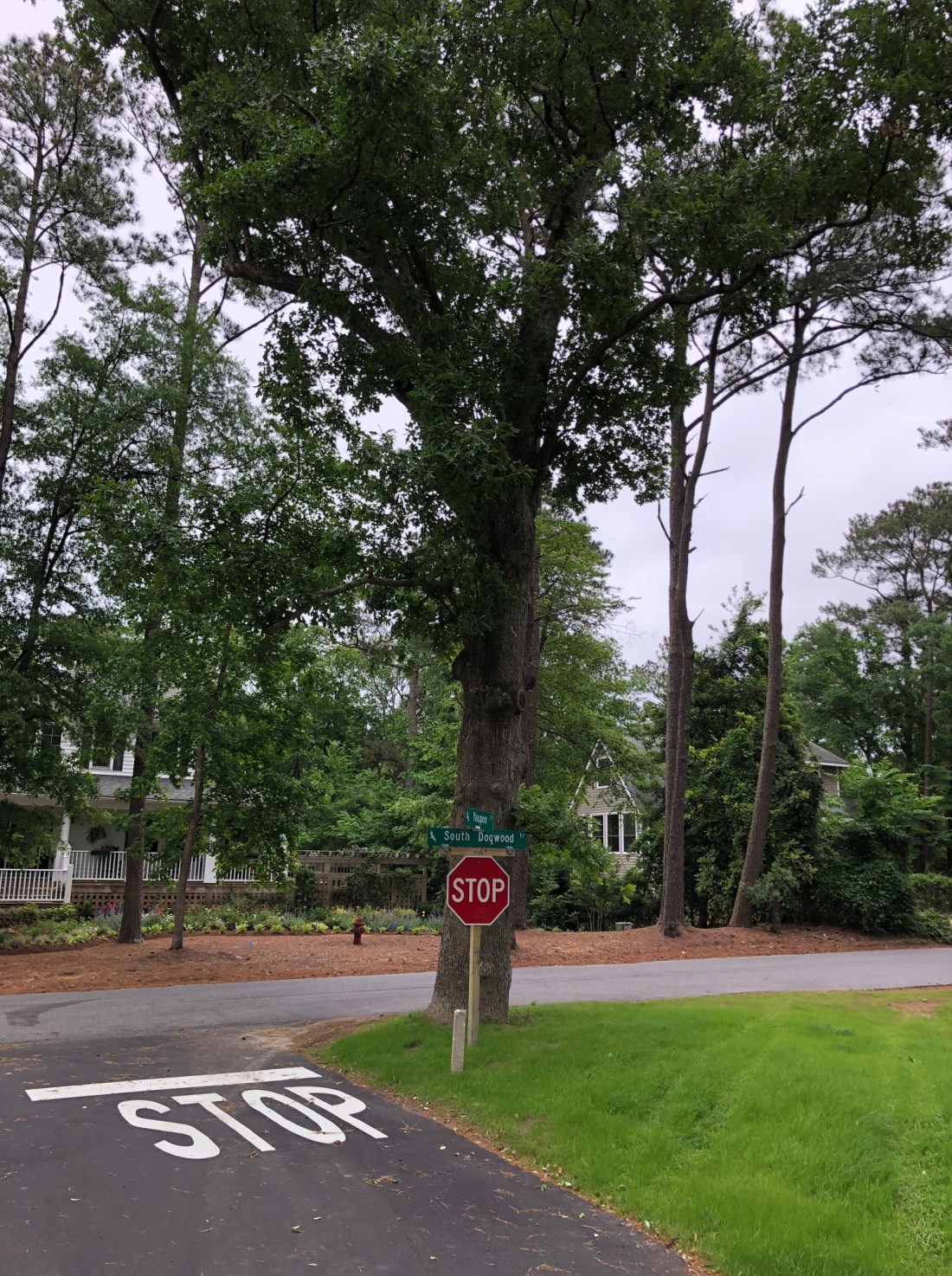







 The Southern Shores Beacon