4/21/20: DARE OPEN TO NON-RESIDENT PROPERTY OWNERS IN ORDER OF LAST NAMES, STARTING MAY 4. NO DECISION ON VISITOR ACCESS YET. COUNTY STAY-HOME ORDER EXTENDED TO MAY 22, WITH FACE COVERINGS NOW BEING REQUIRED.

facemask
Dare County is now requiring individuals to wear face coverings in public settings when they cannot maintain six-foot social distancing.

Dare County will be open to non-resident property owners who have valid entry permits and government-issued IDs starting Monday, May 4, and continuing on Wednesday and Friday of that week, in order of the owners’ last names, according to an elaborate plan announced this afternoon by the Dare County Control Group.

As part of that plan, the Control Group also has extended the County’s stay home-stay healthy order until May 22, leaving in place all current restrictions and adding to them the requirement that people wear a mask or cloth covering in public settings when they cannot maintain other social-distancing measures.

According to Bulletin No. 48, which lays out the new plan, the Control Group will address access for visitors “at a future date to allow for necessary syndromic surveillance and monitoring of resource availability.”

See bulletin at https://www.darenc.com/Home/Components/News/News/6172/1483

To apply for an entry permit, see: https://lfp.darecountync.gov/Forms/nonresident.

Starting May 4 at 6 a.m., non-resident property owners with proper permits and IDs whose last names begin with a letter between A and I will be allowed entry.

On May 6, at 6 a.m., non-resident property owners with proper paperwork whose last names begin with a letter between J and R will be given access, and all remaining non-resident property owners (S-Z) will be allowed entry on May 8, at 6 a.m.

Law enforcement officers at the entry checkpoints will check the identification of every person in a vehicle, according to the “Frequently Asked Questions” portion of the Dare County bulletin. Only those people who are listed on a permit with matching government-issued ID will be allowed entry, along with their minor children.

The Control Group further asks that non-resident property owners bring “their own supplies to sustain themselves in their homes as much as possible, including groceries, prescriptions, paper products, and other essentials.”

In response to an FAQ about why Dare County is lifting restrictions later than Currituck County is, the bulletin states: “Dare County has developed a plan for gradual lifting of restrictions on entry based on the science, trends, data, epidemiology, and resource availability. We do not have information on what criteria Currituck County used to make their decision on entry.

The Currituck County Board of Commissioners voted yesterday to approve reentry of non-resident property owners to the Currituck-Outer Banks this Thursday at 9 a.m. The Beacon wrongly expected Dare County to follow suit and is pleased to discover that Dare has been quite circumspect in its planning.

But shouldn’t law enforcement officers deny entry into Dare County to all non-resident Corolla property owners who are not essential workers? They don’t have permission to be in Dare County, and they cannot get to Corolla without going through Dare.

Oh, well.

The Control Group cites in its statement of “plan rationale” a number of changes that have improved the county’s position regarding COVID-19, including:

*The number of positive COVID-19 cases in Dare County has been stable for over a week, and there have been no new cases during that time.

*Syndrome surveillance indicates no immediate increase in respiratory illness or COVID-19-related symptoms.

*Testing is now readily available in Dare County in accordance with current N.C. Dept. of Health and Human Services guidelines.

*Testing turnaround—the time between specimen collection and test results—has dramatically decreased over the past few weeks so that results are now received within 24 to 72 hours.

*The Dare County Dept. of Public Health has increased capacity for contact tracing.

Non-resident property owners would be well-advised to read the details about Dare County’s stay home-stay healthy order and the answers to the FAQ that are provided in the emergency bulletin.

The Governor’s statewide stay-at-home order is in effect until April 29 and will likely be extended.

In other COVID-19 news, The Charlotte Observer reported today that North Carolina’s LabCorp has received the first approval from the U.S. Food and Drug Administration for an at-home testing kit for COVID-19.

According to The Observer, the company said its kit will involve placing a swab inside a person’s nose, then mailing the swab to LabCorp for testing.

The FDA has not officially cleared or approved the LabCorp product, but it has authorized its use. For now, the kit will be used on the pandemic’s front lines, going to healthcare workers and first responders who need it.

LabCorp said its kit will be available to the general public within the coming weeks and will cost $119, according to The Observer’s article.

See https://www.charlotteobserver.com/news/local/article242168736.html

Ann G. Sjoerdsma, 4/21/20


4/21/20: TOWN COUNCIL HOLDS SLOPPY BUDGET WORKSHOP. DARE COUNTY TO ANNOUNCE ENTRY PLAN AT END OF DAY.

beachnourishment

Today’s Town Council budget workshop, which consumed more than five hours, was the most sloppily conducted meeting I have ever witnessed in Southern Shores, and I have attended dozens of them.

When Council members finally got around to making decisions, they clumsily worded their motions, which were unduly confusing and which Mayor Tom Bennett did not repeat upon calling votes—most likely because he could not remember them.

Perhaps in a day or two, after I have recovered from my shock and dismay, and I have been able to view the videotape, I will publish a more upbeat post about today’s workshop. But today, I am struck by the lows.

The lowest points of this poorly run meeting were:

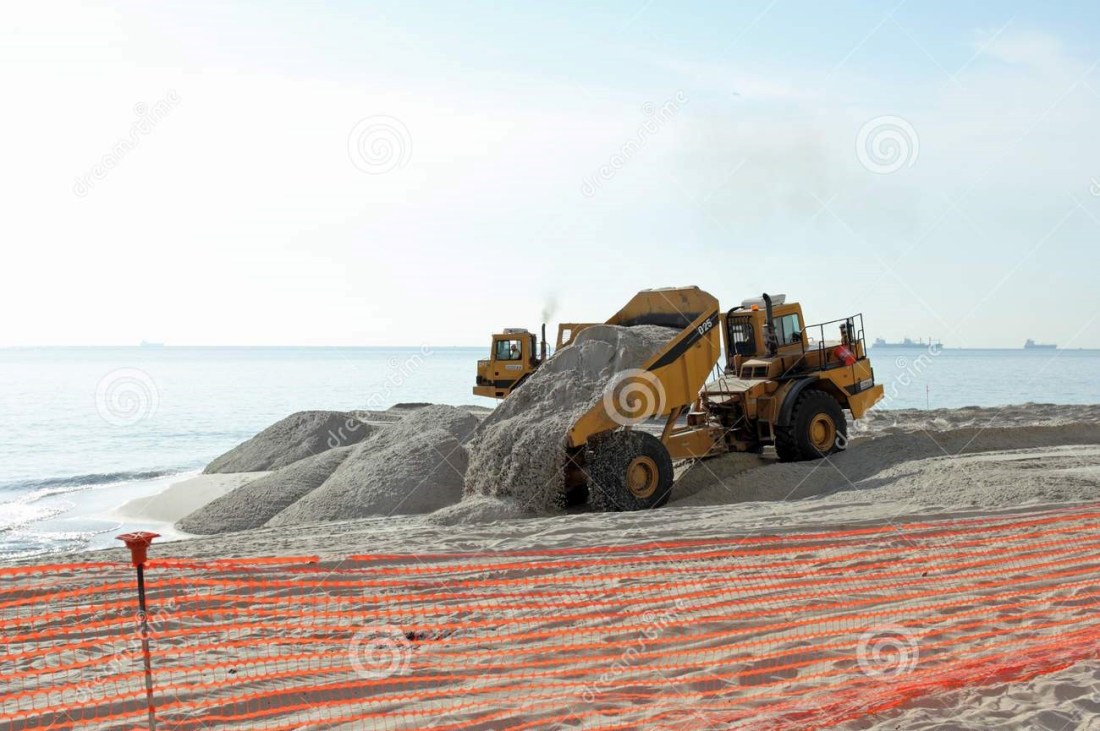
BEACH NOURISHMENT: The Town Council implicitly approved a beach nourishment project option without bothering to take a vote on either the approval of beach nourishment or the four options themselves, which were presented in the meeting packet.

I have never seen such backhanded maneuvering by elected officials in Southern Shores. Or maybe it was just ineptitude. Or confusion?

Council members dodged a straightforward, honest vote and discussion on the four plans by instead authorizing Interim Town Manager/Budget Officer Wes Haskett to work with APTIM to apply for two beach nourishment grants available through the N.C. Dept. of Environmental Quality’s Coastal Storm Damage Mitigation Fund: one grant to finance project option no. 4 and the other to finance renourishment of Pelican Watch.

In framing her motion about the grants, Mayor Pro Tem Elizabeth Morey made clear that she and her Council colleagues had discussed the project options among themselves before the meeting and had coalesced around option 4, which is priced at $14,755,600. There is no doubt about this.

But let’s be honest. You do not pay a consultant thousands of dollars to prepare a $2.5 million grant application for a project that you do not intend to perform. You do not apply for grants to finance theoretical projects. You are accountable to the grantor for how you progress with your project, for how you spend the grantor’s money–in this case, State taxpayers’ money–for goodness sake.

Mr. Haskett said that APTIM will handle the grant applications for $4,970, but he was a little unsure of whether the fee covered both grants or just one. He thinks both.

Those Council members who showed ignorance about this grant possibility—which was announced by NCDEQ in early March and by Mr. Haskett at the Council’s April 7 meeting—need to start doing their homework.

Also, according to Mr. Haskett, the beach-nourishment financial/tax increase data that have been in the Council’s meeting packet for the past two workshop meetings are just numbers “to start the discussion” on such financing—which, of course, was not held. The numbers apparently are not for real. They are “just information,” Mr. Haskett said, “not a recommendation.”

Did it ever occur to Mr. Haskett to inform the public of that fact, and then to explain it?

Here is my bottom-line question: What happens if the State no longer has money for these grants–as Councilman Neal suggested–or if Southern Shores is not awarded one?

The NCDEQ advertised that up to $11.5 million total would be available for coastal storm mitigation grants.

A VIOLATION OF THE OPEN-MEETING LAW/RECYCLING: Councilman Jim Conners admitted that he and other Council members had violated the open-meeting law during the lunch recess they took by conferring about curbside recycling in town, in particular, about a proposed contract from RDS of Virginia to handle processing the Town’s recyclables.

Upon realizing that he had admitted he had conducted the public’s business privately with a quorum of the Council, Mr. Conners said simply: “My bad.”

Overall, the Council’s discussion about recycling showed a profound lack of knowledge about the recycling market locally, nationally, and internationally, and a profound lack of commitment to recycling, despite the commitment the State of North Carolina has made and the obligations the State has imposed on municipalities by statute.

Councilman Matt Neal showed the most clearheaded thinking on RDS’s contract, and on the state of recycling, as he did on most of the issues the Town Council took up, but too often he backed away from his microphone and could not be heard.

Mr. Neal was inclined to work with RDS to negotiate some of the terms that Council members objected to, such as the length of the contract and the chargebacks to the Town for contaminated recycling that RDS rejects. Mr. Haskett should have tried to renegotiate the contract before the budget workshop. The chargebacks were an obvious sore point.

With Ms. Morey’s assistance, Mr. Neal was able to steer his colleagues in the direction of continuing with having Bay Disposal haul curbside recyclables to the Wheelabrator incinerator in Portsmouth and pursuing a “better contractual relationship” with RDS, as Ms. Morey put it in a motion discussion. But I could not tell you what her motion actually said, and the Mayor did not restate it upon calling the vote.

For the first time, Ms. Morey proclaimed herself a “huge fan of single-stream recycling” and said “we’re not recycling now.”

NO LEFT-TURN WEEKEND FUNDING: Mayor Bennett attempted to put words in Councilman Jim Conners’s mouth by suggesting AFTER Mr. Conners had said that he favored appropriating $6500 per weekend to block the left turn at the intersection of U.S. Hwy. 158/Dogwood Trail that instead Mr. Conners had advised taking the funding off of the table. After the Mayor’s interruption, which contradicted him, Mr. Conners decided not to speak further and deferred to other people’s opinions.

The motion that eventually passed unanimously was so confusingly worded, so softly spoken by Mr. Neal, and not repeated by the Mayor that I cannot tell you precisely what did pass. I believe the Council postponed a final decision on this funding until its June meeting, when members will have an idea of what the summertime traffic will be.

THE BIGGEST DECISIONS otherwise made by the Town Council were:

*To balance the budget by covering the proposed $348,853 shortfall, as well as budget additions that the Council approved today, with monies budgeted for fiscal year 2020-21 infrastructure projects, which total $662,340.

Mr. Conners made the motion to balance the budget by covering the shortfall with the capital-projects monies, and Councilman Leo Holland seconded it. But before a vote could be taken, Mr. Neal interjected comments—which I could not hear on Zoom—and when the audio returned, Council members were amending Mr. Conners’s motion by adding costs to the budget.

By the time the motion unanimously passed—without anyone seconding the amendments—the Council had approved the hiring of a full-time building inspector/code enforcement officer, to start in December so he/she can “shadow” Building Inspector Buddy Shelton for two months before he retires in February, and the awarding of bonuses to all staff members of either $1,000 or $500.

Ms. Swain calculated the new building inspector’s full-time salary for six months would be $35,000, but she gave no figures for his/her benefits. She also calculated the staff bonuses to total $35,000. (Had all staff members received a cost-of-living increase in FY 2020-21, Ms. Swain said, the increase to the budget would have been $58,000.)

Representing Southern Shores residents, who are suffering financially, too, Mr. Holland tried to argue that the staff bonuses should be less, suggesting $500 or $250, but he did not find support among his colleagues.

At one point, Ms. Swain advised that she had heard from Police Chief David Kole, who attended the morning session of the workshop, that a $45,000 grant the Chief had included in the proposed FY 2020-21 police department revenues would not be received, after all. So, the Council deducted $45,000 from what was left of the capital-improvement funds.

Mr. Neal quite accurately characterized decisions about subtracting from the capital-improvement budget as “just a shell game, anyway.” The Council always has the option of moving funds from the undesignated fund balance to fill a gap by way of a budget amendment during the fiscal year.

At the beginning of the morning session, Ms. Swain provided figures for FY 2019-20 surpluses—for example, from projects that came in under-budget—and a figure for the June 30, 2019 total of undesignated funds, information that was not disclosed to the public. Last June the undesignated fund balance had $4,173,321 in it, she said.

Asked to guesstimate about where the fund stands now, she declined, as she has at every other budget workshop I have ever attended, saying the balance is a “moving target.”

To leave the revenue-neutral tax rate of 0.1958 in effect for FY 2020-21. The Council had the option of assessing the current tax rate of 0.22 to property values, but decided not to do so this year, suggesting it may resurrect the 0.22 rate in FY 2021-22.

Ms. Swain sought to explain that if other Dare County towns increase their tax rates, Southern Shores will be at a disadvantage when it comes to “shared revenues,” in particular, when the County determines the town’s proportion of shared county occupancy taxes. But she was not specific about how the towns’ shares are calculated—even though the Mayor referred to a “formula”—and she really should have been.

It is quite likely that some Council members do not know how shared occupancy-tax revenues are calculated. Certainly, the public does not.

DARE COUNTY RE-ENTRY PLAN

The Dare County Control Group announced at 1 p.m. today that it is finalizing a plan to address “the lifting of restrictions on entry to Dare County while protecting the safety of our community.” The plan will be released by the end of the day.

See Bulletin no. 47: https://www.darenc.com/Home/Components/News/News/6170/1483

Ann G. Sjoerdsma, 4/21/20

4/21/20: BREAKING NEWS: TOWN COUNCIL RECESSES BUDGET WORKSHOP UNTIL 12:45 p.m. BEACH NOURISHMENT YET TO BE DISCUSSED.

Seventhavenue

After nearly three hours of a line-by-line examination of proposed fiscal year 2020-21 revenues and expenses, led by Interim Town Manager/Budget Officer Wes Haskett and Finance Officer Bonnie Swain, the Southern Shores Town Council took an hourlong recess from today’s budget workshop for lunch. When it resumes the meeting at 12:45 p.m., it will finally get to a discussion about balancing the budget and about a prospective beach nourishment project, as well as other proposals.

Mayor Pro Tem Elizabeth Morey, who said, “I expected us to be a lot further along” after three hours, expressed an interest in scheduling another meeting next week, but she was informally overruled by Town Council members who wanted to “plow through,” as Councilman Matt Neal said.

Ms. Swain said that scheduling a meeting next week would compromise her ability to work with Mr. Haskett on preparing a balanced budget to present to the Council at its May 5 meeting.

As The Beacon reported yesterday, Mr. Haskett, as interim town manager/budget officer, is obligated by N.C. law to submit a balanced budget, but he is not obligated by law to submit one as early as May 5. That is his choice.

State law requires a municipal budget officer to submit the budget, along with a budget message, to the governing board no later than June 1; and the submission need not be at a formal meeting. (See N.C. Gen. Stat. sec. 159-11(b).)

Please tune into Zoom videoconferencing at 12:45 p.m., if you can.

Once you have downloaded the Zoom software, all you need to do to watch the workshop is to click on “Join the meeting” and to provide the following meeting ID number when you are prompted: 952-9642-3158.

(If anyone from Town Hall or the Town Council reads this, please tell Mr. Neal that he is not audible. He needs to speak directly and clearly into his microphone.)

The Beacon will post a report about the budget workshop later in the week. We anticipate that we will be busy with news of Dare County’s plan to lift entry restrictions. As reported earlier today, we expect non-resident property owners to be allowed entry some time on Thursday.

Ann G. Sjoerdsma, 4/21/20

4/21/20: SSCA’S EARTH ‘WEEK’ BEACH CLEANUP STARTS TOMORROW ON 50TH ANNIVERSARY. VOLUNTEERS NEEDED TO CLEAR STORM DEBRIS AT CROSSOVERS.

EarthDay2020
The first Earth Day was held April 22, 1970.

(Breaking news: Return day for non-resident property owners appears to be Thursday. See below.)

This year the Southern Shores Civic Assn. is celebrating Earth Day, which is tomorrow, by holding a weeklong beach cleanup during what it has proclaimed Earth Week.

The SSCA is asking its members and other interested volunteers to help clear its beach crossovers and nearby beaches of debris, starting tomorrow, the 50th anniversary of the first Earth Day, and continuing through Wednesday, April 29.

Since the last nor’easter, the SSCA Board of Director writes in an email sent to members, “sand-fencing debris and sundry items” have washed up on the beach near the crossovers. According to the release, the crossovers at the Hillcrest Beach, Purple Martin Lane, and Second Avenue “have more significant debris than others.”

SSCA Volunteer/Social Coordinator Emily Gould told The Beacon that waste bags will be provided for volunteers at the Hillcrest Beach in the vacant port-a-john enclosure; at the Purple Martin crossover at the bench on the viewing deck; and at the Second Avenue crossover at the benches on the viewing deck.

At all other crossovers, Ms. Gould asks that you BYOB, bring your own bags, although some of the debris is so large and bulky that a bag will not accommodate it.

Please email Ms. Gould at ee.karr785@gmail.com with the beach area you wish to visit and when you expect to clean up there.

SSCA would like you to place the debris on either side of a crossover, at its middle section, or at the roadside, to the south of a crossover.

When you have completed your cleanup, Ms. Gould asks that you let her know the crossover address where you have deposited the debris.

Ms. Gould also would like you to have a picture taken of yourself (or to take a selfie) with the trash collected and send it to her so that you can be properly recognized and thanked for your efforts.

Perhaps the non-resident Southern Shores property owners, who are expected to be able to access Dare County starting Thursday, will join us in celebrating this beautiful environment that we share and in getting some exercise and fresh air during these difficult times.

We say “expected to” because OBX Today is reporting that the Currituck County Board of Commissioners voted yesterday to allow non-resident property owners to access Corolla, starting Thursday, and they cannot get to Corolla without going through Dare County—as residents in Southern Shores know only too well. The Dare County Control Group will announce the reentry plan for Dare County later today.

OBX Today also reports that the tentative date selected by the Currituck Board for return of visitors is May 15. Please check back with The Beacon this afternoon for a report on the Dare County plan.

Ann G. Sjoerdsma, 4/21/20

4/20/20: BREAKING NEWS: DARE COUNTY TO RELEASE PLAN ON GRADUAL LIFTING OF ENTRY RESTRICTIONS TOMORROW

checkpointpost

THIS JUST IN . . . The Dare County Control Group has asked staff to prepare a plan to “address the lifting of restrictions on entry to Dare County while ensuring the safety of our community,” according to today’s emergency bulletin.

The County’s plan will be released tomorrow.

The County Group’s decision was made “with careful consideration of the science, trends, data and resource availability,” according to Bulletin No. 46, which was issued at 1 p.m. today.

No new COVID-19 cases have been reported in Dare County.

See the bulletin at https://www.darenc.com/Home/Components/News/News/6162/1483.

The Beacon, 4/20/20

4/20/20: FY 2020-21 BUDGET: TOWN COUNCIL LIKELY TO DECIDE YOUR TAX FUTURE TOMORROW. BEACON URGES YOU TO MAKE YOUR OPINION KNOWN.

Beachjan9

Tomorrow morning you will find out about the character, foresight, flexibility, and even the sense of empathy of the five people you have elected to serve on the Southern Shores Town Council when they sit in judgment on the next fiscal year’s budget.

The Town Council will meet at the Pitts Center tomorrow at 9 a.m. for its one and only scheduled budget workshop session. The Town meeting notice advises that this will be a videoconference, and you may join via Zoom or listen by telephone. A maximum of 10 people are permitted to gather in the Pitts Center.

See the electronic-participation instructions at https://www.southernshores-nc.gov/southern-shores-town-council-workshop-meeting-tuesday-april-21-2020-900-a-m/southern-shores-notice-electronic-participation-april-21-2020/

Interim Town Manager/Budget Officer Wes Haskett and Finance Officer Bonnie Swain have submitted a draft budget that shows a deficit of $348,853, with revenues projected to be $5,953,243, and anticipated expenses to be $6,302,096.

This is basically with no growth—except for SSVFD fire services increasing by an estimated $80,000—but with no major cuts in expenses, either.

Is this budget realistic? Unduly optimistic? Not optimistic enough?

Mr. Haskett told The Beacon that he plans to submit a balanced annual operating budget to the Council at its May 5 meeting and to ask for a public hearing on June 1, long past the time that the five Council minds will have been made up.

Mr. Haskett is obligated by N.C. law to submit a balanced budget, but he is not obligated by law to submit one as early as May 5. That is his choice.

State law requires a municipal budget officer to submit the budget, along with a budget message, to the governing board no later than June 1; and the submission need not be at a formal meeting. (See N.C. Gen. Stat. sec. 159-11(b).)

So, if you wish to have a voice in your immediate financial future, and in any decision-making about which Southern Shores town services are considered “essential,” and which projects are deserving of funding, email your comments before tomorrow’s meeting to Town Clerk Sheila Kane at skane@southernshores-nc.gov, with the subject line, “Public Comment April 21, 2020.”

Your comments must be limited to three minutes, when read aloud. You also may comment for up to three minutes live via the chat feature on Zoom.

Here is tomorrow’s meeting agenda: https://www.southernshores-nc.gov/wp-content/uploads/minutes-agendas-newsletters/Agendas_2020-04-21.pdf

The meeting packet (budget is on pp. 3-17): https://www.southernshores-nc.gov/wp-content/uploads/minutes-agendas-newsletters/Meeting-Packet_2020-04-21.pdf

For more background, see The Beacon’s discussion of the proposed budget on 4/16/20.

UNCERTAIN FUTURE, REVENUES

No one knows what the future of the new coronavirus that causes the potentially fatal COVID-19 will be. Not even elite physician-scientists like Dr. Anthony S. Fauci, director of the National Institute of Allergy and Infectious Diseases.

After the current acute phase of this unpredictable severe respiratory disease subsides, will we see it return in a second wave and maybe a third wave? If so, when? September? October? And when it does subside, how will we live? What restrictions will be imposed on us and on our visitors?

Careful public-health planning in tourist areas, where the population is dense—and where the health-care services and hospital capacity may be limited—will be vital to avoiding a resurgence of COVID-19.

The Outer Banks summer vacation season remains uncertain. Considering the trend of COVID-19 cases in North Carolina, it seems unlikely that any vacation home rentals will occur before Memorial Day, but no one has a crystal ball.

Major N.C. newspapers are reporting today that cases in the state continue to double every 12 days. The doubling rate is a key factor for state government officials to consider in deciding when to relax the social restrictions that have been credited for slowing the spread of COVID-19.

Epidemiologists say that no matter what a state’s or a community’s doubling time is, the key is seeing it get longer: North Carolina’s doubling rate, although long, has been steady.

Epidemiologists also warn that case counts may not be the most reliable indicator of how the COVID-19 outbreak is spreading because testing has been hindered by a lack of available tests, swabs, and protective equipment, and by limited laboratory capacity.

With so many unknowns confronting them, how will the five Town Council members assess the unbalanced proposed fiscal year 2020-21 budget that the Town staff have presented, with no recommendations on how to balance it?

At least, Mr. Haskett and Ms. Swain offered no recommendations in the April 15 memorandum that they sent to the Council with the draft budget–electing instead to defer entirely to the Town Council. Perhaps they actually will share some at tomorrow’s meeting.

SOME OF THE KEY NUMBERS

Nearly one-third of the Town’s projected FY 2020-21 revenues are occupancy, sales, and land-transfer taxes.

Mr. Haskett and Ms. Swain have reduced the total for these taxes in the next fiscal year, compared to the current fiscal-year total, by roughly $219,500. Is that enough? Is that realistic? Is the reduction a worst-case scenario? (See The Beacon, 4/16/20, for their monthly percentage reductions.)

Occupancy taxes, in particular, have been strong for Southern Shores in recent years–so strong that the town has had a surplus in revenues that has been carried over to the next fiscal year.

Dare County assesses a 6 percent occupancy tax and distributes a portion of half of these proceeds to Duck, Southern Shores, Kitty Hawk, Kill Devil Hills, Nags Head, and Manteo, in “proportion to the amount of ad valorem tax levied by each town in the preceding fiscal year.” See Dare County Occupancy Tax at https://www.darenc.com/departments/tax-department/occupancy-tax

Ad valorem (real-estate) taxes constitute 52 percent of all projected revenues in Southern Shores in FY 2020-21. In FY 2019-20, those taxes made up 46 percent of all revenues.

Should taxpayers be asked to shoulder more budgetary expenses before the Town significantly tightens its belt?

As you all know, Dare County conducted a property reappraisal this year. The revenue- neutral tax rate (“RNTR”) for all Southern Shores property, according to Mr. Haskett and Ms. Swain, is 0.1958, or 19.58 cents per $100 of property value.

When a reappraisal occurs, N.C. law requires a municipal budget officer to calculate the RNTR, which it defines as “the rate that is estimated to produce revenue for the next fiscal year equal to the revenue that would have been produced for the next fiscal year by the current tax rate if no reappraisal had occurred.” (N.C. law. (Gen. Stat. sec. 159-11(e))

Although N.C. law requires a budget officer to include a statement of the RNTR in the next year’s budget, it does not require a governing board—the Southern Shores Town Council—to adopt it.

If the Town Council keeps the current tax rate of 0.22 (22 cents per $100 value), Mr. Haskett and Ms. Swain say in their memo, revenues would increase by $379,013—enough to wipe out the projected shortfall.

This would mean that our taxes would constitute 56 percent of all revenues. That does not sit well with us.

It also does not sit well with us that the Town staff has not provided an accounting of the funds currently in the undesignated fund balance. How much money is in reserve above the minimum $1.75 million that must be maintained?

The Council freely dips into this fund during a fiscal year by approving budget amendments. An amended fiscal-year budget can look very different from an adopted fiscal-year budget.

How will the Town Council make up the anticipated budgetary shortfall?

Will it increase real-property taxes on property owners, both resident and non-resident, who are already suffering financially because of the pandemic?

Will it halt or reduce all non-essential capital projects and all other non-essential costs? There currently is $662,340 budgeted for FY 2020-21 infrastructure projects.

Or will it simply cover the deficit with unassigned funds?

What philosophy and outlook will it embrace? What foresight will these five people show?

And, finally, the $64,000 question: Will the Town Council approve a much-discussed and much-disputed, exorbitant beach-nourishment project ($14-$17 million) that will be paid for in significant part by increasing property owners’ taxes, starting next year? The financial data for four beach-nourishment plan options are in the meeting packet.

Town Councilman Jim Conners said at the last Council meeting that, during budget deliberations, he would have the word austere “imprinted on my brain.” We hope so.

We support austerity. We also believe in preparing for the worst-case scenario, not the best-case scenario. We believe it is better to be frugal and not caught by surprise.

We support holding the line on taxes, cutting all nonessentials,  and postponing the Town’s “wish-list” of additional budgetary items that are enumerated in the agenda—the chief one being beach nourishment of the entire town coastline.

Our beaches are, and have been for many years, stable. A minimum of a year’s delay on this decision will not hurt. It will help taxpayers and save the Town money.

(The $35,000 budgeted for DEC Associates, the beach-nourishment financial consultants, is an obvious immediate savings, and it’s not the only one.)

Please tell your elected officials what you think. Please ensure that our government is a representative one. Send your three-minute comments to Town Clerk Sheila Kane at skane@southernshores-nc.gov.

Ann G. Sjoerdsma, 4/20/20

4/18/20: THE BEACON SPEAKS ABOUT THE RETURN OF NON-RESIDENT PROPERTY OWNERS AND ‘NORMALCY’ ON THE OUTER BANKS

COVIDscreening

I have taken some heat lately from loyal local readers who believe I have “aligned” myself with non-resident property owners and realtors against the interests of their continued health, safety, and welfare.

I cannot control the way people think, but I can say that I have no “side” in any conflict that may exist between Outer Banks resident property owners and non-resident property owners except the one that supports reason, science, reality, and the dissemination of information.

Non-resident property owners make up a large segment of The Beacon’s readership, and I am cognizant of giving them news that they can use to make informed decisions—in much the same way as I seek to empower locals with reliable information.

Non-resident property owners also make up a large segment of the Outer Banks community. Our coastal community, as we know it, would not exist without non-resident property owners. That’s a simple reality.

I believe it is a mistake to regard non-resident property owners as barbarians at the gates who potentially bring disease with them, rather than as good neighbors who will work with us to continue our successful mitigation efforts.

Those who do not choose to work with us in preserving and protecting the health/safety/welfare of Outer Bankers should face serious legal consequences.

If I had been on the Dare County Control Group a month ago, I would not have been so quick to bar non-resident property owners from access. I do not see the Control Group’s decision as a tough one, but as a “light-switch” easy one. Black-and-white. I am inclined toward more nuanced thinking and problem-solving.

If I had been persuaded, however, by both the scientific evidence and recommendations by credible public-health officials that a temporary ban was advisable, I would have at least given non-residents a weekend’s notice so that they could make plans. The County could have asked all non-resident property owners who arrived over the weekend of March 20-22 to self-quarantine for two weeks, as other jurisdictions nationwide have done.

The County also could have made mandatory protective measures such as social distancing, wearing face coverings in public spaces, limiting the size of group gatherings, etc., etc.

We locals seem to be living in a magical castle now, and the Currituck Sound is our moat, but sooner or later, the drawbridge must be lowered. The operative questions for all concerned are when and how?

THE VIRUS IS ‘OUT THERE’

I think of what appears to be our safe Outer Banks environment—even though we know the new coronavirus, SARS CoV-2, is “out there”—as a bubble or a cocoon. I am astonished by the number of people who do not cover their faces in stores and who are out and about, doing goodness knows what.

I also think it is a mistake to analogize the COVID-19 pandemic to a hurricane, which inevitably passes, and to think of non-resident property owners as having been evacuated, although I support a staged reentry that would allow non-resident property owners access before visitors when the restrictions are lifted.

I see the task before the Dare County Control Group now as figuring out how to reunite the Outer Banks community without endangering the people who are already here.

I do not think the reunification has anything to do with who pays how much in property taxes, how much rental income may be lost, or even about someone’s right to travel. It is, and always will be, about public health.

This new SARS (severe acute respiratory syndrome) coronavirus is not going to “miraculously disappear,” as President Trump incorrectly informed the public some weeks ago, much to his real scientific advisers’ chagrin.

That description might be applied to the coronavirus strain that caused the SARS epidemic of 2002-04, which killed 774 people, mostly in China and Hong Kong, but the reality is that intensive contact tracing and case isolation likely contained the spread of SARS CoV-1.

The transmissibility of SARS CoV-2 is far different from the transmissibility of the earlier strain. It is much more aggressive and insidious. It is highly contagious.

Dr. Anthony S. Fauci of the National Institute of Allergy and Infectious Diseases has made this point on numerous occasions. Just last Thursday, he reportedly told Fox News host Laura Ingraham during an interview: “[T]he degree of efficiency, of transmissibility of this is really unprecedented in anything that I’ve seen. It’s an extraordinarily efficient virus in transmitting from one person to another. Those kinds of viruses don’t just disappear.”

SARS CoV-2 is what a background source of mine, who formerly served as chief of the Bureau of Drugs at the U.S. Food and Drug Administration and maintains high-level contacts there, calls “a wily opponent.”

It is both wily and unpredictable.

THE POST-ACUTE PHASE OF COVID-19

I contacted Southern Shores Realty Co. for comment last week, and I published owner Mike Stone’s letter to SSR’s homeowners about realtors’ discussions with the Dare County Control Group, because I believe people should know how the predominant rental company in Southern Shores is operating during the COVID-19 emergency and how it views the upcoming summer rental season. This is what I consider important public information.

We have no investigative reporters on the Outer Banks. If we did, we might already have had the benefit of articles written about the viewpoints of a sampling of rental property companies, as well as restaurant owners and other businesspeople affected by the COVID-19 restrictions, and we definitely would have more accountability from the Dare County Control Group than just videotaped messages from its chairman, Bob Woodward.

(It appears that today’s Dare County Emergency Management bulletin is a message from Mr. Woodard that was posted yesterday. See https://www.darenc.com/departments/health-human-services/coronavirus.)

What passes as news in our local media is mostly what public-information staff for government officials print in press releases.

If I could investigate, I would most want to speak with local, state, and national public-health officials, as well as prominent scientists, such as Dr. Fauci, about what we can expect in the post-acute phase of COVID-19.

Once the acute phase of this severe respiratory disease subsides, that is where we will be, and we need to plan for that. Anyone who thinks we will simply pick up where we left off in February is sadly mistaken.

In an editorial published online yesterday by the Journal of the American Medical Assn. (“JAMA”), two physicians write:

“It is impossible to know exactly what the future pattern of COVID-19 disease activity might be, because it seems that the only predictable aspect of this pandemic is that it has been unpredictable. For instance, it is unknown whether there will be substantially less disease over the coming months, or whether a second wave of pervasive severe disease will emerge.”

The authors—one of whom specializes in emergency and preventive medicine—go on to say that as “more reliable data and evidence from the acute phase of the pandemic” become available, it may be possible to provide “some insights about the future potential consequences of COVID-19” for the nation’s health-care system.

See “COVID-19: Looking Beyond Tomorrow for Health Care and Society” at https://jamanetwork.com/journals/jama/fullarticle/2764952

Another recent editorial in the JAMA identifies the fall of 2020 as a “key milestone.”

These physician-scientists, one of whom is at the prestigious Johns Hopkins Bloomberg School of Public Health, write:

“If the initial social distancing and perhaps warmer temperatures reduce the scale of the outbreak this summer, there is a major risk of a resurgence during the traditional season of respiratory viruses.”

They recommend that the United States suspend the first year of medical school for one year and give the incoming 20,000 medical students the opportunity to join a national service program for public health that would begin with their receiving training in July on infectious disease epidemiology, outbreak response, etc., so that by August, they could deploy to state and local public-health departments to support a “test, trace, track, and quarantine strategy.”

See “A Bold Response to the COVID-19 Pandemic: Medical Students, National Service, and Public Health,” at https://jamanetwork.com/journals/jama/fullarticle/2764427

You also may be interested in a Jan. 23, 2020 JAMA article that Dr. Fauci co-authored, titled “Coronavirus Infections: More Than Just the Common Cold,” available at https://jamanetwork.com/journals/jama/fullarticle/2759815.

THE ‘NEW NORMAL’ AFTER THE SURGE

Governor Roy Cooper talked broadly last week about testing, tracing, and trends in the post-acute phase. He gave the outline of a plan, but no details.

How exactly will statewide testing and tracing occur after restrictions are lifted so that we all can be protected—both residents and non-residents alike?

Will we have throughout North Carolina, as well as in Dare County, the public-health infrastructure, personnel, and the supplies that we need to do it properly?

I am eager to know more.

In yet another JAMA editorial, two infectious disease specialists, one at Harvard, the other at Emory, discuss how the United States can safely resume “normal activities.”

“In the absence of a breakthrough treatment or vaccine,” they write, “the U.S. must navigate from mitigation back to containment, using the brute-force strategies effectively mobilized by South Korea.”

First, they say, “density must be limited.” The areas in the United States that have been most affected by the disease share in common either having dense urban conditions or temporarily dense population influxes—such as Mardi Gras in New Orleans, or the usual influx of vacationers to the Outer Banks in the summertime.

Decision-makers, such as the Dare County Control Group, must consider the risk of “large gatherings, festivals, conferences, and sporting events” when they determine how to proceed, they write. Businesses and health-care settings should work out schedules that limit crowding, and retailers should consider [continuing] limits of their store occupancy.

“[T]he immediate future of restaurant dining,” these experts write, “is unclear.”

Questions: How many people should be allowed to occupy a rental dwelling at one time or to congregate in close proximity on the beach?

The authors describe “massive testing” as the “cornerstone” of the post-acute phase, both testing of antibodies and of active disease.

I find what these authors say about the second form of testing quite instructive. They give me a sense of the details that Governor Cooper has not offered yet.

“These [active disease] tests,” the physicians write, “must be easy to perform, quick to result, readily and equitably available outside of the health care setting, and inexpensive. Testing must be immediately accessible to anyone with any symptom suggestive of COVID-19, such as headache, fever, runny nose, cough, shortness of breath, diarrhea, malaise, or anosmia [which is the loss of smell].

“Furthermore, because asymptomatic and presymptomatic transmission is important, additional wide-scale intermittent testing (e.g., weekly) of asymptomatic persons also may be required, particularly for individuals with significant exposure to others, such as athletes, teachers, service industry employees (e.g., in retail and maintenance), and health-care workers. Strategies such as home testing should be aggressively pursued to allow people to self-test whenever necessary.”

I would like to know how feasible home testing is, and, if it is feasible, how far away we are from having such testing available.

Of course, once people are identified with COVID-19, the authors write, they “must be immediately informed, educated, isolated, and then their contacts efficiently identified” and, in order to achieve effective control, “quarantined within 24 hours.”

The authors also discuss attending to the most vulnerable populations and investing in national public-health infrastructure, plans, measures, and supplies. They suggest an investment of $5 billion would be required.

See “From Mitigation to Containment of the COVID-19 Pandemic: Putting the SARS-CoV-2 Genie Back in the Bottle” at https://jamanetwork.com/journals/jama/fullarticle/2764956

In his interview with Fox’s Laura Ingraham, Dr. Fauci said again, as he has many times before, that the COVID-19 threat is “not going to be over to the point of our being able to not do any mitigation until we have a scientifically sound, safe and effective vaccine.”

While the Dare County Control Group waits to see how Governor Cooper will gradually “reopen” the state, it should be conferring with public-health and scientific experts now about how to prevent an increase in COVID-19 cases on the Outer Banks when people start arriving. Members should be educating themselves and doing what they can to help the local health-care system and the population prepare.

There is not going to be a return to business as usual. The mitigation steps that the Control Group leaves or puts in place will be critical to our immediate future.

DRUGS IN THE PIPELINE

Just as a postscript, I would like to note that my FDA source has said that he is “not optimistic that any of the drugs now being tested will prove to be dramatically effective against COVID-19. Certainly hydroxychloroquine is not.”

“To be really useful,” according to my source, who was a trusted associate of my late drug-czar father (about whom I have written), “any new drug has got to reduce mortality and/or the number of people who need the ICU, and that should be easy to determine in well controlled short-term trials.”

If you would like to read the latest about therapeutic drug trials, see:

The NIH: https://www.niaid.nih.gov/diseases-conditions/coronaviruses

The CDC: https://www.cdc.gov/coronavirus/2019-ncov/hcp/therapeutic-options.html

Reports I read in medical journals, particularly The New England Journal of Medicine, indicate that the most promising therapeutic trials have occurred with Gilead Sciences’ antiviral drug, remdesivir, which has been used to fight the Ebola virus. All data on its effectiveness so far are limited and preliminary, however.

Have a good Sunday, everyone.

Ann G. Sjoerdsma, 4/18/20

4/17/20: 3 N.C. MEDICAL SCHOOLS JOIN STATEWIDE EFFORT TO ASSESS TRUE COVID-19 INFECTION RATE. STATE HAS NOT HIT PEAK. GOVERNOR SAYS N.C. NEEDS FEDERAL HELP WITH TESTING, SUPPLIES.

Testkit

Governor Roy Cooper announced today a partnership with three of the state’s medical universities to increase testing and tracing in North Carolina, according to a report this afternoon by The Raleigh News and Observer.

The University of North Carolina, East Carolina University, and Duke University have joined a statewide research project designed to learn more about the percentage of North Carolina residents who have COVID-19 and are asymptomatic and, generally, “to better understand the true number of COVID-19 infections in our state,” the Governor said at a news conference.

North Carolina has four medical schools. The fourth is at Wake Forest University in Winston-Salem.

Governor Cooper also emphasized at his conference the need for more help from the federal government with testing and personal protective equipment, The News and Observer reported. (Note: All coronavirus reporting by The News and Observer is available free.)

The Governor spoke of “global supply chain breakdowns” that compel the federal government to “help more” than it has.

So far, the state has conducted about 73,000 COVID-19 tests, according to the N.C. Dept. of Health and Human Services (NCDHHS)—a number that accounts for much less than 1 percent of North Carolina’s total population.

North Carolina, which is the ninth most populous state in the country, has about 10.5 million people.

Contrary to a University of Washington model that estimated the heaviest outbreak of COVID-19 cases in North Carolina would come this week, public-health experts now believe the peak could come as late as mid-May.

The NCDHHS reported today 394 more confirmed COVID-19 cases in the state over yesterday’s total. The largest one-day surge in cases statewide was reportedly 404 cases on April 11.

The acute phase of this respiratory disease will subside, but there is great uncertainty about what the post-acute phase will look like and whether a resurgence is likely.

More than 630,000 people filed for unemployment insurance in the past month, according to the N.C. Division of Employment Security, which plans to triple its staff to 1,600 in order to process the claims.

LOCALLY, DARE COUNTY continues a nearly weeklong trend of reporting no new COVID-19 cases.

See Dare Emergency Management Bulletin No. 45: https://www.darenc.com/Home/Components/News/News/6155/1483.

THIS JUST IN (at 5 p.m.):

DARE COUNTY BOARD OF COMMISSIONERS CHAIRMAN BOB WOODARD, who is also the chair of the Dare County Control Group, addresses the public on the eve of the fourth weekend of Stay Home-Stay Healthy order. Access the videotape at:

https://www.darenc.com/Home/Components/News/News/6160/398

Ann G. Sjoerdsma, 4/17/20

4/16/20: BULLETIN: DARE COUNTY CONTROL GROUP DISCUSSING STAGED REENTRY, ALLOWING NON-RESIDENT PROPERTY OWNERS AHEAD OF VISITORS. TIMELINE UNCERTAIN, LIKELY TO TRACK STATE DECISION-MAKING.

checkpoint

With no increase in the number of positive COVID-19 cases in Dare County, today’s COVID-19 emergency bulletin focuses on lifting the County’s entry restrictions.

“When implemented,” Bulletin No. 44 states, “it is likely that a staged entry process will be implemented to allow non-resident property owners entry before allowing entry to visitors.”

(See The Beacon’s 4/15/20 posts on this subject for more information.)

To access the bulletin, go to https://www.darenc.com/Home/Components/News/News/6147/1483

Both Governor Cooper’s Stay-at-Home order and Dare County’s Stay Home-Stay Healthy order are effective through April 29, at which time they can be continued, modified, or rescinded.

“As April 29 approaches,” Bulletin No. 44 states, “the Control Group will continue to have serious discussions about ways to most effectively balance the health of our community [with] the economic impacts, in order to make decisions that are in the best interest of all. Local officials have begun those discussions regarding the timeline for entry to the County.”

It continues: “As decisions on entry are made, consideration is being given to the Governor’s actions regarding the state’s Stay at Home order, the scientific data including trends and models that are frequently changing, the capacity of local health providers, and the ability of local merchants to provide essential goods and services.”

Not surprisingly, Dare County is aligning with the state and looking to Governor Roy Cooper for guidance. (See The Beacon’s column from earlier today about the Governor’s path to reopening North Carolina.)

One Southern Shores Town Council member told The Beacon this morning that Council members are being “inundated” with emails from non-resident property owners, who have been barred entry to Dare County since 10 p.m. on March 19.

Mayor Tom Bennett, along with all other town mayors, is a member of the Dare County Control Group, which is chaired by Bob Woodard, chairperson of the Dare County Board of Commissioners.

The bulletin also reports that two more Dare County residents who tested positive for COVID-19 have recovered or are asymptomatically cleared, bringing that total to 13. One person who tested positive never had symptoms, and the 15th person died.

2020 CENSUS: Dare continues to encourage residents who have not responded to the U.S. Census questionnaire to complete the form online at my2020census.gov, using your physical street address, or to call 1-844-330-2020 (English) or 1-844-468-2020 (Spanish).   

Ann G. Sjoerdsma, 4/16/20

4/16/20: TOWN’S DRAFT FY 2020-21 BUDGET SHOWS PROJECTED SHORTFALL OF $350,000. GOVERNOR GIVES OVERVIEW OF STATE ‘REOPENING.’ Also News on Recycling. Town Council Budget Workshop 9 a.m. Tuesday.

Coronavirus-CDC-678x381
All Outer Banks towns are now having to budget and plan for the next fiscal year with an eye toward the ‘new normal’ of life with COVID-19. 

The draft fiscal year 2020-21 budget that the Town Council will consider at its workshop session next Tuesday is unbalanced, showing a shortfall in projected revenues over projected expenses during an uncertain financial time of about $350,000.

Projected revenues for next year are $5,953,243, and expenses are $6,302,096.

For the proposed FY 2020-21 budget, see pages of: 3-17 of the April 21 budget workshop packet: https://www.southernshores-nc.gov/

Interim Town Manager/Budget Officer Wes Haskett and Finance Officer Bonnie Swain have submitted a budget with “minimal increases” in expenses to “keep services running at the current level,” they write in a memorandum to the Town Council, and have reduced revenues in occupancy taxes (by an overall 20 percent); sales taxes (5 percent); and land- transfer taxes (2.5 percent).

The projected occupancy-tax revenue assumes receipts in July of 50 percent of last July’s receipts; 30 percent in August, 20 percent in September, and 10 percent in October, according to the memorandum. The two staff members assume all other occupancy-tax receipts will be “flat as compared to last year’s numbers.”

They are also assuming that “travel patterns will return to normal.”

Mr. Haskett and Ms. Swain project a slight increase in real-estate property (aka ad valorem) tax revenue, based on a revenue neutral tax rate (RNTR) of 0.1958, which towns are required by state law to calculate, but not adopt, after a countywide property reappraisal like the one Dare just performed.

The Town’s current tax rate is 0.22, or 22 cents per $100 of property value.

For an explanation about the confusing RNTR, see: https://canons.sog.unc.edu/the-revenue-neutral-tax-rate/

Rather than recommend to the Town Council a preliminary budget that is balanced, Mr. Haskett apparently has left to the Council the tough decision-making about how that can be achieved. In the joint memorandum, he offers the following options:

  • Cutting expenditures/services
  • Using monies from the Town’s unassigned fund balance
  • Increasing taxes (by keeping the current 0.22 tax rate)
  • Using a combination of the above three options

The current balance in the undesignated fund balance, which was depleted in this fiscal year by $1,406,411–some of which will be reimbursed by grant money–is not indicated in the memo.

North Carolina town managers are tasked by state law with preparing and submitting the budget and capital program to a town council. (See N.C. General Statutes 160A-148(5)). They are in the best position to analyze and consider carefully all departmental requests. A town council serves only in an advisory role, offering guidance.

The Beacon believes that Mr. Haskett should have dug deeper for cuts in expenses, not only to balance the budget now as he and Ms. Swain have projected it, but to anticipate further revenue reductions. We believe Mr. Haskett should be suggesting potential cost-saving measures—per a town manager’s budgetary duty and power—and we can readily offer some obvious ones:

1) Asking all department heads to cut their budgets by a mandatory 10 to 15 percent;

2) Eliminating all external contracts (engineering, beach nourishment studies, etc.);

3) Reducing or eliminating capital expenditures.

Employee salary cuts should be considered, too, in case the local economy fares far worse than currently anticipated.

We also believe the timing of this draft budget is unfortunate. In a month, we will know much more about what the “new normal” in North Carolina will look like and how the tourism and construction industries will be affected. The Town can be flexible in the next two months about when it workshops the budget; when Mr. Haskett submits a balanced budget; and when the public hearing on the proposed balanced budget is held.

The usual budgetary deadlines need not be rigidly observed, as long as an FY 2020-21 budget is approved by June 30 and the public has had an opportunity to be heard.

THE GOVERNOR’S PLAN: TESTING, TRACING, TRENDS

Governor Roy Cooper started discussing life in North Carolina after COVID-19-related restrictions are lifted yesterday at a news conference at the state’s Emergency Operations Center in Raleigh.

“This virus is going to be with us until there is a vaccine, which may be a year or more away,” the Governor said, cautiously. “That means as we ease restrictions, we are going to enter a new normal.”

Governor Cooper seeks to ensure that when people go back to work, and businesses and schools reopen, public-health measures are still in place to protect the most vulnerable people. He is cognizant of guarding against a spike in COVID-19 cases that could overwhelm hospitals and cause widespread casualties.

“We now need to look ahead at how we stay ahead of the curve,” said Dr. Mandy Cohen, secretary of the N.C. Dept. of Health and Human Services, a chief adviser to the Governor.

The plan that the Governor proposes to initiate gradually consists of three components:

  • Widespread testing, so infected people can be identified, isolated, and tracked;
  • Aggressive contact tracing, so that people who came in contact with individuals who test positive for COVID-19 can be identified and tested, and, if necessary, isolated and tracked;
  • Detection of “trends” that will influence policy decisions.

In order to ease restrictions, there needs to be an increase in testing capabilities over what is currently possible in the state, and more public-health personnel need to be hired in order to do aggressive contact tracing, according to the Governor’s Office.

See press release, “Governor Cooper Shares Path Forward for North Carolina”: https://governor.nc.gov/news/governor-cooper-shares-path-forward-north-carolina

By trends, Governor Cooper means data showing changes in the number of new positive COVID-19 test results; the number of COVID-19-related hospitalizations and deaths; the number of available hospital beds and ICU capacity; and the number of available supplies of personal protective equipment. Any worrisome trends that emerge will have to be addressed by public-health safeguards, such as social distancing, face masks, and limited gatherings.

Invoking the now common light-switch analogy, the Governor said he prefers to use “a dimmer switch that can be adjusted incrementally.”

Until state and county restrictions are gradually lifted, we will not know how the Outer Banks will “trend.”

RECYCLING CONTRACT

Returning to the draft Southern Shores FY 2020-21 budget, we were glad to see that the town has been offered a recycling contract by Recycling & Disposal Solutions (“RSD”) of Virginia with a fixed price of $57.50/ton for processing single-stream recycling with glass; or $49/ton for single stream recycling without glass.

RSD, which operates a materials recovery facility in Portsmouth, is assuming the market risk should the price of commodities drop—which is what Bay Disposal & Recycling should have done, instead of requesting a price hike from the Town Council, when the processing fees it was paying increased.

The Beacon previewed RSD’s proposed contract with Nags Head on 4/14/20, expecting it to be much like the one the recycling company would offer Southern Shores, and it is, with the significant exception of the price. (See pp. 18-48 of the meeting packet.)

RSD’s contract only concerns the disposal of the Town’s curbside recyclables once they arrive at its facility. Bay Disposal would charge the Town separately for collecting the recyclables and hauling them to Portsmouth. As of yesterday, Mr. Haskett did not have a price quote from Joshua Smaltz, who is Outer Banks Site Manager for Bay Disposal.

A big advantage that RSD offers over the previous processing arrangement that Bay Disposal had with a Chesapeake recycling center is that it will handle sorting all recyclables so that any contamination does not adversely affect the Town.

Facing what Nags Head Town Manager Cliff Ogburn believes might be a $1.5 million budgetary shortfall in the next fiscal year, the Nags Head Board of Commissioners, which met yesterday, decided to postpone a decision on its RSD contract until its May 6 meeting. The larger town was not offered a fixed price like Southern Shores was.

The Beacon would like to see the Town Council approve an arrangement with RSD and do some good for the planet, while also supporting the recycling market. If the Council decides to continue to allow Bay Disposal to haul our recyclables to the Wheelabrator incinerator in Portmouth, it will do neither.

The Beacon has lost track of the figures, since the Town Council gave Bay Disposal a price increase to transport the Town’s recyclables to Wheelabrator, but it may be that the arrangement with RDS is also more cost-effective.

ZOOM AND PUBLIC COMMENT

The Town has given notice that next Tuesday’s 9 a.m. budget workshop will be held in the Pitts Center, “utilizing the Zoom platform/app.” Details about who will be present at the Pitts Center would be welcome, but the Town does not provide them. We will never understand why the Town is not more forthcoming with basic information.

We suggest that you do a trial run with Zoom before Tuesday, if you have not used it before. The Town’s instructions, via the link below, might confuse you:

https://www.southernshores-nc.gov/wp-content/uploads/2020/04/Southern-Shores-Notice-Electronic-Participation-April-21-2020.pdf

The bottom line is that, once you have downloaded the Zoom software and can join a meeting, all you need to participate in the budget workshop is the meeting ID, which is 952 9642 3158.

You also may listen to the meeting on the telephone. The link above gives telephone numbers that you may use.

You may email public comments to Town Clerk Sheila Kane before the meeting at skane@southernshores-nc.gov, with the subject line, “Public Comment April 21, 2020,” or you may comment live via the chat feature on Zoom.

If you do email your comments, someone will read them into the record on your behalf. The Beacon advises you to be mindful that the person who reads them might be a slow and stumbling reader. You are limited to three minutes, which may be shortened when read by a hesitant reader.

The Beacon will write again about the draft budget before next Tuesday’s workshop.

Ann G. Sjoerdsma, 4/16/20